
Uluru-Kata Tjuta National Park
Rising from Australia’s flat red desert, Uluru stands as one of the most awe-inspiring natural monuments on Earth — a sandstone monolith 348 metres tall and nearly 10 kilometres in circumference that pulses with colour at sunrise and sunset. The surrounding Kata Tjuta formation, a cluster of 36 massive domed rocks, stretches across the horizon just 30 kilometres away. Together these two formations are the centrepiece of Uluru-Kata Tjuta National Park, a UNESCO World Heritage site home to the Anangu people for at least 30,000 years. To visit is to stand in the presence of deep time.
History of Uluru-Kata Tjuta National Park
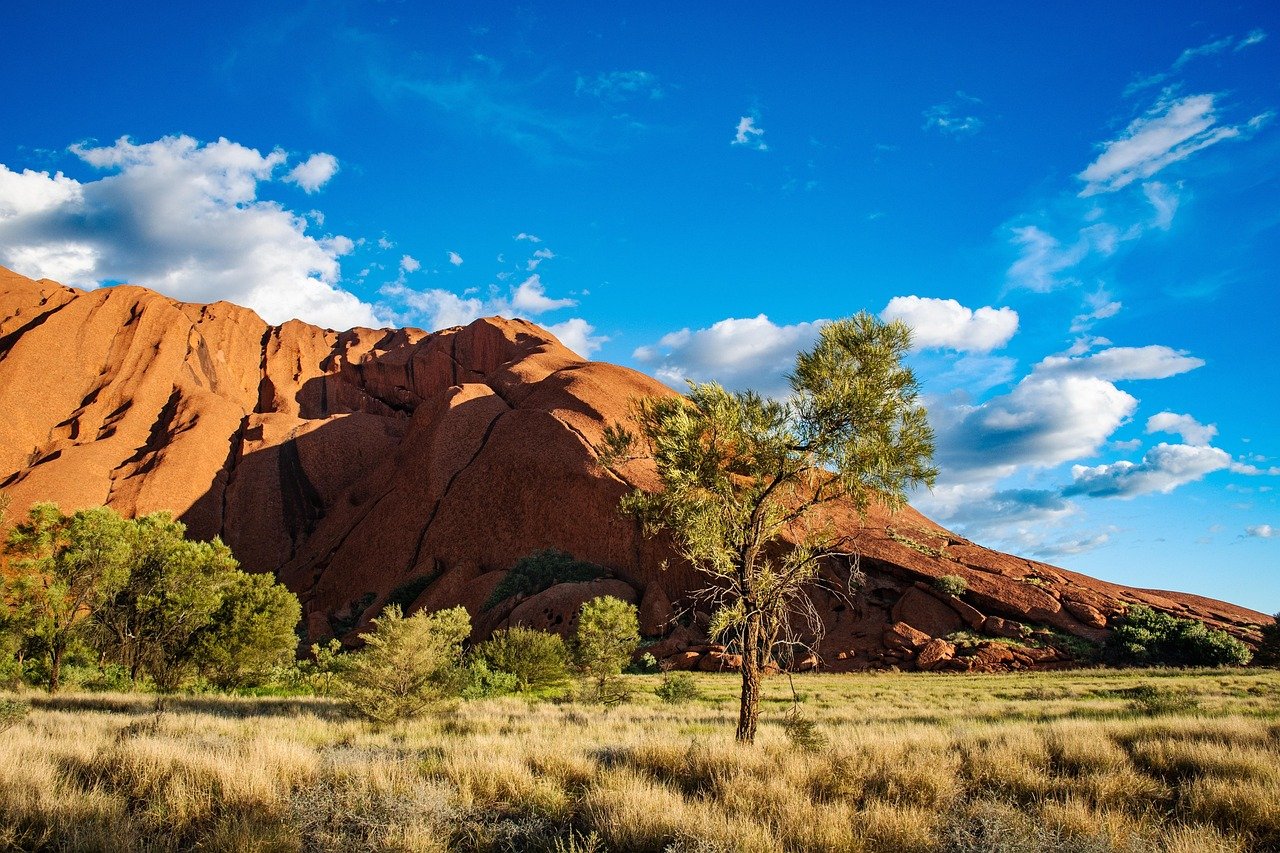
Uluru and Kata Tjuta are of immense cultural significance to the Anangu, the traditional custodians of the land. The Anangu system of law and culture, called Tjukurpa, describes the creation of the world by ancestral beings and governs relationships between people, plants, animals, and the land. Every crack, waterhole, and cave at Uluru carries meaning within Tjukurpa, and the rock is regarded as a living entity rather than a geological curiosity.
European explorer William Gosse was the first outsider to reach Uluru in 1873, naming it Ayers Rock. In 1985 the Australian government returned ownership of the park to the Anangu, who leased it back for joint management with Parks Australia. In October 2019 climbing Uluru was permanently banned at the Anangu’s request, marking a profound shift toward respectful engagement with the site.
What to See

The Base Walk circles the entire perimeter of Uluru — a 10.6-kilometre circuit that takes around three to four hours and reveals the rock’s extraordinary variety of surfaces, cave paintings, waterholes, and rock art. Guided cultural walks led by Anangu rangers illuminate the Tjukurpa stories associated with specific features. The free ranger-guided Mala Walk on the northern face passes some of the most significant Tjukurpa sites each morning.
At Kata Tjuta, the Valley of the Winds walk is rated one of Australia’s great short hikes — a 7.4-kilometre circuit through narrow gorges between the domed rocks offering dramatic viewpoints and a sense of scale that photographs cannot capture. The shorter Walpa Gorge walk is accessible to all fitness levels and leads into a spectacular natural amphitheatre.
Sunrise and Sunset Viewing
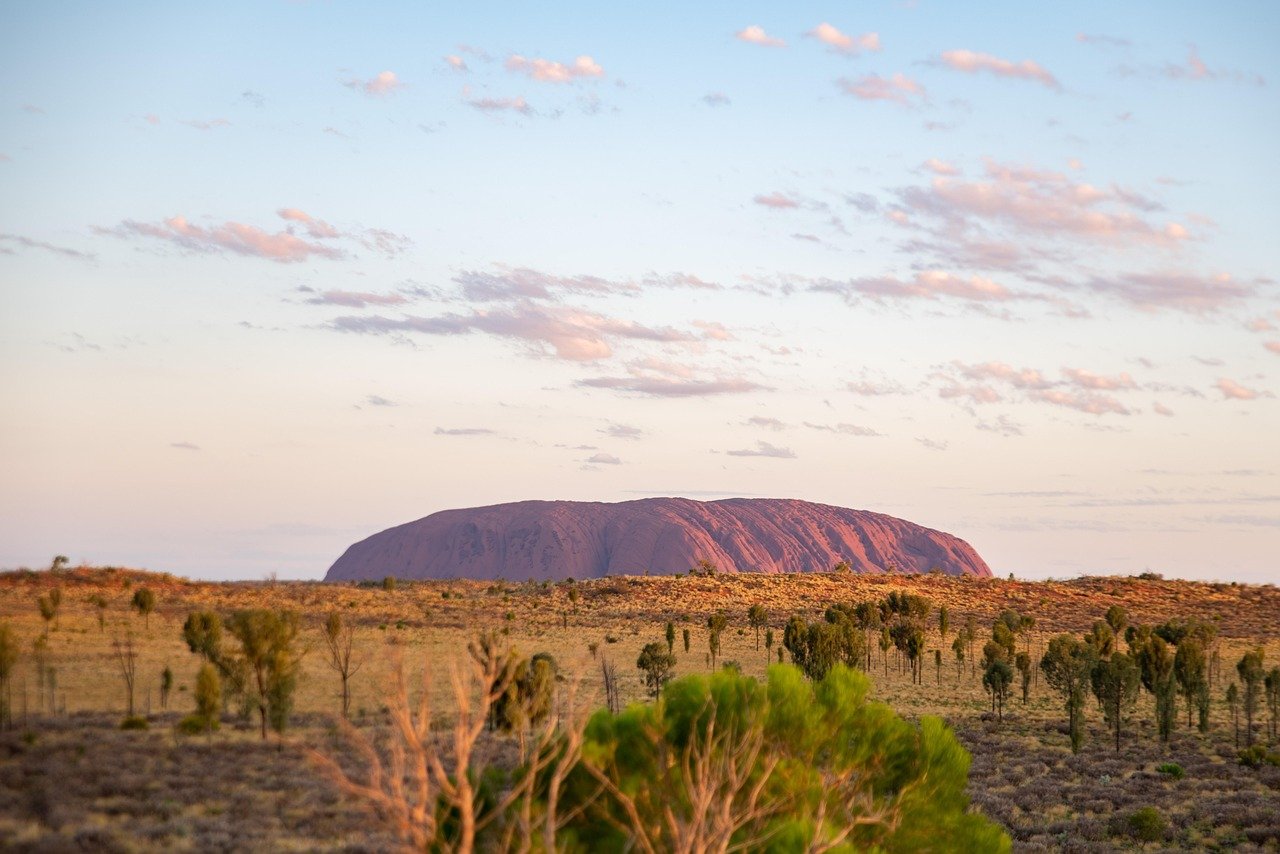
Uluru’s colour-shifting performance at sunrise and sunset draws visitors from around the world. As the sun rises the rock progresses from deep purple through blue to glowing orange and blazing red, finally settling into its characteristic ochre hue. The reverse journey at sunset is equally dramatic. The park maintains two dedicated viewing areas with raised platforms that offer unobstructed sightlines.
The night sky above Uluru is extraordinary — far from any city lights, the Milky Way appears so vivid it seems painted onto the dome of the sky. Several operators offer stargazing experiences combining Anangu astronomical stories with telescope viewing of southern constellations.
Practical Information
- Tickets: AUD 38 per adult, valid for three consecutive days (children under 16 free)
- Opening hours: Gates open 30 min before sunrise; closing times vary seasonally
- Best time to visit: May to August (20-25C); avoid December-February (extreme heat over 45C)
- Duration: 2-3 days to explore both Uluru and Kata Tjuta properly
- Booking: Book accommodation at Ayers Rock Resort well in advance; pay park entry at the gate
Local Insights

Understanding that Uluru is a living sacred site for the Anangu transforms a visit from sightseeing into something far more meaningful and humbling.
- Arrive before sunrise for the Base Walk — the light is spectacular and trail temperatures are manageable before midday
- Join a free ranger-guided Mala Walk each morning for the best cultural interpretation of rock art and Tjukurpa stories
- Photography of certain sacred sites is not permitted — signage throughout the park explains which areas to avoid photographing
- Carry at least two litres of water per person for any walk; the desert heat is serious even in winter
- The free Cultural Centre near the base of Uluru offers excellent Anangu art, exhibits, and cultural context before exploring
Getting There
- By air: Ayers Rock Airport (Connellan) receives direct flights from Sydney, Melbourne, Alice Springs, and Cairns
- By road: 450km from Alice Springs via the Stuart and Lasseter Highways on sealed roads
- Shuttle: Resort shuttles and tour operators connect the airport, Ayers Rock Resort, and park viewing areas
- Car rental: Available at the airport; self-driving gives maximum flexibility within the park
Frequently asked questions
Can you still climb Uluru?
No. Climbing Uluru was permanently banned in October 2019 at the request of the Anangu traditional owners. The Anangu regard Uluru as sacred and ask visitors to respect this by exploring base walks and cultural experiences instead.
How much does it cost to enter Uluru-Kata Tjuta National Park?
Park entry costs AUD 38 per adult and covers three consecutive days. Children under 16 are free. Entry is paid at the park gate on arrival.
What is the best time of year to visit Uluru?
The most comfortable time is May through August when daytime temperatures range from 20-25 degrees Celsius. Summer months bring extreme heat often exceeding 45 degrees Celsius, and some walks may close during high heat alerts.
How long should I spend at Uluru?
Two to three days is ideal to experience both Uluru and Kata Tjuta properly. A single day can cover the highlights if time is limited but will feel rushed.
Is there accommodation near Uluru?
Ayers Rock Resort in the nearby town of Yulara is the only accommodation option within the area, ranging from campsites to the luxury Sails in the Desert hotel. Book well in advance for peak winter months.