
Torre Bellesguard
Perched high on the slopes of the Collserola hills, where the city of Barcelona fades into pine-scented woodland, stands a structure unlike anything else Antoni Gaudí ever created. Torre Bellesguard — or Casa Figueras, as it is officially known — is the architect’s most intimate and historically layered work, a medieval fantasy rendered in modernist stone. Built between 1900 and 1909, it occupies land once home to a royal palace of King Martin I of Aragon, the last monarch of the House of Barcelona. Gaudí did not ignore that history. He absorbed it, honoured it, and wove it into every pointed arch and carved dragon scale of his design. To visit Torre Bellesguard today is to step into two centuries at once — a place where medieval Catalonia and early twentieth-century genius share the same walls.
History of Torre Bellesguard
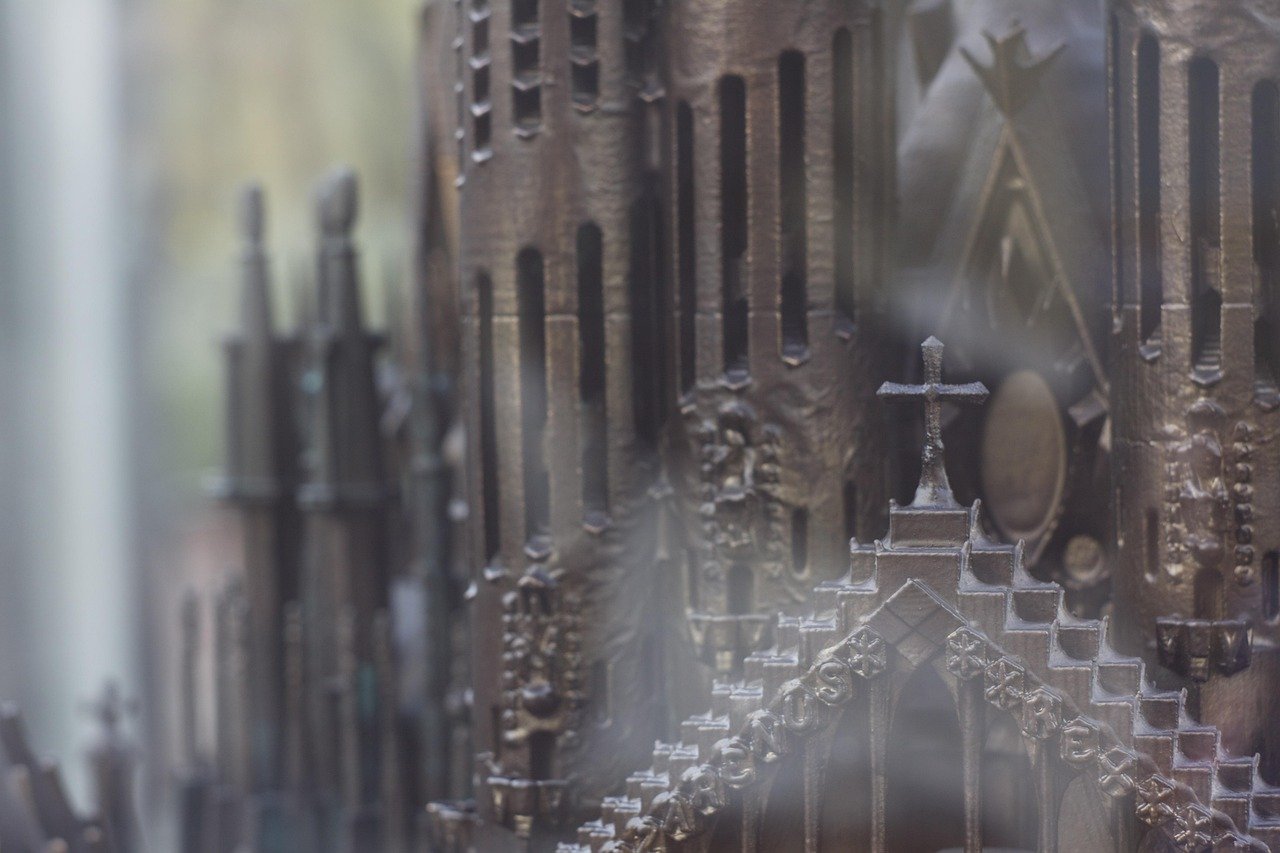
The story of Torre Bellesguard begins not with Gaudí but with a medieval king. In the early fifteenth century, King Martin I of Aragon — known as Martin the Humane — chose this hilltop retreat above Barcelona as the site for his summer court. He named it “Bellesguard,” a Catalan phrase meaning “beautiful view,” a name that remains entirely justified today. The king’s palace became a centre of culture and power during the final years of the Crown of Aragon’s original dynasty. When Martin I died in 1410 without an heir, the House of Barcelona was extinguished, and the royal estate fell into ruin. For nearly five centuries, only crumbling Gothic walls remained atop the hill, slowly being reclaimed by vegetation and the quiet of the forest above the city.
In 1900, Antoni Gaudí was commissioned by the Figueras family to design a new residence on the historic site. Gaudí approached the project with unusual reverence. Rather than clearing the medieval ruins, he incorporated them into his design, treating the remnant Gothic stonework as sacred ground. He spent considerable personal effort arranging the acquisition of the property and ensuring the site’s historical significance was understood and preserved. The result was a building unlike any of his other commissions — less exuberant than Park Güell or the Sagrada Família, more restrained and more deeply rooted in Catalonia’s medieval soul. Gaudí designed Bellesguard during his neo-Gothic period, but the structure is far from a mere imitation of medieval forms. It is a creative reinterpretation: traditional pointed arches meet innovative brick vaulting, and hand-cut stone blends with pioneering structural experimentation. The tower was completed in 1909, and the Figueras family has remained its steward ever since, opening it to the public in recent decades as one of Barcelona’s most rewarding hidden landmarks.
What to See at Torre Bellesguard
The Dragon Facade and Medieval Ruins
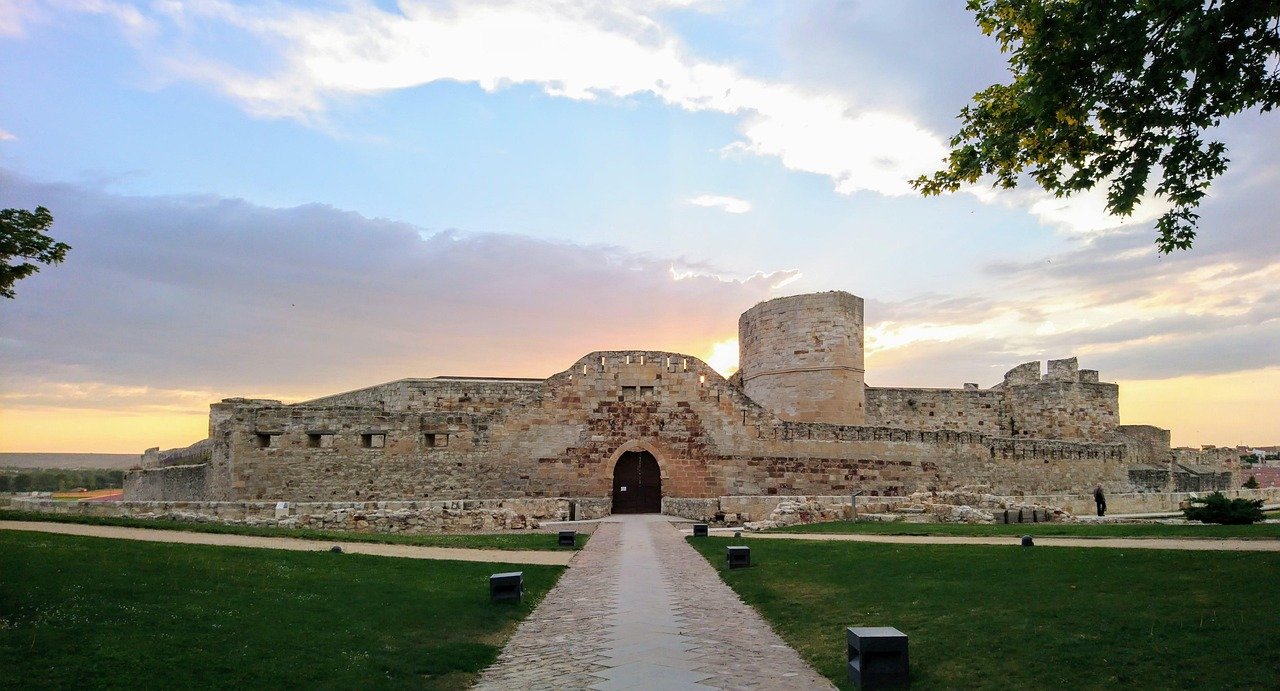
The first and most dramatic impression of Torre Bellesguard comes from the exterior, where Gaudí crafted a facade that functions as an elaborate visual narrative of Catalan mythology. Look carefully at the front elevation and a dragon’s face begins to emerge from the stonework: narrow pointed windows form the creature’s eyes, the arched entrance suggests a snout, and the jagged roofline traces the spine of a great beast. At the very top of the octagonal tower, rising more than thirty metres above the hillside, a four-armed Gaudí cross is positioned like Saint George’s lance piercing the dragon — a direct reference to the patron saint of Catalonia. This layered symbolism rewards slow, attentive observation. Near the entrance, visitors can also examine the preserved remains of the original fifteenth-century Gothic palace. These ancient stones, carefully integrated into the landscape rather than swept away, make Bellesguard unique among Gaudí’s works. You are not simply visiting a modernist building but standing within a living archaeological site where royal Aragonese history literally underlies the foundations of architectural genius. The grounds also feature a striking viaduct with nine catenary arches supported by distinctive elephant-leg pillars — a structural device Gaudí would refine and deploy later at Casa Batlló and La Pedrera. Walking this viaduct offers early glimpses of how Gaudí thought in curves and organic forms long before those ideas fully flowered in his most celebrated buildings.
The Vestibule, Attic and Interior Spaces
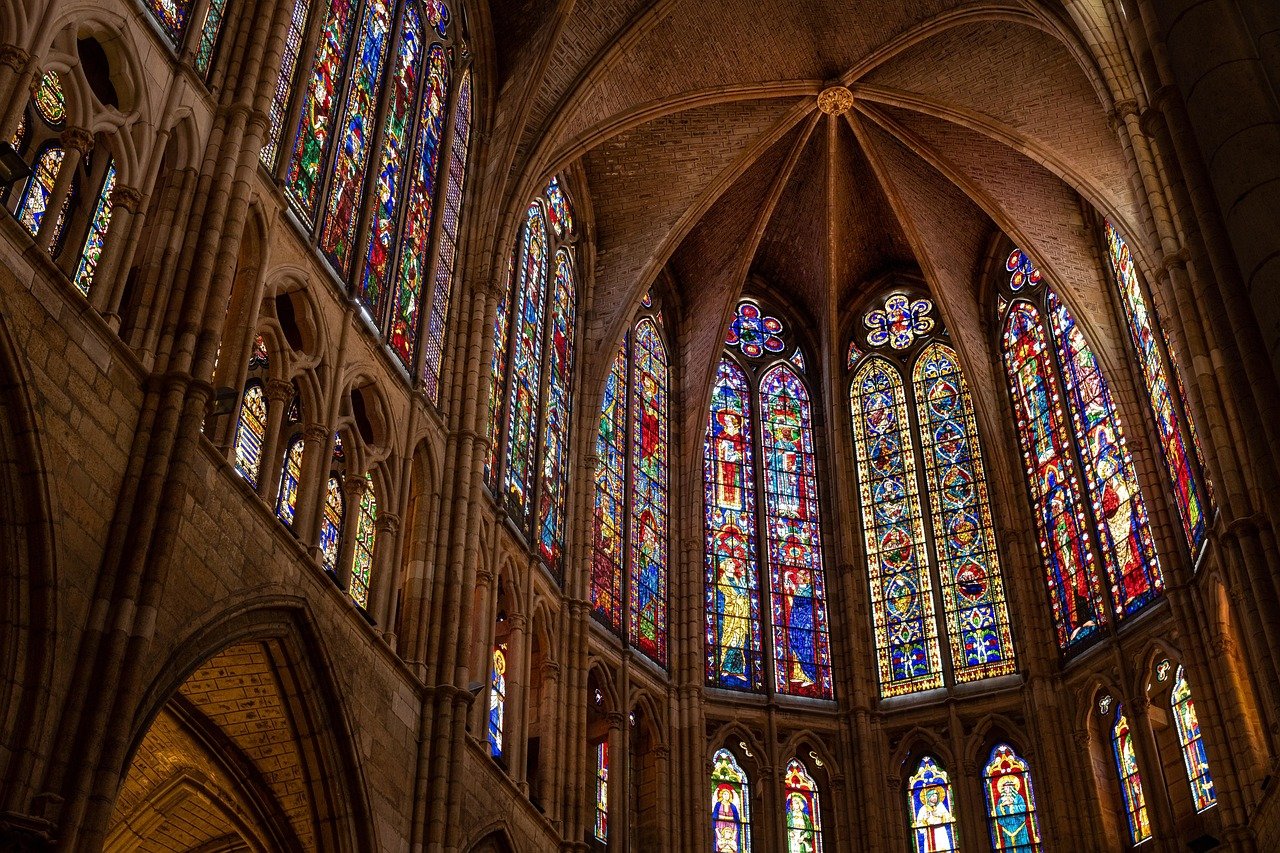
Stepping inside Torre Bellesguard is to enter one of the most richly detailed interiors in all of Barcelona. The vestibule immediately announces the building’s dual personality: tiled walls decorated with roosters and heraldic lions speak to medieval Catalonia, while a spectacular Star of Venus window — a geometric composition in coloured glass — floods the space with shifting, jewel-toned light that Gaudí himself described as “ephemeral paintings of God.” The stained-glass panels throughout the house were designed to capture sunlight at different hours of the day, transforming the interior into a living canvas of colour as the sun moves across the Collserola hillside. Higher up, the attic known as the Hall of Bricks is one of the architectural revelations of the visit. Here, Gaudí deployed red brick in a series of parabolic arches and mushroom-shaped pillars that create an extraordinary, almost forest-like canopy overhead. The acoustic properties of this space are exceptional — sound behaves strangely and beautifully within the curved brick vaults, and guides often demonstrate the effect. This attic was Gaudí’s laboratory: the structural techniques he pioneered here, including the hyperbolic paraboloid vaulting, were later applied on a grander scale at Casa Milà. The ceilings throughout the building feature scalloped, lobed forms inspired by Mudéjar Islamic architecture, another reminder of the complex cultural heritage Gaudí drew upon in composing this singular work.
The Rooftop and City Views
The climb to the rooftop of Torre Bellesguard is the experiential culmination of the visit. Ascending the narrow spiral staircase inside the octagonal tower, visitors emerge onto a battlemented terrace that commands a sweeping 360-degree panorama over Barcelona. To the south, the city spreads in a vast urban mosaic stretching all the way to the Mediterranean, with the Sagrada Família unmistakable on the skyline. To the north, the pine forests of the Collserola Natural Park create a green horizon. This is precisely the “beautiful view” that inspired King Martin I to establish his court here over six centuries ago, and it remains just as compelling today. The rooftop also offers the best close-up perspective on Gaudí’s four-armed cross and the intricate trencadís mosaic work that decorates the tower’s crown — broken ceramic tiles arranged into shimmering, jewel-like patterns that are a hallmark of Gaudí’s mature style. The whispering bench in the front garden below is another detail worth experiencing: positioned to exploit the natural acoustic properties of the surrounding stone, it allows whispered conversations across surprising distances, a playful hidden feature that delights visitors of all ages.
Local Insights

Visiting Torre Bellesguard well takes a little planning. Here are the tips that make the biggest difference to your experience.
- Book the guided tour, not just the audioguide. At EUR 20 per person, the live guided tour costs more than the EUR 12 audioguide option, but the guides at Bellesguard are exceptionally knowledgeable and bring details to life — particularly in the attic and on the rooftop — that recorded audio simply cannot replicate. Groups are kept small, so the experience feels personal and unhurried.
- Arrive early, especially in summer. Torre Bellesguard opens at 10am Tuesday through Sunday. The morning light through the stained-glass vestibule windows is at its most spectacular in the first hour, and the site is significantly quieter before 11am. Midday visits in summer can feel crowded by comparison, despite this being one of Barcelona’s least-known major Gaudí works.
- Wear comfortable shoes with grip. The property includes gravel pathways, narrow medieval stone stairways inside the tower, and an uneven rooftop terrace. There is no elevator on site. Visitors with mobility limitations should confirm accessibility options when booking, as some areas of the building may be inaccessible.
- Combine with a trip to Park Güell. Both sites sit in the northern hills above central Barcelona and can be visited in the same half-day. Torre Bellesguard is about a 20-minute bus or taxi ride from Park Güell’s main entrance. Seeing these two works side by side reveals the full range of Gaudí’s architectural imagination — from Bellesguard’s restrained medievalism to Park Güell’s exuberant colour.
- Check the closure calendar before booking. Torre Bellesguard is closed on Mondays and on January 1, January 6, December 25, and December 26. It also occasionally closes for private events and film shoots. The official website at bellesguardgaudi.com always reflects current availability, and advance booking is strongly recommended as daily capacity is limited.
Planning Your Visit
- Tickets: Audioguide visit EUR 12 (adults), EUR 9 (under 18 and retired), free for children under 8. Guided tour EUR 20 (adults), EUR 15 (under 18 and retired). Special “Spaces of Power” guided tour EUR 25. Purchase tickets online at bellesguardgaudi.com.
- Opening hours: Tuesday to Sunday, 10:00am to 3:00pm. Closed on Mondays and on January 1, January 6, December 25, and December 26.
- Best time: Tuesday or Wednesday mornings between 10:00am and 11:30am for the smallest crowds and the best morning light through the stained-glass windows. Spring (April to June) and autumn (September to October) offer pleasant weather for the rooftop and garden areas.
- Duration: Allow 1 to 1.5 hours for the audioguide visit and up to 2 hours for the full guided tour, including the rooftop and garden. The Spaces of Power tour runs approximately 2.5 hours.
- Booking: Advance booking strongly recommended as daily visitor numbers are capped. Book online at bellesguardgaudi.com; same-day walk-up tickets are sometimes available but not guaranteed.
Getting There
- Metro/FGC train: Take the FGC L7 line from Placa Catalunya to Av. Tibidabo station, then board Bus 196 toward the Bellesguard stop. Total journey approximately 30 minutes from central Barcelona.
- Bus/Tram: Lines V13, V15, 123, and 196 all serve the Bellesguard area from various points in the city. Check TMB’s journey planner for current routes and frequencies.
- On foot: A pleasant but steep 25-minute uphill walk from the FGC Av. Tibidabo station through the residential Sarria-Sant Gervasi neighbourhood. Not advisable in summer heat or for visitors with mobility limitations.
- Taxi/ride-share: The most straightforward option from central Barcelona. A taxi from Placa Catalunya costs approximately EUR 12 to 15 and takes 15 to 20 minutes depending on traffic. Uber and Cabify also serve the address at c/Bellesguard 20, 08022 Barcelona.
Frequently asked questions
Is Torre Bellesguard worth visiting if I have already seen the Sagrada Familia and Park Güell?
Absolutely, and arguably more so. Torre Bellesguard shows a completely different side of Gaudí — restrained, historically grounded, and deeply personal rather than spectacular and monumental. Where the Sagrada Família is about grandeur and Park Güell is about colour and play, Bellesguard is about intimacy and history. The building’s scale allows you to appreciate Gaudí’s structural inventions — catenary arches, parabolic vaults, trencadís mosaics — at close range and without the enormous crowds that define Barcelona’s other Gaudí landmarks. It is a more contemplative and intellectually rewarding experience that Gaudí enthusiasts consistently rate as one of their most memorable Barcelona visits.
Can children visit Torre Bellesguard?
Yes, and the building tends to fascinate children who enjoy hunting for the dragon hidden in the facade, exploring the atmospheric attic vault, and discovering the whispering bench in the garden. However, parents should note that there is no elevator, that staircases are narrow and steep in places, and that gravel paths and uneven stone surfaces require sturdy footwear. Children under 8 enter free of charge. The guided tour is generally more engaging for families with curious children than the self-guided audioguide option, as guides can tailor their storytelling to younger audiences.
How does Torre Bellesguard differ architecturally from Gaudi’s other Barcelona buildings?
Torre Bellesguard represents Gaudí’s neo-Gothic period, a phase of his career that preceded the more fluid naturalism of his mature works. The building is more angular, more historically referential, and more deliberately austere than Casa Batlló, La Pedrera, or the Sagrada Família. Yet it is also a technical laboratory: the parabolic brick arches in the attic and the catenary viaduct in the garden were structural experiments that Gaudí refined and deployed at much larger scale in his subsequent commissions. Understanding Bellesguard gives visitors a richer grasp of how Gaudí’s architectural thinking evolved, and why each of his buildings feels like a progression rather than a repetition of what came before.
Is photography allowed inside Torre Bellesguard?
Photography for personal use is permitted throughout Torre Bellesguard, both inside the building and on the rooftop. There are no restrictions on cameras or smartphones, and the stained-glass windows, attic brickwork, and rooftop panorama all offer exceptional photographic subjects. Professional photography and filming for commercial purposes requires prior arrangement with the Figueras family administration and may involve additional fees. The building is occasionally rented as an exclusive filming location, which can result in partial or full closure to regular visitors — checking the website before your visit is always advisable.