
Taling Chan Floating Market 💎 Hidden Gem
On weekend mornings, wooden boats loaded with fresh fruit, grilled squid, and steaming bowls of noodles drift slowly through the klongs (canals) of Taling Chan, their vendors manoeuvring by long bamboo poles with the casual expertise of people who have spent their lives on water. On the banks, plastic tables are set up over the water on stilts, locals eat pad kra pao and drink Singha, and the whole scene has none of the staged quality of Bangkok’s more famous tourist markets. Taling Chan is a real, functioning community floating market — and the fact that it hasn’t been polished for Instagram is exactly what makes it good.
History of Taling Chan Floating Market
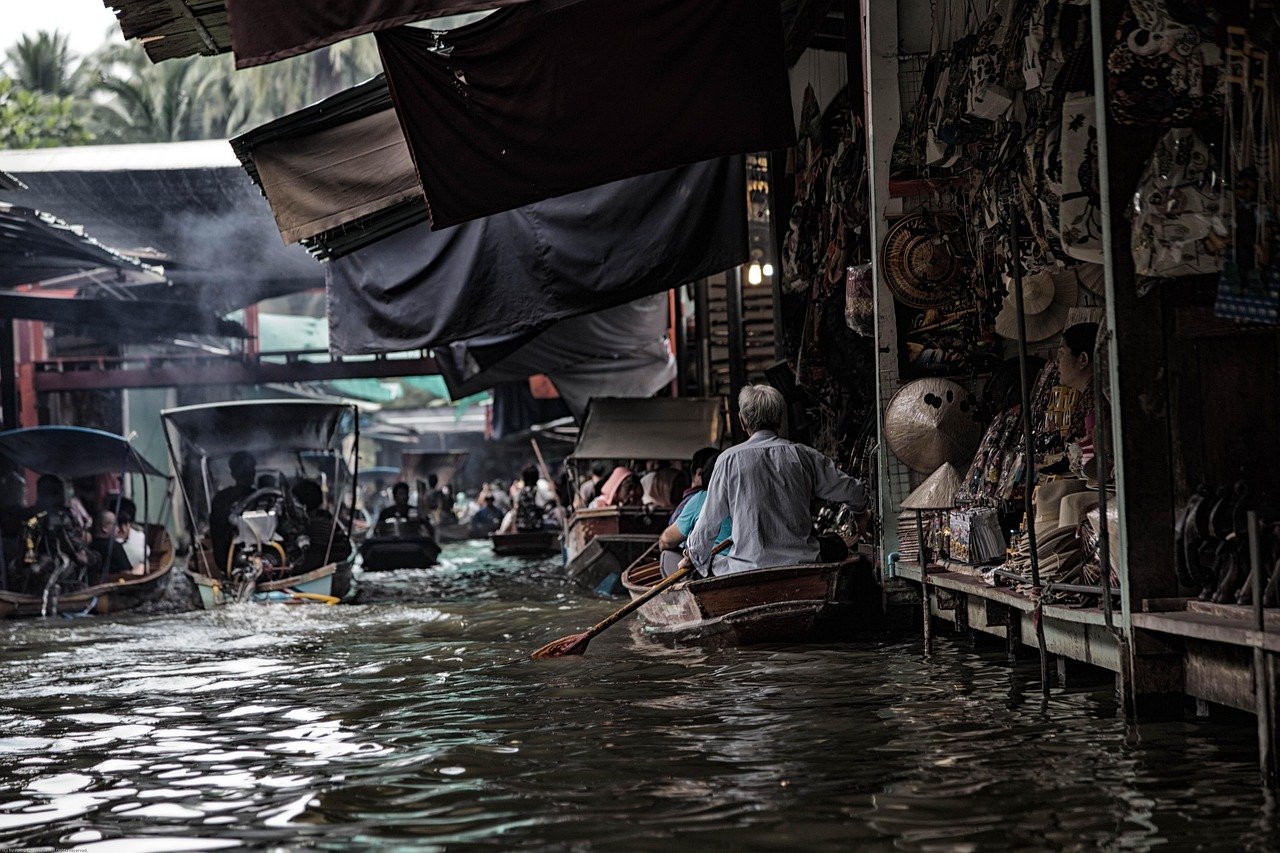
Taling Chan District lies on the western (Thon Buri) side of Bangkok, a short distance from the Chao Phraya River along the canal network that once served as the city’s primary transportation grid. Bangkok was built on this canal system, and the Thon Buri side of the river retained its water-based character long after the eastern bank modernised. The area around Taling Chan remained a semi-rural community of orchards, vegetable gardens, and small-scale fisheries well into the late 20th century, with the canal market serving as the neighbourhood’s main commercial hub.
The Taling Chan Floating Market as a visitor attraction developed organically from this existing canal commerce rather than being purpose-built for tourism. Unlike Damnoen Saduak — the heavily touristed floating market 100 kilometres from Bangkok, where boat-to-boat selling is theatrical but products are tourist-oriented — Taling Chan operates as a genuine local market where Bangkok families come on weekend mornings to buy fresh produce, eat breakfast and lunch by the water, and browse the plant and gardening stalls that fill the covered section near the entrance. This dual identity as both local institution and visitor attraction gives it a credibility most floating market alternatives lack.
What to See and Do
The market is open Saturday and Sunday from 08:00 to 16:30. The covered section near the entrance is dominated by plant nursery vendors — orchids, bonsai, and tropical houseplants fill the space in extraordinary profusion. This is where many Bangkok families come primarily, and the selection and prices are far better than anything available in the city’s garden centres. Beyond the plant section, the market opens onto the canal where the floating element begins: wooden boats drift slowly along the water, selling fresh seafood, tropical fruit, sticky rice desserts, grilled corn, and cooked-to-order pad thai directly from small charcoal stoves on the boat’s stern.
Tables and chairs are set up on wooden platforms over the canal water, and the most pleasurable way to spend time at Taling Chan is to settle at one of these water-level tables, order food from the passing boats (prices are negotiated directly with the vendors and paid immediately), and watch the canal traffic. Canal tours departing from the market pier allow deeper exploration of the surrounding Thon Buri klong network — wooden houses on stilts, orchid farms, and small Buddhist temples rising from the water’s edge, all within 10 kilometres of central Bangkok but feeling entirely removed from it.
The Klong Network
The canal tour from Taling Chan is genuinely one of Bangkok’s best-value experiences. Small long-tail boats seating 6–10 passengers depart from the market’s pier and navigate a circuit of the surrounding klong network. The route passes through communities that existed before Bangkok became a megacity — orchards where pomelo, banana, and jackfruit hang over the water, small wooden houses with spirit houses at their corners, monks walking the dawn alms route along waterside paths, and cats watching from stilted porches with the authority of long-established residents.
The contrast with the Bangkok of expressways and shopping malls, visible in glimpses through gaps in the treeline, makes the canal experience particularly powerful. The surviving klong communities are under constant pressure from development — land values in the Thon Buri area have risen dramatically, and canal-front properties are being steadily replaced by condominium towers. Visiting Taling Chan and its surrounding waterways is an opportunity to see a way of life that has sustained this city for centuries and is slowly but steadily disappearing.
Practical Information
- Tickets: Free market entry; boat tour approx. 600–800 THB per boat (shared among passengers)
- Opening hours: Saturday and Sunday only, 08:00–16:30
- Best time to visit: Arrive by 09:00 for the freshest produce and before crowds peak; the plant section is quieter early morning
- Duration: 1.5–2 hrs for the market; 2–3 hrs including a 1-hr canal tour
- Booking: No advance booking required; canal tours negotiated at the pier on arrival
Local Insights

What locals know that guidebooks don’t always tell you:
- Cash only — there are no ATMs at the market. Bring THB in small denominations for buying food from boat vendors.
- The free electric shuttle bus from Bang Khun Non MRT station stops directly at the market entrance — this is the easiest and cheapest way to arrive from the city.
- The boat-side food at water level is notably cheaper than the land-based stalls near the entrance. Settle at a canal table and let the boats come to you.
- If you plan a canal tour, negotiate the price per boat (not per person) before boarding and agree on the duration. A 1-hour circuit is standard; ask for a 1.5-hour extended route to reach the orchid farms and traditional stilt houses.
- Taling Chan is a viable alternative to Damnoen Saduak for most visitors — closer to Bangkok (12 km vs. 100 km), cheaper to reach, and more authentic in atmosphere. If you’ve limited time, Taling Chan is the better choice.
Getting There
- MRT + shuttle: MRT to Bang Khun Non station → free electric shuttle bus directly to the market (most convenient)
- Bus: AC bus 79 from Bangkok city centre to market entrance (approx. 45 min depending on traffic)
- Taxi/Grab: 150–350 THB from downtown Bangkok depending on departure point, 15–30 min
- BTS + taxi: BTS to Wongwian Yai Station, then taxi to market
Frequently asked questions
Is Taling Chan open on weekdays?
No. Taling Chan Floating Market operates exclusively on Saturdays and Sundays (and some public holidays). It is closed Monday through Friday. Plan your visit accordingly.
How does Taling Chan compare to Damnoen Saduak?
Taling Chan is more authentic, far closer to Bangkok, and significantly less expensive to reach. Damnoen Saduak is larger, more famous, and more heavily organised for tourism — the experience there can feel staged. For most visitors, Taling Chan is the better choice unless you specifically want the classic tourist floating market experience.
What food is available at Taling Chan?
Grilled seafood, pad thai, noodle soups, green curry, sticky rice desserts, fresh fruit, grilled corn, and som tam (papaya salad) are all available. The quality is generally excellent and prices are lower than comparable Bangkok restaurants.
Can I buy plants at Taling Chan?
Yes. The plant section near the entrance is extensive, with orchids, tropical houseplants, herbs, and bonsai at competitive prices. Purchasing plants for international travel is subject to phytosanitary regulations — check requirements for your destination before buying.
How long should I plan for a visit?
Allow 1.5–2 hours for the market alone, or 2.5–3 hours if you add a canal tour. The market is most pleasant in the morning before the midday heat builds.