
Sugarloaf Mountain (Pao de Açúcar)
Sugarloaf Mountain rises dramatically 395 metres above the entrance to Guanabara Bay, forming one of the most recognisable silhouettes in the world and offering what many consider the finest urban panorama on earth. From the summit, the entire sweep of Rio de Janeiro unfolds below: the curving beach of Copacabana, the statue of Christ the Redeemer on Corcovado, the islands of Guanabara Bay, and the vast Atlantic Ocean stretching to the horizon.
History of Sugarloaf Mountain
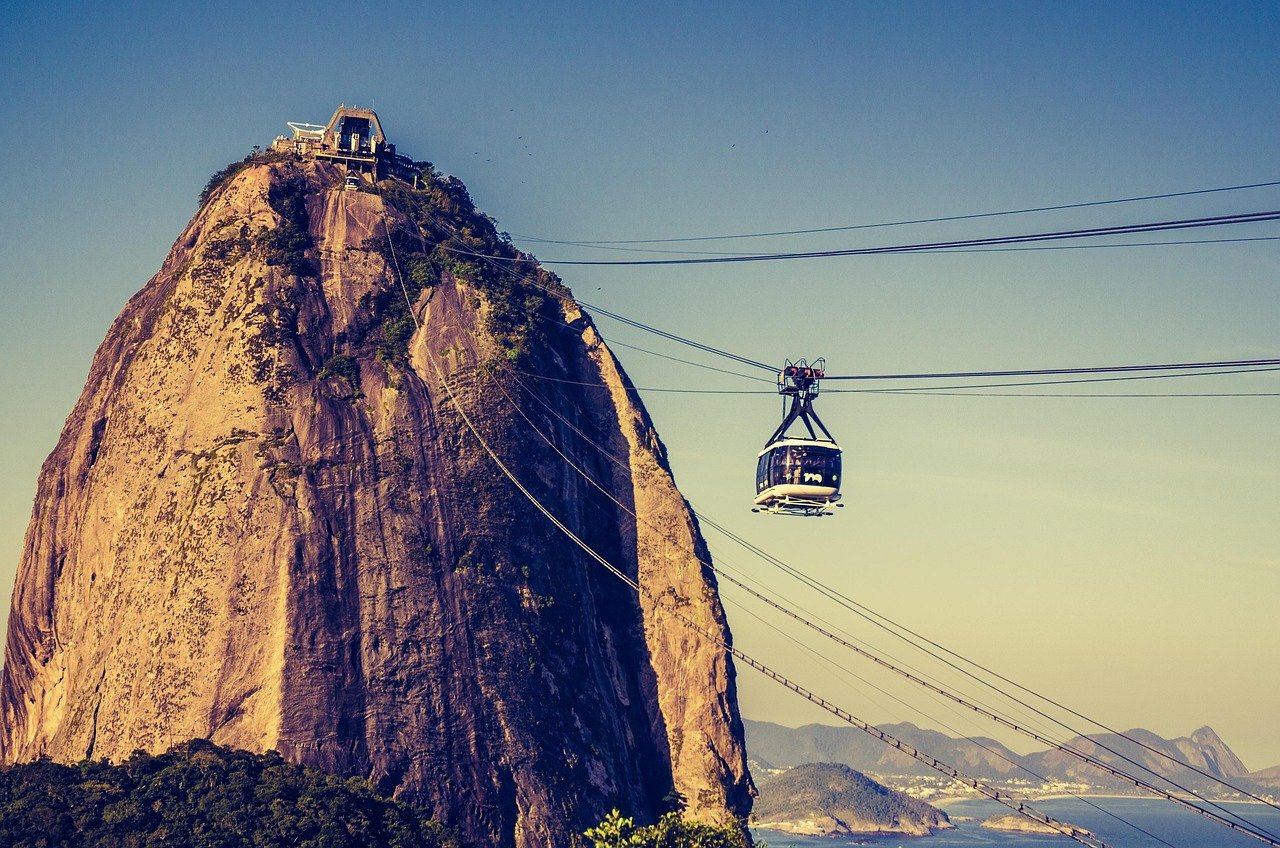
The mountain was known to the Tupi indigenous people as Pau-nh-acuqua and has been a landmark for sailors entering Guanabara Bay since Portuguese explorer Gaspar de Lemos first mapped the area in 1502. The Portuguese built a fort on the mountain as early as 1578 to defend the bay against rival European powers. The name Sugarloaf derives from the mountain resemblance to the conical molds used to refine sugar during the colonial era.
The first cable car system connecting the city to Morro da Urca and then to the summit was inaugurated in 1912, making it one of the earliest aerial tramways in the world. The current cable cars, installed in 1972, can carry up to 1,360 passengers per hour. The mountain gained global fame as a filming location for the 1979 James Bond film Moonraker, in which a dramatic fight scene takes place on the cable car.
What to See at the Summit
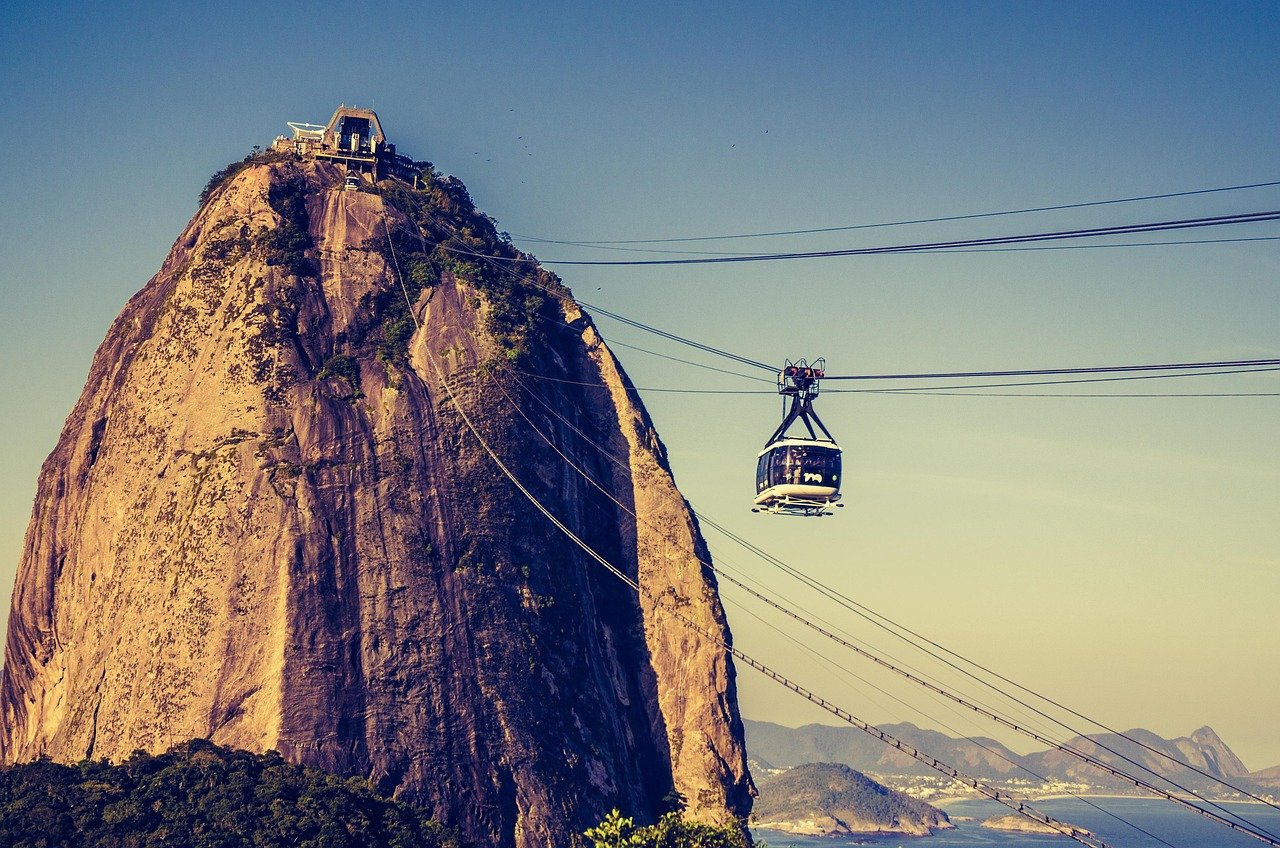
The journey to the summit takes place in two stages. The first cable car travels from the base station in Urca to the intermediate station on Morro da Urca at 215 metres, where there is a restaurant, outdoor terraces, and spectacular views across the bay. The second cable car then continues to the summit of Sugarloaf itself at 395 metres.
At the summit, visitors can walk along well-maintained paths to viewpoints in every direction. The view west takes in Corcovado with Christ the Redeemer, while the view south looks over Copacabana and the Atlantic Ocean. Sunset from the summit is one of the most celebrated experiences in Rio de Janeiro, when the city below glows golden and the sky behind Corcovado turns spectacular shades of orange and pink.
The Natural Environment and Urca Neighbourhood
The mountain is surrounded by Atlantic Forest vegetation and is home to a variety of bird species including marmosets, toucans, and colourful tanagers that are often seen feeding at the cable car stations. The rock face itself is a formation of quartz syenite, a type of granite sculpted over millions of years into its distinctive rounded shape by erosion.
The surrounding Urca neighbourhood at the base of the mountain is one of the most peaceful areas of Rio de Janeiro, with colourful colonial-era buildings, a famous wall along the bay where cariocas gather at sunset to socialise, and some of the best seafood restaurants in the city.
Practical Information
- Tickets: Adult tickets approximately BRL 130-150 (approx. USD 25-30); children aged 5-15 half price; under 5 free
- Opening hours: Cable cars run daily 8am-9pm; last ascent approximately 8:30pm
- Best time to visit: Late afternoon before sunset for the most spectacular light; avoid midday heat and peak crowds
- Duration: 2-3 hours including the cable car journey and time at both intermediate and summit stations
- Booking: Book tickets in advance online at bondinho.com.br to avoid long queues, especially in summer and on weekends
Local Insights
What cariocas and long-term Rio visitors always recommend:
- Go on a clear weekday afternoon for the best visibility and smallest crowds – the mountain can be shrouded in cloud
- The intermediate station at Morro da Urca is less visited than the summit but has excellent views worth spending time at
- Bring a jacket even in summer – the wind at the summit can be surprisingly strong and cold
- The Urca neighbourhood at the base is perfect for a seafood lunch before or after your visit
- Consider combining with a morning visit to Christ the Redeemer for a full day of Rio iconic sights
Getting There
- Bus: Lines 107 and 512 from Copacabana; line 511 from Ipanema stop near the cable car base station in Urca
- Taxi or Uber: Ask for Bondinho do Pao de Acucar; approximately 15 minutes from Copacabana
- Hiking trail: There is a hiking trail to the summit for those who prefer to climb and take the cable car down
- Metro: No direct Metro connection; take Metro to Botafogo then bus or taxi to Urca
Frequently asked questions
Can I hike up to Sugarloaf Mountain instead of taking the cable car?
Yes – there is a hiking trail through Atlantic Forest to the base of the sheer rock face, from where you take the cable car. The hike takes approximately 45-60 minutes and is moderately challenging.
Is Sugarloaf Mountain worth visiting in cloudy weather?
The views are significantly reduced in cloudy conditions, and the mountain is sometimes completely shrouded in cloud. Check the weather forecast before booking and consider postponing your visit if the summit is covered.
How long does the cable car journey take?
Each stage of the cable car journey takes approximately 3 minutes. Including waiting time at each station and the journey itself, allow about 30-45 minutes for the round trip by cable car alone.
What is the best time of day to visit Sugarloaf Mountain?
Late afternoon, arriving about 2 hours before sunset, offers the best light for photography and the opportunity to watch the sunset from the summit. The cable cars run until 9pm so you can also experience the city at night.
Are there restaurants at Sugarloaf Mountain?
Yes – there is a restaurant at the intermediate station on Morro da Urca that serves Brazilian food and drinks. There is also a bar at the summit station with panoramic views.