
Sphinx (Great Sphinx of Giza)
It has watched empires rise and collapse, been buried to its neck in desert sand for millennia, lost its nose to unknown hands, and survived the modern tourist age mostly intact. The Great Sphinx of Giza has been staring east across the plateau for approximately 4,500 years, and there is still no definitive answer to some of the most basic questions about it: exactly who built it, precisely when, and what it was originally meant to represent. That quality of unresolved mystery, coexisting with the Sphinx’s massive physical presence on the Giza Plateau, is what makes it one of the most compelling ancient monuments on earth ? not simply a famous rock to be photographed, but a genuine enigma wearing a human face and a lion’s body.
History of the Great Sphinx of Giza
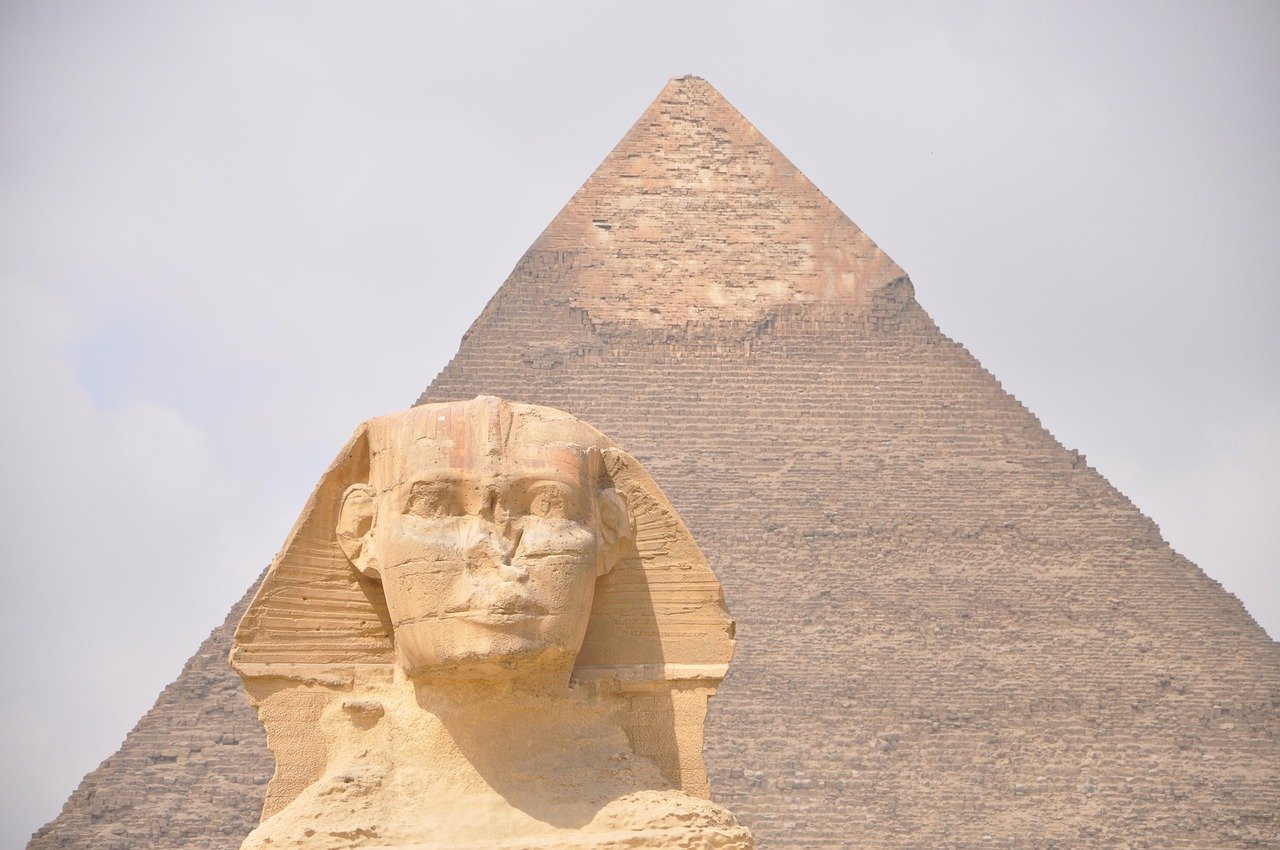
The mainstream scholarly consensus holds that the Sphinx was carved during the reign of Pharaoh Khafre, around 2530 BCE, which would align it with Khafre’s pyramid complex immediately to the southwest. The strongest evidence for this date is the Sphinx’s alignment with the Khafre causeway and the presence of the Sphinx Temple ? built from the same stone and in the same style as Khafre’s valley temple. The face of the Sphinx is generally believed to be a portrait of Khafre himself in the guise of a sun deity. However, no inscription contemporary with its construction has ever been found explicitly attributing the Sphinx to Khafre, which has kept alive alternative theories. Some researchers have proposed an earlier date based on weathering patterns in the limestone bedrock, though this remains a minority position not accepted by mainstream Egyptology.
The Sphinx’s history after its construction is a story of repeated burial and rediscovery. The desert sand, relentlessly advancing from the west, buried the monument periodically throughout antiquity. Around 1400 BCE, a young prince named Thutmose ? later to become Pharaoh Thutmose IV ? is said to have fallen asleep in the shadow of the partially buried Sphinx and dreamed that the god Horemakhet (the Sphinx’s divine identity as “Horus on the Horizon”) promised him the throne of Egypt if he would clear the sands. Thutmose did become pharaoh, and he had the Sphinx excavated and placed a pink granite Dream Stela between its front paws to record the vision. The Stela is still there today, though partially damaged, and it is one of the Sphinx’s most historically fascinating details. The Greeks and Romans also found the Sphinx mysterious and revered it; Roman emperors including Nero reportedly visited. In the medieval period it was again buried to the neck, and its nose was almost certainly removed deliberately ? not by Napoleon’s troops as myth has it, but possibly by a 14th-century Sufi preacher offended by the monument’s continued veneration by local people.
What to See at the Great Sphinx
The Face and the Dream Stela
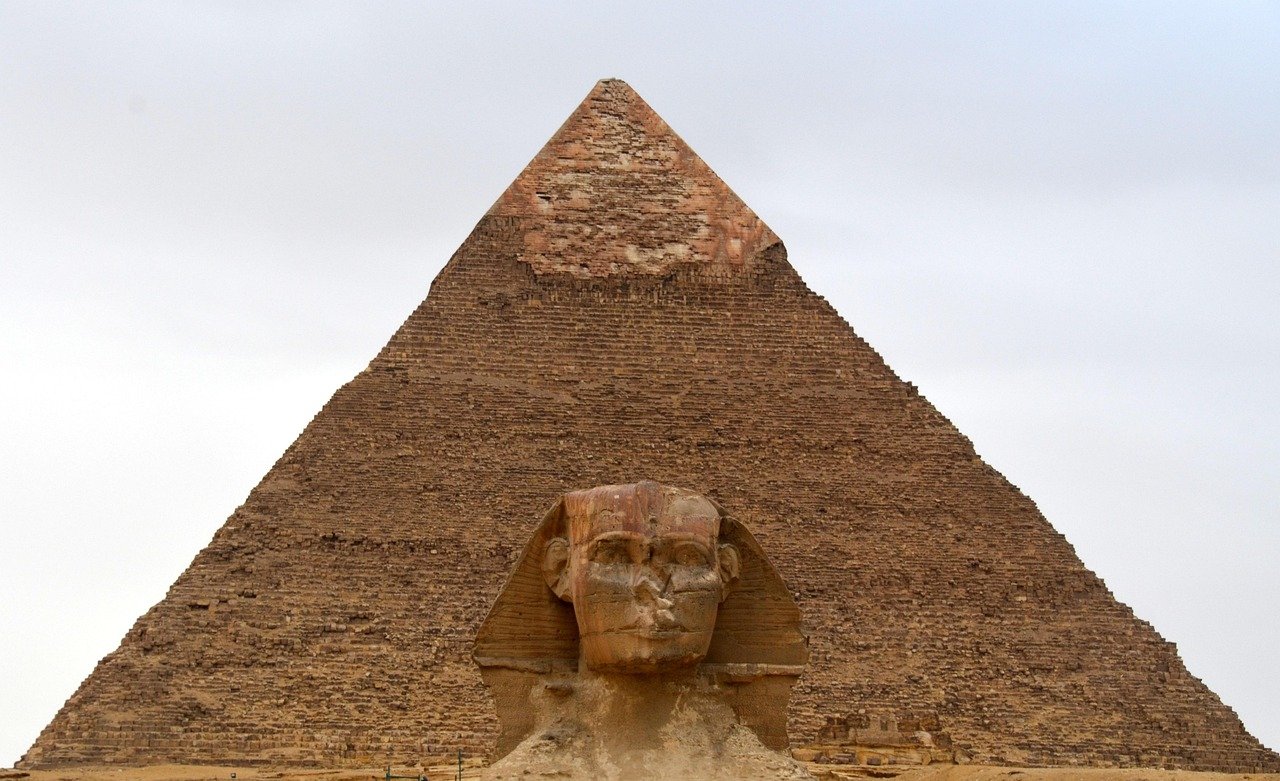
The Sphinx measures 73 metres long, 20 metres tall, and roughly 14 metres wide at the shoulders ? making it the world’s largest known monolithic statue, carved from a single outcrop of limestone bedrock. Its face, despite the missing nose and a beard (now in fragments split between the Cairo Museum and the British Museum), retains a quality of composed, watchful authority that no photograph fully communicates. The uraeus cobra headdress over the forehead is damaged but discernible, as is the remnant of the royal nemes headdress. Directly between the extended front paws, the Dream Stela of Thutmose IV stands several metres tall, its hieroglyphic text recording the prince’s vision and subsequent excavation ? one of the earliest documented restoration projects in history. Visitors can stand on a viewing terrace and walk along the flanks of the Sphinx, approaching close enough to examine the texture of the limestone and the repair stonework ? ancient Egyptian patches, more recent 19th-century repairs, and ongoing modern conservation work all visible in layers.
The Sphinx Temple and Conservation Work
Immediately in front of the Sphinx lies the Sphinx Temple, a substantial Old Kingdom structure built from the core limestone blocks quarried from the enclosure during the Sphinx’s creation ? the same stone, in essence. The temple was never completed or dedicated, and its purpose remains unclear, though it aligns with the rising and setting sun at the equinoxes in a way that suggests astronomical significance. Adjacent to the Sphinx Temple is Khafre’s Valley Temple, a better-preserved structure with massive granite-cased walls and a floor once polished to a mirror finish. The Valley Temple contained 23 diorite statues of Khafre, several of which survived and are now in the Cairo Museum ? including the famous seated statue of Khafre with the Horus falcon embracing his head, considered one of the masterpieces of ancient Egyptian art. Conservation of the Sphinx itself is ongoing: modern 3D laser scanning and photogrammetry completed in recent years guides targeted repair of the limestone substrate, which is vulnerable to rising groundwater, wind erosion, and the sheer volume of visitors in the enclosure.
Viewing Angles and Photography
The Sphinx sits in a roughly rectangular enclosure, and the primary viewing areas are the terraces to the north and the lower platform directly in front of the face. The most photographed angle ? the Sphinx face with the pyramid of Khafre rising directly behind it ? is taken from the northeastern viewing terrace. A slightly different angle from the south shows the Sphinx in profile with both the Khafre and Khufu pyramids behind it, which can make for a more dramatic composition with a longer lens. Early morning light (7?9 am) strikes the Sphinx’s face directly from the east, bathing it in warm golden tones, while late afternoon creates dramatic shadows and silhouettes. The famous sunset view of the Sphinx with the pyramid behind it requires positioning near the northeast terrace around 30 minutes before local sunset time.
Local Insights
The Sphinx is included in the general plateau admission and does not require a separate ticket, but making the most of the visit takes some planning. Here is what to know before you go:
- The Sphinx is best approached in the late morning after the pyramids. Most organized tour groups visit the Sphinx first (it is closest to the old entrance). If you arrive at opening time and head to the pyramids first, you will find the Sphinx viewing terrace considerably less crowded when you reach it an hour or two later. The light is also more interesting after 9 am when it illuminates the face from a higher angle.
- The Sound and Light Show at the Sphinx is genuinely atmospheric. Held several evenings per week, the show projects colored lights onto the pyramids and Sphinx while a recorded narration tells Egyptian history ? starting around 7:30 pm. Tickets start from around $20 USD and are bookable through the Egyptian Ministry of Tourism. It is theatrical rather than scholarly, but seeing the illuminated Sphinx against the night sky is worth the evening.
- You cannot touch or climb the Sphinx. The enclosure allows you to approach quite close ? close enough to see individual stone repair patches and the texture of the original limestone bedrock. But physical contact is prohibited, and guards enforce this consistently. The Dream Stela can be viewed closely from the lower terrace between the paws.
- The missing nose has a specific history. The persistent story that Napoleon’s artillery destroyed the nose is demonstrably false ? drawings from the 18th century already show the nose absent. The most credible theory attributes the damage to a medieval religious figure who reportedly broke it off to protest locals offering incense to the Sphinx as an idol. The act was recorded in a 15th-century account.
- Combine with Khafre’s Valley Temple for context. The Valley Temple, immediately adjacent to the Sphinx, is less visited but deeply impressive ? its massive granite-faced interior gives you a direct sense of Old Kingdom monumental architecture at human scale, and entry is included in your plateau ticket. The statues that stood here (now in Cairo’s Egyptian Museum) were among the finest ever produced in ancient Egypt.
Planning Your Visit
- Tickets: The Sphinx is included in the Giza Plateau entrance fee: 700 EGP (~$14 USD) for adults, 350 EGP for students with valid ID. No separate Sphinx ticket required. Sound and Light Show from $20 USD, bookable separately.
- Opening hours: Giza Plateau (including Sphinx enclosure) open daily 7:00 am ? 5:00 pm. Last entry approximately 4:00 pm. Sound and Light Show held several evenings per week, typically at 7:30 pm.
- Best time: October through April for comfortable temperatures. Visit the Sphinx 7?9 am for the best direct face lighting and smallest crowds. Late afternoon (4?5 pm) offers dramatic silhouette shots from the northeast terrace.
- Duration: Allow 30?60 minutes specifically for the Sphinx and adjacent temples. Most visitors see the Sphinx as part of a broader 3?4 hour plateau visit covering all three pyramids.
- Booking: No advance booking needed for Sphinx access ? it is part of the general plateau ticket. Sound and Light Show tickets can be reserved online through the Egyptian Tourism Authority.
Getting There
- Metro: Cairo Metro Line 2 to El-Giza station, then taxi or microbus to the plateau (approximately 20?25 minutes, 30?50 EGP). The Sphinx enclosure is on the eastern side of the plateau, relatively close to the old main entrance area.
- By car: Take Pyramids Road (Sharia Al-Haram) west through Giza. Since April 2025, the main visitor entrance is the Fayoum Desert Road gate. Parking available at the gate. GPS: 29.9773? N, 31.1325? E.
- On foot: Not feasible from central Cairo. From Giza Metro station, approximately 9 km ? practical only by bicycle.
- Taxi/ride-share: Uber and Careem are the most reliable options (120?200 EGP from central Cairo). Standard unmetered taxis are widely available but require pre-agreed fares. Ask to be dropped at the Fayoum Road main gate; the Sphinx is a short walk inside the plateau from the entry area.
Frequently asked questions
Who built the Great Sphinx of Giza?
The mainstream scholarly consensus attributes the Sphinx to Pharaoh Khafre, who built the second-largest pyramid at Giza around 2530 BCE. The strongest evidence is the Sphinx’s alignment with the Khafre causeway and the architectural similarities between the Sphinx Temple and Khafre’s Valley Temple. The face is widely believed to be a royal portrait of Khafre in the guise of the sun god Horemakhet. However, no inscription contemporary with the construction explicitly names Khafre as the builder, which has kept the attribution technically debated. Alternative theories proposing an earlier date ? sometimes tied to a hypothetical pre-dynastic civilization ? are not accepted by mainstream Egyptology.
Why does the Sphinx not have a nose?
The popular story that Napoleon’s troops shot off the nose with a cannon is historically false ? 18th-century sketches clearly show the nose already missing before Napoleon arrived in Egypt in 1798. The most credible account, based on a 15th-century Arabic historian, attributes the destruction to a Sufi religious figure named Muhammad Sa’im al-Dahr who broke the nose off around 1378 CE as an act of iconoclasm, reportedly in protest of local peasants making offerings to the Sphinx as a divine figure influencing the harvest. He was reportedly executed for the vandalism. The original nose would have been around 1.5 metres tall and is presumed lost.
What is the Dream Stela of the Sphinx?
The Dream Stela is a pink granite tablet standing between the Sphinx’s front paws, erected by Pharaoh Thutmose IV around 1400 BCE. The stela records a dream in which the young prince Thutmose fell asleep in the Sphinx’s shadow and received a divine message from Horemakhet ? the Sphinx’s identity as “Horus on the Horizon” ? promising him the throne of Egypt if he would clear away the sands that had buried the monument to its neck. Thutmose became pharaoh and honored the promise. The stela is one of the earliest documented records of a restoration or conservation project, and it gives us invaluable historical evidence that the Sphinx was already ancient and mysterious to the Egyptians themselves by the New Kingdom period.
Can you go inside the Great Sphinx?
No ? the Sphinx is solid limestone bedrock and does not have interior chambers accessible to visitors. There are small tunnels and cavities in the body, some of which were dug by treasure hunters in the medieval period, but none lead to significant interior spaces. Modern ground-penetrating radar surveys have detected some anomalies in the bedrock beneath the Sphinx and around its enclosure, which have fueled speculation about hidden chambers, but no confirmed cavity of significance has been found. The Sphinx enclosure itself is open and walkable, and visitors can approach closely on the north and south flanks to examine the stonework and repair layers from different historical periods.