
Saqqara (Sakkara)
Thirty kilometres south of Cairo, where the desert swallows the last of the city’s noise, the world’s oldest stone monument rises in six monumental steps against a blazing sky. Saqqara — or Sakkara — is not merely a collection of ruins. It is the birthplace of the pyramid itself, a 5,000-year-old necropolis where Egypt’s architects first dared to build in stone, where priests and nobles were interred in tombs lined with the most vivid paintings of everyday life, and where the genius of a single man named Imhotep changed the course of human history. Come here before Giza if you want to understand why the pyramids exist at all.
History of Saqqara
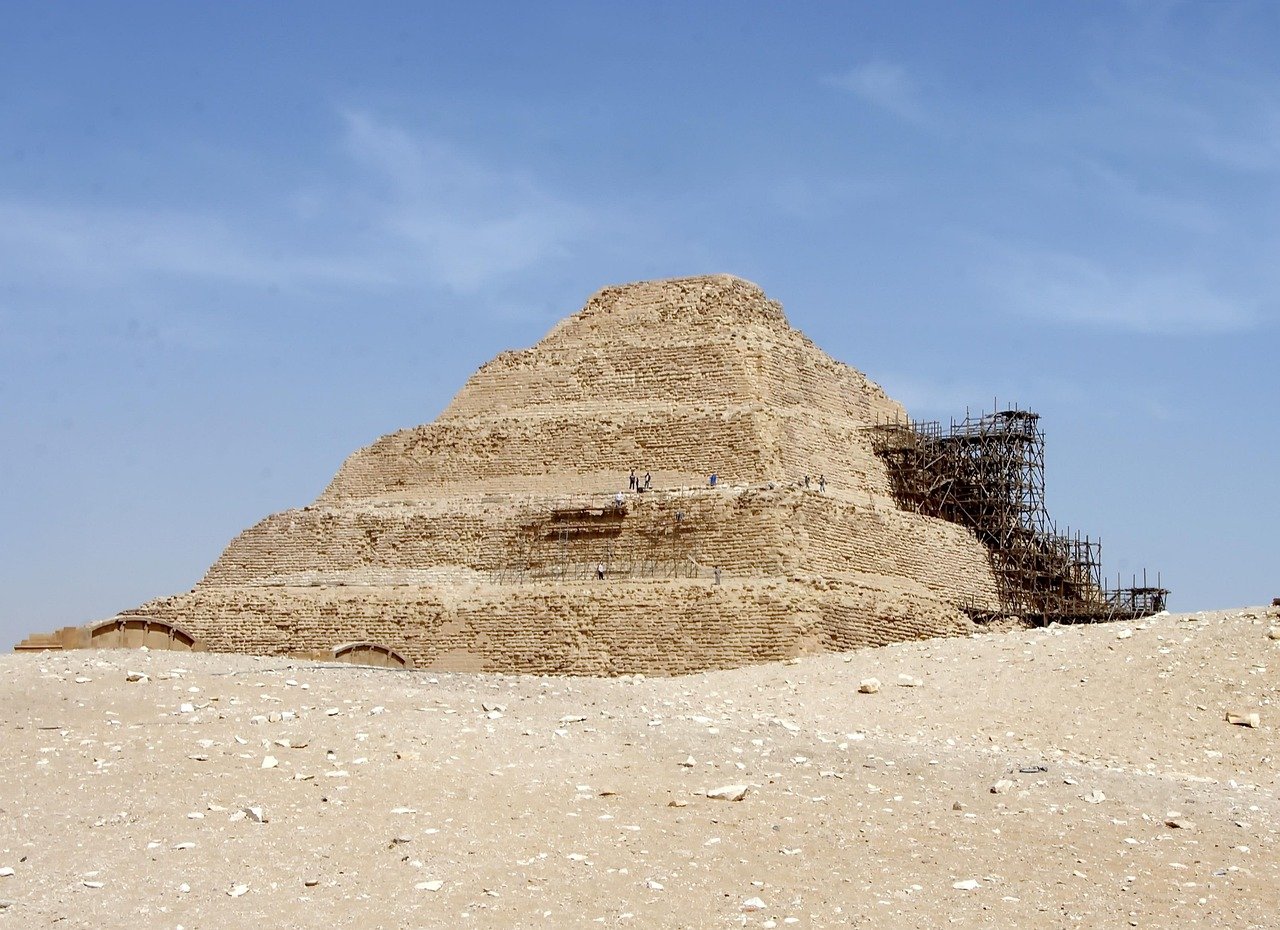
Saqqara served as the principal royal necropolis for the ancient capital of Memphis for more than three thousand years, from Egypt’s earliest dynasties through the Ptolemaic era. The site takes its name from Sokar, the Memphite god of the dead, and covers roughly seven square kilometres of plateau overlooking the Nile floodplain. Long before Pharaoh Djoser ordered his revolutionary monument, the kings of the 1st and 2nd Dynasties were burying their dead here in flat-topped mud-brick structures called mastabas — the forerunners of everything that followed.
Around 2650 BCE, the Third Dynasty pharaoh Djoser gave his chief architect and physician Imhotep an unprecedented commission: create an eternal tomb that would proclaim the king’s divine power for all time. Imhotep’s genius lay in stacking six progressively smaller mastabas on top of one another, creating a stepped structure 62 metres high built entirely from locally quarried limestone. It was the first large-scale stone building in human history. The complex Imhotep designed around it — covering 15 hectares and enclosed by a 10-metre wall with 14 false doors and one real entrance — remained one of the largest religious complexes in Egypt for centuries. After Djoser, every New Kingdom pharaoh and noble of substance wanted a tomb at Saqqara, bequeathing the site with an almost incomprehensible density of mortuary art, sculpture, and inscribed text.
Imhotep himself was so venerated for this achievement that later generations deified him. By the Late Period he was worshipped as a god of medicine and wisdom, and the Greeks identified him with their own Asclepius. His name is inscribed on the base of a statue of Djoser found at Saqqara — one of the very few Old Kingdom architects whose identity survived the millennia. The site continued to grow long after Djoser. Subsequent pharaohs of the Fifth and Sixth Dynasties built their own pyramid complexes at Saqqara, introducing the Pyramid Texts under Unas and later the elaborate Coffin Texts in the tombs of queens. The New Kingdom saw a wave of noble burials, their mastabas decorated with scenes of astonishing naturalistic beauty. By the time Alexander the Great passed through Egypt in 332 BCE, Saqqara had been an active necropolis for nearly three thousand years — a span of continuous sacred use that no other site on earth can rival. The site was still in active religious use well into the Roman period, and ancient pilgrims came from across the Mediterranean world to consult the oracle of the deified Imhotep and pay respects at the animal catacombs that honeycomb the plateau beneath their feet.
What to See at Saqqara
The Step Pyramid Complex of Djoser
The Step Pyramid itself reopened to visitors in 2020 after a 14-year restoration project that shored up the internal chambers and brought the exterior masonry back to something close to its original condition. You can now descend into the burial shaft — 28 metres deep — to see blue-green faience tiles lining the subterranean chambers, a jaw-dropping display that evokes the reed-mat walls of a royal palace rendered permanently in glazed ceramic. Outside, the Heb-Sed court where Djoser ritually renewed his kingship stretches along the pyramid’s east face, flanked by engaged columns — the world’s first architectural columns, carved to resemble bundled papyrus reeds. The South Tomb, a smaller version of the main burial chamber, contains some of the finest bas-reliefs of Djoser in the pose of the running pharaoh. Allow at least an hour for this complex alone; it rewards unhurried exploration.
The Serapeum and the Tombs of the Nobles
The Serapeum is one of the most dramatic underground spaces in all of Egypt — a long, dimly lit catacomb hewn from bedrock where the sacred Apis bulls were interred in monolithic granite sarcophagi, each weighing up to 70 tonnes. The sheer scale of the operation, repeated over more than a thousand years from the New Kingdom through the Roman period, is staggering. The tombs of the nobles are equally rewarding: the mastaba of Ti contains some of the most celebrated Old Kingdom paintings in existence, showing craftsmen, farmers, hunters, and musicians in exquisite colour. The tomb of Mereruka, a vizier of the Sixth Dynasty, has 33 decorated chambers making it the largest private tomb in Egypt. These painted walls bring the ancient world to life in a way that no textbook photograph can prepare you for.
The Animal Catacombs
One of Saqqara’s lesser-known attractions is its extensive network of animal catacombs — vast underground galleries that served as burial grounds for millions of mummified animals offered as votive gifts to the gods. The most accessible is the catacomb of the sacred ibis birds, dedicated to Thoth, god of writing and wisdom. Archaeologists have estimated that the Saqqara ibis galleries contain the remains of over four million birds. Nearby, separate catacombs hold mummified baboons, dogs, cats, and falcons. The scale of this ancient practice — industrial in its organisation — is staggering, and the catacombs are open on selected days. Enquire at the ticket office about current access arrangements.
The Pyramid of Unas and Pyramid Texts
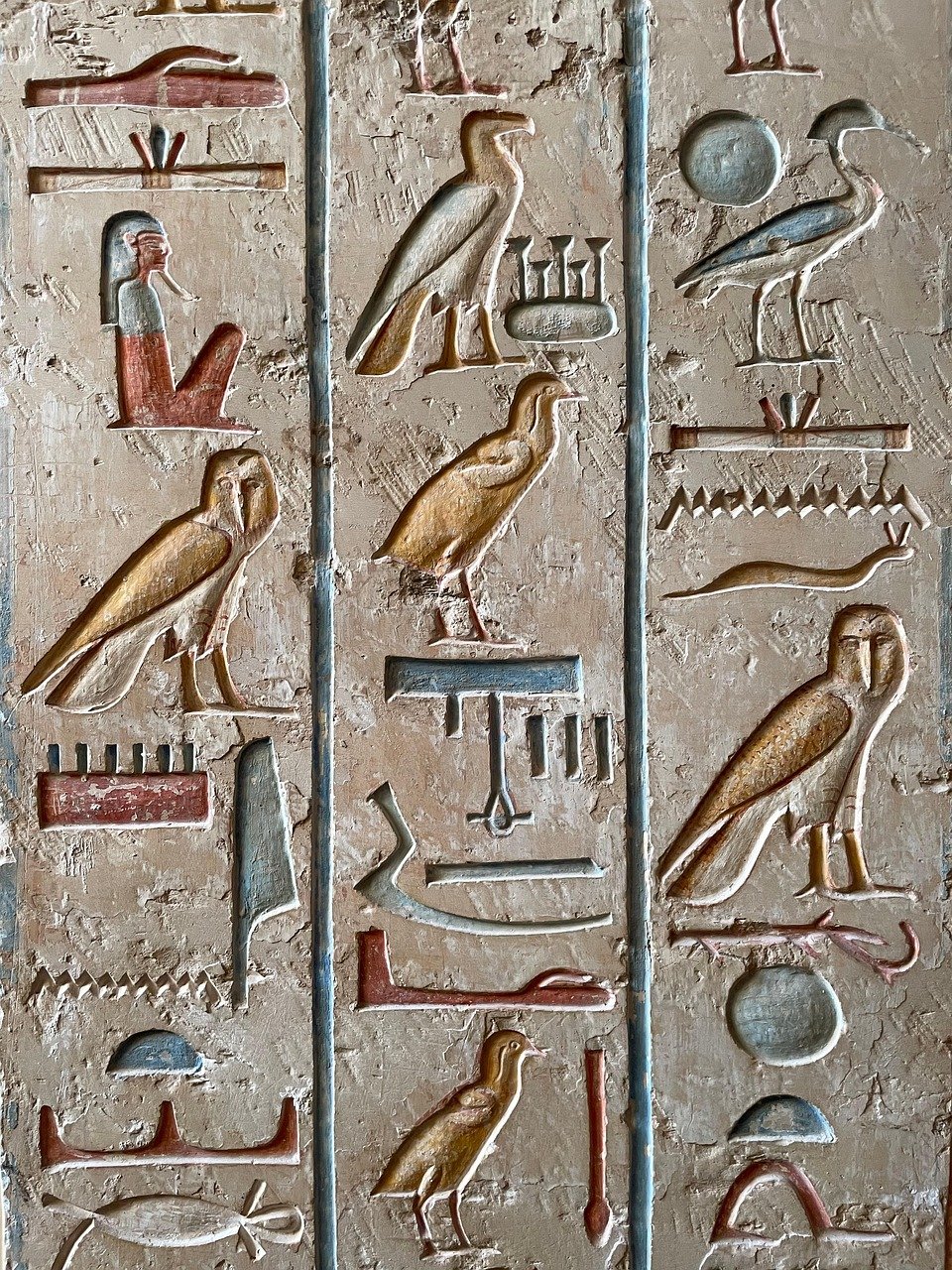
At the far southern edge of the main complex, the ruined Pyramid of Unas (c. 2375 BCE) looks from the outside like a modest pile of rubble. Step inside, however, and the burial chamber walls are covered floor to ceiling in the oldest religious texts ever discovered — the Pyramid Texts, 227 spells and utterances carved and painted in brilliant blue-green hieroglyphs to protect the pharaoh’s soul on its journey through the afterlife. These texts are the foundation of all later Egyptian funerary literature including the Book of the Dead. The intimate scale of the chamber makes the inscriptions feel personal rather than monumental, and the quality of the painted glyphs, more than 4,300 years after they were carved, remains extraordinary. A short walk from Unas, the Persian shaft tombs descend 24 metres to reveal colossal sarcophagi in chambers that feel genuinely other-worldly.
Local Insights
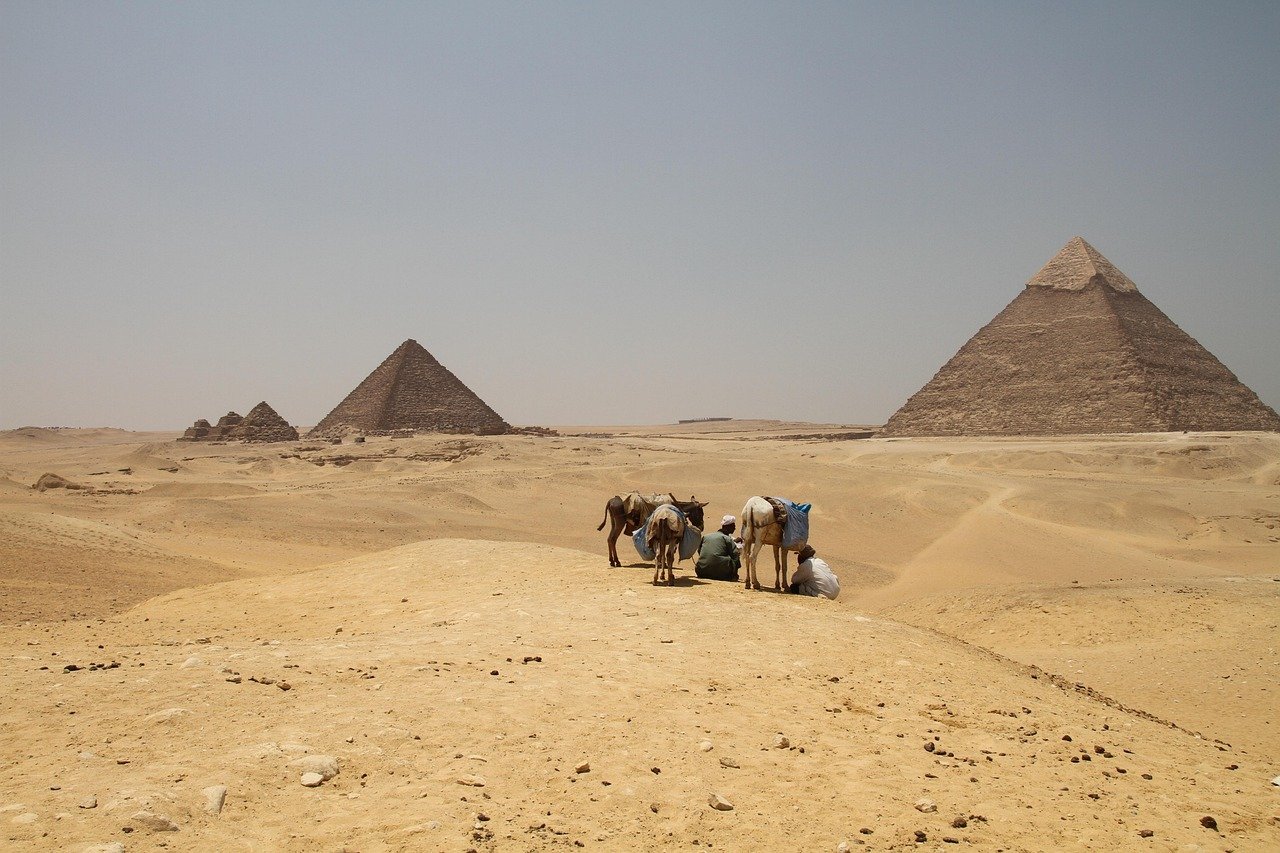
Saqqara rewards preparation. These insider tips will help you get the most from a site that many visitors only scratch the surface of.
- Arrive at opening time (8 AM) and head straight to Djoser’s interior. The burial shaft and faience chambers are only accessible to a limited number of visitors at a time — if you arrive mid-morning you may wait 30–45 minutes in the sun. Being first in line turns a potential frustration into an unforgettable private moment underground.
- The combined ticket saves money if you want everything. The standard Saqqara region ticket (600 EGP/adults, 300 EGP/students) covers the Step Pyramid complex, Teti and Unas pyramids, and several tombs. The full all-sites pass (1,000 EGP/adult) adds the Serapeum and premium nobles’ tombs. Budget travellers can skip the Serapeum and still have a phenomenal day.
- Wear sturdy closed-toe shoes with good grip. The descent into the Pyramid of Unas and the Persian shaft tombs involves steep, polished limestone steps with minimal handrails. Sandals and flip-flops make this genuinely dangerous, especially in summer when sweat makes the stone slippery.
- Hire a site guide at the entrance rather than a Cairo-based tour operator. Local Egyptologist guides certified by the Ministry of Tourism wait at the site entrance and know every tomb opening schedule. They charge around 200–300 EGP for a two-hour tour and will unlock lesser-visited tombs that independent walkers often miss entirely.
- Combine Saqqara with Dahshur and Memphis for a full-day ancient-sites circuit. The three sites sit within 15 km of each other. Start at Dahshur (farthest south), work north through Memphis, and finish at Saqqara. A private taxi for the day runs 500–750 EGP from Cairo; negotiate the full-day rate before you depart.
Planning Your Visit
- Tickets: Saqqara region (Step Pyramid, Teti, Unas pyramids + select tombs): 600 EGP adults / 300 EGP students. Full all-sites pass including Serapeum: 1,000 EGP adults / 500 EGP students. Serapeum standalone: 340 EGP. Approximately USD 12–20 at current exchange rates. Egyptian nationals pay significantly less.
- Opening hours: Daily 8:00 AM – 5:00 PM (summer); 8:00 AM – 4:00 PM (winter, roughly October–March). Last entry one hour before closing. During Ramadan hours may be reduced — confirm locally.
- Best time: October through April for cooler temperatures (18–28°C). Early morning (8–10 AM) any time of year to beat tour groups. Avoid midsummer midday when the limestone plateau reaches 40°C+ and the heat haze obscures photography.
- Duration: 2–4 hours for a good overview of the main complex, Unas pyramid, and one or two nobles’ tombs. A full day if you add the Serapeum and multiple mastabas.
- Booking: Site entry tickets can be purchased at the entrance gate or online via egymonuments.com. No advance booking required for general admission, though tour packages with an Egyptologist guide should be booked ahead through GetYourGuide or a local Cairo operator.
Getting There
- By tour/organised transport: The most practical option. Full-day Dahshur–Memphis–Saqqara tours depart from Cairo hotels daily; prices start around USD 45–70 per person including a guide and private vehicle.
- By car / taxi: Saqqara is 30 km south of Cairo (45 minutes without traffic). From Giza it is 20 km (20–25 minutes). Negotiate a flat daily rate of 500–750 EGP with a Cairo taxi driver; make sure they agree to wait at each site.
- On foot / public transit: Not practical as a primary option. Minibuses run from Giza’s Midan al-Haram to the village of Saqqara for a few Egyptian pounds, but the final 3 km to the site requires a tuk-tuk or horse taxi (50–100 EGP). Budget considerable extra time.
- Taxi / ride-share: Uber and Careem operate throughout Cairo and can drop you at the site entrance. The fare from central Cairo is typically 120–180 EGP one way. For the return, arrange with your driver in advance or call a ride-share; signal can be spotty on the plateau.
Frequently asked questions
Can you enter inside the Step Pyramid of Djoser?
Yes — the interior reopened in 2020 after a 14-year restoration project. Visitors descend a steep shaft 28 metres deep to reach the burial chamber and adjacent rooms lined with spectacular blue-green faience tiles. Access is managed in small groups, so expect a wait if you arrive after 10 AM. Interior photography is generally permitted without a flash. The experience is genuinely awe-inspiring and not to be missed, though those with severe claustrophobia may find the narrow shafts uncomfortable.
How does Saqqara compare to the Giza Pyramids?
Saqqara is older, quieter, and arguably richer in historical detail than Giza. The Step Pyramid predates the Great Pyramid by roughly 150 years and represents a more intimate scale of monument. While Giza impresses through sheer magnitude and the famous Sphinx, Saqqara rewards curiosity — painted tombs, underground catacombs, the world’s oldest pyramid texts. Crowds are noticeably thinner. Many seasoned Egypt travellers come away saying Saqqara was the highlight of their trip. The two sites complement each other perfectly and are only 20 km apart.
Is Saqqara suitable for children?
Older children (8+) who enjoy history tend to find Saqqara fascinating, particularly the underground chambers and the vivid tomb paintings. Younger children can enjoy the open-air landscape but may struggle with the walking distances (the full site spans several kilometres on uneven desert terrain), the steep descents into tombs, and the midday heat in summer. Bring water, sun protection, and close-toed shoes. The site has limited shade and no modern playground facilities; plan your visit for the cooler morning hours and keep the itinerary flexible.
What is the best way to get from Cairo to Saqqara?
The most comfortable approach is to hire a private driver for the day at a negotiated rate of 500–750 EGP, allowing you to combine Saqqara with Dahshur and Memphis in a single efficient loop. Organised day tours from Cairo hotels start around USD 45 per person and include an Egyptologist guide. Uber and Careem taxis from central Cairo cost roughly 120–180 EGP one way but require you to arrange a return independently. Public minibuses to Saqqara village followed by a local tuk-tuk are the cheapest option but add an hour and significant hassle to each leg.