
Sanssouci Palace
Crowning the eastern end of Museum Island with its vast copper-green dome and ornate sandstone facades, Berlin Cathedral — the Berliner Dom — is the largest Protestant church in Germany and one of the most visually arresting buildings in the German capital. Built at the turn of the twentieth century as a dynastic showcase for the Hohenzollern imperial family, it carries centuries of German history within its walls: royal sarcophagi in the crypt below, glittering mosaics and gilded altarpieces above, and one of the finest pipe organs in the country filling the nave with sound on Sunday mornings. Badly damaged during the Second World War and painstakingly restored over decades, the cathedral stands today as a living place of worship, a major tourist attraction, and an architectural statement about power, faith, and endurance that continues to provoke and inspire in equal measure.
History of Berlin Cathedral
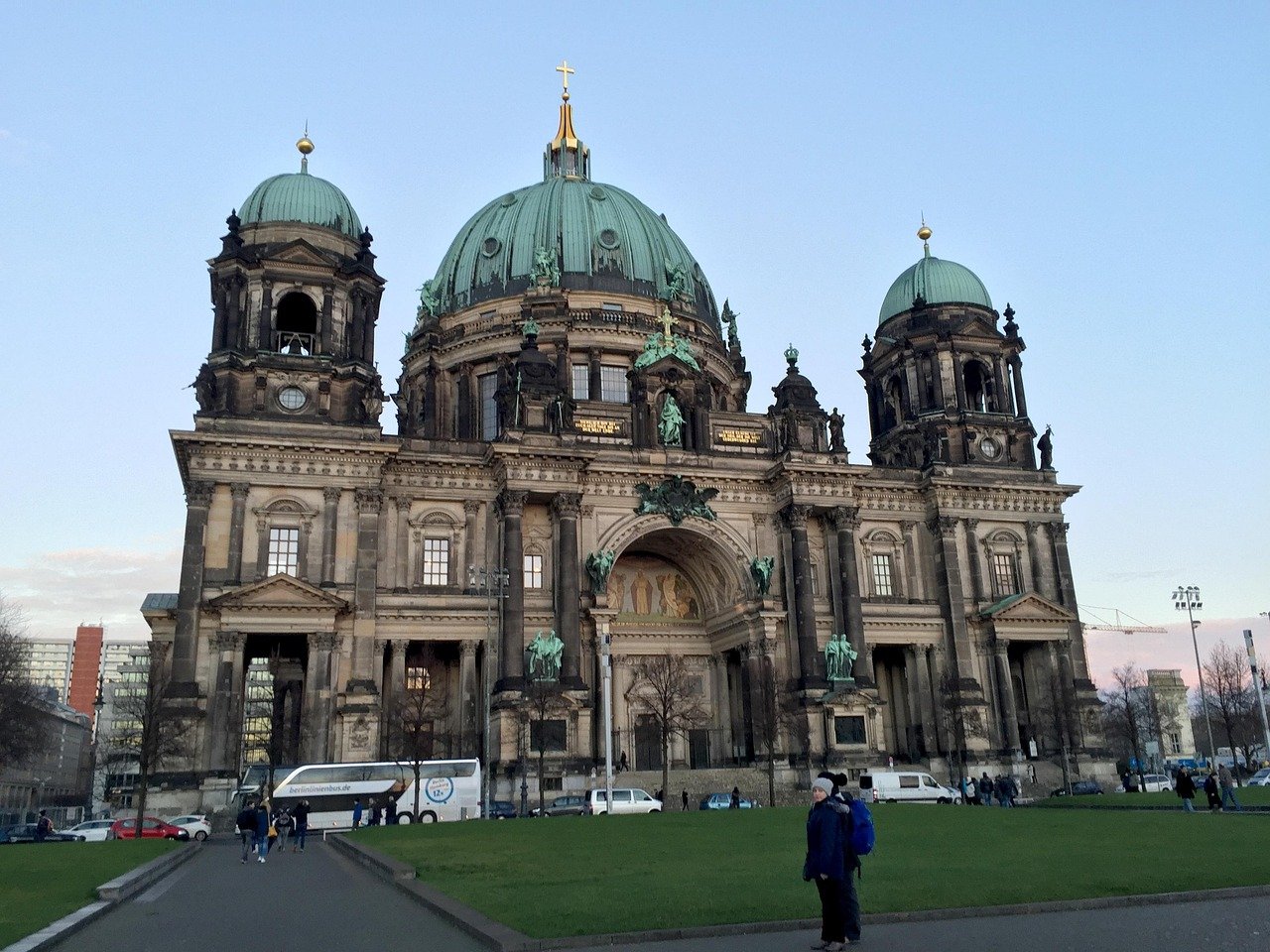
A cathedral has stood on this site beside the River Spree since the fifteenth century, but the building visitors see today is essentially a creation of the Wilhelmine era. Kaiser Wilhelm II, who came to the throne in 1888 with ambitions to make Berlin a cultural and political capital to rival Rome and Vienna, commissioned an entirely new structure to replace the more modest neoclassical church that had stood here since the early nineteenth century. The architect Julius Raschdorff designed a monumental Italian High Renaissance building on a colossal scale, incorporating five domes, elaborate sculptural programmes, and interiors intended to project the divine authority of the Hohenzollern dynasty. Construction began in 1894 and the building was consecrated in 1905, by which time it had cost over eleven million marks — a staggering sum that attracted considerable criticism from those who felt the money could have been better spent.
The cathedral’s story in the twentieth century is one of damage, neglect, and painstaking recovery. Allied bombing raids in 1944 and 1945 caused severe structural damage, destroying the dome, gutting the interior, and burning many irreplaceable furnishings. After the war, the building sat in the Soviet sector of divided Berlin, where the East German government had little enthusiasm for restoring a symbol of Prussian imperial power and Protestant church authority. A makeshift roof was eventually added to prevent further deterioration, but serious reconstruction work did not begin until the 1970s. The restoration continued for more than three decades and involved difficult decisions: the four smaller comer towers of the original Raschdorff design were not rebuilt, which is why the present cathedral is noticeably lower than photographs from the early twentieth century suggest. The interior was finally reopened to the public in 1993, though restoration work on details continued well into the 2000s. Today the building is maintained by the Evangelical Church in Germany and by admission income from visitors.
What to See at Berlin Cathedral
The Main Nave and Imperial Staircase
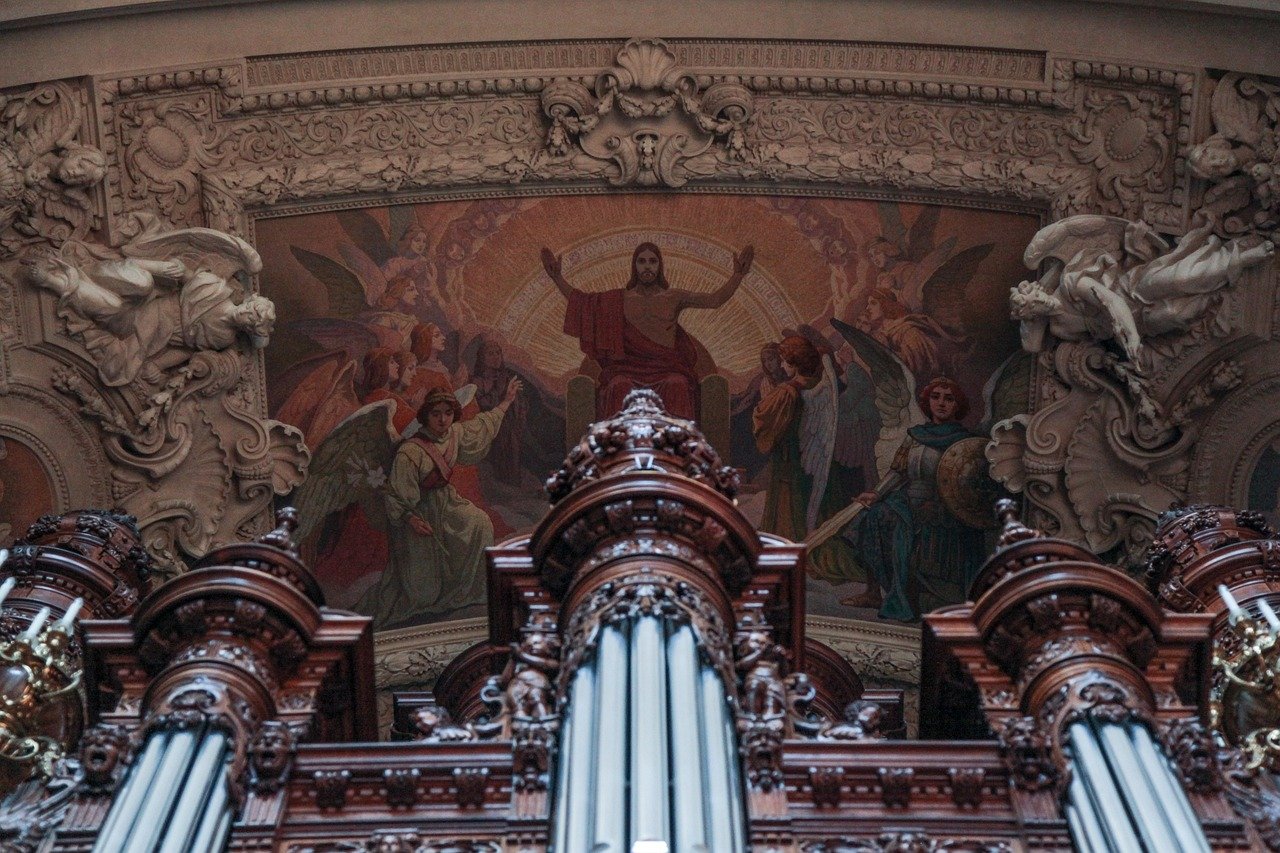
The central nave is the heart of the cathedral and the first space most visitors encounter after passing through the main entrance on the south side. It is enormous in scale — the building can hold around two thousand worshippers — and the eye is immediately drawn upward to the decorated drum and dome overhead, with its eight arched windows flooding the space with natural light. The walls carry vast mosaic cycles depicting scenes from the life of Christ, executed in a rich, gold-laden Byzantine style that creates an overwhelming sense of opulence. At the east end, the high altar in white Carrara marble is flanked by bronze statues of the apostles. The Sauer organ, installed in 1905 and rebuilt most recently in 2005, contains 7,269 pipes across 113 registers and is one of the largest and most technically sophisticated instruments in Germany. Organ concerts are a regular feature of the cathedral calendar and offer an extraordinary acoustic experience in this resonant space. The imperial staircase leading to the gallery level is itself worth pausing at, featuring elaborate wrought-iron balustrades and marble steps that convey the grandeur the Hohenzollerns were determined to project.
The Hohenzollern Crypt
Descending below the main floor, visitors enter one of the largest and most significant royal burial vaults in Germany. The Hohenzollern Crypt contains 94 sarcophagi and caskets holding members of the Prussian royal family spanning four centuries, from the sixteenth to the twentieth. The oldest are plain and relatively unadorned; the later ones grow progressively more elaborate, culminating in the monumental zinc sarcophagi of Frederick I and his wife Sophie Charlotte, designed by Andreas Schluter in the early eighteenth century and considered masterpieces of Baroque funerary art. The sarcophagus of the young Prince Friedrich Ludwig, who died aged two in 1707, is especially moving — a tiny casket on a grand plinth, illustrating the personal tragedies behind the dynastic spectacle above. The crypt is included in the general admission price and is accessible via stairs from the nave; it tends to be quieter than the main church and rewards unhurried exploration. Informational labels in German and English identify each sarcophagus and provide brief biographical details of the individuals interred.
The Dome Gallery and Panoramic Views
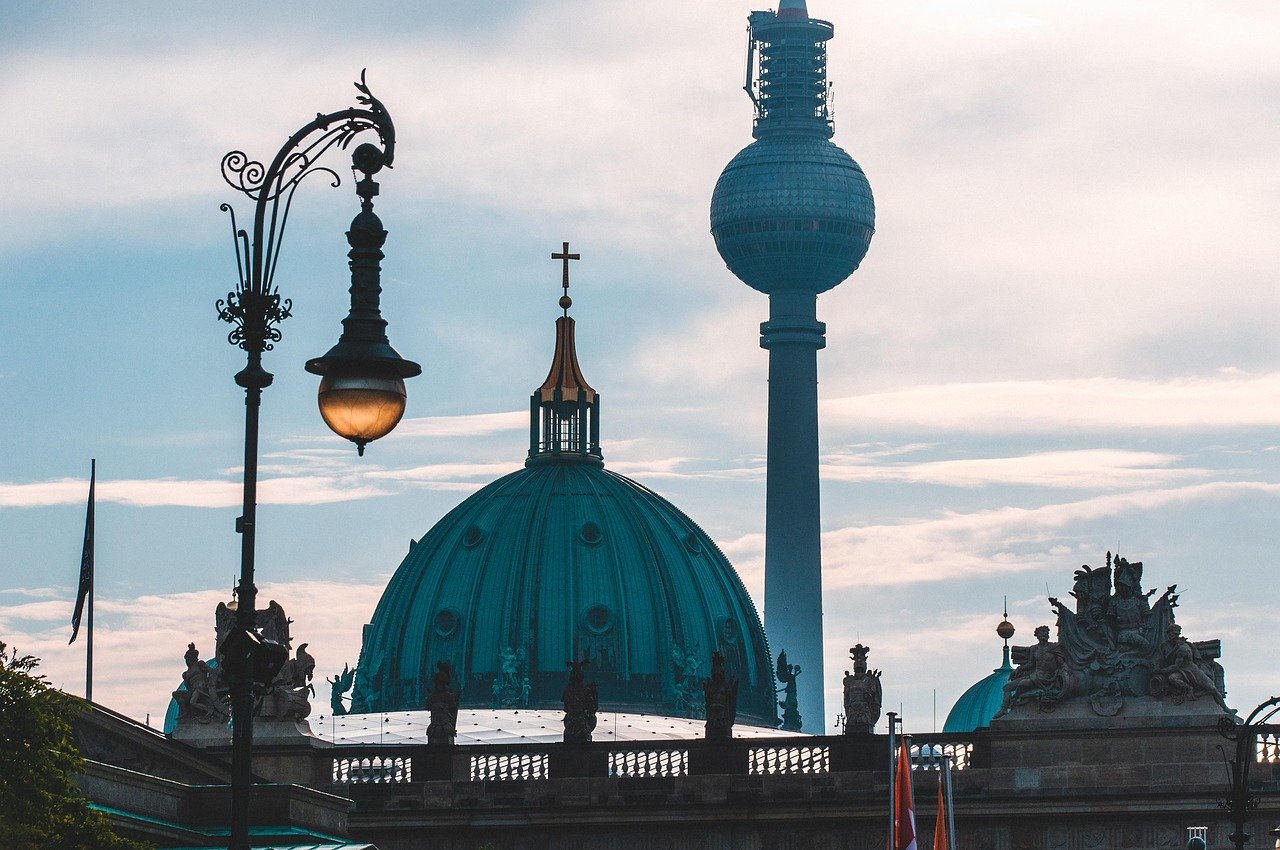
A climb of 267 steps (with a lift available for part of the ascent) brings visitors to the outer gallery around the base of the main dome, approximately 74 metres above ground level. The views from here are among the best in central Berlin: to the west lies the Television Tower, to the north the Humboldt Forum and the former Palace of the Republic site, to the south the rooftops of Mitte, and to the east the River Spree curving away past Museum Island. On a clear day the panorama extends far beyond the immediate city centre. The inner dome gallery — the walkway inside the drum, looking down into the nave below — is equally impressive, giving a vertiginous sense of the building’s scale and allowing close-up inspection of the upper sections of the mosaic decoration. The climb is moderately strenuous but accessible to most visitors in reasonable fitness; those with mobility difficulties should enquire about the partial lift access at the main entrance before beginning.
Local Insights
Berlin Cathedral rewards visitors who come prepared and plan around a few key details. Here are five tips that make the difference between a rushed visit and a genuinely memorable one.
- Arrive early on weekday mornings — ideally before 10:00 — to experience the nave in near-silence before tour groups arrive. The cathedral opens at 9:00 am, and the first hour is often populated mainly by worshippers and independent visitors, giving you time to absorb the mosaics and architecture without crowds pressing around you. Weekend mornings are busier and services run until noon on Sundays, so the site does not fully open to tourists until 12:00 on Sundays and public holidays.
- Check the cathedral’s online concert calendar before your visit. The Sauer organ is one of the finest instruments in Germany, and regular recitals — some free with admission, others ticketed separately — fill the space with sound that no recording can replicate. If you happen to be in Berlin when a major choral or orchestral event is scheduled in the cathedral, prioritise it; the acoustics are extraordinary and the experience of music in this space is genuinely unforgettable.
- The crypt is consistently undervisited relative to the main nave and dome. Most visitors who do not know about it skip it entirely. The Hohenzollern sarcophagi represent some of the finest Baroque and Rococo funerary sculpture in northern Europe, and the space itself — cool, quiet, and dimly lit — provides a striking counterpoint to the gilded grandeur above. Allow at least thirty minutes here; it is worth every minute.
- Museum Island makes an ideal full-day pairing with the cathedral. The island contains five world-class museums — the Pergamon Museum, the Altes Museum, the Neues Museum, the Alte Nationalgalerie, and the Bode-Museum — within easy walking distance of the cathedral entrance. A Museum Island day pass covers all five institutions and represents exceptional value. Plan the cathedral visit for morning and one or two museums for the afternoon.
- The Cathedral Cafe in the basement level is a convenient and reasonably priced place for coffee and cake, popular with both visitors and local workers. It tends to be busy around lunchtime but quieter in mid-morning and mid-afternoon. Eating here is considerably cheaper than the tourist-facing restaurants immediately surrounding the cathedral on the island, and the setting is pleasantly calm.
Planning Your Visit
- Tickets: Adults €7; reduced (students, seniors, disabled visitors) €5; children under 18 free. Organ concerts may carry an additional charge
- Opening hours: Monday–Saturday 9:00–20:00 (summer); Monday–Saturday 9:00–19:00 (winter, October–March); Sundays and public holidays 12:00–20:00 (summer) / 12:00–19:00 (winter)
- Best time: Weekday mornings for quiet; blue-hour evenings (around 20:00 in summer) for dramatic exterior photography from the Lustgarten opposite
- Duration: 1.5–2.5 hours for nave, crypt, and dome gallery at a comfortable pace; longer if attending a concert or service
- Booking: General admission does not require advance booking; tickets available at the door. For group visits of 10 or more, advance reservation is recommended via the cathedral website berlinerdom.de
Getting There
- U-Bahn/S-Bahn: S-Bahn lines S3, S5, S7, S9 to Hackescher Markt (7-minute walk across the bridge); U-Bahn U2, U5, U8 to Alexanderplatz (12-minute walk)
- Bus/Tram: Tram M4, M5, M6 to Lustgarten stop directly opposite the cathedral entrance; Bus 100, 200 stops at Lustgarten
- On foot: 10 minutes from Alexanderplatz through the Nikolaiviertel; 15 minutes from the Brandenburg Gate through the Lustgarten
- Taxi/ride-share: Drop-off at Am Lustgarten, directly in front of the cathedral south entrance on Museum Island
Frequently asked questions
Is Berlin Cathedral still an active place of worship?
Yes. Despite welcoming hundreds of thousands of tourists each year, Berlin Cathedral remains an active Evangelical Lutheran congregation. Regular services are held on Sunday mornings, typically at 10:00 am, as well as on other days of the week and at major Christian festivals such as Christmas and Easter. These services are open to anyone wishing to attend and are conducted in German. Tourists are welcome to observe services respectfully, though the space is not open for general sightseeing during service times. The cathedral also hosts baptisms, confirmations, and weddings for members of the congregation throughout the year, and the choir performs regularly at Sunday services and special concerts.
How difficult is the climb to the dome gallery?
The full ascent to the outer dome gallery involves 267 steps, which most visitors in reasonable physical condition complete in around fifteen to twenty minutes. The staircase spirals upward in stages, with small landing areas where visitors can pause and rest. There is partial lift access covering roughly half the height, which assists visitors with moderate mobility limitations; enquire at the main entrance for current details. The steps themselves are of varying widths — some are quite shallow and narrow — so sensible footwear is advisable. The viewing gallery is enclosed by a balustrade and feels secure; those with a strong fear of heights may find the inner gallery, which looks straight down into the nave, more challenging than the exterior terrace.
What is the Hohenzollern Crypt and is it worth visiting?
The Hohenzollern Crypt is a royal burial vault beneath the main nave containing 94 sarcophagi spanning four centuries of Prussian royal history. It is accessible via a staircase from inside the cathedral and is included in the standard admission price. The crypt is one of the most significant collections of royal funerary monuments in northern Europe, featuring masterworks of Baroque sculpture alongside more modest Renaissance and Rococo pieces. It tends to be overlooked by visitors unfamiliar with it, which means it is usually quieter than the main church above. Art history enthusiasts and those interested in German dynastic history will find it fascinating; even casual visitors generally find the scale, variety, and emotional resonance of the space compelling. Allow thirty to forty-five minutes to explore it properly.
Can I hear the famous organ during my visit?
The cathedral organ — a 1905 Sauer instrument rebuilt in 2005 with 7,269 pipes and 113 registers — is one of the largest and most celebrated in Germany. It is used regularly for services, recitals, and concerts. Short organ demonstrations are sometimes given during visitor hours on weekdays; check the cathedral website or ask at the entrance on arrival. Ticketed organ recitals and larger choral concerts are scheduled regularly throughout the year and listed on the official calendar at berlinerdom.de. Some of these events are included with general admission; others require a separately purchased ticket. Attending a full recital or concert here is one of the most rewarding musical experiences Berlin has to offer, and visitors with any interest in classical music or sacred architecture should make a point of checking the concert programme well in advance of their trip.