
Sagrada Família
The first glimpse of the Sagrada Família over the rooftops of the Eixample neighbourhood is an experience that recalibrates what architecture can be. Sixteen spires rise from the basilica — some complete, some in construction — in forms that suggest Gothic cathedrals and natural bone structures simultaneously, covered in ornamentation that from a distance looks like carved vegetation and from close up reveals an encyclopaedia of sculptural symbolism. Antoni Gaudí's magnum opus has been under construction since 1882 and remains unfinished, yet it already attracts over four million visitors annually and may be the most extraordinary building in Europe.
History of the Sagrada Família

The project was initiated in 1882 by the Associació Espiritual de Devots de Sant Josep — a devotional association committed to building a church that would serve as an expiation for the sins of modernity. The original architect Francisco de Paula del Villar resigned after disagreements, and in 1883 the commission was handed to Antoni Gaudí, then 31 years old. What began as a conventional neo-Gothic project was transformed by Gaudí into something entirely his own — a synthesis of natural forms, symbolic theology, and structural innovation that had no precedent and has had no real successor.
Gaudí devoted the last years of his life almost exclusively to the Sagrada Família, famously living in the crypt in his final years and giving tours of the basilica to raise funds. In 1926 he was struck by a tram on the Gran Via and died three days later; he is buried in the crypt of the basilica he spent 43 years designing. Construction has continued under successive architects interpreting Gaudí's original models and drawings — many of which were destroyed in the Spanish Civil War, requiring painstaking reconstruction from photographs and plaster fragments.
Pope Benedict XVI consecrated the Sagrada Família as a basilica in 2010. The project is funded entirely by entrance ticket revenue and donations, without public subsidy. The central tower of Jesus Christ, when completed, will reach 172.5 metres — fractionally below Montjuïc hill, as Gaudí believed no human creation should exceed God's creation.
What to See

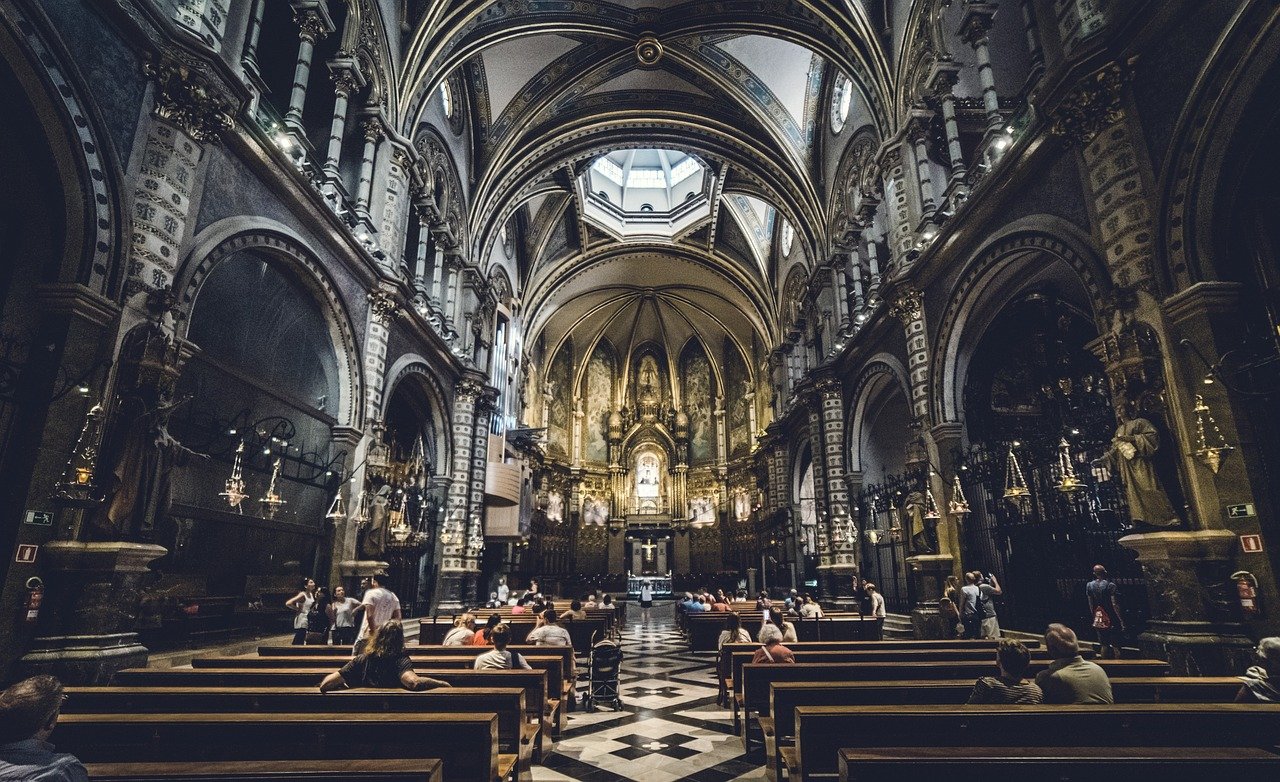
The interior of the Sagrada Família is the great revelation — visitors who expect the dark, heavy atmosphere of a traditional Gothic cathedral are confronted instead with a luminous forest of branching columns that spread overhead like an enormous stone canopy, filtering light through hundreds of stained glass windows. Gaudí designed the column structure to function like trees, dispersing load through hyperboloid and paraboloid forms that produce a building simultaneously more structurally rational and more emotionally powerful than the Gothic originals that inspired it.
The three main facades tell three different stories: the Nativity Facade (east, completed in Gaudí's lifetime) is covered in exuberant naturalistic sculpture celebrating birth and creation; the Passion Facade (west, completed in the 1990s based on Gaudí's sketches, with sculpture by Josep Maria Subirachs) is angular and stripped-back in its representation of suffering; the Glory Facade (south, still under construction) will represent death and resurrection. A crypt museum beneath the nave contains Gaudí's tomb, original models, and documentation of the construction process.
The Towers
Tower access is available for an additional fee and must be booked in advance. The Nativity Tower (east) and the Passion Tower (west) both offer lift access partway and steps to viewing galleries with panoramic views of Barcelona. The Nativity Tower views look toward the sea and Poblenou; the Passion Tower looks toward Montjuïc and the old city. Both sets of towers are narrow at the top and descend by spiral staircases — not recommended for those with claustrophobia or acrophobia.
The towers best convey the impossible complexity of the building's exterior from close quarters — the stone finials, ceramic-tipped spires, and sculptural details that are invisible from street level become clear and extraordinary when viewed from the adjoining walkways. The descent by spiral staircase also gives a sense of the engineering achievement — the hollow stone spires carry nothing but their own weight and are traversable from inside throughout their height.
Practical Information
- Tickets: Basic entry from €26 adults; tower access adds €9–17 depending on which towers. Book only through sagradafamilia.org — no authorised third-party advance sale exists.
- Opening hours: Nov–Feb: Mon–Sat 9:00–18:00, Sun 10:30–18:00. Mar–Oct: Mon–Sat 9:00–19:00 or 20:00, Sun 10:30–19:00 or 20:00. Check sagradafamilia.org for current schedule.
- Dress code: Shoulders and knees must be covered.
- Best time to visit: First entry slot of the day (9am) or the last two hours before closing for fewer crowds. Weekday mornings in spring and autumn are the least crowded.
- Duration: 1.5–3 hours including tower access and the crypt museum.
Local Insights

What locals know that guidebooks do not always tell you:
- Book tickets weeks or months in advance — entry is timed and the basilica sells out completely. There is no walk-in entry. The official website is the only legitimate advance booking channel.
- The Nativity Facade is best photographed in morning light (it faces east); the Passion Facade is better in late afternoon. Plan your timing accordingly if exterior photography matters to you.
- The park across the street from the Nativity Facade (Plaça de Gaudí) has the best classic exterior photo angle — it is always full of tourists but the reflection pool and diagonal view are worth the crowd.
- Free audio guides are included with basic tickets. The app (Sagrada Família official) has augmented reality features that show the completed building superimposed on the current construction state.
- The crypt where Gaudí is buried is free to enter on weekday mornings before 11am for individual visitors attending Mass. It is a genuinely moving and crowd-free experience.
Getting There
- Metro: L2 and L5 to Sagrada Família station — exit directly in front of the Nativity Facade.
- Bus: Routes 19, 33, 34, 43, 44, 50, 51, B20, B24 all serve the Sagrada Família stop.
- On foot: 20–25 minutes from Las Ramblas through the Eixample grid; a pleasant walk through one of the world's great modernist neighbourhoods.
- Taxi/Rideshare: Drop-off on Carrer de Sardenya or Avinguda de Gaudí.
Frequently asked questions
When will the Sagrada Família be completed?
The central Jesus Christ tower and the Glory Facade are still under construction. Completion of the central tower is targeted around 2026–2028; the full complex may take longer. The basilica has been continuously under construction since 1882 and is funded entirely by entrance fees.
Can I visit the Sagrada Família without booking in advance?
No — all entry is timed and must be booked in advance at sagradafamilia.org. The basilica sells out completely on most days, especially from March to October. Walk-in entry is not available.
Is the Sagrada Família still an active church?
Yes — it is a consecrated Catholic basilica (since 2010) with daily Masses. Visitors are welcome to attend morning Mass free of charge as worshippers, though access to the full tourist circuit requires a ticket.
Which towers should I include in my ticket?
If visiting once, choose based on your schedule: the Nativity Tower (east) is slightly less steep and offers sea views; the Passion Tower (west) offers views toward the old city and Montjuïc. Both are worthwhile if time and budget permit.
What other attractions are near the Sagrada Família?
The Eixample neighbourhood contains most of Gaudí's other masterworks within walking distance: Casa Batlló and Casa Milà (La Pedrera) are on the Passeig de Gràcia, about 15 minutes walk. Parc Güell is 30 minutes away by metro.