
Reichstag
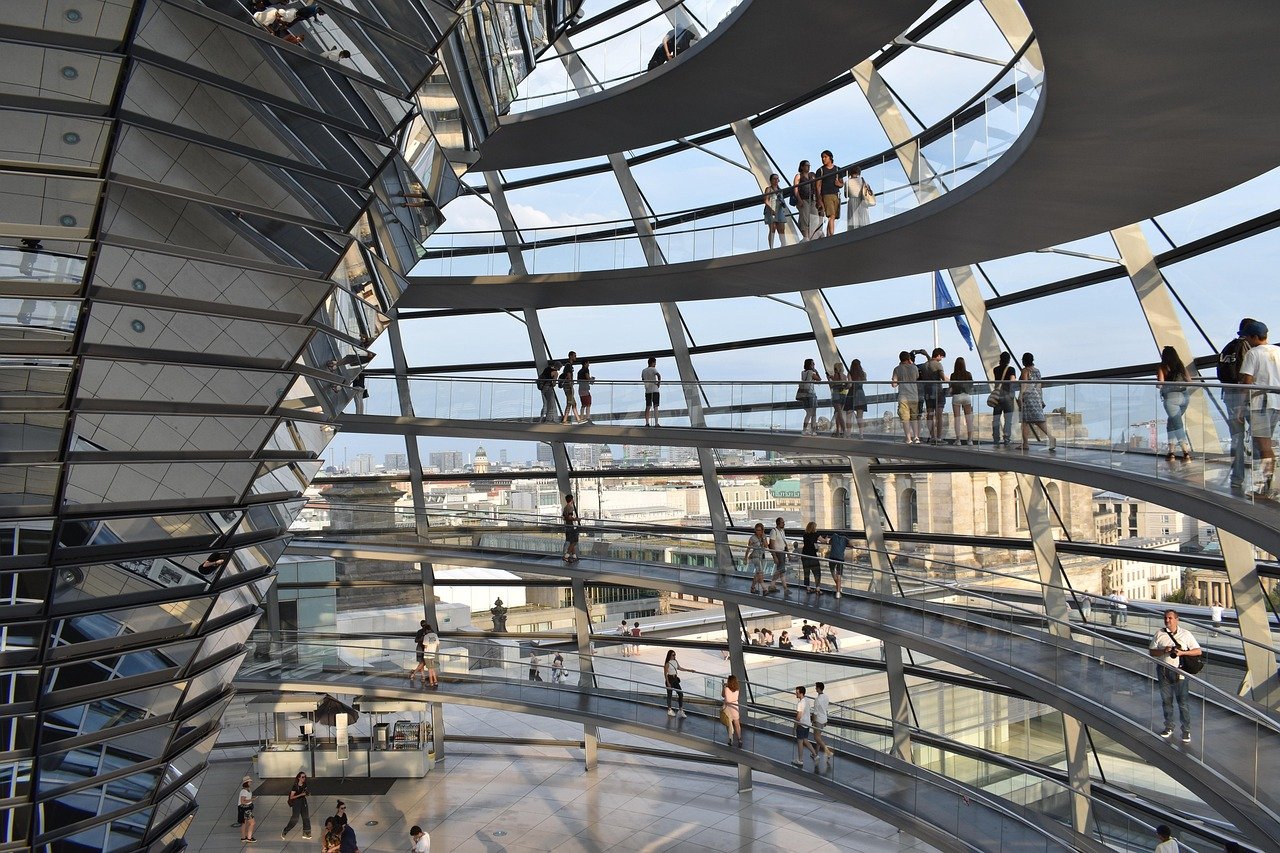
The glass dome sits on the original 19th-century building like a miracle of reconciliation — the old stone scarred by fire and bullets, the new crystal and steel rising above it, open to the sky and accessible to any citizen who books a visit. Inside the Reichstag dome, a spiral ramp ascends around a mirrored funnel that channels daylight down into the parliamentary chamber below, creating a visual metaphor for democratic transparency that feels almost too obvious until you realize it actually works. Standing at the top on a clear Berlin evening, watching the Brandenburg Gate glow amber in the distance and the city spread to every horizon, you understand something about what it cost to get here.
History of the Reichstag
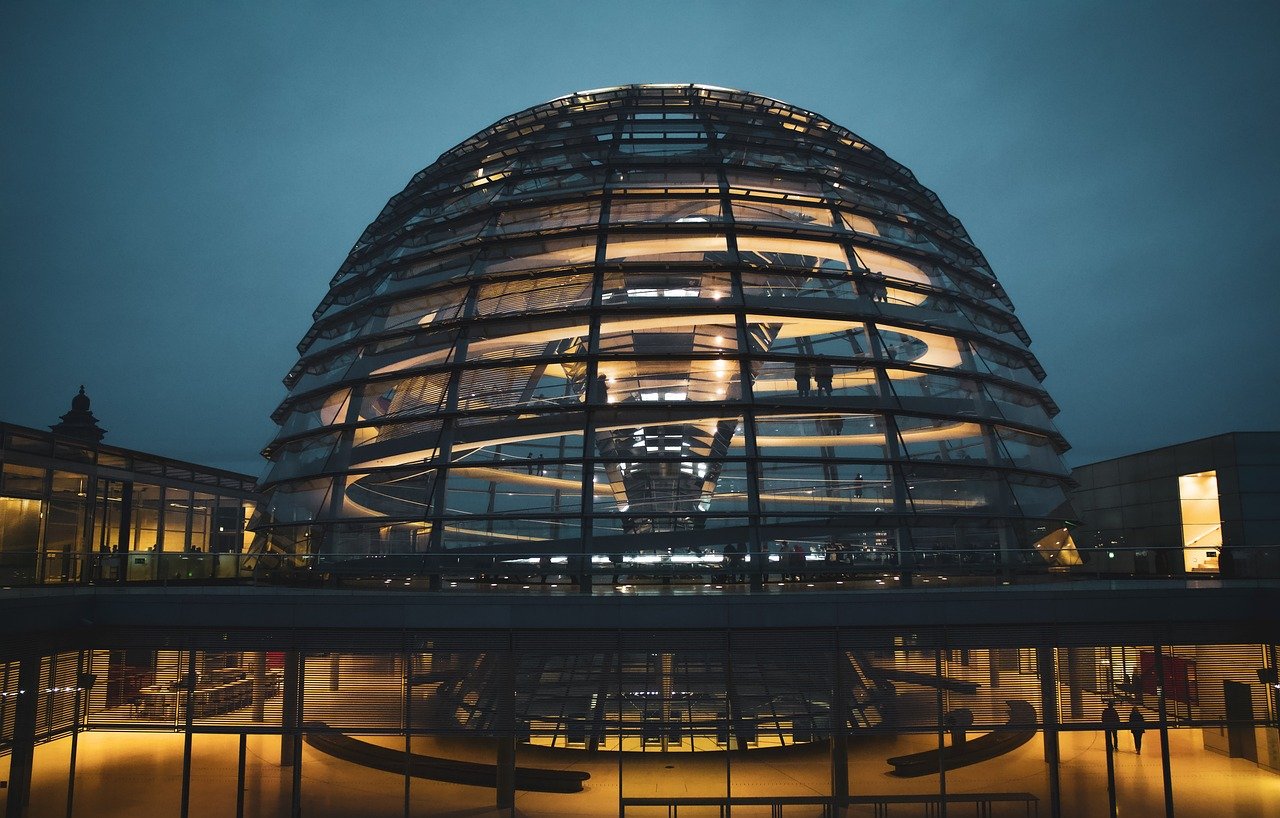
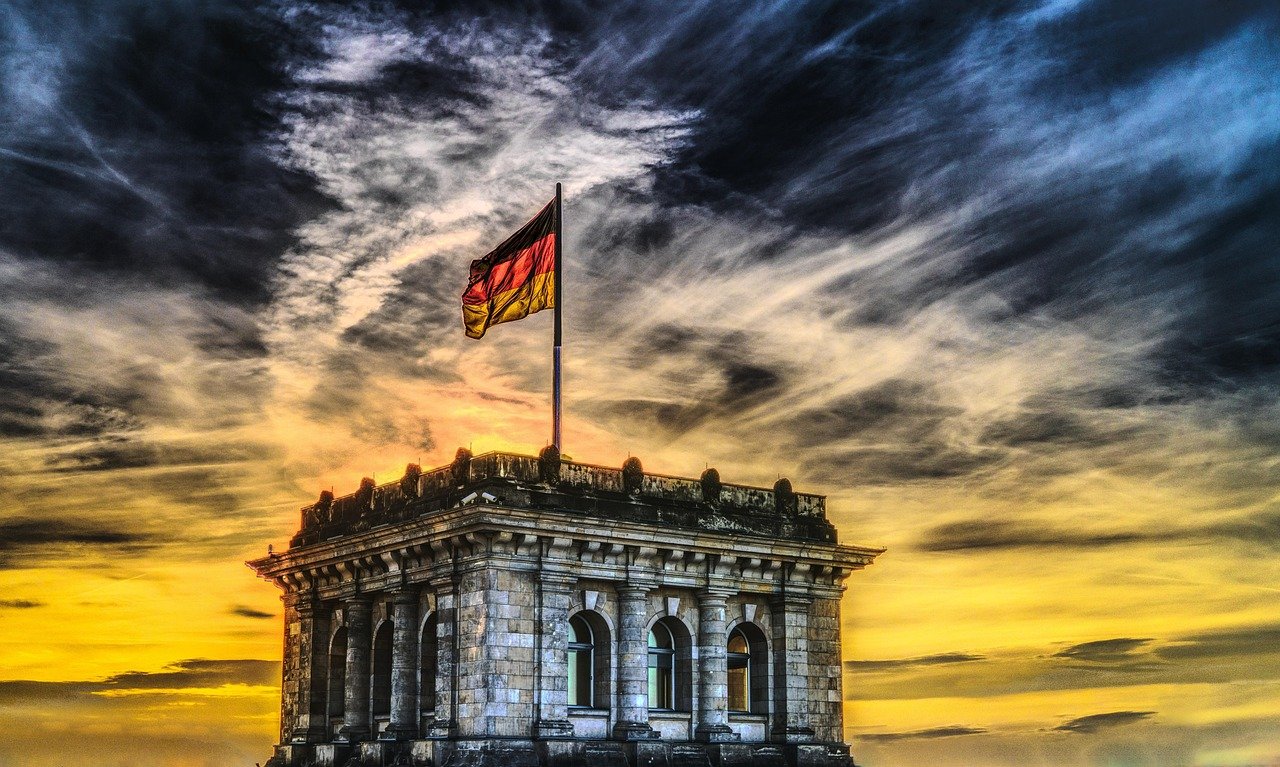
The Reichstag building was constructed between 1884 and 1894 to house the German Imperial Parliament, designed by Paul Wallot in a Neo-Renaissance style with a prominent glass-and-steel dome — a dome that became instantly significant as a symbol of the new German state. The building suffered its first catastrophic event on February 27, 1933, when it was set on fire under circumstances that remain debated by historians; the fire was used by the Nazi government as pretext for the Reichstag Fire Decree, which suspended civil liberties and effectively ended the Weimar Republic. During World War II, the building sustained severe bomb damage, and the ruins were subsequently occupied by advancing Soviet forces in May 1945 — photographs of Soviet soldiers raising a red flag on the ruins are among the most famous images of the 20th century.
The building stood derelict in the divided city, repaired but unused, until German reunification in 1990 made it again politically viable as a parliamentary seat. The Bundestag (German parliament) voted to relocate from Bonn to Berlin in 1991, and the Reichstag was designated as its home. The reconstruction commission was awarded to British architect Sir Norman Foster, who designed a complete rebuilding of the interior while preserving the historic shell, capped by a new glass dome open to the public. Foster insisted on the public dome as a condition of his participation — democratic access to the building from which Germany is governed was a non-negotiable design principle.
What to See
Visitors enter through the west portico and proceed to the roof terrace, from which the city panorama is already impressive. The dome itself is accessible via two intertwining spiral ramps that ascend to an open-air platform at the top — a free-guided audio tour (included with the visit booking) explains the building history, the parliamentary function below, and the design philosophy of the Foster renovation. The mirrored cone at the center of the dome directs natural light into the plenary chamber and provides ventilation for the building — functional and symbolic simultaneously.
Inside the building, visitors who arrive during parliamentary sitting days may observe the Bundestag in session from the public gallery — an opportunity available to all booked visitors and one that few foreign visitors think to arrange. The plenary chamber itself can be viewed through the glass floor of the dome and from dedicated observation positions. Scattered through the building, Soviet graffiti from 1945 has been deliberately preserved in some areas — inscriptions in Russian left by soldiers as they occupied the ruins, maintained as a frank acknowledgment of Germany’s history of destruction and defeat.
The Foster Reconstruction
Norman Foster design for the Reichstag renovation won the commission in 1992 over competing proposals from Santiago Calatrava and Pi de Bruijn. Foster’s approach was characterized by four principles: transparency (the glass dome making parliamentary work visible), history (the preservation of the 19th-century shell and the Soviet graffiti), ecology (extensive use of natural ventilation and a biofuel cogeneration plant), and accessibility (the public dome as a democratic right). The result was an architectural statement about the character of the new German democracy that has become one of the most cited works of late 20th-century public architecture.
The building’s energy system is particularly innovative. A biofuel (rapeseed oil) cogeneration plant beneath the building generates both electricity and heat; waste heat from the summer is stored in a geothermal aquifer beneath Berlin and retrieved in winter for heating. The building thus has a near-zero carbon energy profile — a design ambition that was radical in the mid-1990s and remains impressive today. The government quarter surrounding the Reichstag — the Chancellor Office (Bundeskanzleramt), the Marie-Elisabeth-Luders-Haus, and the Paul-Lobe-Haus — was designed as an integrated ensemble by various architects working under Foster’s overall coordination.
Practical Information
- Tickets: Free. Registration is required in advance — book online at bundestag.de at least 2-3 days ahead; in peak season, book several weeks ahead.
- Opening hours: Dome and roof terrace: daily 08:00-midnight (last entry 22:00). The plenary chamber is open for public gallery viewing when parliament is in session.
- Best time to visit: Evening for the city lights panorama; early morning for the least competition for dome access. January-February for shortest queues.
- Duration: 45-60 minutes for the dome and roof terrace; longer if parliament is in session and you want to observe proceedings.
- Booking: Mandatory online registration at bundestag.de — free. You will receive a time slot; arrive on time as late arrivals are not guaranteed entry. ID required at the security checkpoint.
Local Insights
What locals know that guidebooks do not always tell you:
- Registration fills up weeks in advance in summer — book on the Bundestag website as soon as you know your Berlin dates. Walk-in access is almost never available without a pre-registered slot.
- Evening visits (from about 19:00) offer the most spectacular views as Berlin lights up — the Brandenburg Gate and Tiergarten are particularly striking from the dome at dusk.
- The audio guide provided with the visit is genuinely excellent and free — use it even if you feel audio guides are usually surplus to requirements. The historical detail is extraordinary.
- The Bundestag website registration is in German but fully manageable with a browser translation tool — do not let the language barrier put you off making the booking.
- The Platz der Republik in front of the Reichstag is one of Berlin best open public spaces — the government quarter walk from here along the Spree to the Hauptbahnhof passes some of the most impressive contemporary institutional architecture in Europe.
Getting There
- U-Bahn/S-Bahn: S-Bahn S3/S5/S7/S9 or U55 to Brandenburger Tor/Hauptbahnhof — both within 5-10 minutes walk.
- Bus: Routes 100 and TXL stop at Reichstag/Bundestag on Scheidemannstrasse.
- On foot: 5 minutes from Brandenburg Gate; 10 minutes from Potsdamer Platz through the Tiergarten.
- Bicycle: The Spree riverfront cycle path leads directly to the government quarter — one of Berlin best urban cycling routes.
Frequently asked questions
Do I need to book in advance to visit the Reichstag dome?
Yes — advance registration is mandatory and free. Visit bundestag.de to register for a specific time slot. During summer and holiday periods, slots fill up weeks ahead. Always register as early as possible after confirming your Berlin travel dates.
Is the Reichstag dome free?
Yes — the dome and roof terrace visit are completely free, including the audio guide. You only need to register online in advance and bring valid photo ID to the security checkpoint.
Can I see the German parliament in session from the Reichstag?
Yes — when the Bundestag is in session, the public gallery is open to registered visitors. Parliamentary schedules are published on the Bundestag website. This is a genuinely remarkable democratic transparency provision — few parliamentary buildings in the world offer this level of public access.
Why is the Reichstag dome made of glass?
Norman Foster insisted on a glass dome as an architectural expression of democratic transparency — the dome allows citizens to literally see above the chambers where Germany is governed. The mirrored funnel at its center channels natural light into the plenary chamber below, creating a visual and symbolic connection between the public above and the parliamentary work below.
What is near the Reichstag?
The Brandenburg Gate is 5 minutes walk east. The Holocaust Memorial is 10 minutes south of the Brandenburg Gate. The Chancellery (Bundeskanzleramt) is immediately adjacent. The Tiergarten park begins just west of the Reichstag and extends to Charlottenburg Palace.