
Puerto Madero
There is a corner of Buenos Aires where the smell of chimichurri drifts across cobblestones and the skyline shimmers in the Río de la Plata. Puerto Madero, the city’s youngest and most dramatic neighbourhood, is a place of reinvention — a former derelict port reborn as a gleaming waterfront promenade lined with brick warehouses turned high-end restaurants, luxury towers catching the last of the afternoon sun, and the skeletal arms of century-old cranes still reaching skyward as if to remind you of where all this began. Whether you come for a long sunset walk, a plate of the finest Argentine beef, or simply to watch the light change over the river, Puerto Madero rewards every visitor who wanders its docks.
History of Puerto Madero
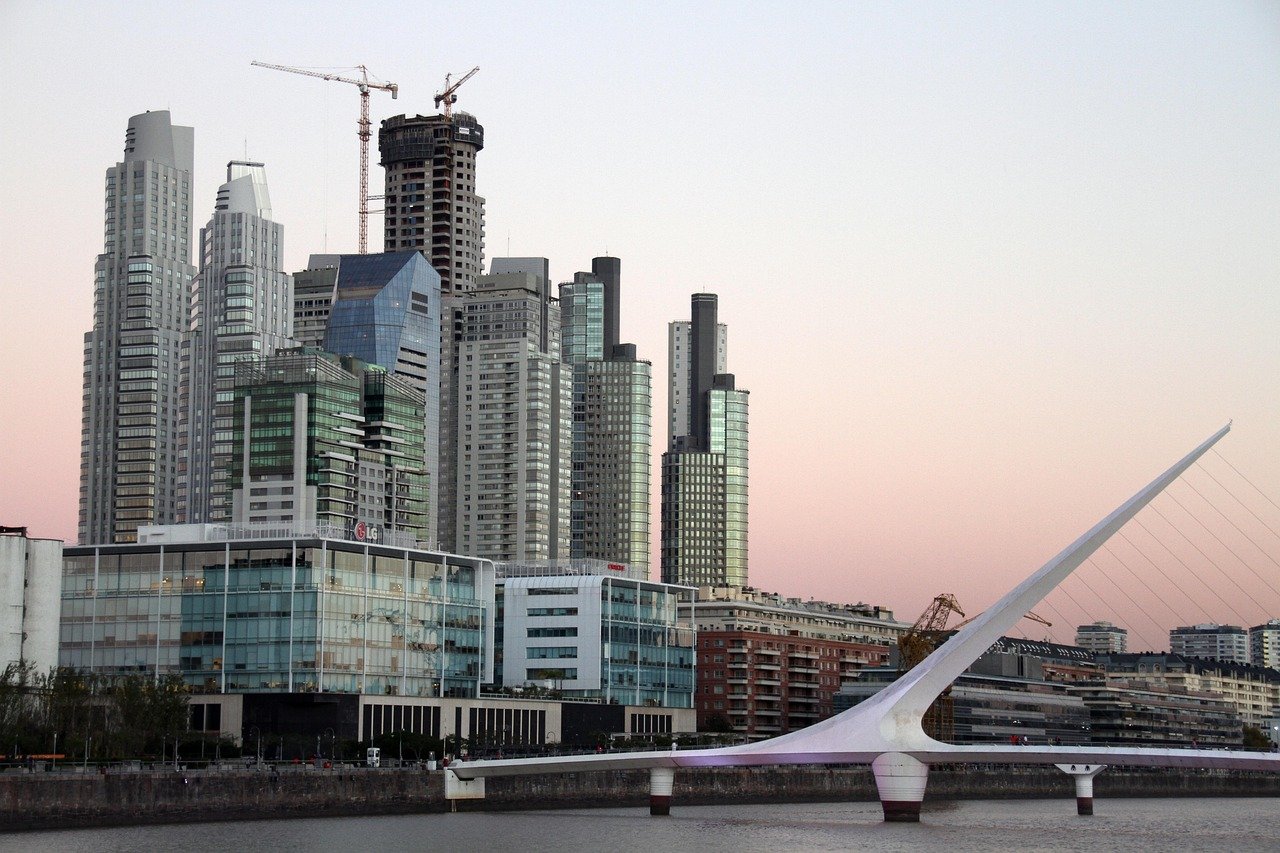
Buenos Aires needed a proper port in the late nineteenth century. The city was booming — waves of European immigrants were arriving, and beef and grain were leaving by the shipload — but the original port facilities were inadequate for the volume of trade. In 1887, Eduardo Madero, a businessman with government connections, won the contract to build a new port. The complex was completed in 1898 and consisted of four rectangular docks — numbered one through four from south to north — flanked by large red brick warehouses to store goods awaiting export. The docks were connected to the city by a rail network that moved cargo directly from ship to warehouse to train.
The trouble was that Madero’s port was already obsolete by the time it opened. Ships were getting longer, but the docks were too narrow to accommodate modern vessels, so a second port — Puerto Nuevo — was built just to the north and operational by 1925. Puerto Madero was abandoned. For the next six decades, the warehouses decayed, pigeons nested in the cranes, and the docks silted up. The area became a forgotten edge of the city, separated from the centro by a motorway and invisible to most porteños. Then, in the early 1990s, the federal government and the city of Buenos Aires jointly created a corporation to redevelop the land. The formula was straightforward: preserve the warehouses, sell the adjacent land to private developers, and use the revenue to fund public infrastructure. The results were transformative. By the turn of the millennium, Puerto Madero had gone from ruin to the most expensive real estate in Argentina.
What to See at Puerto Madero
Puente de la Mujer
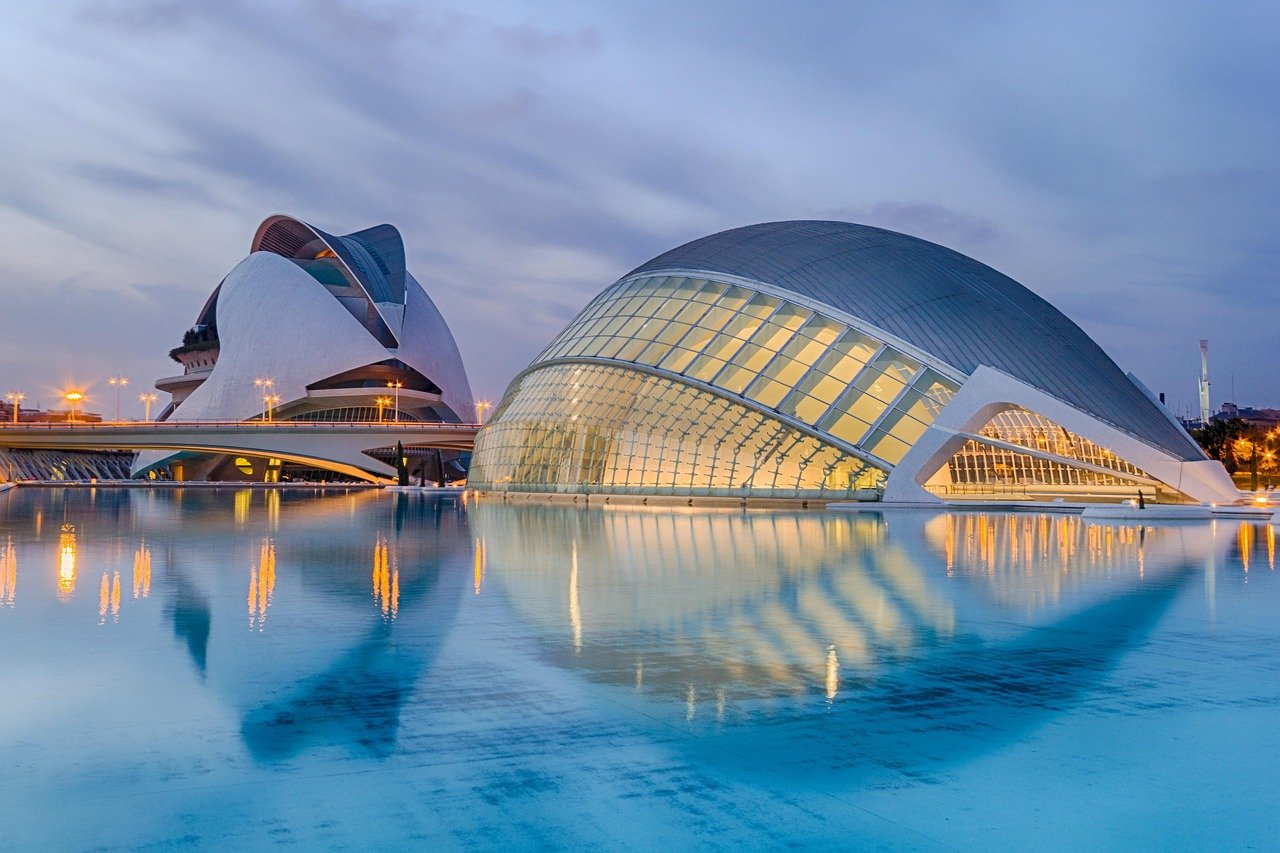
No image of Puerto Madero is complete without the Puente de la Mujer — the Bridge of the Woman. Designed by Spanish architect Santiago Calatrava and inaugurated in 2001, the pedestrian bridge spans Dock 3 with a single asymmetric white mast and a web of steel cables that together form a form reminiscent, depending on who you ask, of a couple mid-tango or a woman dancing alone. The central section — a 102-metre rotating span — pivots 90 degrees to allow tall-masted vessels to pass through the dock. In practice, the rotation happens infrequently and is announced in advance, but if you are lucky enough to witness it you will appreciate just how much engineering is hidden inside something that looks so effortlessly graceful. At night, the bridge is beautifully illuminated, and its reflection in the still water of the dock creates one of the most photographed views in the city. Arrive in the early morning or around golden hour for the best light and smaller crowds.
Reserva Ecológica Costanera Sur
Just beyond the southern end of the docks lies one of the most unexpected urban nature reserves in South America. The Reserva Ecológica Costanera Sur covers 350 hectares of wetlands, lagoons, and grasslands that developed spontaneously on reclaimed land alongside the Río de la Plata. Three lagoons — named for Seagulls, Ducks, and Otters — support over 200 recorded bird species, including roseate spoonbills, southern lapwings, and great kiskadees. Capybaras occasionally waddle across the paths, utterly unimpressed by birdwatchers with expensive telephoto lenses. Entry is free, and the reserve is open Tuesday through Sunday. Early morning visits in spring (September–November) are especially rewarding for birders. Bring water and sunscreen — there is almost no shade on the main trails during summer — and rent a bicycle from one of the stands near the entrance for a faster circuit of the reserve’s 12 kilometres of paths.
The Warehouse Restaurants and Bars
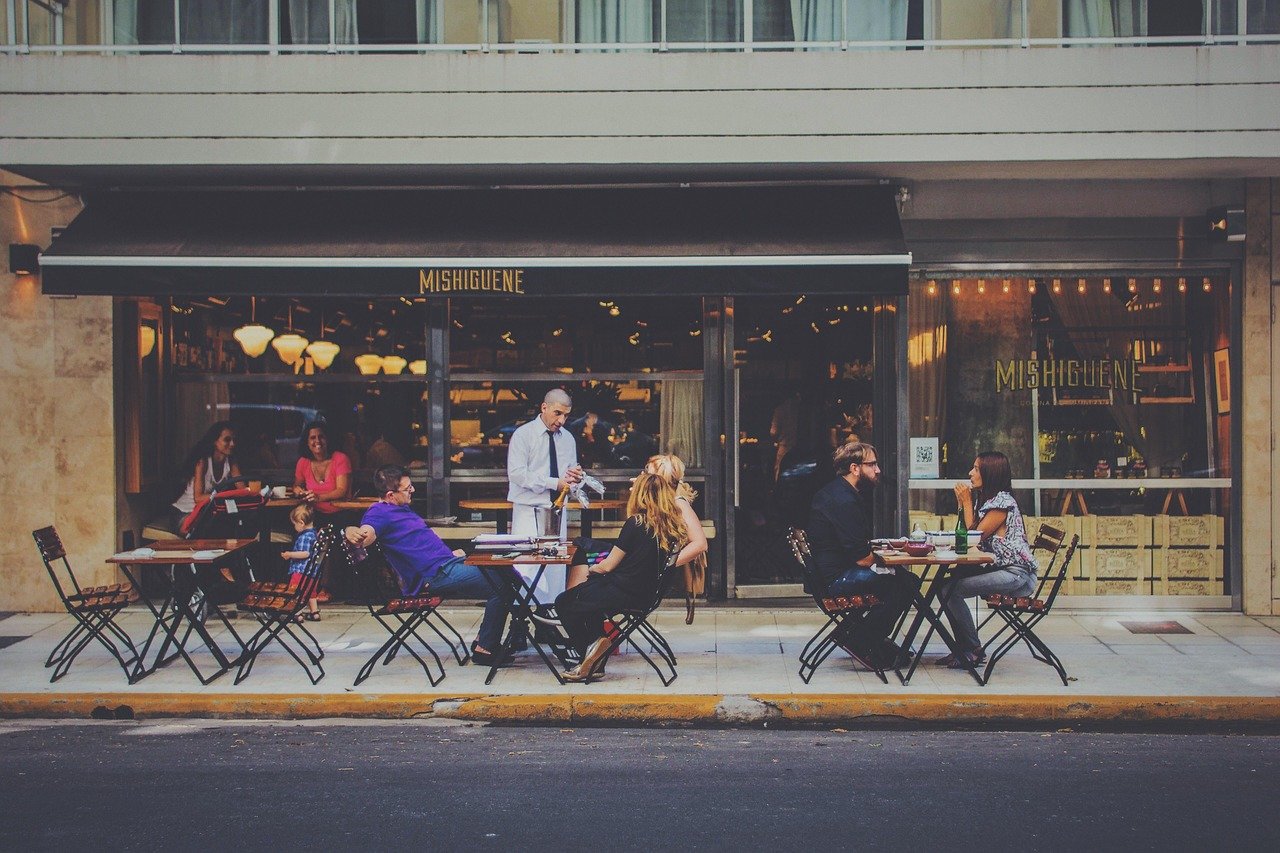
The original Madero warehouses — now beautifully restored — run in two parallel rows along both sides of each dock. Most of them house restaurants, and Puerto Madero’s dining scene has long been the most concentrated and upscale in Buenos Aires. Cabaña Las Lilas is the most famous address, serving prime Argentine beef from its own ranch and collecting accolades from the New York Times and Wine Spectator alike. For something more casual, Siga La Vaca offers an exceptional all-you-can-eat parrilla with unlimited salad bar and house wine — exceptional value by Buenos Aires standards. Lucciano’s, meanwhile, has become a city-wide institution for gelato, and its Puerto Madero branch is a perfect stop on a long afternoon walk along the docks. Several bars occupy the most scenic spots facing the Puente de la Mujer, making this the ideal area for an aperitivo as the sun goes down.
Local Insights
A few insider tips will make your visit to Puerto Madero smoother and more rewarding:
- Come on weekday evenings for restaurant reservations: The top parrillas in Puerto Madero — especially Cabaña Las Lilas — fill up fast on weekends. Booking a Tuesday or Wednesday dinner gives you a far better chance of a prime table with dock views, and some places offer reduced covers on off-peak nights.
- Walk the full docks circuit: The four docks run for about 2 kilometres end-to-end. Start from Dock 1 in the south near the ecological reserve and walk north to Dock 4 for the widest view of the waterfront. The return leg on the opposite side passes through different restaurant clusters and feels like a different walk entirely.
- Visit the museum ships for free on certain days: The Buque Museo Corbeta ARA Uruguay (an 1874 Antarctic rescue vessel) and the Fragata ARA Presidente Sarmiento (a 1897 training ship) are moored in the docks and open to the public. Check ahead for free-entry days and allow 30–45 minutes per ship.
- Rent a bicycle from the ecological reserve entrance: Buenos Aires’ EcoBici public bike system has several stations near Puerto Madero. Registered users can borrow bikes free for up to 30 minutes, which is more than enough to cruise the docks and into the reserve. App registration is quick and the bikes are in good condition.
- Stay past midnight if you want the bridge to yourself: By 1 a.m. the restaurants are closing and the promenade empties out. The Puente de la Mujer at this hour — lit in white, perfectly reflected in the still water — is a genuinely magical sight and you will very likely have it to yourself.
Boat Trips and Day Excursions
Puerto Madero is not just a destination in itself — it is also the departure point for some of the most enjoyable excursions available from Buenos Aires. Sturla Viajes operates regular boat services from the port to Tigre, a river-delta town of waterways, wooden houses, and rowing clubs about 30 kilometres to the north. The journey takes under two hours and deposits you in a completely different landscape — one of willows, canoes, and fruit vendors — before returning you to Puerto Madero by late afternoon. A faster option is the ferry to Colonia del Sacramento in Uruguay (1 hour 15 minutes), a beautifully preserved colonial town across the Río de la Plata that makes for a very satisfying day trip. The Buquebus terminal is a short walk from the docks, and crossings run multiple times daily. Both excursions are bookable at the terminal or online and require no advance preparation beyond a valid passport for Uruguay.
Architecture and Urban Design
Puerto Madero’s skyline is a catalogue of contemporary architecture from the past three decades. The towers that line the western edge of the docks include work by some of the world’s most celebrated firms — Norman Foster, Philippe Starck, and César Pelli have all contributed buildings to what has become an open-air showcase of late-twentieth and early-twenty-first century design. The contrast between these gleaming towers and the preserved red brick warehouses of the 1890s creates a visual tension that is uniquely Buenos Aires: a city that has always reinvented itself without entirely erasing its past. The Faena District, anchored by the Philippe Starck-designed Hotel Faena, deserves special attention — its interior is a theatrical exercise in scarlet, gold, and Argentine kitsch that manages to be simultaneously absurd and magnificent. Even if you are not staying there, the hotel’s bar and arts spaces are accessible to visitors.
Planning Your Visit
- Tickets: Free admission to the waterfront promenade and docks. Reserva Ecológica Costanera Sur is free (open Tue–Sun). Museum ships charge a small fee (approx. ARS 2,000–3,000 / USD 2–3 per vessel).
- Opening hours: The docks and promenade are open 24 hours. The ecological reserve is open Tuesday–Sunday approximately 8:00 AM–7:00 PM (times vary seasonally). Museum ships typically open 10:00 AM–6:00 PM.
- Best time: Late afternoon into evening for the best light on the Puente de la Mujer. September through November (spring) for birdwatching in the ecological reserve. Avoid midday in summer (December–February) as the promenade has little shade.
- Duration: Allow 2–3 hours for the docks and Puente de la Mujer alone; add a half-day if you plan to visit the ecological reserve or dine at one of the restaurants.
- Booking: No booking required for the waterfront. Reserve restaurant tables in advance — especially Cabaña Las Lilas on weekends — via their websites or OpenTable.
Getting There
- Subte (subway): Line B to L.N. Alem station, or Line A to Peru station. From either station, Puerto Madero is a 10–15 minute walk east along Avenida Corrientes or Avenida de Mayo toward the river.
- By car: There is paid parking along Avenida Alicia Moreau de Justo and in several private lots within the neighbourhood. Traffic can be heavy at peak dining hours on Friday and Saturday evenings.
- On foot: Puerto Madero is a 10-minute walk from Plaza de Mayo and the historic centre, making it easy to combine with visits to the Casa Rosada and Cabildo.
- Taxi/ride-share: Uber, Cabify, and traditional radio taxis all drop directly on Avenida Alicia Moreau de Justo running alongside the docks. State your preferred dock number (1 through 4) to your driver to be dropped at the right point.
Frequently asked questions
Is Puerto Madero safe to visit at night?
Puerto Madero is generally considered one of the safest neighbourhoods in Buenos Aires, even after dark. The docks are well-lit, the restaurants are busy until midnight or later, and there is a steady police presence along the main promenade. Standard precautions apply — keep your phone in your pocket, be aware of your surroundings, and avoid the darker side streets at the very edge of the neighbourhood. The area around the Puente de la Mujer and the main restaurant row is particularly lively and safe well into the early morning hours on weekends.
What is the Puente de la Mujer and why is it famous?
The Puente de la Mujer is a pedestrian bridge spanning Dock 3 in Puerto Madero, designed by Spanish architect Santiago Calatrava and opened in 2001. It is famous for its elegant asymmetric design — a single white mast and a web of steel cables — which many interpret as representing a couple dancing tango. The central section of the bridge rotates to allow tall vessels through the dock, though this happens infrequently. The bridge has become the defining icon of Puerto Madero and one of the most photographed landmarks in Buenos Aires, particularly at night when it is illuminated and reflected in the calm water below.
Are there free things to do in Puerto Madero?
Yes — quite a few. Walking the full docks circuit along the waterfront is entirely free and one of the most pleasant urban strolls in Buenos Aires. The Reserva Ecológica Costanera Sur charges no entry fee and offers hours of birdwatching and nature walking. The Puente de la Mujer is a public pedestrian bridge with no charge to cross. The EcoBici public bike system has stations nearby and offers free 30-minute rides for registered users. Even window-shopping the restaurant menus and watching the boats in the marina costs nothing.
How do Puerto Madero’s restaurants compare in price to the rest of Buenos Aires?
Puerto Madero is unequivocally the priciest dining district in Buenos Aires. A full dinner with wine at Cabaña Las Lilas will typically cost USD 60–100 per person at current exchange rates — expensive even by international standards. That said, more accessible options exist. Siga La Vaca’s all-you-can-eat parrilla runs around USD 25–30 per person including wine, which is excellent value for the quality. Casual food stands near the ecological reserve serve choripán and empanadas for a few hundred pesos. For visitors on a tighter budget, grazing and walking is an entirely satisfying way to spend time here.