
Pergamon Museum (Pergamonmuseum)
The Pergamon Museum sits on Museum Island in the heart of Berlin like a stone confession: here, in the early twentieth century, German archaeologists excavated some of the ancient world’s most extraordinary monuments and shipped them — stone by stone, brick by brick — to the banks of the Spree. Whatever your feelings about how it came to be here, the Pergamon Altar — a colossal second-century BC Greek altar with a 113-metre frieze depicting the battle between gods and giants — is one of the most overwhelming works of art in human history, and standing before it in a heated museum in Berlin is an experience that rewires your sense of what antiquity could achieve.
History of the Pergamon Museum
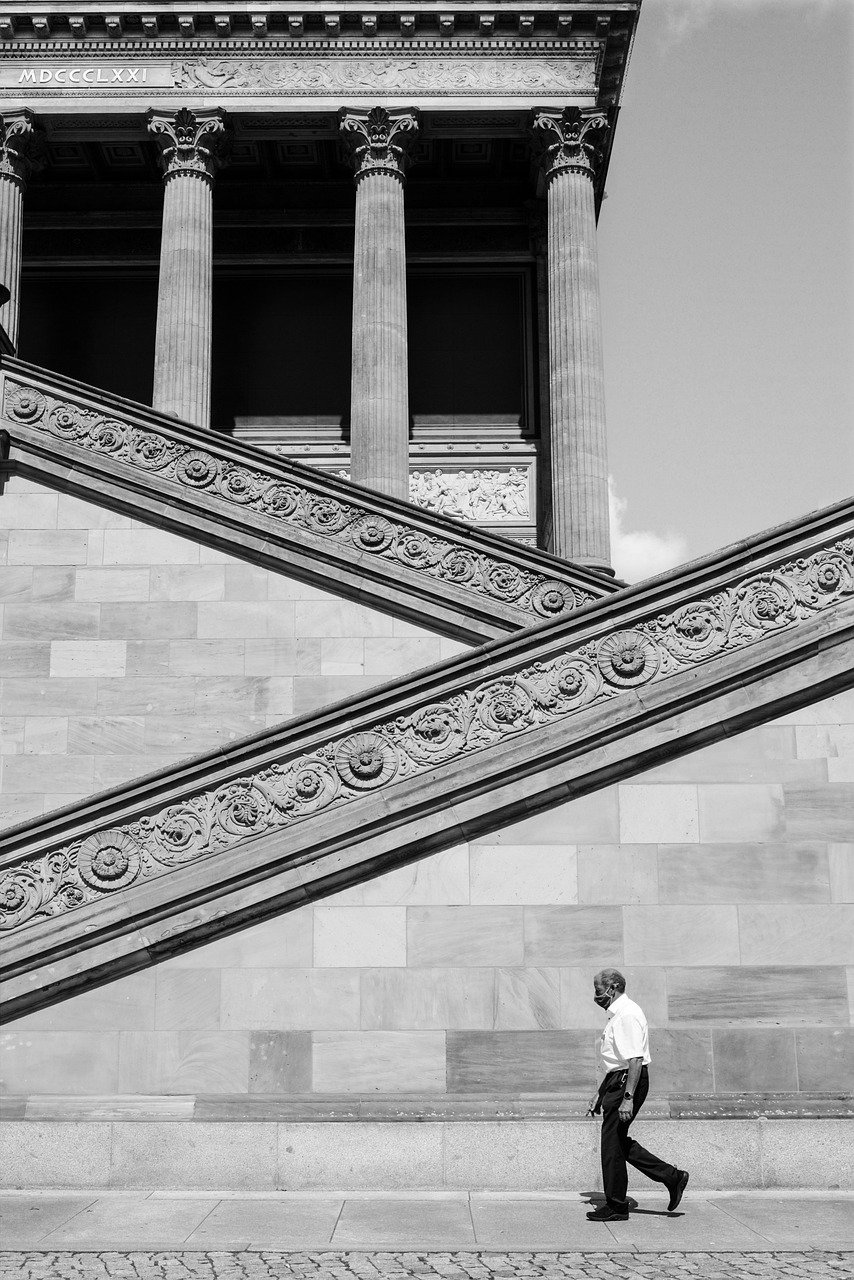
The museum takes its name from the ancient city of Pergamon in modern Turkey, from whose excavations the great altar came. German archaeologist Carl Humann discovered the altar in 1878 and negotiated with the Ottoman government for its transfer to Berlin. The altar was reassembled and first displayed in 1901, and the current museum building — a monumental neoclassical structure designed by Alfred Messel and Ludwig Hoffmann — opened in 1930, built specifically to house these colossal monuments. The museum also received the Ishtar Gate of Babylon (rebuilt from 14,000 fragments excavated by Robert Koldewey between 1899 and 1914) and the Market Gate of Miletus, creating a collection of ancient Near Eastern and classical Greek architecture unmatched anywhere outside the source countries themselves.
The museum was heavily damaged in the Second World War and further depleted when Soviet forces removed thousands of objects to Moscow in 1945. Many were returned to East Germany in the 1950s, but some remain in Russia — a source of ongoing diplomatic tension. The postwar museum was restored and has operated as one of Germany’s most-visited museums ever since. A comprehensive renovation programme begun in 2023 has temporarily closed the main hall containing the Pergamon Altar, but the Ishtar Gate, the Processional Way, and the museum’s other major collections remain accessible during the renovation period.
What to See
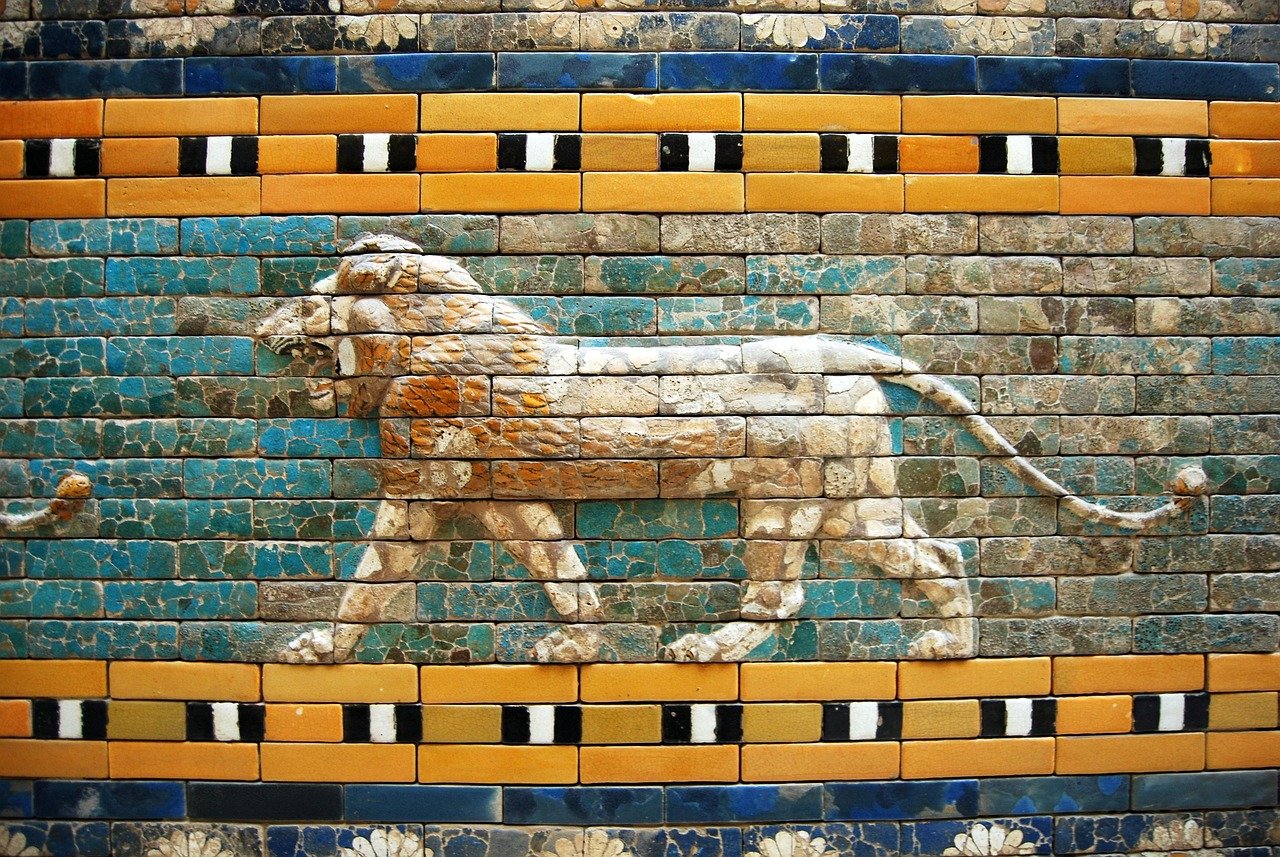
The Ishtar Gate — commissioned by Nebuchadnezzar II of Babylon around 575 BC — is the museum’s most visually spectacular accessible object during the renovation. Constructed from deep blue glazed bricks decorated with alternating rows of lions (representing the goddess Ishtar), bulls (representing the weather god Adad), and dragons (representing Marduk), the gate stands 14 metres tall in the museum’s dedicated hall. The adjoining Processional Way extends through the museum as a recreation of the ceremonial street along which religious processions once moved.
The Museum of Islamic Art housed in the same building contains the Aleppo Room — an early seventeenth-century painted wooden reception room from a Christian merchant’s house in Aleppo, Syria, purchased and removed to Berlin in 1912. Its survival in Berlin now appears providential given the heavy damage to Aleppo’s old city during the Syrian Civil War. The room’s delicate painted panels, combining Arabic calligraphic motifs with Christian and secular imagery, are a remarkable document of multicultural life in Ottoman Syria. The antiquities collections include outstanding Greek and Roman sculpture, pottery, and architectural fragments that would be headline attractions in most European museums.
The Renovation and Museum Island

The Pergamon Altar itself has been inaccessible since October 2023 due to structural renovation of the museum’s north wing, expected to last until approximately 2037. A digital installation called “The Panorama” creates a 360-degree digital reconstruction of the ancient city of Pergamon for visitors who want the altar experience during the renovation. The rest of the museum remains fully open and is genuinely world-class.
The Museum Island complex of which Pergamon forms part — also including the Altes Museum, Neues Museum, Alte Nationalgalerie, and Bode Museum — is a UNESCO World Heritage Site and represents one of the most concentrated collections of cultural institutions anywhere in the world. The adjacent Neues Museum houses the bust of Nefertiti, one of the world’s most famous works of ancient art, while the Alte Nationalgalerie contains Berlin’s finest collection of nineteenth-century European painting. All five institutions are accessible with the Berlin Museum Pass.
Practical Information
- Tickets: Adults €14; reduced €7; Berlin Museum Pass (3 consecutive days, 30+ state museums) €32; note Pergamon Altar hall closed until approx. 2037
- Opening hours: Open daily 10:00 am–6:00 pm; Thursdays until 8:00 pm
- Best time to visit: Weekday mornings; Thursday evenings for extended hours and fewer crowds
- Duration: 2–3 hours for the Pergamon; 4–6 hours if combining multiple Museum Island institutions
- Booking: Timed-entry tickets strongly recommended; available online at smb.museum; can sell out during summer peaks
Local Insights
What locals know that guidebooks don’t always tell you:
- The Berlin Museum Pass covers all five Museum Island institutions plus 30+ other state museums for 3 days — buy it at any of the participating institutions or online. For visitors spending two or more days exploring Berlin’s museums, it saves significantly.
- During the Pergamon Altar renovation, the Bode Museum at the northern tip of Museum Island receives notably fewer visitors and is an excellent alternative — its Byzantine art collection is world-class.
- The Neues Museum immediately adjacent to the Pergamon houses the Nefertiti bust and a remarkable Egyptian collection in one of Europe’s finest museum building interiors (David Chipperfield renovation, 2009).
- Thursday evenings (open until 8pm) are the least crowded time to visit any Museum Island institution — locals take advantage of the extended hours after work.
- The Hackescher Markt area immediately north of Museum Island has Berlin’s best concentration of independent cafes, vintage shops, and restaurants for post-museum exploration.
Getting There
- S-Bahn: S3/S5/S7/S9 to Hackescher Markt; 10-minute walk south across Museum Island
- U-Bahn: U6 to Friedrichstraße; 10-minute walk east along the Spree
- Bus: Routes 100 and 200 stop at Lustgarten directly opposite the museum entrance — these routes serve both the Brandenburg Gate and Alexanderplatz
- Tram: M1, M2, M4, M5, M6 to Hackescher Markt then walk
Frequently asked questions
Is the Pergamon Altar currently accessible?
No — the north wing containing the Pergamon Altar has been closed since October 2023 for structural renovation expected to last until approximately 2037. The museum’s other collections (Ishtar Gate, Processional Way, Islamic Art, antiquities) remain fully accessible. A separate digital Panorama installation offers a 3D reconstruction of ancient Pergamon during the renovation period.
Is the Pergamon Museum worth visiting during the renovation?
Yes. The Ishtar Gate and Processional Way alone are extraordinary. The Islamic Art collection including the Aleppo Room is world-class. The antiquities collection beyond the Altar is strong. Many visitors report the museum feels slightly less crowded during the renovation period as disappointed tourists who came only for the Altar leave quickly, giving more space to those who explore thoroughly.
Where is the Nefertiti bust?
The famous bust of Nefertiti is in the Neues Museum, a separate institution immediately adjacent to the Pergamon on Museum Island. It is accessible with the same Museum Pass or a separate Neues Museum ticket. The Neues Museum visit is highly recommended alongside the Pergamon.
What is the Berlin Museum Pass and is it worth it?
The Berlin Museum Pass (Museumspass Berlin) provides admission to all state-owned Berlin museums for three consecutive calendar days at a cost of €32 for adults. It covers all five Museum Island institutions plus the Gemäldegalerie, Ethnological Museum, and many others. For anyone planning to visit three or more museums, it saves money immediately.
How do I get from the airport to Museum Island?
From Berlin Brandenburg Airport (BER), take the Airport Express (FEX) or S9 S-Bahn toward the city centre; change at Ostkreuz to S5/S7 toward Hackescher Markt (total journey approximately 45 minutes). Alternatively, take a taxi or rideshare (approximately €35–45 to Museum Island).