
Parque Nacional do Iguaçu
There is a moment on the walkway at Parque Nacional do Iguaçu when the forest opens and the world seems to end in white water. Some 275 individual cascades spread across nearly 3 kilometres of the Iguaçu River, plunging up to 82 metres into a boiling canyon of mist and rainbows below. The sound is not noise — it is weather. Eleanor Roosevelt, on her first sight of the falls in 1934, reportedly whispered “Poor Niagara.” The Brazilian national park hugs the eastern rim of this UNESCO World Heritage site, offering an immersive, jungle-fringed panorama of the entire horseshoe that no postcard has ever quite managed to capture. This is the Brazil that earns its place on every bucket list.
History of Parque Nacional do Iguaçu
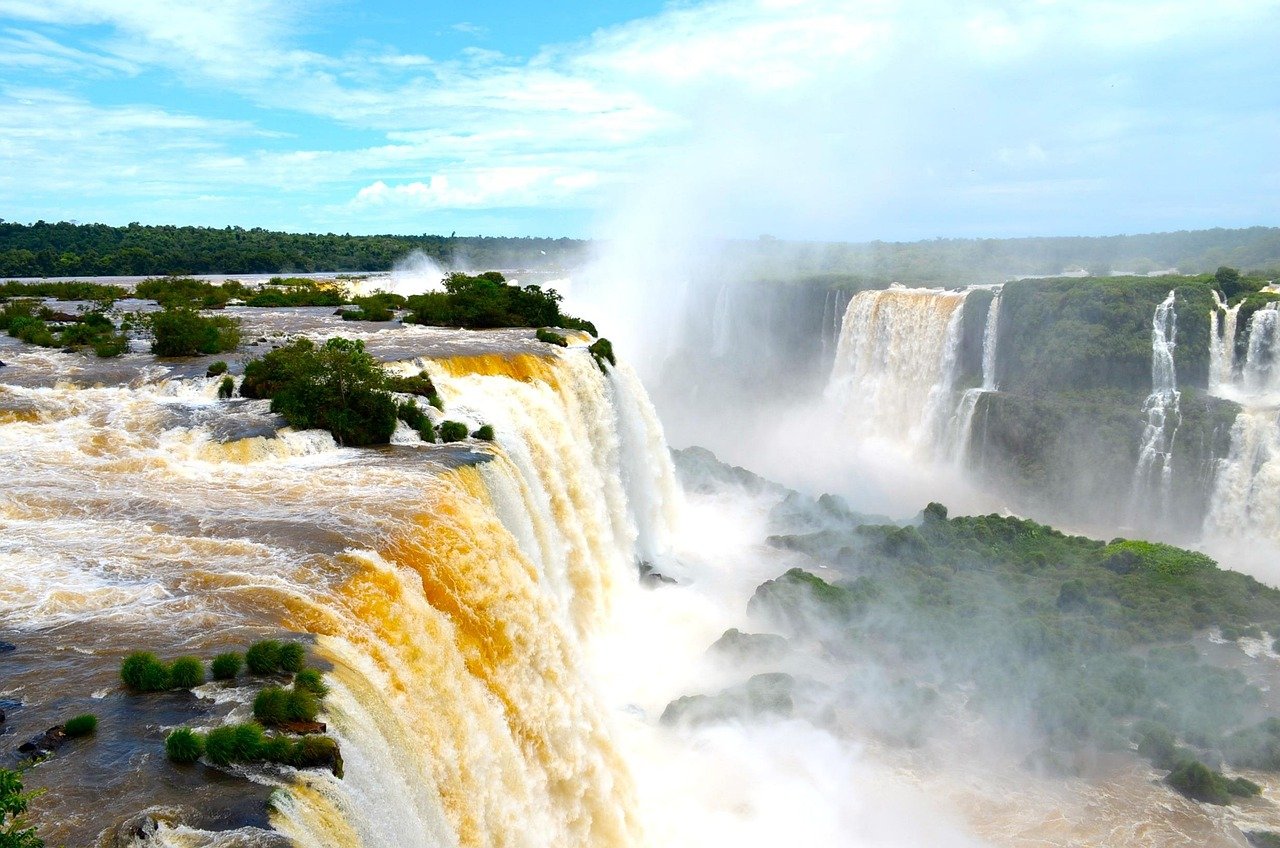
The Iguaçu Falls were known to the Guaraní people — whose name for them, “Y Guasu,” meaning “big water,” gave the river and eventually the falls their name — long before Europeans arrived in South America. The Spanish conquistador Álvar Núñez Cabeza de Vaca is credited as the first European to document them, in 1541, though his crossing of the continent was so extraordinary that the falls barely merited a full paragraph in his account. It took another three centuries before the region drew sustained outside interest, when Argentine and Brazilian explorers in the late 1800s began mapping and publicizing what they found.
Brazil established the Parque Nacional do Iguaçu in 1939, following Argentina’s creation of its adjacent park in 1934. Both parks were jointly inscribed as UNESCO World Heritage Sites in 1984 and 1986 respectively. The Brazilian park covers 185,262 hectares of Atlantic Forest — one of the world’s most biodiverse and most threatened biomes — and the falls themselves sit at its southwestern corner where the Iguaçu River meets the Paraná. Conservation efforts since the 1980s have allowed wildlife populations to recover: jaguars now roam the deeper forest zones, and coatis — the raccoon-like mammals that fearlessly approach visitors on the walkways — have become icons of the park’s ecological health. Flood events have periodically closed sections of the park, but the infrastructure that channels hundreds of thousands of annual visitors has been progressively improved without compromising the wild spectacle itself.
What to See at Parque Nacional do Iguaçu
The Main Waterfall Trail
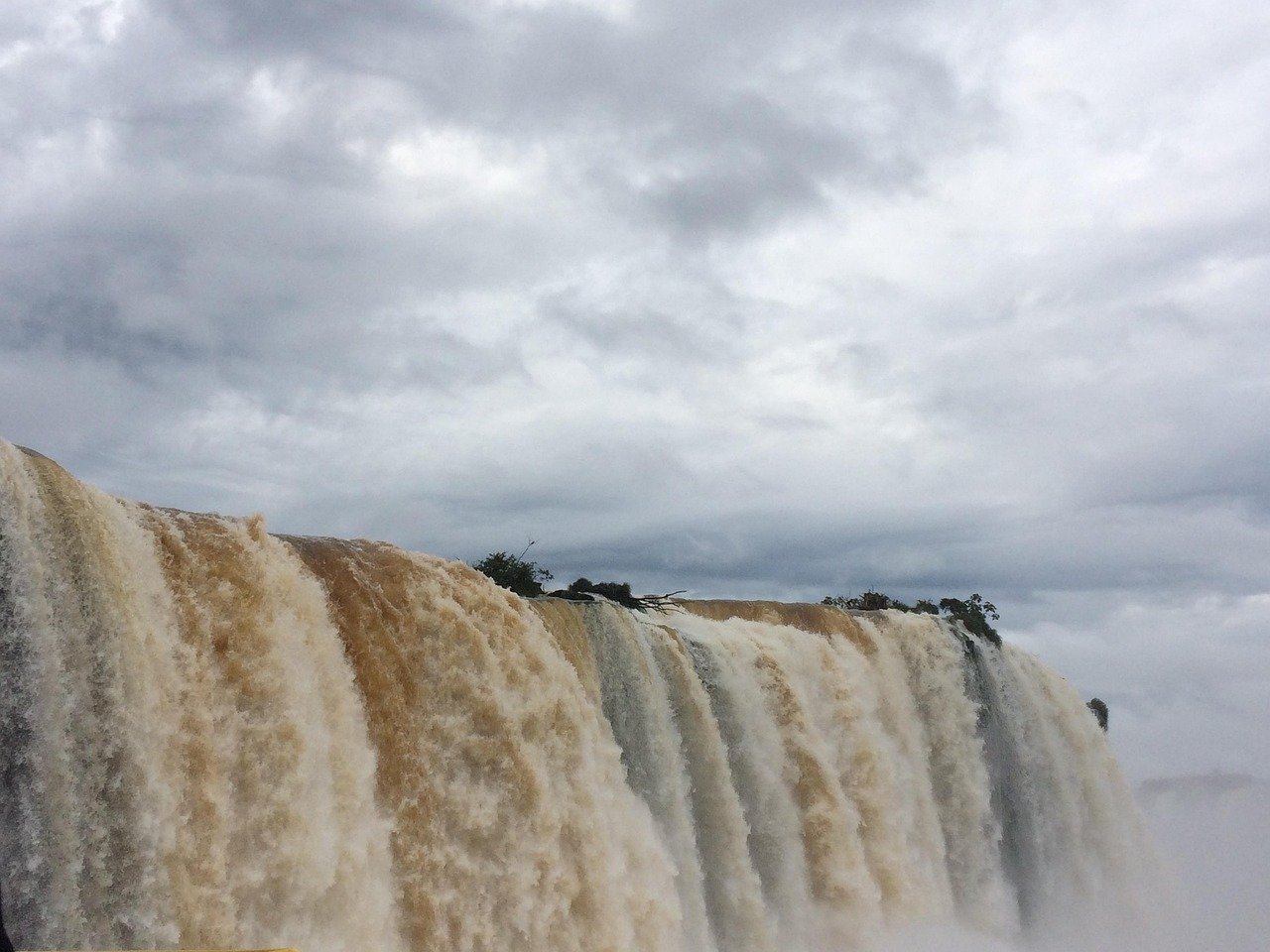
The Brazilian side’s great strength is its panoramic perspective — the paved, accessible trail descends through subtropical forest and emerges at a series of elevated platforms and catwalks that give you a sweeping view of the entire arc of the falls from above and at eye level. The trail culminates at a walkway jutting out directly above the thundering base of one of the falls’ most dramatic sections, where you will get definitively, enthusiastically wet regardless of the season. The official trail takes around 1.5 to 2 hours to walk at a comfortable pace, but few visitors resist lingering at each platform. The trail is largely accessible for wheelchair users and strollers on its upper sections, though the final descent to the waterfront walkway involves steps. Free double-decker buses shuttle visitors from the park entrance to the trailhead, saving a 9-kilometre walk through the forest. Bring a waterproof bag for camera equipment — the mist carries further than it appears, and a dry phone is a happy phone.
Macuco Safari and Boat Rides

For those who want to go beyond the walkways, the Macuco Safari (operated separately from the park entrance ticket, priced around R$250–350 per person depending on season and operator) offers an electric jeep ride through the Atlantic Forest followed by an optional inflatable boat ride directly into the base of the falls. The jeep trail passes through old-growth forest where giant bamboo groves, orchids, and bromeliads compete for light under a closed canopy. Naturalist guides point out orchid species, leaf-cutter ant columns, and the occasional capuchin monkey in the branches above. The boat section brings visitors within metres of the cascades in a deliberately soaking spectacle that leaves no dry thread of clothing — a crowd-pleasing finale. The Atlantic Forest surrounding the falls is home to over 650 bird species including the iconic toco toucan, roseate spoonbill, and dozens of hummingbird species, making this one of the most productive birdwatching destinations in all of Brazil for keen naturalists.
The Argentine Park and Devil’s Throat
Many visitors crossing from Brazil into Argentina (a short bus ride via Foz do Iguaçu) discover that the two sides offer fundamentally different experiences and are emphatically complementary rather than competitive. The Argentine Parque Nacional Iguazú places visitors amid the falls rather than opposite them — elevated walkways penetrate into the cascade system, and the lower circuit brings you face to face with individual curtains of water. The centrepiece is Garganta del Diablo (Devil’s Throat), a U-shaped chasm nearly 150 metres wide and 700 metres long where fourteen falls converge into a single roaring abyss. The mist column rises so high it can be seen from 30 kilometres away. Entry to the Argentine park costs approximately USD 30–35 for international visitors. Most travelers devoted to seeing Iguazu properly spend at least one day on each side, and the Brazilian side makes the ideal first day for the overview perspective before Argentina’s immersive walkways on day two.
The scale of biodiversity in Parque Nacional do Iguaçu is difficult to overstate. The 185,262-hectare reserve contains over 2,000 plant species, 400 bird species, 80 mammal species, and approximately 300 species of butterflies — figures that place it among the most ecologically rich protected areas in the Americas. Jaguars, pumas, giant river otters, and tapirs roam the interior forest zones, though visitors on the main tourist trail are more likely to encounter the abundant coatis, butterflies, and the resident colony of little blue herons that nest in trees near the falls. The park management works in coordination with Argentina’s adjacent Iguazú National Park to maintain wildlife corridors across the international border, recognizing that jaguars and pumas observe no political boundaries. Conservation funding comes partly from visitor entrance fees, which makes every ticket purchased a direct contribution to the protection of one of the planet’s most irreplaceable wild places.
Local Insights
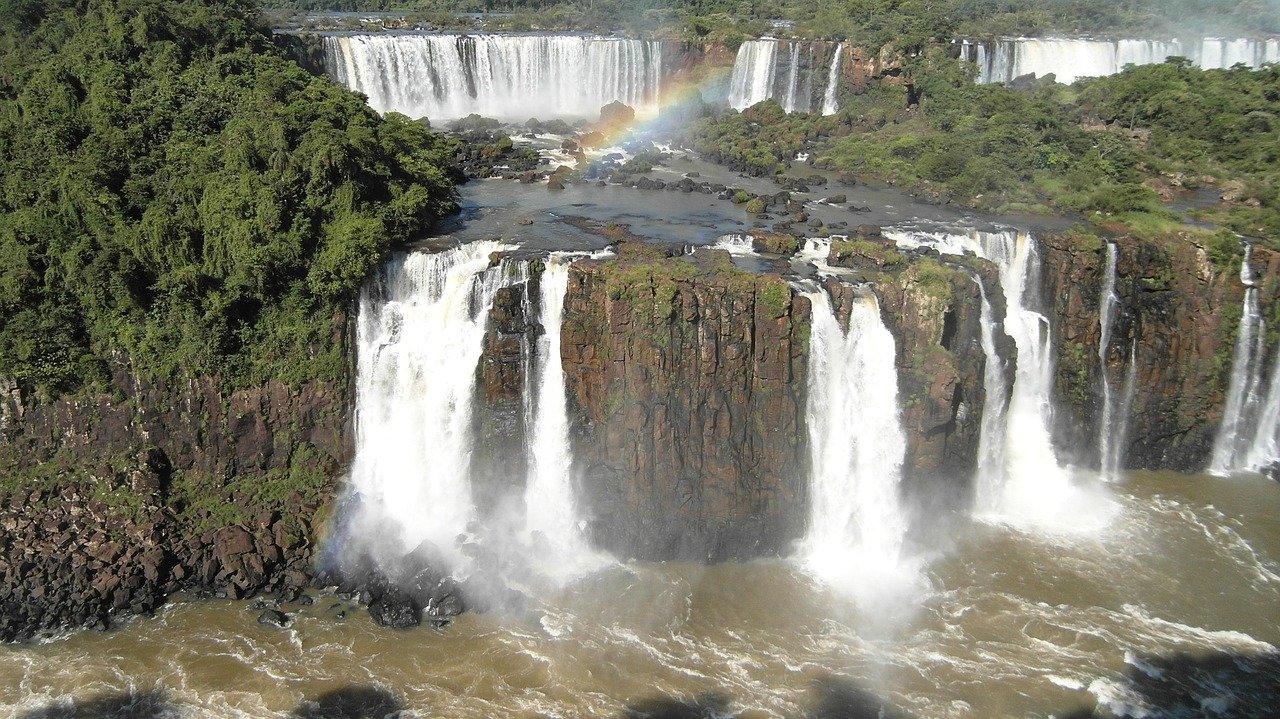
Local guides and experienced travelers share these hard-won tips for getting the best from Parque Nacional do Iguaçu.
- Arrive at opening time: The park opens at 9:00 am Monday–Friday and 8:30 am on weekends. The first buses to the trailhead leave within minutes of opening. If you are there at start of day, you will walk the main trail largely in solitude — by 11 am the walkways are busy and by early afternoon the bus queues can be long. This single tip transforms the experience completely.
- Buy tickets online in advance: The Brazilian park sells tickets via the official website tickets.cataratasdoiguacu.com.br. Online purchase avoids the queue at the gate and guarantees entry on your chosen date, which matters enormously on weekends and Brazilian public holidays when the park reaches capacity and closes early.
- Bring a dry bag and waterproof your camera: The viewing platform at the end of the Brazilian trail is spectacular, but spray drenches everything within ten metres. A simple waterproof phone pouch (available from vendors outside the park gate for R$10–20) will save your device. Professional camera users should carry an underwater housing or a reliable waterproof cover.
- Do not feed the coatis: The ring-tailed coatis that congregate around the trailhead and picnic areas are wild animals that bite without much provocation. Feeding them is prohibited and creates dependency. Watch them hunt for fallen figs in the forest — far more interesting than seeing them beg — and keep food in sealed bags or they will investigate your pack regardless.
- Combine with Itaipu Dam on a two-day itinerary: Foz do Iguaçu town sits 20 km from the national park entrance and 20 km in the opposite direction from Itaipu Dam. Dedicate Day 1 to Itaipu (morning tour, afternoon Paraguayan side), Day 2 to the Brazilian falls in the morning and the Argentine side in the afternoon — this is the complete Tri-Border experience that uses your time perfectly.
Planning Your Visit
- Tickets: Brazilian park entry approximately R$100–120 (~USD 18–22) for international visitors; lower for Brazilian nationals and Mercosur citizens (~R$90). Children under 6 free. Argentine park approximately USD 30–35 for non-Mercosur visitors. Brazilian tickets at tickets.cataratasdoiguacu.com.br.
- Opening hours: Monday–Friday 9:00 am – 5:00 pm (last entry 4:00 pm). Saturday–Sunday 8:30 am – 5:00 pm (last entry 4:00 pm). Visitors may remain inside until closing. Hours may extend in peak season.
- Best time: August–October for lower visitor numbers and lush green forest after dry-season rains. November–March has higher water flow (more dramatic falls) but also higher crowds and heat. Early morning arrival is essential year-round.
- Duration: Main waterfall trail: 1.5–2 hours walking. Allow 3–4 hours for a complete visit including bus transit and stops. Full day if adding Macuco Safari boat ride.
- Booking: Online booking strongly recommended, especially for weekends and Brazilian school holidays (July, December–January). Purchase at tickets.cataratasdoiguacu.com.br. Entry includes internal shuttle buses.
Getting There
- Bus: From Foz do Iguaçu’s urban terminal (Terminal Urbano, central Foz) the “Parque Nacional” bus runs approximately every 30 minutes and takes about 25–30 minutes to the park entrance gate. Fare around R$5. Services begin early enough to reach the park for opening time.
- By car: From central Foz do Iguaçu follow BR-469 south approximately 20 km to the park gate — well signposted throughout the city. Paid parking available at the visitor center. Drive time 20–25 minutes without traffic.
- On foot: Not feasible from Foz do Iguaçu town — the park gate is 20 km from the city center along a busy highway without pedestrian infrastructure.
- Taxi/ride-share (Uber widely available in Brazil): Uber operates in Foz do Iguaçu and is the most convenient option if you prefer not to take the public bus. Expect R$40–60 from central Foz to the park gate one way. Pre-book your return ride as Uber availability at the park gate varies.
Frequently asked questions
Should I visit the Brazilian or Argentine side of Iguazu Falls first?
The conventional wisdom — and it holds — is to visit the Brazilian side first. Brazil’s park offers a panoramic overview of the entire falls system from the rim, letting you understand the geography before you immerse yourself in it. Argentina’s park then places you among the cascades via its network of elevated walkways, culminating in the Devil’s Throat. If you only have one day, the Brazilian side offers the more dramatic single experience for photography, but Argentina’s immersive lower circuits are unforgettable. Two days is the ideal allocation to do justice to both.
Is it worth paying extra for the Macuco Safari boat ride?
For most visitors, yes — with realistic expectations. The Macuco Safari boat ride delivers the soaking of a lifetime as inflatable rafts push into the base of the falls. It is thrilling, loud, and genuinely extraordinary. However, it adds around R$250–350 to your costs, you will be completely wet for the remainder of your visit, and the wildlife jeep portion before the boat is quieter than advertised in peak season. Bring a dry bag for valuables, wear clothes you can wring out, and go in during summer when being drenched is refreshing rather than chilling.
What wildlife can I see in Parque Nacional do Iguaçu?
The park protects one of the largest remaining fragments of Atlantic Forest, one of Earth’s most biodiverse ecosystems. Common sightings along the main trail include coatis, butterflies in extravagant variety, toucans, and numerous hummingbird species. Patient visitors in the early morning may see howler monkeys, capuchin monkeys, and a stunning array of forest birds. Tapirs and giant anteaters inhabit the park’s interior but rarely approach the tourist zone. The Macuco Safari trail into the forest gives better chances of forest-interior species. Jaguars are present but extremely rarely seen by visitors.
Can I visit Iguazu Falls and Itaipu Dam on the same day?
You can — but it will feel rushed and you will not do justice to either. Itaipu’s Brazilian side tours (even just the Panoramic) take around 70 minutes plus transit, and the national park’s waterfall trail takes 1.5–2 hours minimum. The combined driving between sites adds 45 minutes each way. A far better plan is to dedicate one full day to each attraction, using Foz do Iguaçu as your base. The city has accommodation for every budget, excellent churrascaria restaurants, and is genuinely set up for this dual-attraction itinerary.