
Palace of Catalan Music (Palau de la Música Catalana)
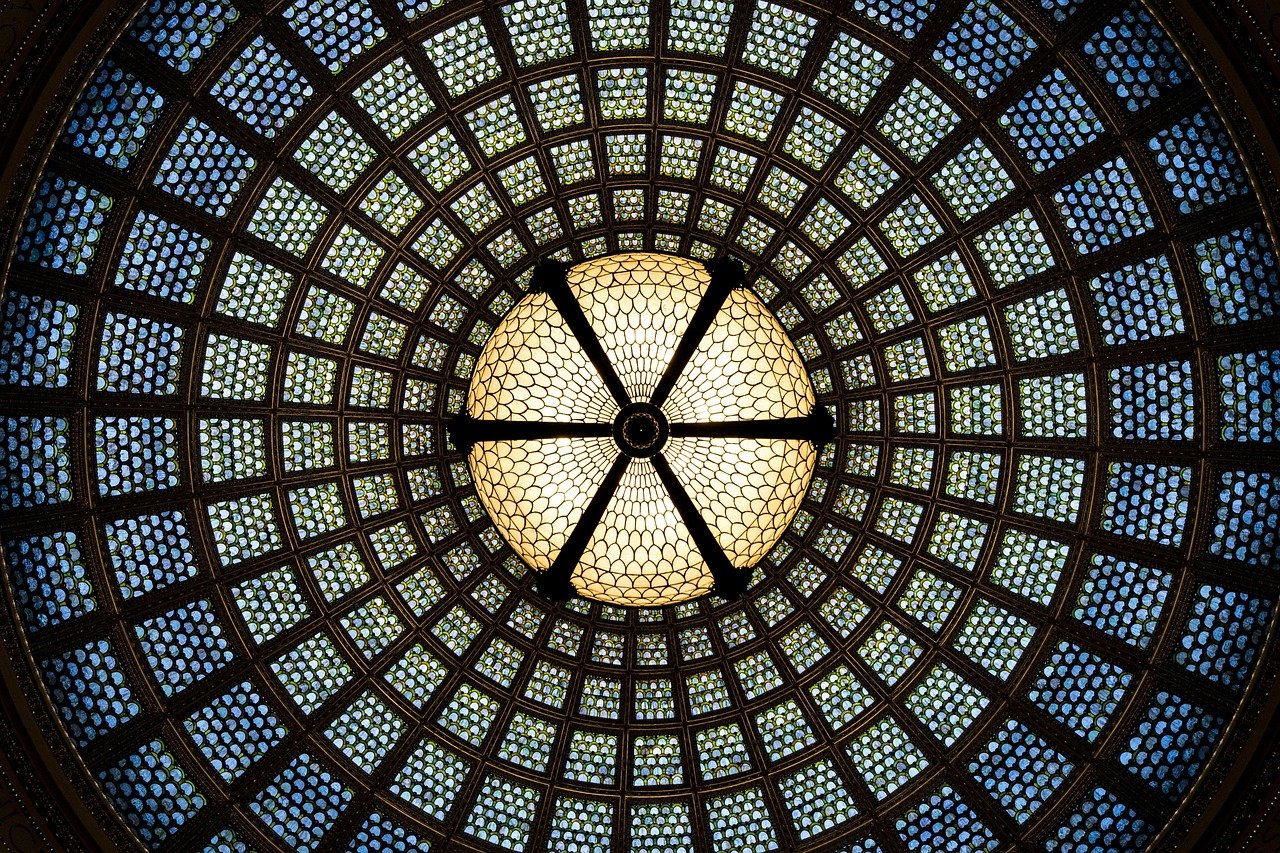
The concert hall of the Palau de la Música Catalana is among the most beautiful rooms built by human hands in the 20th century. Light pours through a central stained-glass skylight of 40 inverted domes — an enormous flower of amber, yellow, and blue glass suspended above the audience — and through the walls of stained glass on all sides, suffusing the entire space in a warm, trembling luminosity. The music, when it plays, seems to rise from the very materials of the room: the terracotta reliefs, the mosaic columns, the ceramic flowers erupting from every surface. Lluís Domènech i Montaner built this as a sanctuary for Catalan folk music, and it remains a sanctuary — for music, for craftsmanship, for an idea of culture as something that should be as beautiful as the art it contains.
History of the Palau de la Música Catalana
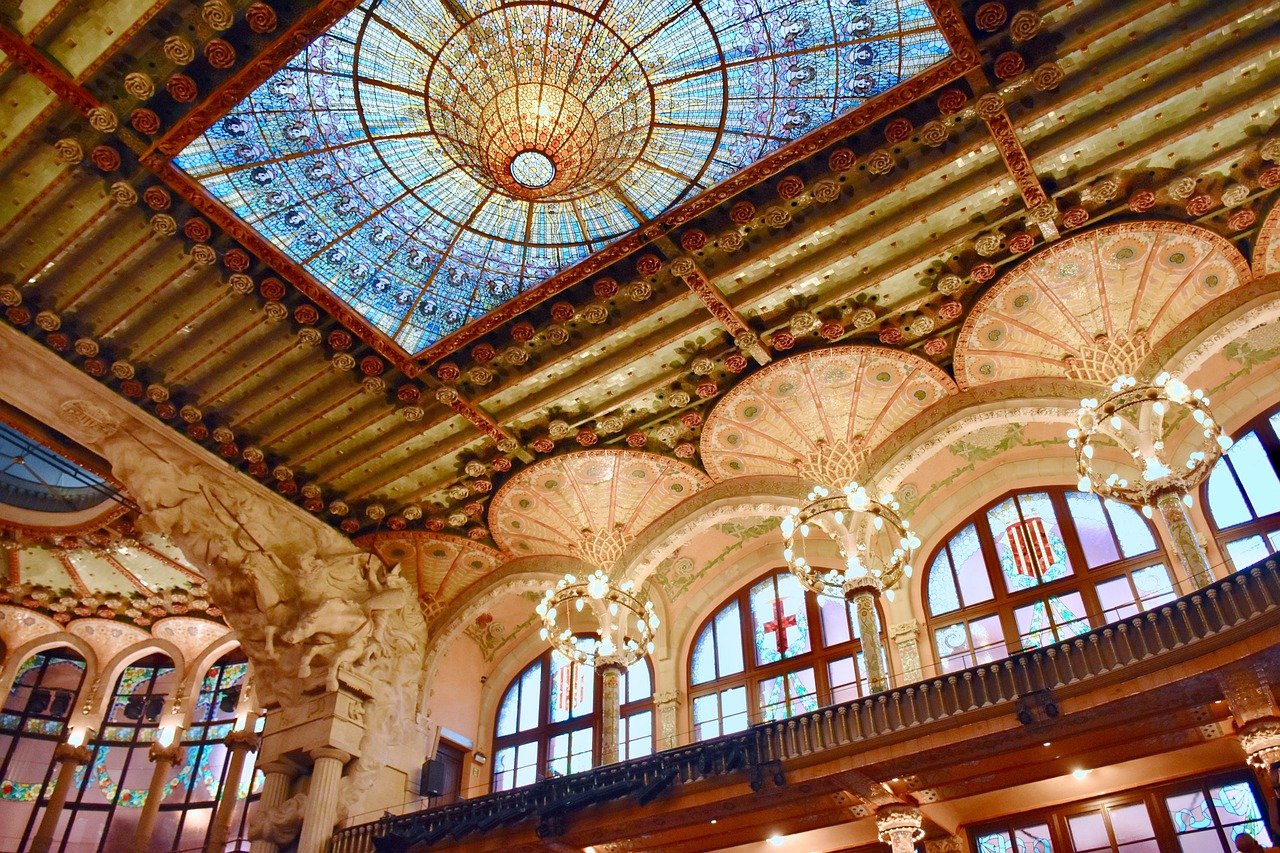
The Palau de la Música was commissioned by the Orfeó Català — the Catalan choral society founded in 1891 as part of the broader Renaixença, the cultural and political renaissance of Catalan identity in the late 19th century. The Orfeó Català had become the most important vehicle for promoting Catalan folk song, and its leaders wanted a permanent home that would embody their artistic and national aspirations in architectural form. They chose Lluís Domènech i Montaner — the greatest practitioner of Catalan Modernisme after Gaudí and arguably a more consistent architect — for the commission.
Domènech i Montaner designed the Palau to occupy a cramped site in the old Sant Pere neighborhood, squeezed between existing buildings. His solution was to bring light and decoration from every available surface, treating the exterior as an intricate advertisement for what lay within. Construction ran from 1905 to 1908, and the building was inaugurated in February 1908. It was declared a UNESCO World Heritage Site in 1997, part of the “Modernista Architecture in Catalonia” designation. A major extension designed by Óscar Tusquets Blanca was added in 2003, doubling the venue’s facilities while preserving the original building intact.
What to See
The building’s exterior is a tapestry of mosaic, terracotta, and sculpture. The main facade on Carrer del Palau de la Música features the famous busts of Bach, Beethoven, Palestrina, and Wagner arranged as a music pantheon alongside Catalan composer Anselm Clavé. The ceramic panels and ironwork columns of the exterior arcade are among the finest surviving examples of Modernista craftsmanship. The concert hall itself, reached via a broad staircase, is the building’s revelation: the stained-glass skylight dominates, but every surface rewards closer inspection — sculptural busts of 18 muses emerge from the back wall of the stage, the iron balcony railings are individually wrought floral designs, and the acoustic panels in the ceiling are a master class in integrating function with beauty.
Guided tours run daily and provide access to areas normally reserved for performers and staff, including the rehearsal rooms, the stage area, and detailed explanations of the building’s structural innovations. Domènech i Montaner constructed the hall with a steel frame — highly unusual in 1905 — which allowed the massive glass walls to be used as the primary source of illumination rather than artificial lighting. The result is a space that transforms across the day as the angle and quality of natural light shifts, making no two visits identical.
Music at the Palau
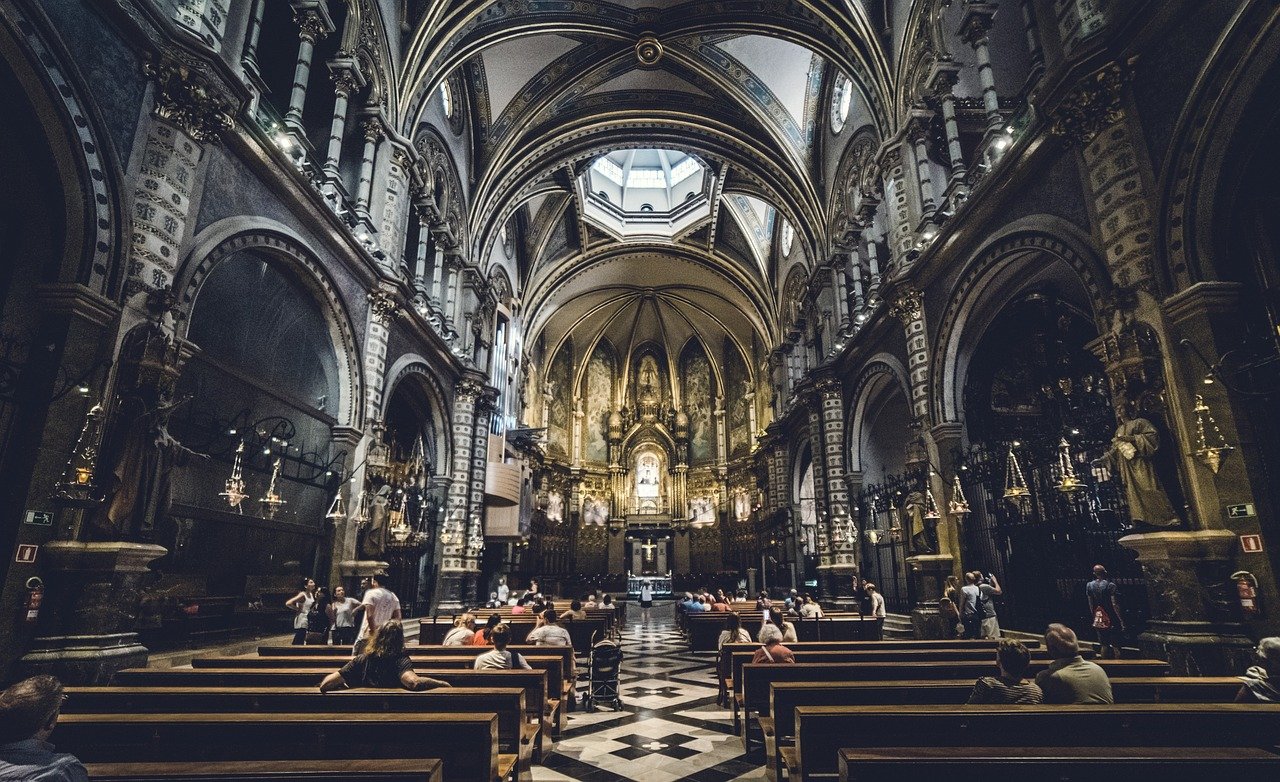
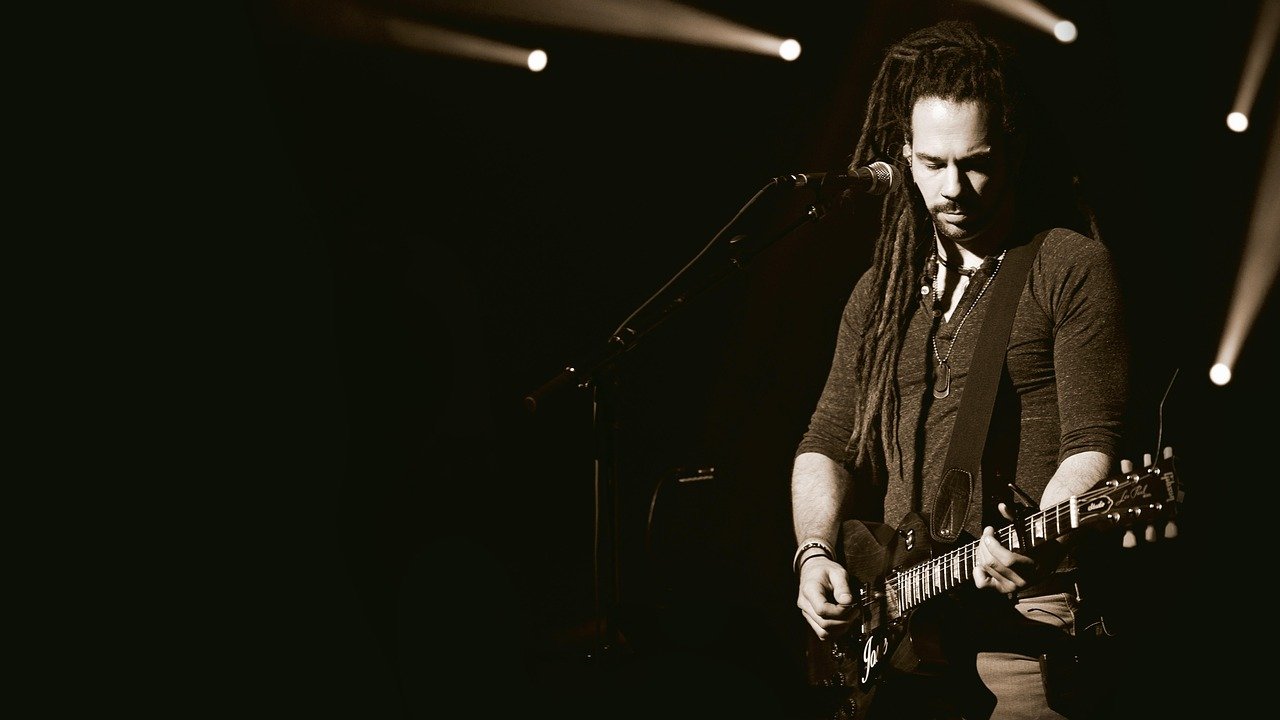
The Palau is first and foremost a functioning concert hall — it hosts around 300 performances a year, ranging from the Orfeó Català’s own choral concerts to international chamber orchestras, jazz performances, flamenco shows, and the Barcelona Guitar Festival. The hall’s acoustics, designed in an era before modern acoustic modeling, have been consistently rated among the finest in the world — the natural resonance and warmth of the stone and ceramic surfaces create a listening environment that electronic technology has struggled to replicate. Attending a concert here is among the finest musical experiences Barcelona offers.
The programming balances the Palau’s function as a Catalan cultural institution with its role as an international venue. The Orfeó Català still performs here regularly, and certain dates — particularly around Sant Jordi (April 23, Catalonia’s national day) — are celebrations of Catalan musical heritage with concerts that sell out months in advance. The acoustics favor chamber music and vocal performance over large orchestral works, though the hall accommodates full symphonic programming. Attending even a single concert — rather than only a daytime tour — transforms the building from beautiful artifact into living experience.
Practical Information
- Tickets: Guided tour: €22 adults, €20 students/seniors, €11 children under 12; concert tickets €38–€60+ depending on performance and seating; book online at palaumusica.cat
- Opening hours: Tours daily 9:00am–3:00pm; box office Mon–Sat 9:30am–3:30pm, also 2 hours before concerts; closed Christmas Day
- Best time to visit: Morning tours for best natural light in the concert hall; attending a concert rather than a tour gives the fullest experience; Sant Jordi period (April) for special programming
- Duration: Guided tour 55 minutes; concerts 90 minutes–2 hours
- Booking: Book tour and concert tickets well in advance at palaumusica.cat; guided tours in multiple languages; phone booking also available for non-internet users
Local Insights
What locals know that guidebooks don’t always tell you:
- Attending a concert is dramatically more affordable than it sounds — tickets for chamber music or choral performances can be as low as €15–25, and the experience of hearing music in the Palau is genuinely transformative in a way that a daytime tour cannot fully capture.
- The morning light in the concert hall (10–11am) is the most dramatic — the eastern orientation means the stained glass skylight blazes with warm morning sun, and the overall effect is overwhelming. If possible, time your tour slot for this window.
- The building is in the old Sant Pere neighborhood, which has some of Barcelona’s most genuine old-town atmosphere and least-tourist infrastructure — walk around before or after your visit for a more authentic Barcelona streetscape than the Barri Gòtic provides.
- Domènech i Montaner’s other masterpieces are equally magnificent and far less visited: the Hospital de Sant Pau (20 minutes walk north) is a UNESCO site of extraordinary beauty that rivals the Palau in decorative ambition and receives a fraction of the visitors.
- The Palau has a café in the extension that is a pleasant stop — the architecture here by Tusquets Blanca is deliberately modern but respectful, and the terrace space is a good place to decompress after the sensory intensity of the main building.
Getting There
- Metro: L1 (Red Line) or L4 (Yellow Line) to Urquinaona station — 3-minute walk; also L4 to Jaume I station — 5-minute walk
- Bus: Routes 17, 19, 40, 45, 120 stop near the Palau
- On foot: 10-minute walk from Plaça de Catalunya; 15 minutes from the Gothic Quarter; 5 minutes from the El Born neighborhood
- Taxi/rideshare: Address: Carrer Palau de la Música 4-6; drop off on Via Laietana (the main road adjacent to the building)
Frequently asked questions
Is it worth attending a concert at the Palau de la Música rather than just the daytime tour?
Yes — unequivocally. While the guided tour provides excellent access to the building and its history, hearing live music in the Palau activates the space in a way that no tour can replicate. The acoustics are world-class, the atmosphere of a live performance in this extraordinary room is unique, and concert tickets often cost comparable to the guided tour admission for a much richer experience. Check palaumusica.cat for the current programming and book what interests you.
How is the Palau different from other Gaudí buildings?
The Palau de la Música Catalana was not designed by Gaudí but by Lluís Domènech i Montaner — a different architect, different style, different philosophy. While Gaudí was inspired by nature and organic forms, Domènech i Montaner’s approach was more directly craft-based, blending medieval Islamic mosaic tradition with Catalan Romanesque symbolism and modern steel engineering. Both are classified as Catalan Modernisme, but they are architecturally very distinct. Together, they represent the two poles of Barcelona’s extraordinary early 20th-century architectural achievement.
Can children visit the Palau de la Música?
Yes — children 12 and under receive half-price tour admission, and those under 5 are free. The building’s sensory richness — the glowing colors, the sculptural profusion, the scale — tends to captivate children who might not otherwise engage with architecture. If attending a concert with children, look for family-friendly programming (there is often a dedicated family series) and check the age recommendations on individual events, as some performances have minimum age requirements.
Are photographs allowed inside the Palau?
Photography for personal, non-commercial use is permitted throughout the building during daytime tours, including in the concert hall. Tripods are generally not permitted. During concerts, photography is prohibited during the performance itself (standard concert-hall etiquette) but pre-concert photography of the hall is usually allowed while people are being seated. Flash photography should always be avoided near the stained glass and decorative surfaces.
What other modernista buildings are near the Palau?
The Palau’s neighborhood contains several Modernista buildings worth seeking out: the adjacent Carrer Trafalgar and the streets of the Sant Pere neighborhood have well-preserved shopfront architecture of the period. Further afield, the “Block of Discord” on Passeig de Gràcia (15 minutes walk) has three famous Modernista buildings side by side. Hospital de Sant Pau (20 minutes north) is Domènech i Montaner’s other masterpiece and is UNESCO-listed. A Modernista walking tour app or map from the Barcelona tourist board connects all major sites.