
Neues Museum (New Museum)
She has been called the most beautiful woman of the ancient world, and for over three thousand years her face has not dimmed. The bust of Queen Nefertiti — sculpted in 1345 BC and displayed today in the North Dome Hall of the Neues Museum on Berlin’s Museum Island — is the undisputed centrepiece of one of Europe’s most extraordinary museum buildings. But the Neues Museum offers far more than a single famous artefact. Across three floors and 3,600 square metres of neoclassical splendour, rebuilt after wartime destruction with meticulous care by British architect David Chipperfield, the museum takes visitors on a journey from the earliest prehistoric humans through the height of ancient Egyptian civilisation and into the classical antiquity of Greece and Rome. To visit the Neues Museum is to walk through the full arc of human history in a building that itself carries the scars of history on its walls.
History of the Neues Museum
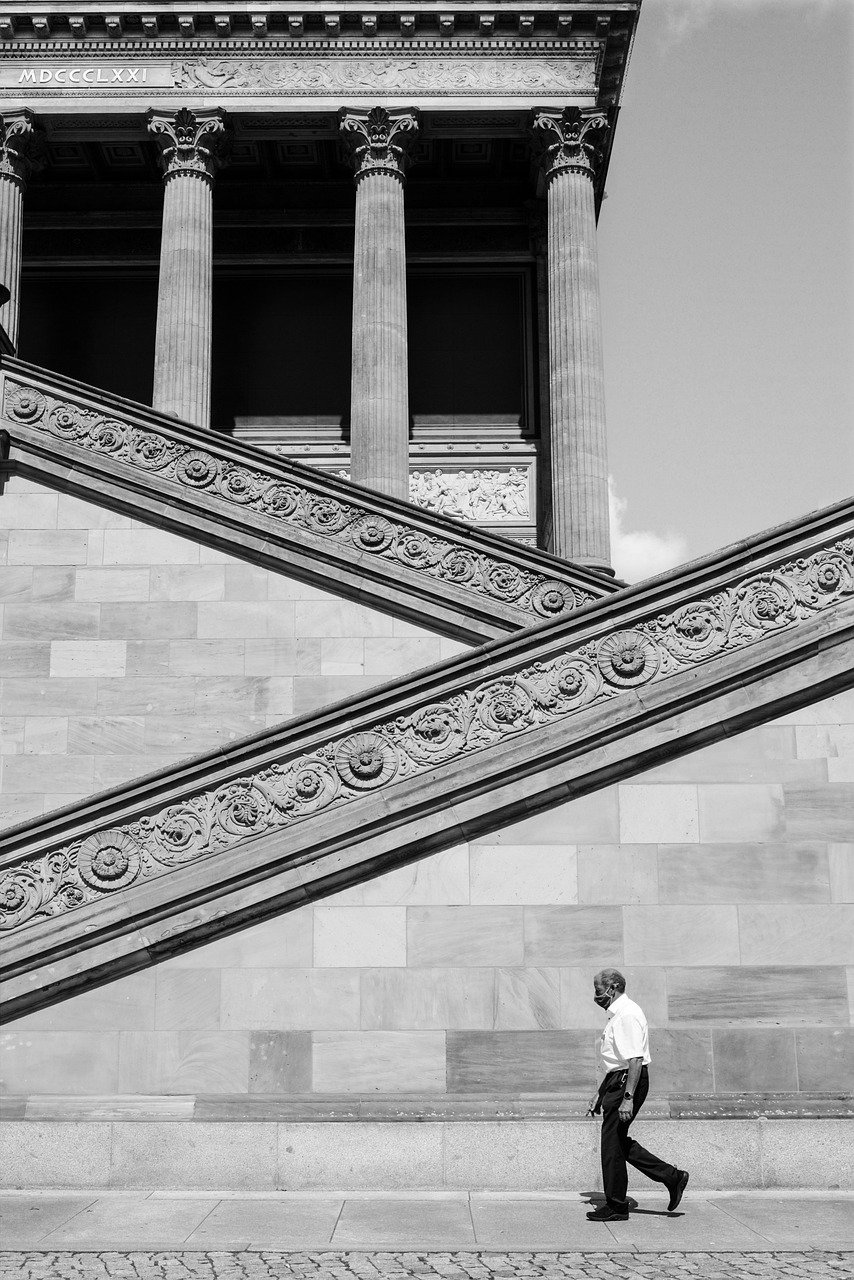
The Neues Museum was built between 1843 and 1855 to a design by Friedrich August Stüler, a student of the great neoclassical architect Karl Friedrich Schinkel. Stüler created an ambitious Neoclassical and Renaissance Revival structure intended to house the collections that had outgrown the adjacent Altes Museum. The new building was innovative not only architecturally but structurally: Stüler incorporated iron construction elements, including a central staircase supported by iron columns, making it one of the earliest German buildings to do so. The museum opened to the public in 1855 and quickly established itself as one of the great cultural institutions of the Prussian capital, celebrated for its Egyptian collections and its remarkable interior decoration programmes, which featured elaborate murals, painted ceilings, and architectural sculpture throughout its many halls.
The Second World War brought catastrophe. Allied bombing in 1943 and 1945 severely damaged the building, destroying entire sections of roof, collapsing interior spaces, and exposing the structure to decades of neglect and further decay. During the Cold War, the Neues Museum stood in East Berlin in a ruinous state — too damaged to use, too historically significant to demolish — slowly deteriorating while the city around it was divided. After reunification, the question of how to restore it became one of the most debated architectural questions in Germany. The answer, selected through an international competition won by David Chipperfield Architects in 1997, was radical: rather than recreating the lost interiors, Chipperfield would practice what he called “complementary restoration,” rebuilding the structural fabric while allowing the war damage and postwar decay to remain visible as layers of authentic history. Bullet holes and charred wall surfaces were preserved. Missing decorative programmes were not recreated. New concrete additions sat openly beside nineteenth-century stonework. The rebuilt Neues Museum reopened in 2009 and won the European Union Prize for Contemporary Architecture (the Mies van der Rohe Award) in 2011.
What to See at the Neues Museum
The Bust of Queen Nefertiti
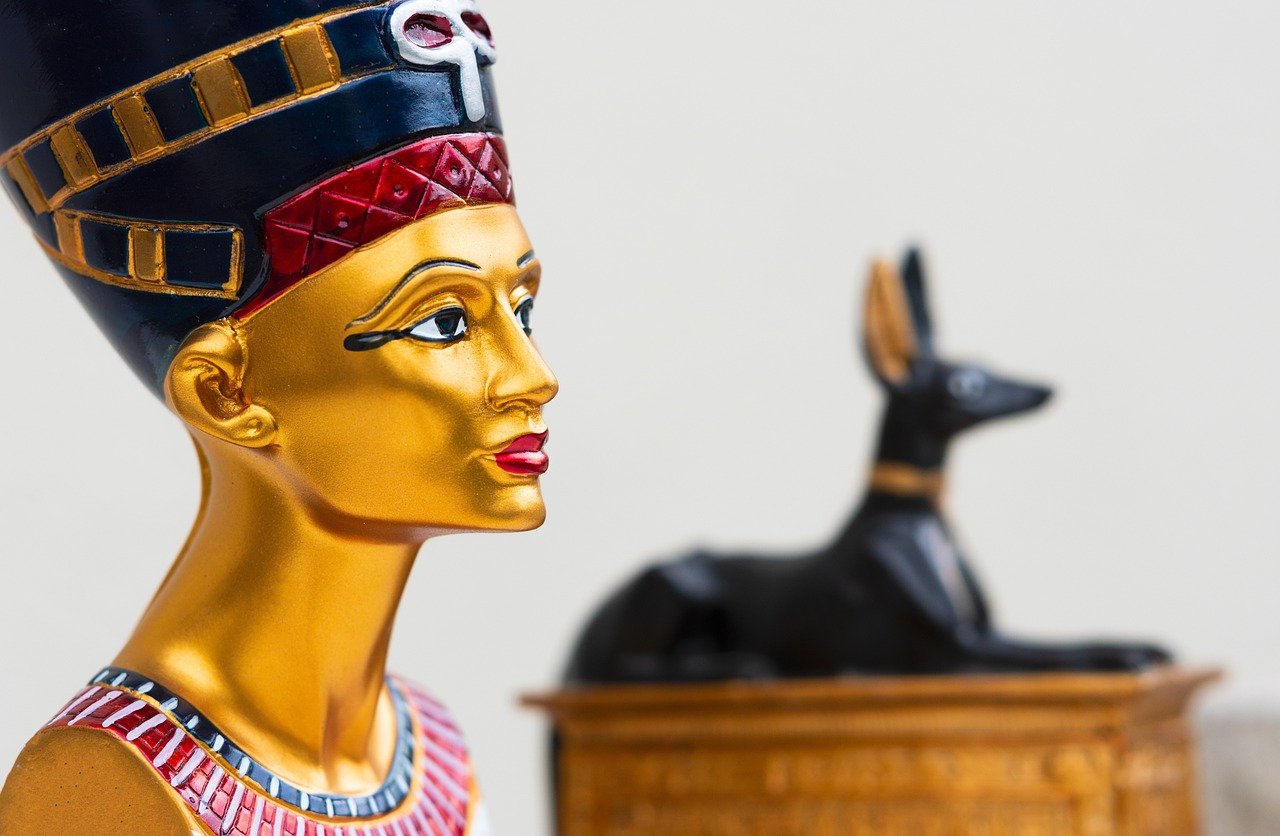
The Neues Museum’s most celebrated object needs no introduction, and yet the experience of standing before it consistently exceeds expectations. The bust of Queen Nefertiti, wife of the pharaoh Akhenaten, was sculpted around 1345 BC by the court sculptor Thutmose at the royal workshop in Amarna. It was discovered in 1912 during a German archaeological expedition led by Ludwig Borchardt and arrived in Berlin in 1913, where it has remained — despite repeated requests from Egypt for its return — ever since. The sculpture is remarkable for its state of preservation: the original pigment survives in vivid detail, giving the queen’s face a lifelike warmth that reproductions cannot adequately convey. The asymmetry of the eyes — one inlaid with a painted iris, the other left without — has never been definitively explained, though various theories suggest it was a deliberate artistic choice rather than damage or incompletion. The bust is displayed alone in the centre of the North Dome Hall, lit by a single focused light source, and the effect is theatrical and unforgettable. Photography is strictly prohibited in this room, a policy enforced to protect the pigments from cumulative light exposure. Visitors are asked to simply look — an instruction that proves entirely adequate.
The Egyptian Museum and Papyrus Collection
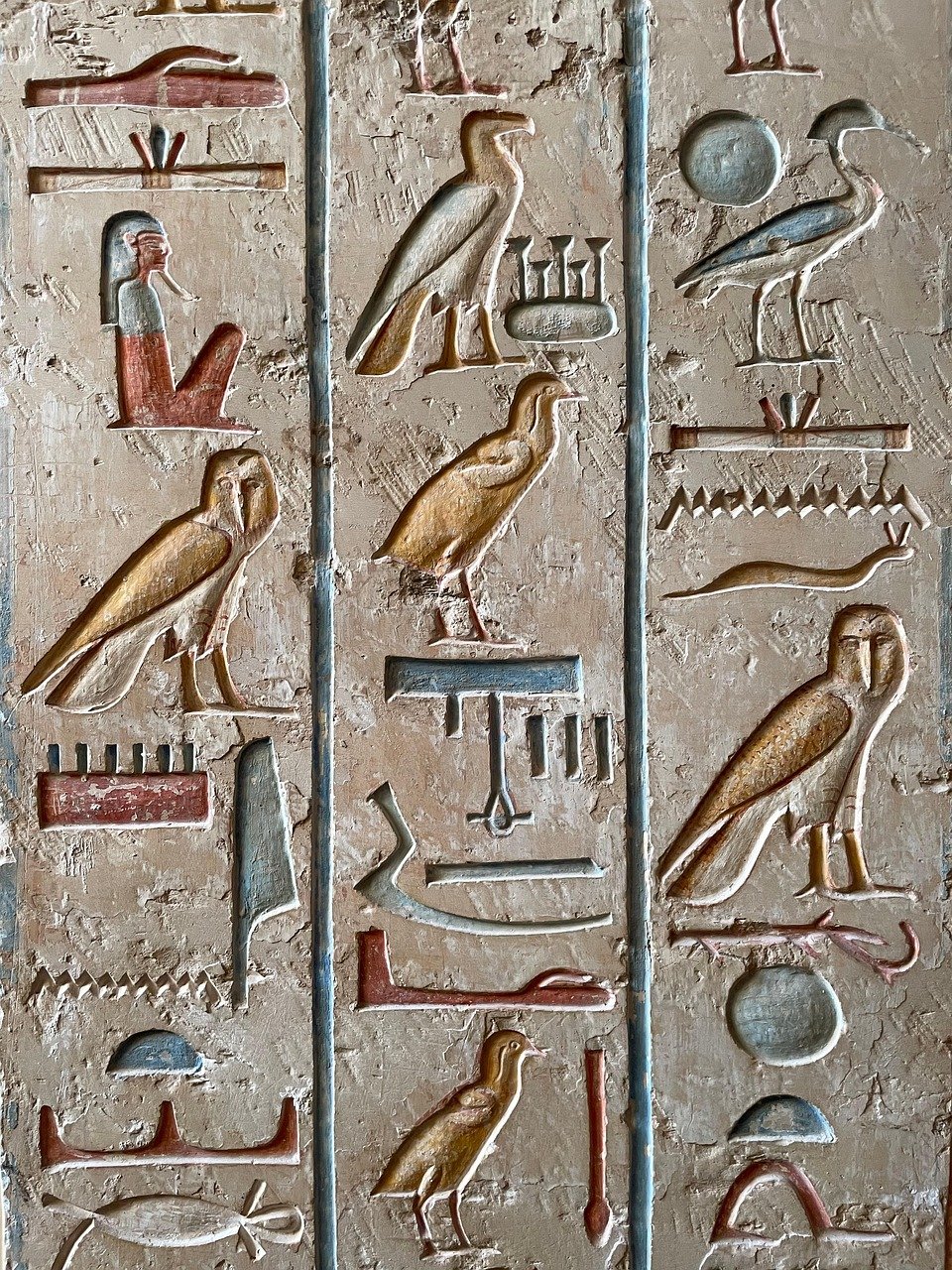
The Egyptian Museum occupies the ground and first floors of the museum’s south wing, and the collection extends far beyond Nefertiti. The Papyrus Collection is one of the world’s largest, comprising thousands of documents in ancient Egyptian, Greek, Latin, Coptic, and Arabic that span nearly four thousand years of human literacy. Fragments of religious texts, administrative records, private letters, and literary works illuminate daily life in the ancient Mediterranean world with extraordinary immediacy. The Egyptian sculpture collections are equally remarkable, with royal portrait heads, ushabti figurines, canopic jars, and hieroglyphic inscription panels representing the full span of pharaonic civilisation from the Old Kingdom through the Late Period. Particular highlights include an extensive collection of objects from the Amarna period — the brief but radical reign of Akhenaten, during which Egyptian religious art was transformed — that contextualises Nefertiti within the broader cultural revolution of her era. The museum’s approach to display, influenced by Chipperfield’s restoration philosophy, places objects within rooms that bear traces of their own wartime history: cracked plaster, exposed brickwork, and damaged ceiling paintings create a backdrop that reminds visitors of the museum’s own survival across the centuries.
Museum of Prehistory and Early History
The upper floors of the Neues Museum are devoted to the Museum of Prehistory and Early History, a collection whose highlights rival Nefertiti in historical significance if not in popular recognition. The Berlin Gold Hat — a Bronze Age ritual object from the late second millennium BC, one of only four known gold hats of this type in the world — is among the most astonishing prehistoric artefacts in any European museum. Standing 74.5 centimetres tall and covered in precisely tooled geometric ornament, it is thought to have functioned as a priestly headdress and possibly as a calendrical calculator. Also on display are the Trojan treasures excavated by Heinrich Schliemann in the 1870s, including gold jewellery, vessels, and weapons from the site he identified as ancient Troy. The collection traces human culture from the earliest Palaeolithic stone tools through the Neolithic farming revolution, the Bronze Age, and the Iron Age to the cusp of recorded history. A Neanderthal skull and reconstructed prehistoric environments give visceral form to the remotest chapters of human prehistory. Together, the Museum of Prehistory and the Egyptian collections make the Neues Museum one of the few institutions in the world where visitors can trace the full span of human civilisation within a single afternoon.
Local Insights
The Neues Museum is one of Berlin’s most visited attractions, and some practical knowledge will make a significant difference to your experience.
- Book your tickets online at least a week in advance. The Neues Museum operates a timed-entry ticket system, and popular slots — particularly weekend mornings — frequently sell out days or even weeks ahead. Day tickets can be booked up to four weeks in advance at smb.museum. Arriving without a pre-booked ticket risks being turned away or waiting in a long queue for any released slots. The first Sunday of each month is free but requires a pre-booked free time slot that typically sells out within minutes of release.
- Enter via the James-Simon-Galerie. The main entrance to the Neues Museum is not through the historic building itself but through the adjacent James-Simon-Galerie, a modern David Chipperfield building opened in 2019 that serves as a shared visitor hub for the entire Museum Island. All visitor services — ticket desks, cloakroom, cafe, bookshop, and accessibility facilities — are located here. Entering directly through the Neues Museum’s historic portal is not permitted for regular visitors.
- Go straight to Nefertiti before the tour groups arrive. Within 30 minutes of the museum opening each morning, tour groups begin arriving at the North Dome Hall. Visitors who head directly to Nefertiti upon entry can have several minutes of relative quiet with the bust before the crowds build. The hall does not allow photography, which mercifully encourages visitors to actually look rather than photograph, keeping the atmosphere more contemplative than in many famous museum galleries.
- Combine with other Museum Island attractions on a day ticket. A Museum Island day ticket covers entry to all five museums on the island: the Neues Museum, the Altes Museum, the Pergamon Museum, the Bode Museum, and the Alte Nationalgalerie. At EUR 19 for adults, this represents outstanding value if you plan to visit more than two museums. The James-Simon-Galerie ticket desk sells combination tickets and can advise on current opening times for each museum.
- Allow time for the building itself, not just the collections. David Chipperfield’s restoration is itself one of Berlin’s great architectural achievements. The deliberate dialogue between preserved war damage and new concrete, between lost nineteenth-century decoration and exposed structural masonry, repays slow, attentive exploration. The central staircase hall — one of Stüler’s most celebrated spaces, partially restored and partially left open to the sky above — is one of the most emotionally resonant architectural interiors in Germany.
Planning Your Visit
- Tickets: General admission EUR 14 (adults), EUR 7 (reduced: students, seniors, disabled visitors). Children and young people under 18 enter free but must book a free time slot online. First Sunday of the month: free for all visitors, but free time slot booking required and slots sell out rapidly. Museum Island day ticket EUR 19 covers all five island museums.
- Opening hours: Tuesday to Sunday, 10:00am to 6:00pm. Closed on Mondays. The James-Simon-Galerie entrance opens from 9:30am for pre-booked visitors.
- Best time: Tuesday or Wednesday mornings at 10:00am for the smallest crowds. Late afternoon visits from 4:00pm onward also see significantly reduced visitor numbers. Avoid weekend mornings during peak tourist season (June to August) without a very early booking.
- Duration: A highlights-only visit focusing on Nefertiti and the most famous Egyptian pieces takes approximately 60 minutes. A thorough visit covering all three collections across the full building takes 2.5 to 3 hours.
- Booking: Advance booking strongly recommended; tickets available at smb.museum up to four weeks ahead. Same-day walk-in entry is possible but frequently unavailable for popular time slots. Audio guides available at the museum entrance (fee applies).
Getting There
- Metro/U-Bahn: U-Bahn line U5 to Museumsinsel station (directly adjacent to Museum Island). Alternatively, U2 to Stadtmitte and then a 10-minute walk north across the Schlossbrücke.
- Bus/Tram: Tram lines M1, M4, M5, and M6 to Am Kupfergraben stop, a 2-minute walk from the James-Simon-Galerie entrance. Bus line 100 and 200 stop at Lustgarten, directly in front of the Altes Museum facing the Neues Museum.
- On foot: A 5-minute walk from Hackescher Markt S-Bahn station through the Monbijoupark. Approximately 15 minutes from Alexanderplatz via Unter den Linden. Museum Island is clearly signposted throughout the Mitte district.
- Taxi/ride-share: Request drop-off at Bodestrasse 1-3, 10178 Berlin (James-Simon-Galerie entrance). Taxis from Berlin Hauptbahnhof take approximately 10 minutes and cost EUR 10 to 14. Uber, Free Now, and Bolt all serve the address.
Frequently asked questions
Why is photography prohibited in the Nefertiti room?
The prohibition on photography in the North Dome Hall where Nefertiti is displayed is intended to protect the sculpture’s extraordinary original pigmentation from cumulative light damage. The bust retains vivid original colour in the crown, collar, and facial features that has survived more than three thousand years. Flash photography and the sustained exposure from thousands of camera flashes per day poses a measurable threat to these fragile pigments. The museum enforces the ban strictly, with attendants stationed in the room at all times. Visitors are encouraged simply to look — an experience that the absence of camera screens actually enhances considerably.
What is the story behind Priam’s Treasure at the Neues Museum?
Priam’s Treasure refers to a collection of gold and silver objects excavated by Heinrich Schliemann at Hisarlik in northwest Turkey in 1873, which he believed to be the treasure of the Trojan king Priam as described in Homer’s Iliad. The collection was smuggled out of the Ottoman Empire by Schliemann and eventually donated to the Ethnological Museum in Berlin, later transferred to the Neues Museum. Much of the treasure was taken to the Soviet Union by the Red Army in 1945 and remains in Moscow’s Pushkin Museum, but a portion remained in Berlin and is now on display at the Neues Museum — though the objects’ ultimate legal ownership remains disputed between Germany, Russia, Turkey, and Greece.
How does the Neues Museum relate to the other museums on Museum Island?
Museum Island (Museumsinsel) in Berlin’s Mitte district is a UNESCO World Heritage Site comprising five museums built between 1830 and 1930. The Neues Museum sits between the Altes Museum and the Pergamon Museum and shares the James-Simon-Galerie entrance building with both. The five museums together cover ancient, classical, Egyptian, prehistoric, Byzantine, and nineteenth-century European art and history. A Museum Island day ticket provides the best value for visitors planning to explore more than one building. The Pergamon Museum, currently undergoing major renovation until approximately 2037, is partially open and should be checked for current access before planning your visit.
Is the Neues Museum accessible for visitors with disabilities?
The Neues Museum is wheelchair accessible throughout, with lifts serving all floors. The James-Simon-Galerie entrance is step-free, and accessible toilets are located on each floor of the museum. Audio guides are available for visually impaired visitors, and tactile reproduction objects can be requested at the information desk for hands-on engagement with selected artefacts. The museum’s website at smb.museum provides detailed accessibility information for all visitor categories. Visitors using wheelchairs or with mobility requirements are advised to contact the museum in advance to confirm any temporary access restrictions related to ongoing conservation work in specific galleries.