
Montserrat Mountain
From the cable car, the last few hundred metres of ascent are almost vertical — a steel cabin swinging through air above a rock face that drops away into dark green forest. Then the car crests the top and you step out onto a terrace and the whole of Catalonia is spread below in a single sweeping panorama. The monastery of Montserrat clings to the serrated cliff face like something that could only have been placed there by faith alone — which, in the story Catalans tell about it, is exactly how it came to be.
History of Montserrat Mountain
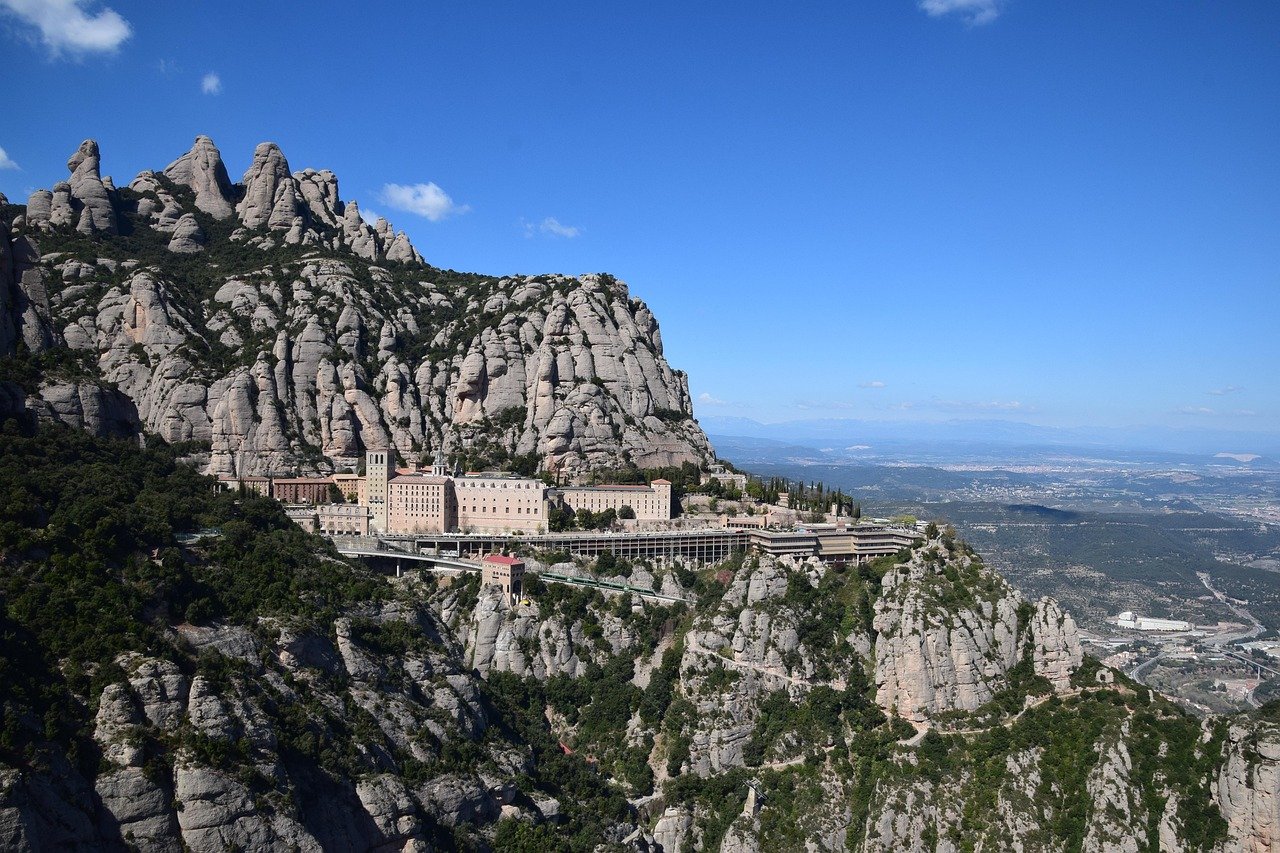
Montserrat means “serrated mountain” in Catalan — an apt description of its extraordinary silhouette, formed by the erosion of conglomerate rock into vertical pillars and rounded formations rising to 1,236 metres above sea level. The mountain has been a site of spiritual significance for Iberian peoples for at least two thousand years. The Benedictine monastery visible today traces its origins to a hermitage established in the 9th century, though the community grew significantly in the 11th century under the patronage of the Counts of Barcelona and was formally established as a Benedictine monastery in 1025.
The monastery’s fame spread across medieval Europe through the legend of the Black Madonna — the statue of Our Lady of Montserrat, known as La Moreneta (The Dark One), discovered in a cave on the mountain by shepherd children in the 9th century according to tradition. The statue (actually dating from the 12th century) became one of the most important pilgrimage destinations in Iberia, visited by royalty, nobles, and common pilgrims alike, including Ignatius of Loyola who had his spiritual conversion experience here in 1522, leading directly to the founding of the Jesuits. The Nazis plundered the monastery in 1811 during the Peninsular War and again in 1936 during the Spanish Civil War — the community was nearly wiped out both times before recovering.
What to See and Do
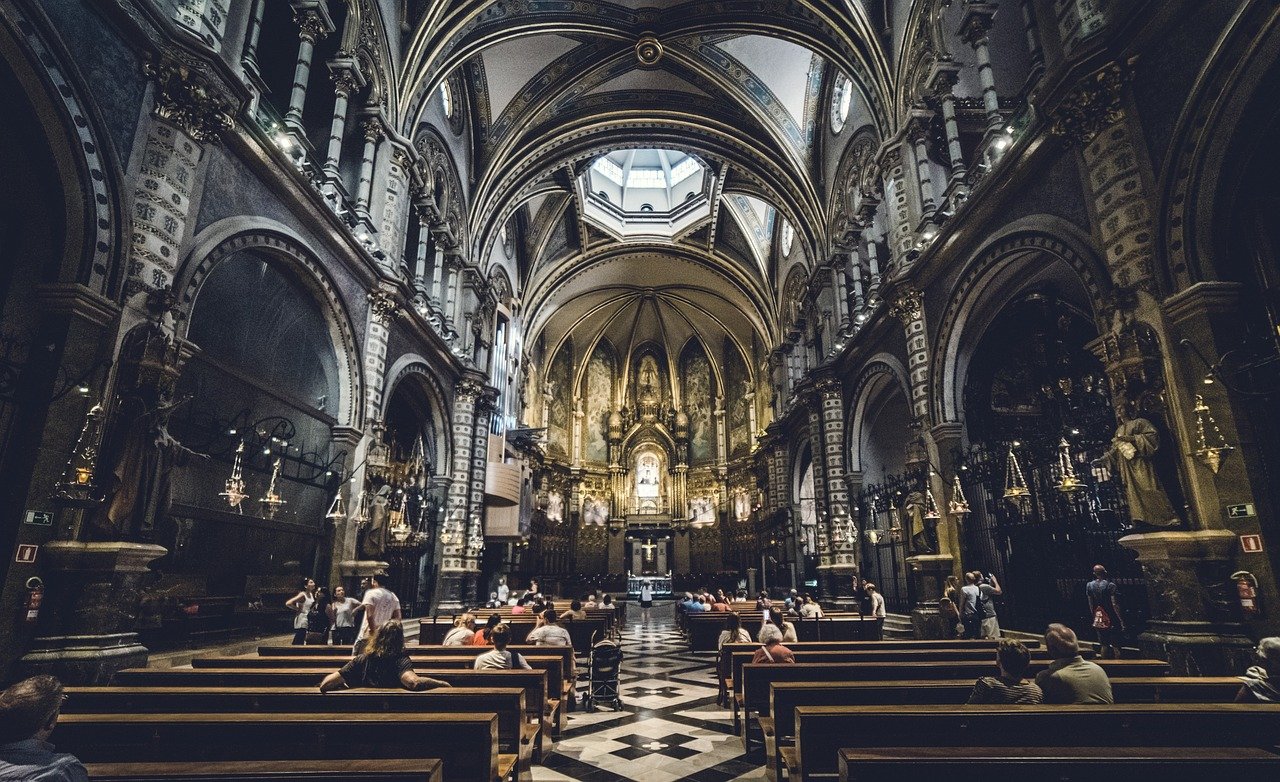
The monastery basilica, with its ornate 16th-century facade and the venerated Black Madonna in the upper chapel, is the spiritual heart of the site. Visiting hours for the Madonna are typically 08:00–10:30 and 12:00–18:30 — pilgrims file past the statue in a separate procession from the main basilica visitors. The monastery museum holds an impressive collection of Flemish and Spanish paintings, as well as archaeological finds from Egypt and the Near East collected by the community in the 19th century.
The mountain itself offers two rack railways and several hiking trails. The Sant Joan funicular rises to 1,003 metres, providing access to the Sant Joan hermitage ruins and the highest accessible point of the monastery complex. Hikers can continue on foot to the Sant Joan peak and beyond — the trail network across the mountain top reveals formations with names like Mummy, Elephant, and The Knight, natural rock shapes that fired the imagination of generations of Catalans. The Sant Cova funicular descends into the gorge to the cave where the Black Madonna is said to have been found, passing a series of devotional sculptures by major Catalan artists including Puig i Cadafalch and sculptor Josep Llimona.
The Black Madonna

La Moreneta, Our Lady of Montserrat, is one of the most venerated Marian statues in the Catholic world and the patron saint of Catalonia. The statue depicts the Madonna and Child in an enthroned position — both figures with dark faces (la moreneta) thought to result from centuries of candle smoke, though some art historians attribute the coloration to original pigmentation. The right hand of the Madonna holds a sphere, a symbol of the universe; visitors and pilgrims touch this globe and make their petitions.
The statue rests in a golden camarin (chamber) in the upper basilica, and visitors approach via a side corridor separated from the main nave. The queue to venerate the statue can be long, especially on feast days and weekends, but moves steadily. The Escolania de Montserrat — one of Europe’s oldest and most celebrated boys’ choirs, founded in the 14th century — performs the Salve Regina and Virolai hymn at 13:00 daily and during afternoon vespers at 18:45. Attending this brief choral performance is one of the most moving experiences the mountain offers, entirely free and open to all.
Practical Information
- Tickets: Cable car (Aeri de Montserrat): €9.30 one way, €14.00 return adult; rack railway (Cremallera): similar pricing. All-in tickets with funiculars and museum available from €39.
- Opening hours: Monastery area accessible daily; Basilica 07:30–20:00; Museum 10:00–17:45; Madonna visits 08:00–10:30 and 12:00–18:30
- Best time to visit: Weekday mornings for smaller crowds; avoid Sunday mornings when local pilgrims are numerous; spring and autumn for clearest views
- Duration: 3–5 hrs for monastery and one funicular; full day for hiking
- Booking: Buy cable car tickets online in advance to skip queues at the base station (aeridemontserrat.com)
Local Insights

What locals know that guidebooks don’t always tell you:
- The Escolania choir performance at 13:00 daily is free and one of the most beautiful acoustic experiences in Catalonia — arrive in the basilica 15 minutes early to get a seat. The 18:45 vespers performance is less crowded and equally moving.
- The rack railway (Cremallera) from Monistrol de Montserrat is a more scenic approach than the cable car and ends directly at the monastery complex. The cable car gives more dramatic views during the ascent.
- The FGC train from Plaça Espanya in Barcelona (R5 line) to Aeri de Montserrat or Monistrol stations connects to both the cable car and rack railway — no car needed and included in many Barcelona transport passes.
- The Santa Cecilia church ruins, a 15-minute walk from the main monastery complex, are almost always deserted and offer perspective on the mountain’s medieval scale without the tourist crowds.
- Buy a piece of mató cheese and local honey from the monastery shop — this combination has been produced here for centuries and is the authentic Montserrat souvenir over the standard religious merchandise.
Getting There
- Train + Cable Car: FGC R5 line from Barcelona Plaça Espanya → Aeri de Montserrat station → cable car (1 hr total)
- Train + Rack Railway: FGC R5 line from Plaça Espanya → Monistrol de Montserrat → Cremallera rack railway (1 hr total)
- Car: C-55 motorway from Barcelona; approx. 1 hr. Paid parking at the cable car base or rack railway station.
- Organised tour: Half-day tours from Barcelona widely available; convenient but offer less flexibility
Frequently asked questions
Can I hike at Montserrat?
Yes. Several well-marked hiking trails cross the mountain, ranging from 1-hour walks to the Sant Joan funicular area to full-day traverses of the ridge. The Sant Joan hermitage circuit (approximately 3 hours) is the most popular full hike. Sturdy footwear and water are essential.
Is Montserrat suitable for children?
Yes. The cable car and funiculars handle the altitude without requiring any walking. The monastery area is flat and accessible. Children enjoy the bizarre rock formations and the cave at Sant Cova. Avoid the summit hikes with very young children due to exposed cliff edges.
Can I stay overnight at Montserrat?
Yes. The monastery operates cells and apartments for pilgrims and visitors. Booking in advance is essential, especially at weekends and religious feast days. Staying overnight allows you to experience the mountain before and after the day-tripping crowds.
Is there food available at Montserrat?
Yes. The monastery cafeteria serves reasonable food at moderate prices. The mountain also has a restaurant and a self-service café. Prices are higher than equivalent Barcelona restaurants — bring snacks if planning a long day.
What is the best viewpoint on the mountain?
The Sant Joan funicular upper station terrace offers 360-degree views across the Catalan countryside to the Pyrenees and the coast. The Santa Cova path lower down provides the best close-up views of the monastery buildings set against the cliff face.