
Melbourne Cricket Ground (MCG)
Walk through Gate 3 of the Melbourne Cricket Ground and the scale of the place hits you like a physical force. One hundred thousand seats rise in tiers toward the sky on all sides, the playing surface an impossible emerald green at the centre, the roar of the crowd on match day a sound you feel as much as hear. The MCG — as Melburnians call it with the possessive shorthand of true ownership — is not just the world’s largest cricket venue. It is the secular cathedral of Australian sport, the place where the first Test match was played in 1877, where Bradman batted, where the 1956 Olympics were held, where the AFL Grand Final is decided every September. To visit the MCG is to stand inside the living history of Australian sporting culture.
History of the Melbourne Cricket Ground

The MCG’s story begins in 1853 when the Melbourne Cricket Club established its ground on the Yarra River parklands. The early ground was modest — timber bleachers and an earthen outfield — but the club’s ambitions were not. In 1877, the MCG hosted the first-ever Test cricket match between Australia and England, which Australia won. This moment established the venue’s place in sporting history before the ground had even reached its mature form. The first grandstand of consequence was built in the 1880s, and successive rebuilding through the 20th century gradually transformed the venue into its present configuration.
The 1956 Melbourne Olympic Games required a major expansion, and the MCG was selected as the main stadium — it hosted the opening and closing ceremonies and the athletics program. Further expansions through the 1980s and 1990s brought the capacity toward its current figure of 100,024 (the largest stadium in the Southern Hemisphere at the time of its rebuilding). The completion of the Great Southern Stand in 1992 and the Northern Stand in 2006 gave the venue its current near-circular profile. The MCG’s status as a national icon was formally recognized in 2005 when it was added to the Australian National Heritage List.
What to See
When no event is scheduled, guided tours of the MCG offer access to areas normally off-limits: the player change rooms, the Long Room (the members’ social area), the coaches’ coaches box, and the playing surface itself. The tour concludes in the Australian Sports Museum — an outstanding collection covering the full sweep of Australian sporting achievement, from cricket’s Ashes urn to the swimming suits of Olympic champions, from AFL premiership cups to the boxing gloves of Lionel Rose. The museum is clever, emotional, and comprehensive — allow at least 90 minutes to do it justice.
On match days, the MCG transforms. AFL season runs March to September, with regular-season matches most weekends and the Grand Final in late September. The Boxing Day Test cricket match (December 26–30) is one of Australia’s great summer sporting events, traditionally drawing 90,000+ crowds for the first day. Tickets for blockbuster events sell out months in advance. For the full experience of 100,000 people roaring for an AFL Grand Final or a last-wicket partnership in the Ashes, nothing compares — this is sporting spectacle at the largest scale.
The AFL Grand Final and Match Day Culture
Australian rules football is Melbourne’s defining obsession, and the MCG is its holiest site. The AFL Grand Final — held at the MCG every year since 1902 — draws over 100,000 fans in person and millions more watching on television. Tickets are impossibly difficult to obtain through normal channels (allocated through club memberships and ballots), but simply being in Melbourne on Grand Final day is an experience: the entire city stops, streets fill with fans in team colors, and the collective excitement is contagious even for those watching in pubs or on big screens in the parks around the ground.
Regular season AFL matches are easier to attend and offer an authentic Melbourne experience. The MCG has a standing area (Bay 13, in the southern stand) that has traditionally been the most raucous part of the crowd, with passionate fans who have attended for generations developing their own rituals and chants. The food and bar concessions within the ground are extensive and affordable by international sports venue standards. Melbourne has nine AFL clubs and usually hosts at least one “blockbuster” regular season match per round at the MCG, drawing crowds of 70,000+.
Practical Information
- Tickets: Guided tour + museum: adult AUD 35, child AUD 18, concession AUD 29; event tickets vary widely by event — check mcg.org.au or Ticketmaster
- Opening hours: Tours depart every 30 minutes from Gate 3, 10:00am–3:00pm; check for non-tour days when events are scheduled; Australian Sports Museum: daily 10am–5pm
- Best time to visit: AFL season (March–September) for match atmosphere; Boxing Day for cricket; non-match days for the most relaxed tour experience with full access to the field
- Duration: 75-minute guided tour; additional 60–90 minutes for the Australian Sports Museum
- Booking: Book tours online at mcg.org.au; strongly recommended for school holidays and weekends; event tickets via mcg.org.au or Ticketmaster
Local Insights

What locals know that guidebooks don’t always tell you:
- The Melbourne & Olympic Parks precinct surrounding the MCG has excellent free parkland walking — the Yarra River trail, the Rod Laver Arena tennis precinct, and the AAMI Park soccer and rugby stadium are all within easy walking distance, making a full day of sports tourism feasible.
- The Boxing Day Test match (Dec 26) is one of Australia’s great summer social events — even a part-day ticket on day one, sitting in the outer with Melbourne’s summer heat and a cold beer, is a bucket list experience that doesn’t require deep cricket knowledge to enjoy.
- Free tram travel in Melbourne’s CBD zone extends to the MCG precinct — look for trams on Flinders Street and Wellington Parade that run directly to the ground without fare.
- The MCG tour includes time on the actual playing surface — bring a cricket ball or AFL football if you want to bowl or kick on the hallowed turf during the tour (guides generally accommodate this).
- The Australian Sports Museum café is decent and quieter than the café options outside — a good place to review your experience and check out the permanent exhibits on Australian Olympic history.
Getting There
- Tram: Routes 48 and 75 from the CBD to MCG; free within the Free Tram Zone which covers most of central Melbourne
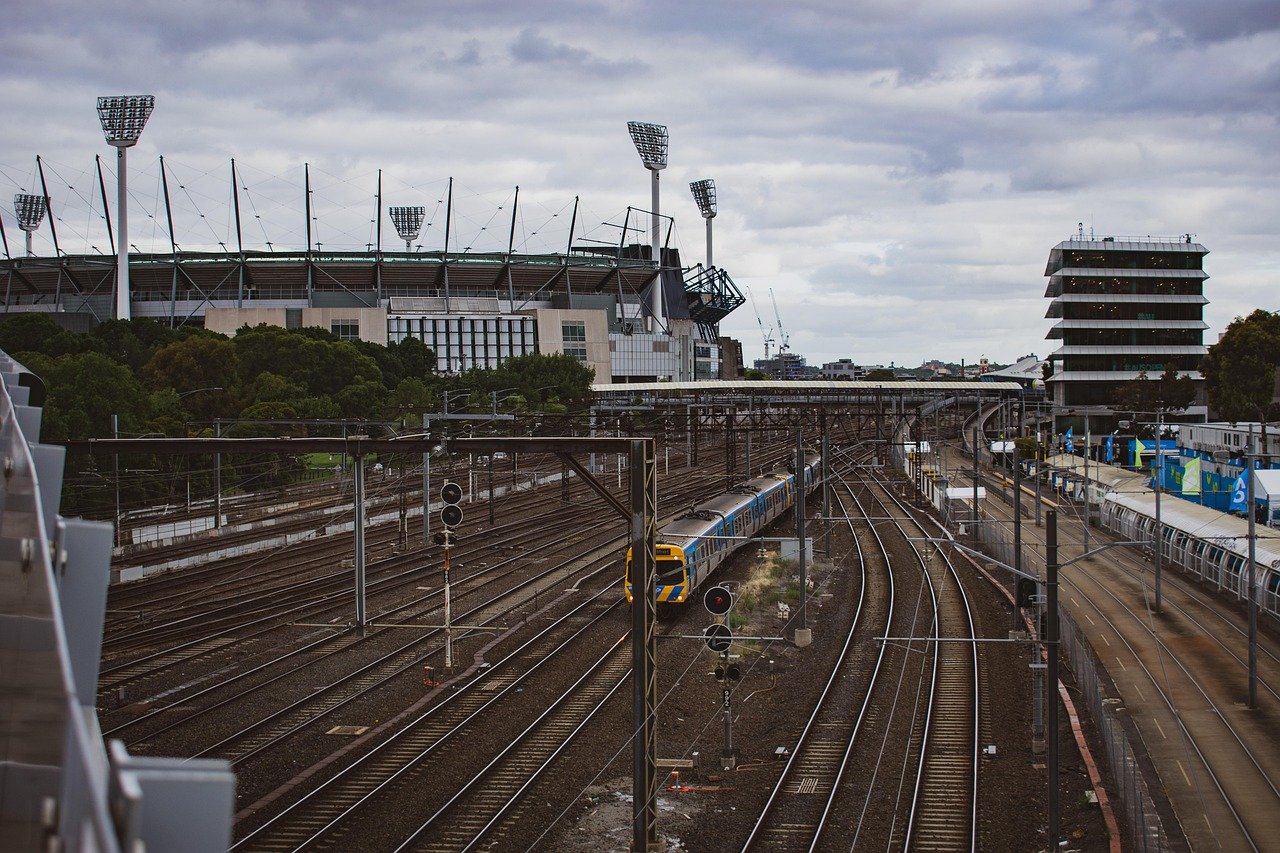
- Train: Jolimont Station (City Loop lines) is a 3-minute walk from Gate 3 — the closest and most convenient option on event days
- On foot: 1.5km from Flinders Street Station via Birrarung Marr parkland — a pleasant 20-minute walk along the Yarra River
- By car: Paid parking available in the precinct and surrounding streets; public transport strongly recommended on event days due to traffic
Frequently asked questions
Can I visit the MCG when no game is scheduled?
Yes — in fact, non-match days are ideal for the guided tour, which provides access to player change rooms, the Long Room, the coaches box, and the playing surface. The Australian Sports Museum is open daily regardless of events. Tours depart from Gate 3 every 30 minutes from 10am to 3pm. Check the MCG website for days when tours are not available due to event setup.
Is the Australian Sports Museum worth visiting?
Absolutely — even visitors with no strong interest in Australian sport find the museum engaging. The collection spans cricket, Australian rules football, tennis (the MCG hosted the Davis Cup), athletics, swimming, and boxing, with extensive use of video, interactive displays, and memorabilia. The Bradman collection (devoted to cricket’s greatest batsman) and the exhibit on Australia’s Olympic history are particular highlights. Allow at least 90 minutes.
How do I get tickets to AFL matches at the MCG?
Regular season AFL matches are ticketed through Ticketmaster (via the AFL website). Prices vary from approximately AUD 25–80 depending on seat location and match status. Finals tickets are allocated through AFL club memberships via ballot and are extremely difficult to obtain without membership. For the Grand Final, attendance without club membership connections is essentially impossible — but thousands of fans watch on the big screens set up in the surrounding parkland.
How large is the MCG?
The MCG has a seating capacity of exactly 100,024 — making it the 12th largest stadium in the world by capacity and the largest in Australia. It covers a playing surface of 171 meters by 146 meters (the playing field itself), surrounded by the oval seating bowl. The scoreboard structure is 55 meters high. The entire venue covers approximately 34.7 hectares including surrounding facilities.
What other attractions are near the MCG?
The entire Melbourne & Olympic Parks precinct is within walking distance: Rod Laver Arena (home of the Australian Open tennis Grand Slam in January), AAMI Park (Melbourne City FC, Melbourne Storm rugby), and Melbourne Park’s various Show Courts. Birrarung Marr parkland along the Yarra River connects the MCG to Federation Square, the National Gallery of Victoria, and the CBD via a scenic riverside walk of about 20 minutes.