
Labyrinth Park of Horta (Parc del Laberint d’Horta)
Take the metro to Mundet station, walk five minutes uphill through a quiet residential street, and push open a wrought-iron gate into a world that Barcelona’s rush seems unable to reach. The Parc del Laberint d’Horta unfolds in terraced gardens of cypress and water — an 18th-century neoclassical creation with a 19th-century romantic extension added like a fever dream around its edges. At the center of it all is the hedge labyrinth that gives the park its name: two meters of yew sculpted into corridors and dead ends, where children (and adults who should know better) spend half an hour trying to find the stone Eros at the middle. This is Barcelona’s oldest garden, its most tranquil, and arguably its most beautiful.
History of the Labyrinth Park of Horta
The park was created in 1791 by Joan Antoni Desvalls i d’Ardena, the Marquès d’Alfarràs, on his estate in the Horta valley north of Barcelona. Desvalls commissioned the Italian architect Domenico Bagutti to design a neoclassical garden in the formal Italian style — the labyrinth, terraced water features, fountains, pergolas, and classical statuary were all part of this original design. The garden hosted a legendary literary and intellectual salon in the early 19th century: Spanish Enlightenment figures, artists, and poets gathered here under the patronage of the Desvalls family. The garden was opened to the public on certain days even during this private era.
In 1820, the park’s second phase was added: a romantic garden around the edges of the neoclassical core, with meandering paths, artificial grottos, a fake ruined castle, and a cemetery that became the fashionable final resting place for members of Barcelona’s intellectual elite. This romantic extension embraced deliberate asymmetry and “natural” disorder as a counterpoint to the formal geometry of the older section — a characteristically 19th-century sensibility about the relationship between culture and nature. The Desvalls family donated the park to the City of Barcelona in 1971, and it has been managed as a public park since then.
What to See

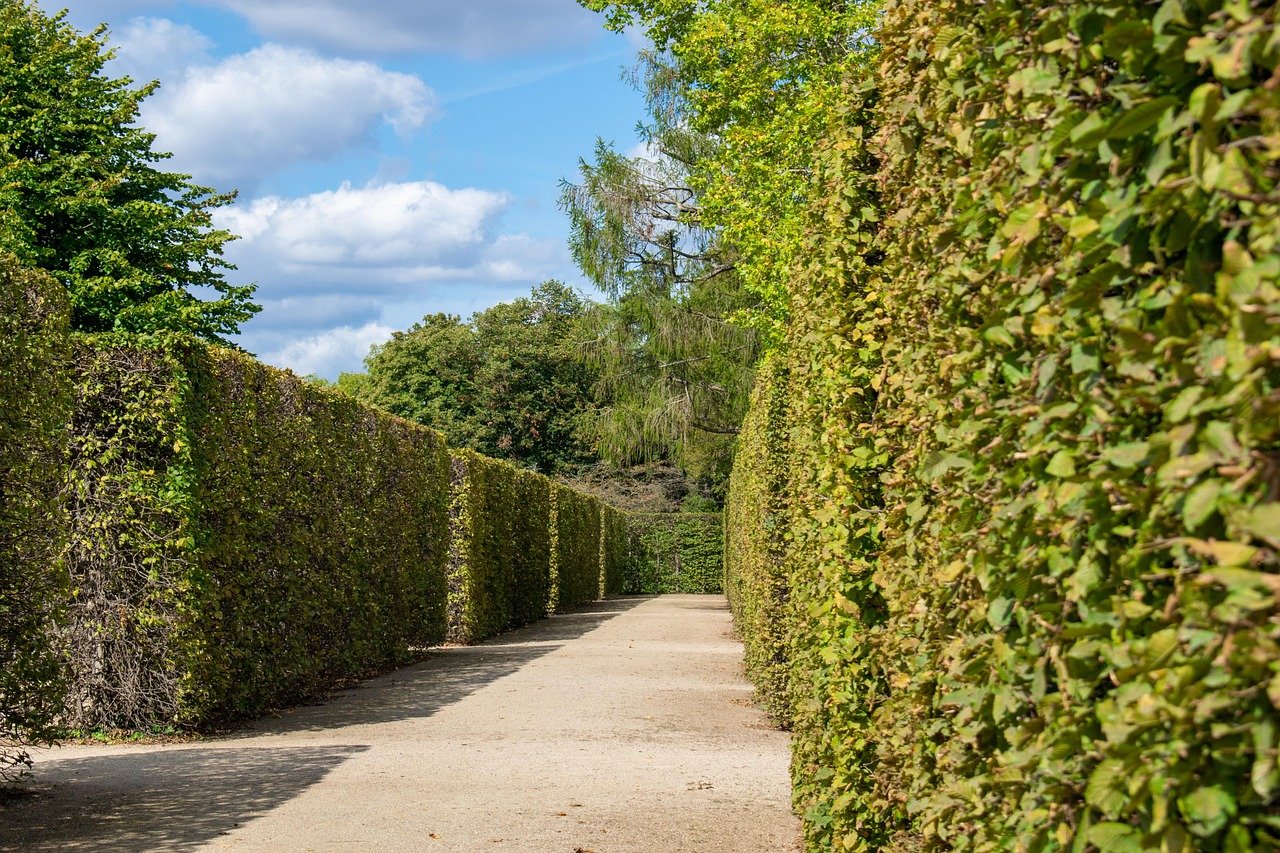
The labyrinth itself is the park’s centerpiece — a yew hedge maze roughly 750 square meters in area, with pathways about a meter wide threading through two-meter-high walls of precisely clipped cypress. At the center stands a marble statue of Eros, and above, a stone structure called the belvedere provides views over the entire maze — useful if you’ve been inside for longer than intended. The maze is simultaneously harder and easier than it looks: most visitors find the path to the center in 10–20 minutes, but the exit proves more challenging than expected. Watching other visitors navigate from above is genuinely entertaining.
The neoclassical terraces surrounding the labyrinth are punctuated by fountains, including the Nymphaeum (a semicircular water feature with mythological relief sculpture), classical statues in niches, pergolas covered in wisteria, and cypress-lined walkways of extraordinary formal beauty. The romantic garden extension has a more melancholy character: artificial grottos, overgrown paths, a Romantic-era pavilion called the Cascada, and the small historic cemetery where 19th-century Catalan intellectuals and members of the Desvalls family are buried. The views from the upper terrace extend over Barcelona to the sea.
The Neoclassical Garden Design
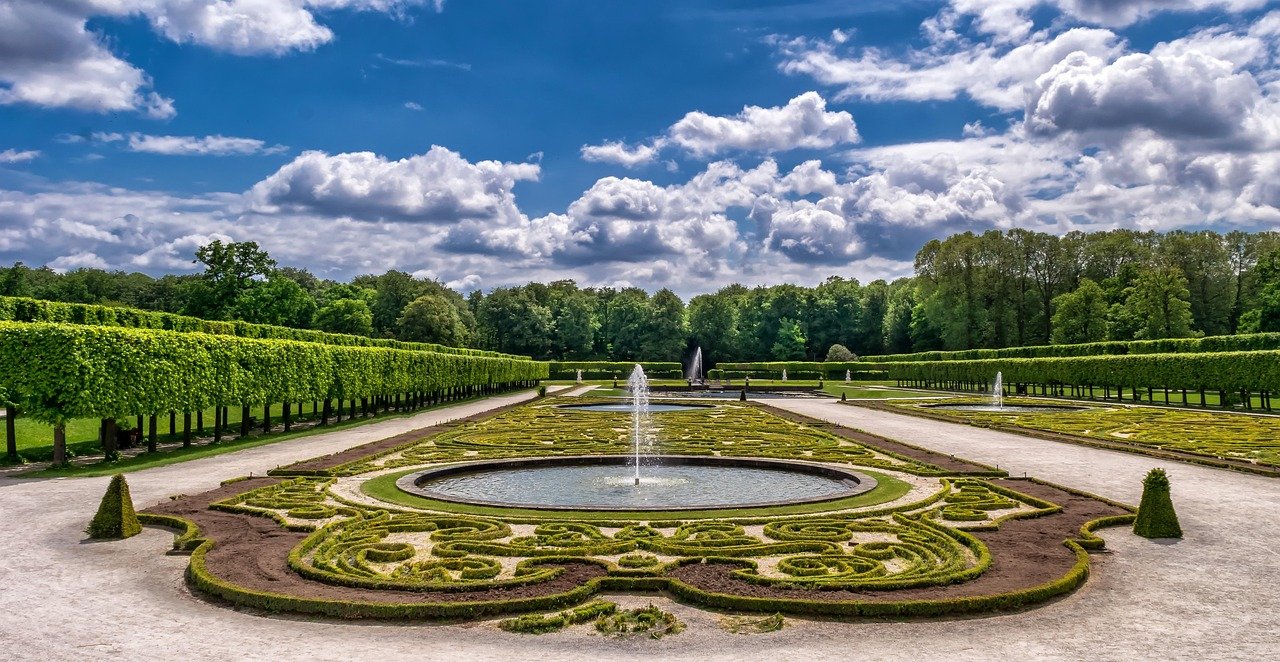
The garden’s neoclassical design follows the principles of the Italian giardino all’italiana tradition — rigorous geometry, axial symmetry, topiary, and water features as the primary organizing principles, with nature subordinated to human design rather than celebrated in its wild form. Domenico Bagutti’s plan for the Horta garden is one of the finest surviving examples of this tradition in Catalonia, and its state of preservation makes it uniquely valuable as a historical document of late 18th-century horticultural taste.
The planting scheme relies heavily on cypress, yew (for the labyrinth), and laurel — all slow-growing evergreens that maintain their form through decades of careful clipping. The water features use gravity-fed channels rather than pumps, following Roman engineering principles that have functioned without significant intervention for over 200 years. Several of the original statuary pieces are from Italian workshops of the 1790s period, and careful study reveals mythological narratives embedded in their arrangement across the terraces — Diana hunting, the Graces dancing, seasonal allegories in stone that reward the visitor who takes time to look.
Practical Information
- Tickets: EUR 2.23 adults; EUR 1.42 reduced (under 14, over 65, disabled); free on Wednesdays and Sundays; no online purchase — cash only at park gates
- Opening hours: Apr 1–Oct 31: 10am–8pm; Nov 1–Mar 31: 10am–6pm; daily
- Best time to visit: Weekday mornings for almost no crowds; spring (April–May) for wisteria bloom on the pergolas; autumn for the light and fallen leaves in the romantic garden; free Wednesday visits if budget is a consideration
- Duration: 1–2 hours including labyrinth, main terraces, and romantic garden
- Booking: No advance booking; pay cash at gate; daily visitor cap of 750 people (almost never reached on weekdays) — arrive early on summer weekends to be sure of entry
Local Insights
What locals know that guidebooks don’t always tell you:
- The park is one of Barcelona’s best-kept secrets among tourists — even on busy summer weekends, visitor numbers are a fraction of what you’d find at Park Güell. Midweek mornings, you may have entire sections of the garden to yourself.
- The free Wednesday and Sunday admission is confirmed — arrive early on these days as the 750-person daily cap could theoretically be reached (in practice it rarely is on Wednesdays).
- The romantic garden section behind and above the main terraces is largely overlooked by visitors who focus on the labyrinth — spend time in its shaded grottos, the small waterfall (Cascada), and the cemetery for the most atmospheric part of the visit.
- Spring is the most beautiful season: wisteria covers the pergolas in purple cascades in April and May, water iris blooms in the channels, and the light is warm enough for comfortable exploration without the summer heat.
- The park is genuinely off the beaten tourist track in a neighborhood (Horta) with excellent traditional Catalan restaurants near the metro — combine your visit with lunch at a local restaurant for a more authentic Barcelona day than the city center offers.
Getting There
- Metro: L3 (Green Line) to Mundet station — 5-minute uphill walk to the park entrance; follow the signs
- Bus: Routes 27, 60, 73, 76, and 85 serve the Horta neighborhood; check current route maps as services change
- On foot: Not practical from Barcelona city center — the park is in the northern Horta district, 6km from the old town
- By car: Parking available on Passeig dels Castanyers near the park entrance; easier by car than public transport if coming from suburbs
Frequently asked questions
How difficult is the labyrinth?
The labyrinth is challenging enough to be genuinely engaging but not so difficult as to cause real frustration — most adults find the center in 10–20 minutes, though the exit can take equally long. Children tend to find it enormously entertaining, particularly the experience of getting lost and having to retrace their steps. The belvedere lookout above the labyrinth allows you to see the full plan — you can either use this to cheat your way in, or resist the view for the fuller experience of navigating by choice alone.
Is the park suitable for young children?
Very much so — the labyrinth is the highlight for children, who can run its corridors safely (the hedges are solid yew, no thorns). The terraced gardens have flat sections suitable for running and picnicking. Prams and strollers can access most of the neoclassical garden, though the romantic garden section has some uneven paths. There are toilets near the main entrance. The park’s enclosed nature means children can roam with reasonable freedom — it is one of Barcelona’s best family destinations for a quiet morning.
Can I have a picnic in the Labyrinth Park?
Yes — picnics are welcomed in the designated areas, particularly on the upper terraces and in some sections of the romantic garden. The park has several benches and flat grass areas suitable for spreading out. Bringing food and wine for a picnic in this extraordinary garden is one of Barcelona’s more civilized pleasures. There are no food facilities inside the park itself, so bring everything from outside.
Is the Labyrinth Park wheelchair accessible?
Partial accessibility — the main neoclassical terraces have paved paths and ramps that allow wheelchair access to the most significant areas including the labyrinth viewing area and main fountain terraces. The romantic garden section has uneven gravel and natural paths that are more challenging for wheelchair users. The main entrance has an accessible gate and there are accessible toilets near the entrance. Contact the park administration for specific accessibility information for your needs.
What other attractions are near the Labyrinth Park?
The Horta neighborhood surrounding the park has a genuinely local character distinct from tourist Barcelona — traditional Catalan restaurants, neighborhood markets, and daily life relatively unaffected by mass tourism. The Velòdrom d’Horta (cycling velodrome) is a 5-minute walk. Further afield, Park Güell (Gaudí’s famous mosaic park) is a 20-minute metro ride from Mundet, making a Labyrinth + Park Güell day combination feasible.