
Koutoubia Mosque (Mosquée Koutoubia)
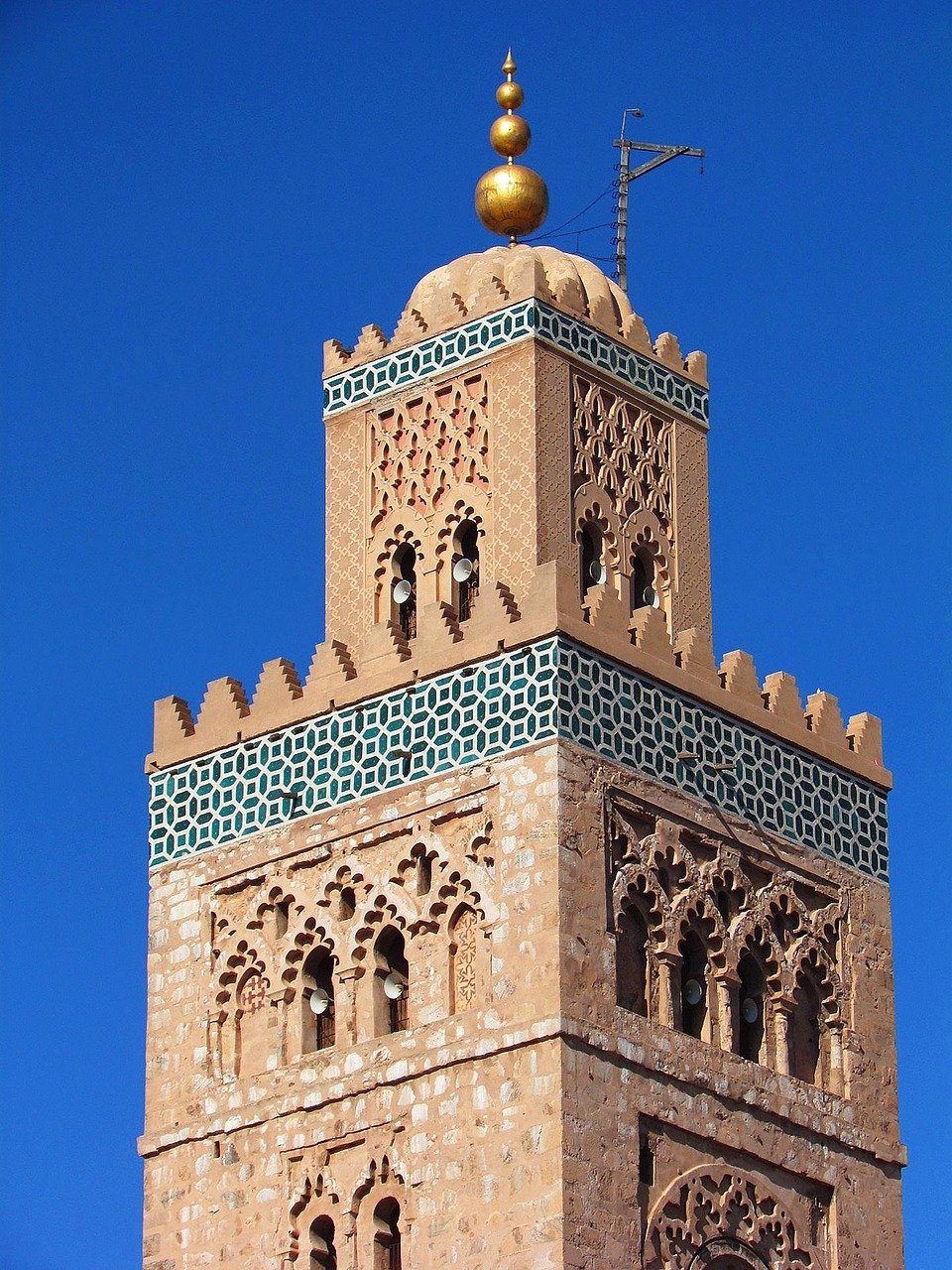
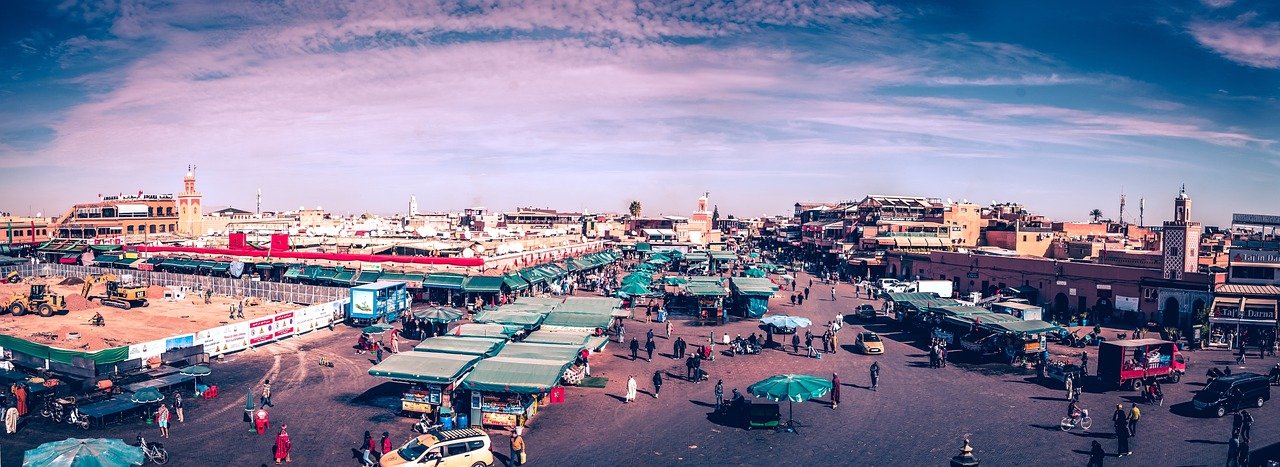
The Koutoubia Mosque is the soul of Marrakech, a twelfth-century masterpiece of Almohad architecture whose 70-metre minaret has defined the city skyline for over eight hundred years and served as the architectural prototype for the Giralda in Seville and the Hassan Tower in Rabat. Standing at the western edge of the Djemaa el-Fna square, the Koutoubia is the largest mosque in Marrakech and the city’s most visited Islamic monument, its rose-tinted tower glowing at sunrise and illuminated dramatically each evening against the darkening sky.
History and Architecture
The Koutoubia Mosque was built in the twelfth century during the reign of the Almohad caliph Yusuf ibn Tashfin and substantially rebuilt under Abd al-Mumin around 1158 AD. The name comes from the Arabic word for booksellers (kutubiyyin), as the mosque was originally surrounded by a market of manuscript sellers. The minaret was completed around 1195 and has served as the template for the great Almohad minarets that followed, most notably the Giralda tower in Seville which was built just a few years later using the same proportions and decorative vocabulary.
The minaret’s design is extraordinarily sophisticated, its facade decorated with sebka (diamond-pattern) screens, arrow-loop windows, and decorative bands of geometric tilework that vary on each face. At the summit, three golden balls of decreasing size form the jamur, traditionally said to have been made from the melted jewellery of the wife of Yacoub al-Mansour as penance for breaking the Ramadan fast. A lantern and weathervane complete the composition.
- Built around 1158-1195 during the Almohad dynasty
- 70-metre minaret served as the model for the Giralda in Seville and Hassan Tower in Rabat
- Largest mosque in Marrakech, serving the entire medina community
- The sebka decorative screens on the minaret are a masterpiece of geometric design
- The three golden balls (jamur) at the summit are legendary in Islamic tradition
What to See and Experience
Non-Muslims cannot enter the mosque itself but the exterior and surrounding gardens are freely accessible and magnificent. The Koutoubia Gardens on the southern side of the mosque are a beautifully maintained park of orange trees, roses, and jasmine with shaded paths and benches – a peaceful oasis from the bustle of the nearby Djemaa el-Fna. Views of the minaret from the gardens are among the most photographed in Morocco.
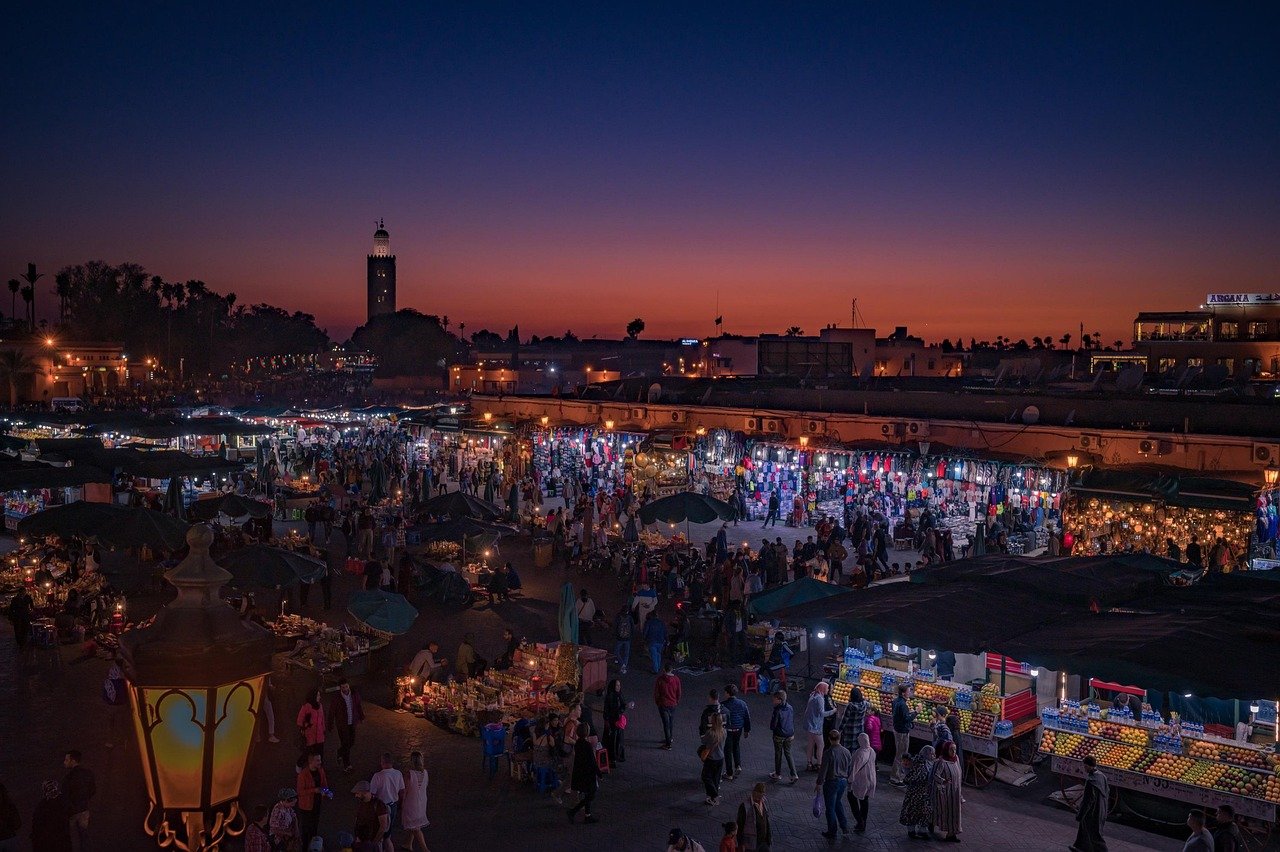
The best views of the mosque and its relationship to the city can be obtained from the roof terraces of cafes surrounding the Djemaa el-Fna. At sunset the minaret turns gold, then pink, then purple as the light fades, while the muezzin call to prayer echoes across the medina – one of the great sensory experiences of North Africa.

Practical Information
- Access: Non-Muslims may visit the gardens and exterior; interior is accessible only to Muslims
- Entry: Koutoubia Gardens are free
- Dress: Modest dress respectful near a mosque; women need not cover heads in the gardens
- Photography: Exterior photography fully permitted
- Prayer times: The call to prayer (adhan) sounds five times daily
Local Insights
- Arrive at the gardens shortly before sunset for the most spectacular light on the minaret
- The roof terrace of Cafe de France on Djemaa el-Fna offers excellent views of both the square and the minaret
- The call to prayer from the Koutoubia is particularly affecting at dusk – pause and listen
- The gardens are an excellent respite from the intense energy of the Djemaa el-Fna just 200 metres away
- The minaret is illuminated at night and the evening light show is beautiful from the square
Getting There
- Walking: 2-minute walk from Djemaa el-Fna square; the mosque is visible from throughout the medina
- Taxi: Any taxi in Marrakech can bring you to the Koutoubia
- By foot: At the western edge of the medina, easily reached from most riad accommodations
Frequently asked questions
Can tourists enter the Koutoubia Mosque?
No – the Koutoubia Mosque is open only to Muslims. Non-Muslim visitors can freely explore the exterior, gardens, and surroundings, which are themselves magnificent. The Ben Youssef Mosque and Medersa Ben Youssef nearby are open to non-Muslims.
Why is the Koutoubia Mosque called the Booksellers Mosque?
The name derives from the Arabic word for booksellers (kutubiyyin), as the mosque was originally surrounded by a market of manuscript and book sellers. The area was the intellectual and cultural hub of medieval Marrakech.
What is the best time to photograph the Koutoubia Mosque?
Sunrise and sunset offer the most dramatic light. The tower glows golden at sunrise and transitions through magnificent colours at sunset. The minaret is also beautifully illuminated at night.
How does the Koutoubia relate to the Giralda in Seville?
The Koutoubia minaret was the direct prototype for the Giralda tower in Seville, built just a few years later under the same Almohad dynasty. Both towers share the same proportions and decorative vocabulary, including the distinctive sebka diamond-pattern screens.
Is the Koutoubia Mosque in the centre of Marrakech?
Yes, the Koutoubia stands at the western edge of the Djemaa el-Fna, which is the central square and heart of the Marrakech medina. Its minaret is visible from throughout the city and serves as a navigational landmark.