
Islamic Cairo 💎 Hidden Gem
The call to prayer rolls across rooftops in overlapping waves, each mosque answering the next in a chain that stretches back a thousand years. Islamic Cairo is not a single monument but an entire living district — a UNESCO World Heritage Site packed with more medieval Islamic monuments than anywhere else on earth. Crumbling Fatimid gateways open onto lanes where coppersmiths still hammer their trade next to perfumers dispensing jasmine oil by the gram. The air smells of incense, cardamom, and diesel in equal measure. Wandering here, map folded away and senses open, you encounter the kind of layered human history that polished heritage sites can only approximate. This is old Cairo as it actually exists: worn, magnificent, and utterly alive.
History of Islamic Cairo
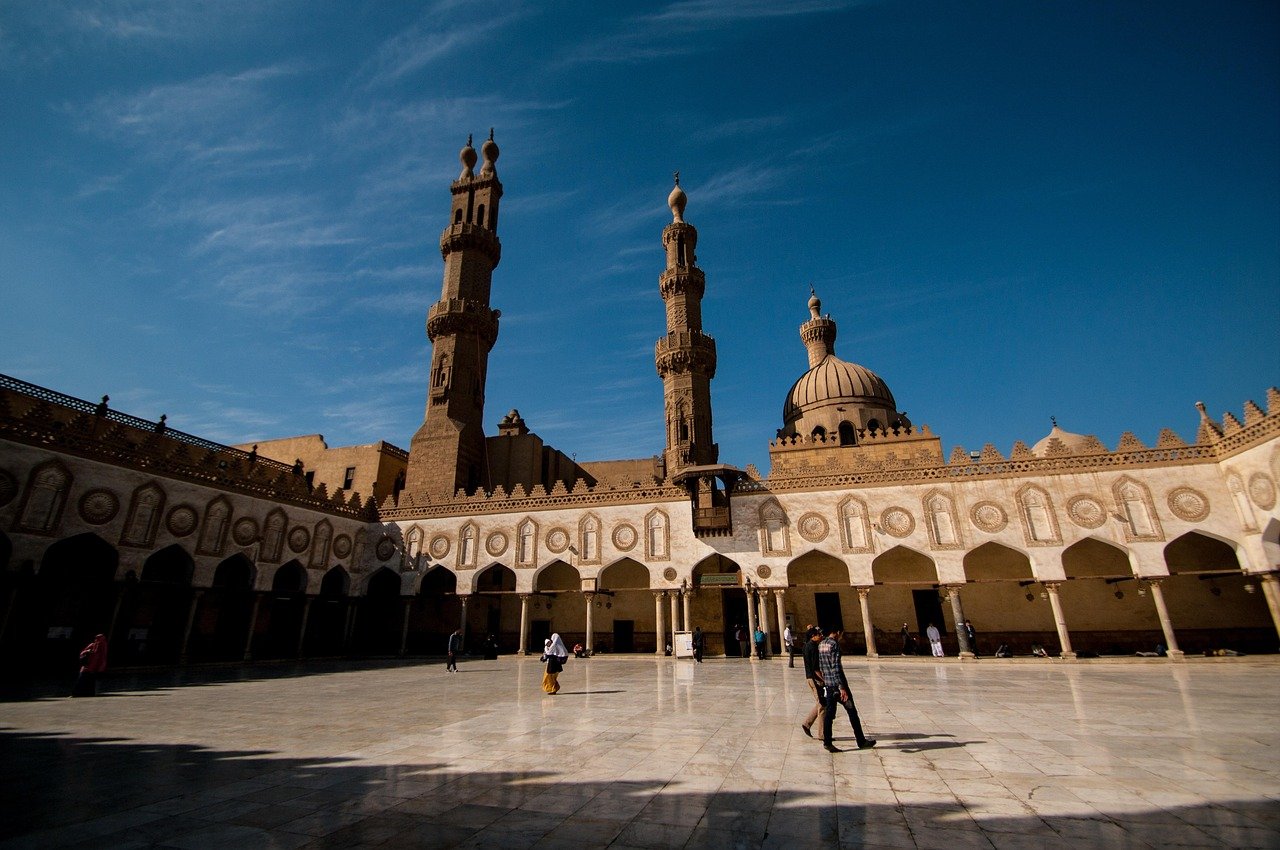
The story of Islamic Cairo begins in 969 CE when the Fatimid general Jawhar al-Siqilli led an army from North Africa and established a fortified royal city called al-Qahira — the Victorious — adjacent to the earlier Arab garrison town of Fustat. The Fatimids immediately set about building symbols of their new Ismaili Shia power: the Al-Azhar Mosque was completed in 972 CE and became the nucleus of a theological university that has operated continuously ever since, making it arguably the oldest university in the world. The walled city they built, with its twin ceremonial gates of Bab Zuweila (south) and Bab al-Futuh and Bab al-Nasr (north), forms the skeleton around which the district still organises itself today.
The Ayyubid dynasty under Saladin (Salah al-Din) seized Cairo in 1171, abolishing Fatimid rule but leaving most of their monuments intact. He added the mighty Citadel on the Mokattam Hills. The Mamluks who followed between 1250 and 1517 were the great builders of Islamic Cairo — Sultan Hassan’s colossal mosque-madrasa, the ornate funerary complexes along the Street of the Tombs, and dozens of sabil-kuttabs (public fountains with Quran schools above) all date to this era of fierce artistic competition between rival emirs. Ottoman rule from 1517 introduced a new architectural vocabulary of slender pencil minarets and tiled interiors, visible at the Mosque of Sinan Pasha in Bulaq. Today the district stretches roughly from the Citadel to the northern walls, encompassing over 600 registered monuments within an area a determined walker can cross in forty minutes.
What to See in Islamic Cairo
Khan el-Khalili Bazaar
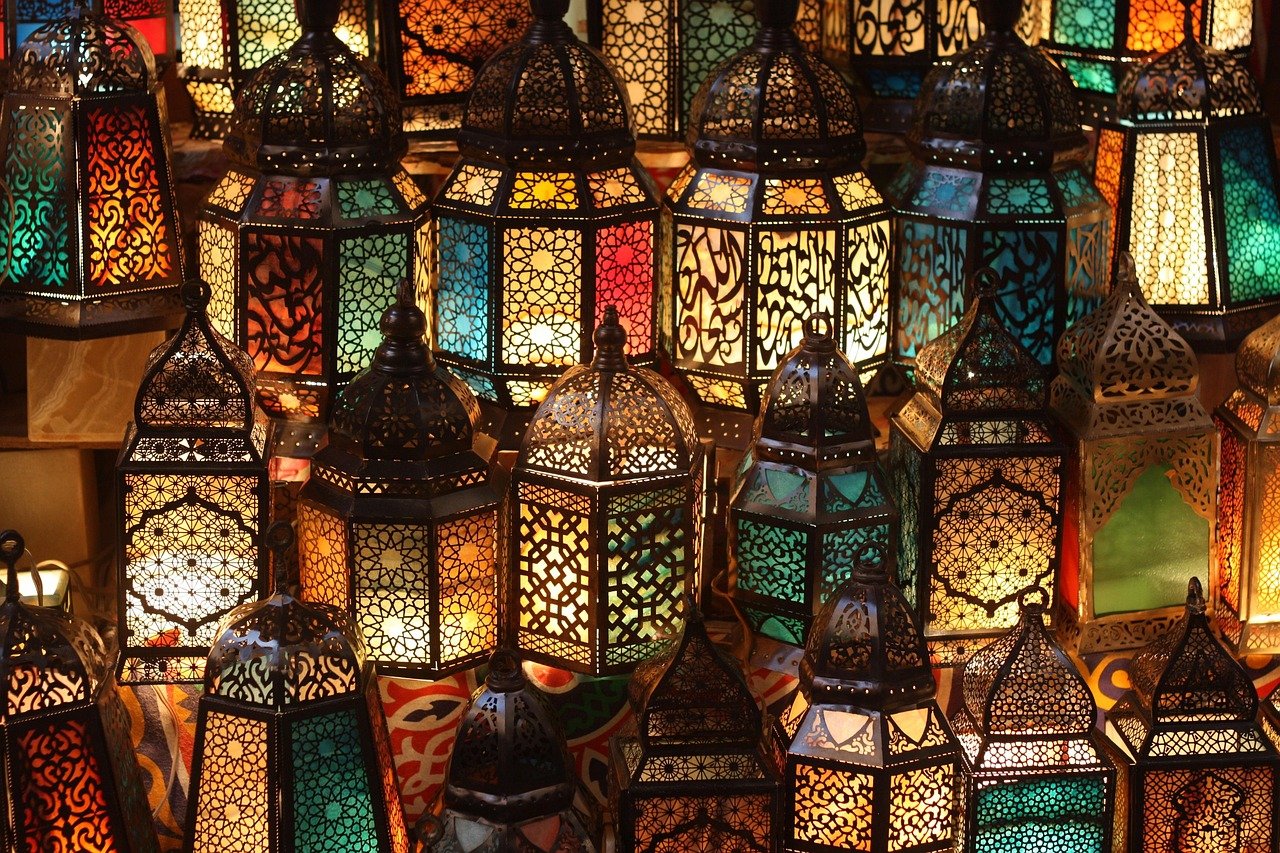
Established in 1382 by Emir Djaharks el-Khalili as a caravanserai for Persian merchants, Khan el-Khalili has traded without interruption for over 640 years. The bazaar spills through dozens of interconnected lanes, each traditionally specialising in a single trade: the goldsmiths’ quarter, the perfumers’ alley, the lane of the brass workers, the spice sellers. Modern tourism has pushed souvenirs to the forefront — alabaster sphinx paperweights, papyrus scrolls, shisha pipes — but turn into any side lane and you encounter functioning workshops where artisans are still producing handmade copper lamps, silver cartouche jewellery, and hand-stitched leather goods. The anchor cafe of the bazaar is El-Fishawi, founded in 1771 and arguably Cairo’s most atmospheric coffee house: mirrored walls, incense smoke, and the click of backgammon pieces. Order a mint tea, settle in, and watch the city flow past.
Al-Azhar Mosque and Sultan Hassan Mosque
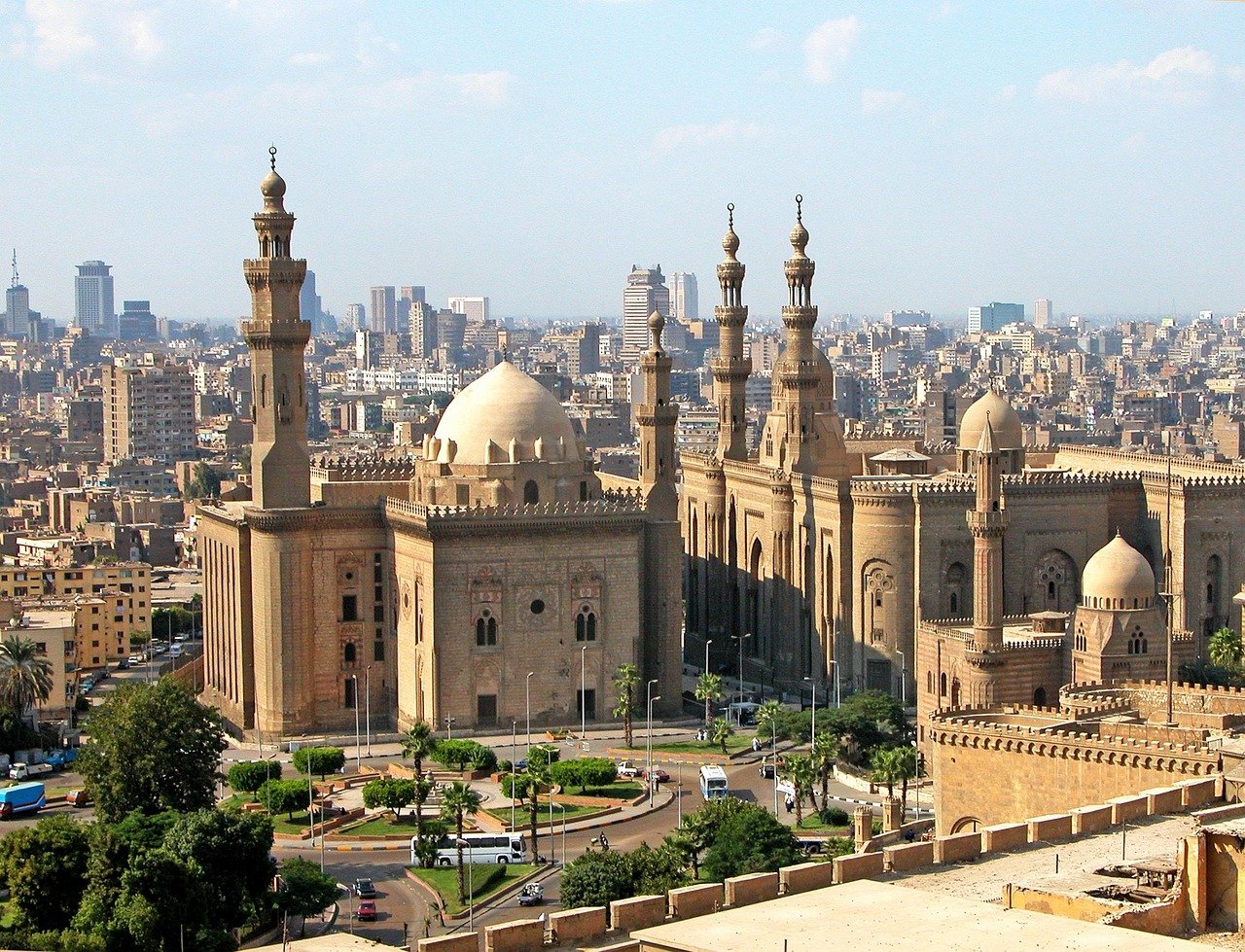
Al-Azhar Mosque, founded in 970 CE, is free to enter for non-Muslims (remove shoes and cover hair/shoulders at the gate) and its colonnaded courtyard, surrounded by minarets from five different centuries, demonstrates in stone how the district accumulated layer upon layer of patronage. The adjacent Al-Azhar University, where tens of thousands of students study Islamic theology, is the oldest institution of continuous higher education in the world. Two minutes’ walk away, the Mosque-Madrasa of Sultan Hassan (1356–1363) is perhaps the greatest single piece of Mamluk architecture anywhere: its entrance portal stands 37 metres tall, and the four iwans — vaulted halls oriented to the compass points — create a space of almost vertiginous scale. Both mosques are open to respectful visitors outside prayer times and neither charges a formal admission fee, though a small donation is appreciated.
Bab Zuweila and the Medieval Gates
The southern gate of the Fatimid city, Bab Zuweila (1092 CE), is one of the best-preserved medieval urban gates in the Arab world. Climb to the twin towers via a steep internal staircase (small admission fee, around 100–150 EGP) for a panoramic view over the roofscape of Islamic Cairo — an almost unbroken medieval skyline interrupted only by forest of minarets. The gate was the city’s ceremonial threshold for centuries: Mamluk sultans launched military campaigns from here, and it was also the place of public execution, where the last Mamluk sultan was hanged by the Ottomans in 1517. The view from the top at dusk, when the call to prayer is rolling out across the district, is one of the great urban experiences in Africa.
Al-Muizz Street and the Qalawun Complex
Al-Muizz li-Din Allah Street, named after the Fatimid caliph who commissioned the founding of Cairo, is effectively an open-air museum of Islamic architecture. Walking its full pedestrianised length from Bab al-Futuh to Bab Zuweila takes you past an extraordinary concentration of monuments: the Mosque of Al-Hakim (completed 1013), the Qalawun complex with its Gothic-influenced facade (1284-85), the Madrasa of Al-Nasir Muhammad (1304), and dozens of sabil-kuttab fountains where Mamluk emirs once dispensed free water to the poor while educating orphan children in the Quran in the room above. The street atmospheric peak is in the hour before sunset, when the limestone facades turn gold, lanterns begin to glow, and the evening call to prayer echoes through the narrowing alleys.
The Qalawun complex rewards slow exploration. Sultan Qalawun built it between 1284 and 1285 as a combined mausoleum, madrasa, and maristan — the hospital was free and served patients of all religions, an extraordinary provision for the medieval world. The facade alternating stone courses in red and white recall the Crusader architecture that Qalawun armies were simultaneously fighting in the Levant, suggesting his builders absorbed both traditions. The interior of the mausoleum, with its stucco-covered walls and stained glass windows casting coloured patterns on the floor, is one of the most beautiful spaces in all of Islamic Cairo and is frequently overlooked by visitors moving too quickly between the larger mosques.
The City of the Dead, the vast inhabited necropolis immediately east of Islamic Cairo, is one of the district most extraordinary and misunderstood places. A series of Mamluk and Fatimid funerary complexes built between the 10th and 15th centuries, it was gradually colonised by living residents — estimated at around 500,000 people today — who build homes among the tombs and mausoleums. It is a functioning neighbourhood, not a ruin, and wandering its lanes at dusk, when families light lamps in courtyard gardens between medieval domed tombs, is one of Cairo most atmospheric experiences. The largest monuments — the complexes of Qaytbay (1474) and Barquq (1400) — are UNESCO-listed masterpieces of late Mamluk architecture and can be visited independently or as part of a guided tour.
Local Insights
Navigating Islamic Cairo well requires a few pieces of ground-level knowledge that guidebooks rarely provide.
- Visit Friday morning before noon prayers. The district comes alive early on Fridays — street vendors set up, the coffee houses open early, and the light for photography is exceptional. After noon prayers the streets briefly quiet, then surge again in the afternoon. Avoid the Friday midday rush in the main mosque courtyards.
- Dress modestly and carry a lightweight scarf. Women need to cover hair before entering any mosque; men should avoid shorts. A lightweight cotton scarf serves double duty as sun protection on the exposed rooftops of Bab Zuweila. Many mosques offer borrowed robes at the entrance, but having your own covering is more comfortable.
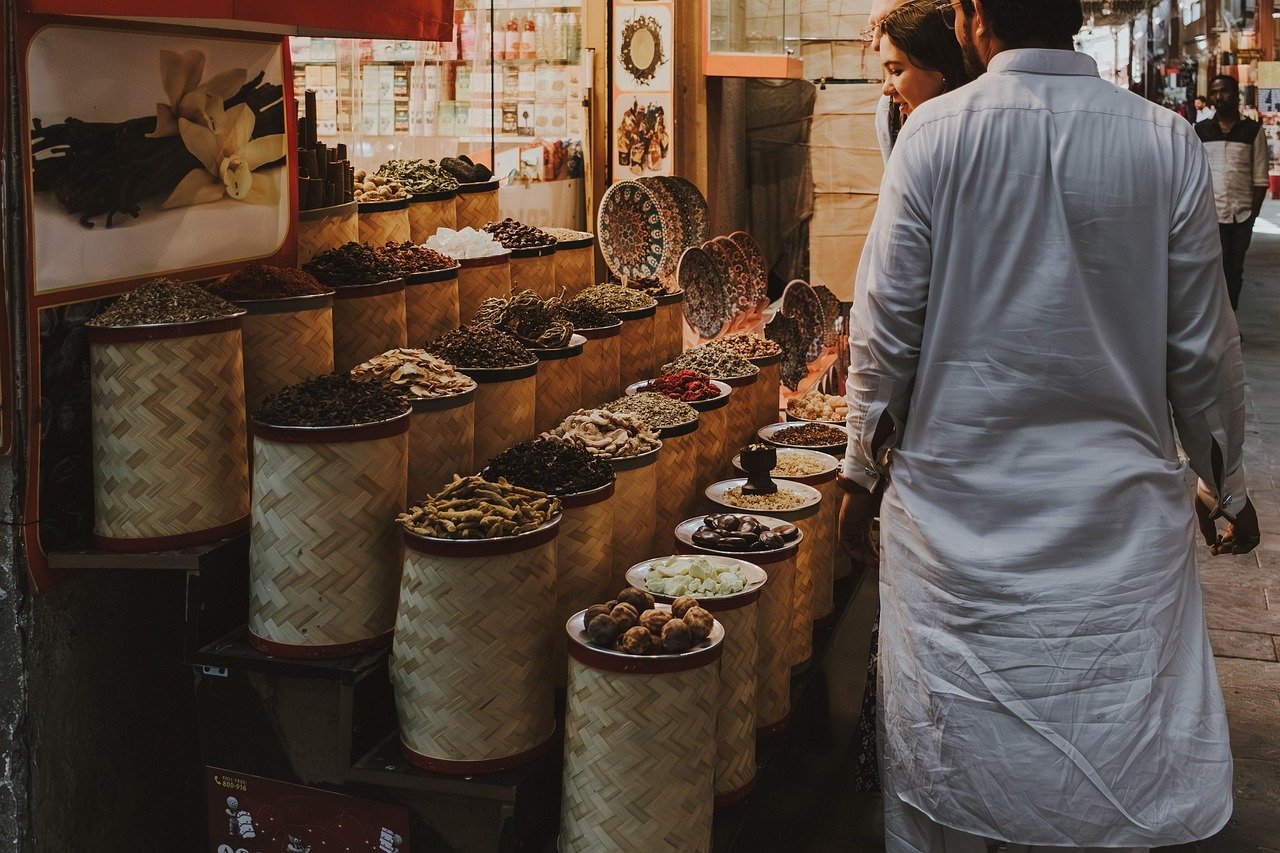
- Negotiate at Khan el-Khalili, never accept the first price. The bazaar operates on a performance of negotiation — opening prices for tourists are routinely three to five times the final price. Smile, counter at half, accept somewhere in the middle. The process is expected and good-humoured; refusing to bargain is mildly insulting to the vendor.
- Start your walk at Bab al-Futuh (north gate) and walk south. Beginning at the northern gate and walking down Al-Muizz li-Din Allah Street toward Khan el-Khalili puts the landmark monuments in roughly historical order and ends at a cafe with a reward. The street is partially pedestrianised and most beautiful in the hour before sunset.
- Book a food tour for evening. The district’s street food — koshary (lentils, rice, pasta and spiced tomato sauce), feteer meshaltet (layered pastry), and grilled kofta — is best after dark when the food carts fire up around Khan el-Khalili. Several local operators run two-hour evening food tours for 300–500 EGP per person that hit six or seven vendors in sequence.
Planning Your Visit
- Tickets: The district itself is free to wander. Individual monuments charge separately: Bab Zuweila approximately 100–150 EGP; Al-Azhar Mosque free (donations welcome); Sultan Hassan Mosque approximately 100 EGP for foreign visitors. Many small mosques charge 20–50 EGP.
- Opening hours: The district is accessible at all times, but individual mosques open approximately 8 AM–5 PM (winter) and 8 AM–6 PM (summer), closing for up to 30 minutes during Friday noon prayers. Khan el-Khalili shops open from around 10 AM, with some vendors staying open until 11 PM or midnight.
- Best time: October to April for cool weather. Arrive before 10 AM to enjoy Al-Muizz Street before crowds build. Late afternoon light on the minarets is excellent for photography.
- Duration: A focused highlights walk takes 3–4 hours. A full day including Khan el-Khalili shopping, several mosques, and lunch is easily filled. Return visits are rewarding — each lane yields something new.
- Booking: No booking required for independent visits. Guided walking tours (recommended for first-timers) can be arranged through licensed tour operators in advance or via Airbnb Experiences; expect to pay 400–700 EGP per person.
Getting There
- Metro: Cairo Metro Line 2 — alight at El-Ataba station, a 10-minute walk west along Al-Azhar Street to the heart of the district. Alternatively, take Line 1 to Mubarak/Ramses station and a taxi for the remaining distance.
- By car: Drop-off on Al-Azhar Street near the Al-Azhar Mosque is most convenient. Parking inside the district is impractical; agree a meeting point with your driver for collection.
- On foot: About 15 minutes’ walk from Cairo’s Downtown hotel strip east along Al-Azhar Street. The minarets of Al-Azhar are visible from most of the route as a navigation landmark.
- Taxi/ride-share: Uber and Careem both work well to Islamic Cairo. Request Khan el-Khalili as your destination — drivers know it universally. Fare from Tahrir Square is typically 30–60 EGP.
Frequently asked questions
Is Islamic Cairo safe for tourists?
Yes, Islamic Cairo is generally safe for tourists. The district sees a large volume of visitors daily, locals are accustomed to foreign guests, and the area’s tight-knit community character provides informal security. As in any very crowded area, take standard precautions with valuables: keep phones in front pockets, carry a copy of your passport rather than the original, and be alert in extremely dense crowds. Travelling with a licensed guide adds both safety and depth of experience, particularly on a first visit when the labyrinthine street layout can disorient.
Do I need to cover my head to visit the mosques in Islamic Cairo?
Women are required to cover their hair before entering any mosque in the district; a lightweight scarf brought from home is ideal. Men are not required to cover their heads but should wear long trousers and avoid sleeveless shirts. Both men and women must remove shoes at the entrance — many mosques provide plastic bags to carry them inside. Most mosques keep spare robes and head coverings near the entrance for visitors who arrive unprepared, though having your own covering is more comfortable and hygienic.
What is the best street food to try in Islamic Cairo?
The district is one of Cairo’s richest street food zones. Koshary — a hearty vegetarian mix of rice, lentils, chickpeas, pasta, caramelised onions, and spiced tomato sauce — is the quintessential Cairo street dish, served from small dedicated restaurants throughout the area for under 30 EGP a bowl. Feteer meshaltet, a layered buttery pastry served sweet or savoury, is particularly associated with the district’s traditional bakeries. Around Khan el-Khalili in the evening, look for grilled kofta skewers, ful medames (stewed fava beans with olive oil and lemon), and freshly squeezed sugarcane juice served in plastic cups.
How much time should I spend in Islamic Cairo compared to other Cairo attractions?
Islamic Cairo rewards the most time of any attraction in the city. A single day will give you a strong overview — Al-Muizz Street, Khan el-Khalili, Al-Azhar Mosque, and Sultan Hassan Mosque — but a second day exploring side streets, the City of the Dead (the vast inhabited necropolis adjacent to the district), and the northern walls around Bab al-Futuh fills easily. Many travellers who spend a week in Cairo find themselves returning to Islamic Cairo every other day, drawn back by something glimpsed in a lane, or simply by the quality of the coffee at El-Fishawi.