
Ibn Tulun Mosque
To stand inside the great courtyard of the Ibn Tulun Mosque is to experience a rare thing in Cairo — genuine stillness. While the city churns and roars beyond its walls, this enormous enclosure of pale limestone and spiraling stucco feels suspended outside of time. Built between 876 and 879 AD, it is the oldest mosque in Cairo to survive in anything close to its original form, a miracle of preservation in a city that has been rebuilt and demolished and rebuilt again across fourteen centuries. Its sheer scale — the courtyard alone covers nearly a hectare — and the elegant austerity of its Abbasid architecture give it a gravity that even Egypt’s most spectacular monuments cannot quite replicate.
History of Ibn Tulun Mosque
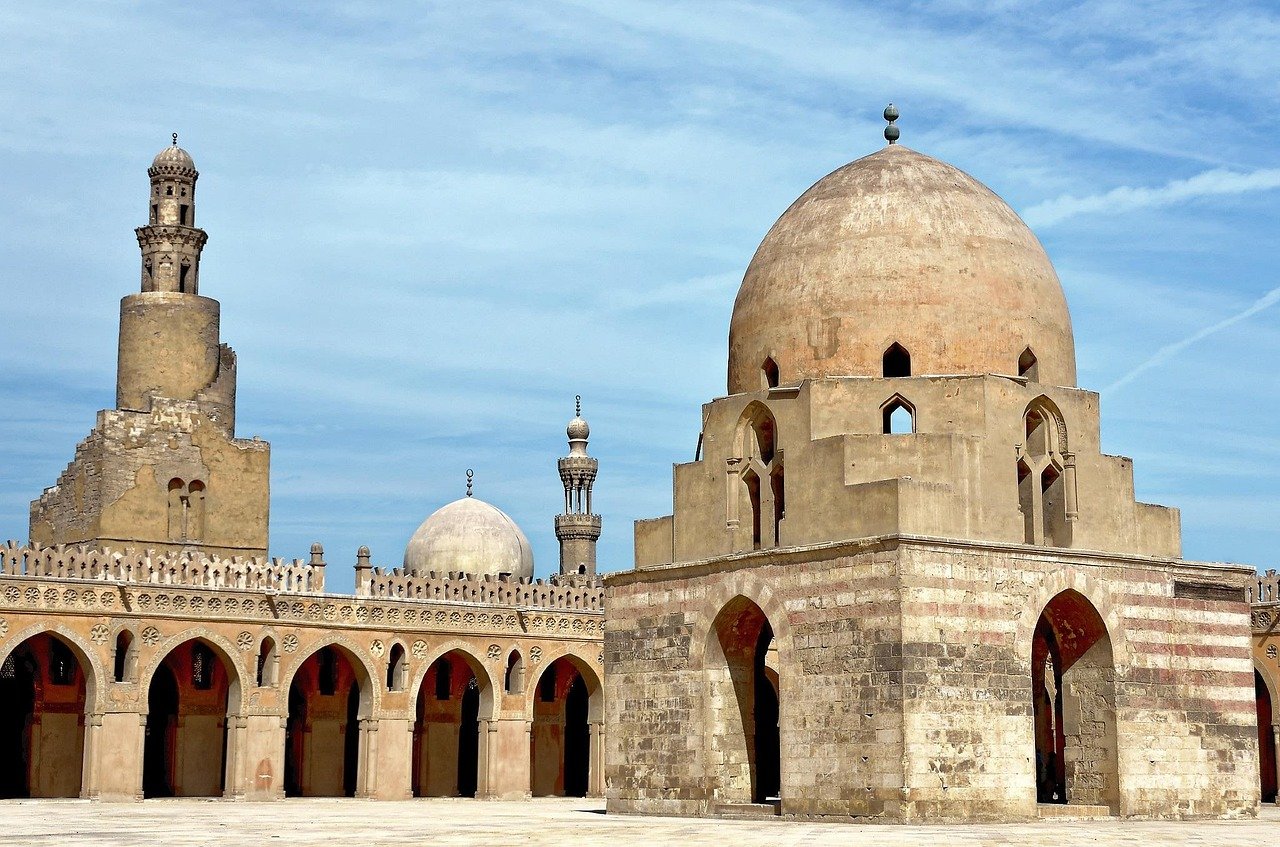
Ahmad Ibn Tulun arrived in Egypt in 868 AD as the Abbasid governor appointed by the caliph in Samarra (in present-day Iraq). Within a decade he had made himself effectively independent, founding his own royal city — Al-Qata’i — on the Muqattam Hills overlooking the Nile. The mosque he commissioned as the centerpiece of his new capital was consciously modeled on the great mosque at Samarra, the world’s largest mosque at the time, and imported not just its architectural ideas but even its building techniques. Ibn Tulun purportedly hired a Coptic Christian architect named Saimon, who suggested using red brick covered in carved stucco rather than marble, which would have required demolishing an existing Christian church to obtain the needed materials — or so the story goes.
Construction was completed in 879 AD, just two years before Ibn Tulun’s death. His son and successor, Khumarawayh, added decorative elements including gilded ceilings and a famous pool of mercury, but the mosque itself remained essentially unchanged. When the Abbasid caliphate reasserted control over Egypt in 905 AD and demolished most of Al-Qata’i, the mosque survived — perhaps because it was too sacred to tear down, or perhaps simply too large and well-built. Over the following centuries it fell into disuse and was used at various points as a prison, a caravanserai for pilgrims, and a salt warehouse. A major restoration was undertaken in 1296 under the Mamluk Sultan Lajin, who had taken refuge in the mosque while fleeing his enemies and vowed to restore it if he survived. He kept his promise, adding the unusual external spiral minaret — unique in Egypt — that still defines the mosque’s skyline today.
What to See at Ibn Tulun Mosque
The Great Courtyard and Ablution Fountain
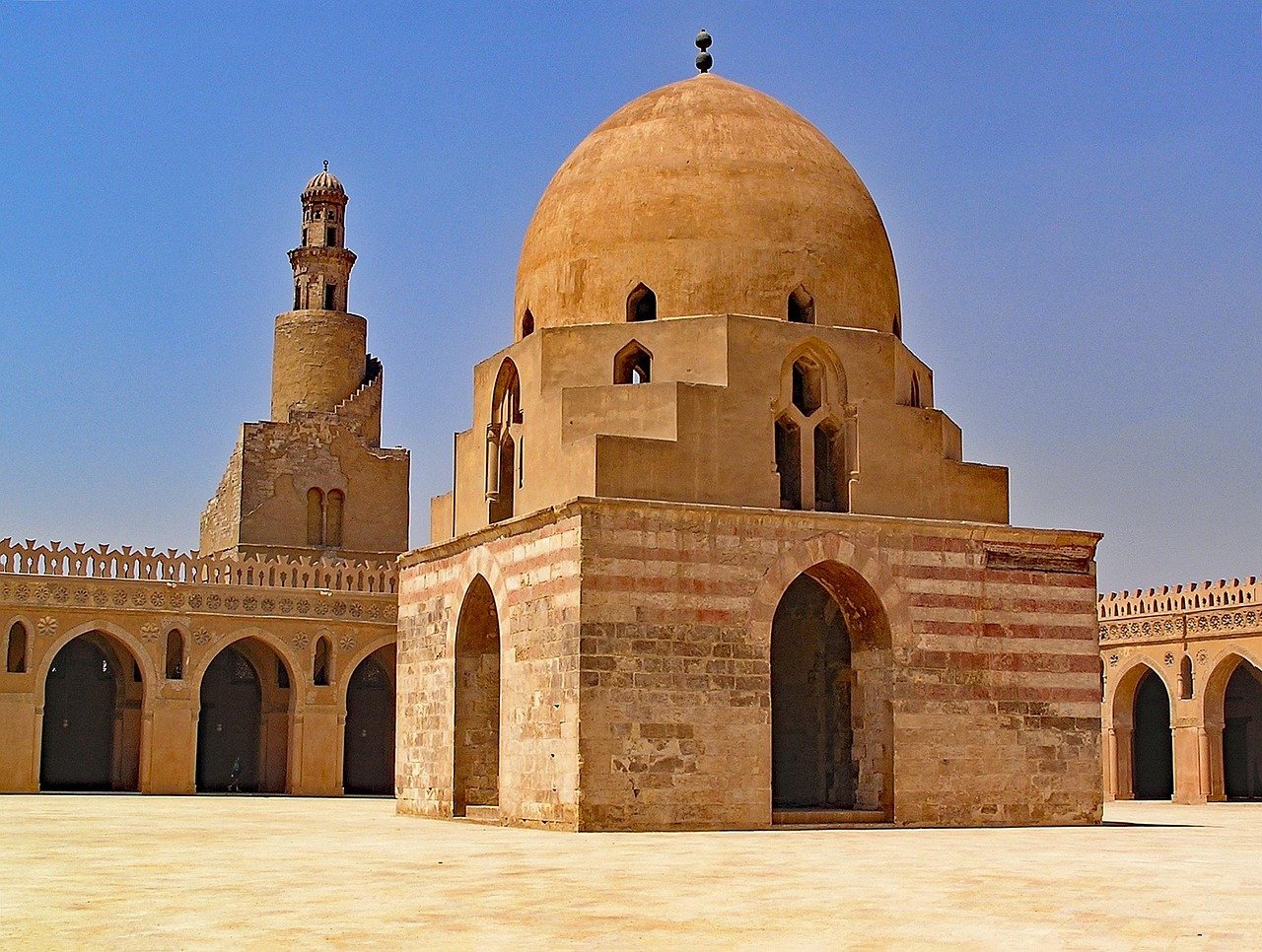
The central courtyard — the sahn — measures roughly 92 meters on each side, making it one of the largest mosque courtyards in the world. It is surrounded on three sides by double arcades of pointed arches, their soffits carved with an extraordinarily intricate vine-and-leaf stucco frieze that runs unbroken for several kilometers around the entire mosque. This frieze is considered one of the masterpieces of early Islamic decorative art and inspired generations of later Egyptian craftsmen. At the courtyard’s center stands the restored ablution fountain (mida’a), topped by a ribbed dome added during the Mamluk restoration. The open sky above, framed by the repetition of arches and the soft color of the limestone, creates an atmosphere of contemplative geometry that feels utterly removed from the chaotic city outside. Photographers find the early morning light particularly flattering, casting long shadows across the courtyard’s paving stones and illuminating the carved plasterwork of the arcades.
The Spiral Minaret
The mosque’s most distinctive feature is its external minaret — a square tower topped by a cylindrical shaft encircled by an external spiral staircase, wrapped around the outside rather than built within the tower itself. This design closely mirrors the famous Great Mosque of Samarra’s helical minaret in Iraq, and it remains the only example of this type in all of Egypt. According to one popular legend, Ibn Tulun himself absent-mindedly sketched the minaret’s spiral shape by wrapping a piece of paper around his finger during a boring meeting with his advisors — whether true or not, the story captures something of the minaret’s organic, improvisational elegance. Visitors can climb the exterior staircase (vertiginous but sturdy) for panoramic views over Islamic Cairo’s rooftop landscape: a jumble of minarets, domes, satellite dishes, and pigeons stretching toward the Citadel to the south and the Muqattam escarpment to the east.
The Gayer-Anderson Museum
Attached directly to the mosque’s south-east corner are two 16th- and 17th-century Ottoman houses that have been linked internally and restored as the Gayer-Anderson Museum, named after the British military officer and collector John Gayer-Anderson who lived and worked here from 1935 to 1942. The museum preserves the house’s original interiors — ornate mashrabiya screens, painted ceilings, Persian carpets, pharaonic antiques, Islamic ceramics, and an eclectic collection of furniture from across the Ottoman world — giving visitors a rare glimpse into the domestic life of a wealthy Cairene household of the Ottoman period. James Bond fans may recognize the interior from scenes in the 1977 film The Spy Who Loved Me. The admission ticket to the Gayer-Anderson Museum can be purchased separately at the mosque entrance and is well worth the additional cost.
Local Insights
These practical tips will help you make the most of your visit to Ibn Tulun Mosque:
- Dress modestly and bring a scarf. Ibn Tulun is an active place of worship. Women should cover their hair, shoulders, and knees before entering the prayer hall; men should wear trousers rather than shorts. Robes and scarves are available to borrow at the entrance free of charge, but bringing your own lightweight scarf is more comfortable. Remove shoes before entering the prayer hall area — bring a bag to carry them.
- Visit on a weekday morning for the most peaceful experience. Friday afternoons bring local worshippers and can make the prayer hall inaccessible to tourists during the main prayer. The mosque is least crowded on Sunday–Thursday mornings between 8am and 11am. Mid-morning light is also the best for photography of the carved stucco friezes.
- Combine with the Gayer-Anderson Museum next door. The museum is physically attached to the mosque and shares the same entrance area. Allocate at least 90 minutes for both — 45 minutes for the mosque and courtyard, 45 minutes for the museum’s ornate rooms. Together they make one of Cairo’s most rewarding cultural half-days.
- Climb the spiral minaret carefully. The external staircase is original and not for the faint-hearted — there are no handrails on the outer edge for much of the climb, and steps are uneven. Wear closed-toe shoes with grip. The view from the top is genuinely spectacular and rarely crowded, making the slight vertigo worthwhile.
- Hire a context, not just a guide. The mosque’s architectural detail — particularly the Quranic inscriptions in Kufic script that run along the interior arcade friezes — is far more meaningful with explanation. The on-site custodians often offer informal commentary for a small tip. For deeper historical context, pre-arrange a tour with a licensed Egyptologist through a reputable Cairo operator.
Planning Your Visit
- Tickets: Mosque entrance: EGP 100 (~$2 USD) for foreigners, EGP 10 (~$0.20) for Egyptian nationals. Gayer-Anderson Museum: separate ticket EGP 100 for foreigners. Combined visits require purchasing both tickets. Prices are subject to change — verify at the site.
- Opening hours: Mosque open daily 8am–5pm (last entry 4:30pm). Closed to tourists during Friday main prayer (approximately 12:00pm–1:30pm). Gayer-Anderson Museum: 9am–4pm daily.
- Best time: October to April for cooler temperatures. Best light for photography is early morning (8–10am). Avoid visiting during the noon Friday prayer slot. Ramadan brings special evening atmosphere but can affect opening hours.
- Duration: Allow 1–2 hours for the mosque and courtyard; 3+ hours if including the Gayer-Anderson Museum and a slow, contemplative wander through the surrounding Ibn Tulun neighborhood.
- Booking: No advance booking required. Simply purchase tickets at the entrance gate. Guided tours including Ibn Tulun can be booked through Cairo’s major tour operators or directly through your hotel.
Getting There
- Metro: The nearest Metro station is Mar Girgis on Cairo Metro Line 1, approximately 2 km north-west of the mosque — a 20-minute walk or a short taxi ride through the historic neighborhoods. The walk passes through interesting residential streets of Islamic Cairo.
- By car: The mosque is located on Saliba Street in the Sayyida Zaynab district. GPS navigation to “Ibn Tulun Mosque Cairo” is reliable. Street parking is available on surrounding residential streets, but the area’s lanes are narrow — arriving by taxi or ride-share is more convenient.
- On foot: From Khan El-Khalili bazaar, the mosque is approximately 3 km south-west — around 35–40 minutes on foot through historic lanes, passing the Khan el-Khalili area toward the Sayyida Zaynab district. This walk takes you through some of Islamic Cairo’s most atmospheric residential streets.
- Taxi/ride-share: Uber and Careem are reliable and inexpensive. Request drop-off at “Masjid Ibn Tulun” or “Ibn Tulun Mosque, Saliba Street.” Expect EGP 50–120 from Downtown or Tahrir Square (~$1–2.50 USD depending on time of day and traffic).
Frequently asked questions
Why is Ibn Tulun Mosque considered so historically significant?
Ibn Tulun Mosque is Cairo’s oldest surviving mosque in anything close to its original form, predating the famous Al-Azhar Mosque by nearly a century. Built in 876–879 AD, it is one of the few remaining examples of Abbasid-era mosque architecture anywhere in the world — most structures from this period in Iraq (where the style originated) have been destroyed or heavily altered. Its massive scale, the extraordinary carved stucco friezes that run throughout its arcades, and its unique external spiral minaret make it a benchmark monument in the history of Islamic architecture. Scholars consider it among the dozen most important mosques on earth.
Can non-Muslims visit Ibn Tulun Mosque?
Yes. Ibn Tulun Mosque is fully open to non-Muslim visitors throughout most of the day, except during the main Friday noon prayer when the prayer hall area is reserved for worshippers (typically 12:00pm–1:30pm). Visitors of all backgrounds are welcome and are simply asked to dress modestly, remove shoes before entering the prayer hall, and behave respectfully. The custodians and ticket sellers at the entrance are accustomed to international visitors and are generally helpful in explaining basic protocols. Photography throughout the mosque and courtyard is permitted and encouraged.
What is the Gayer-Anderson Museum and is it worth visiting?
The Gayer-Anderson Museum occupies two beautifully preserved Ottoman-era townhouses (circa 16th–17th century) directly attached to the south-east corner of the mosque. It houses the eclectic collection of British Major John Gayer-Anderson: Persian ceramics, Syrian inlaid furniture, pharaonic antiquities, Islamic manuscripts, and sumptuous carved wooden ceilings — all displayed in authentically decorated rooms including a harem reception hall with mashrabiya (latticework) screens overlooking the street below. It is absolutely worth the separate admission fee and makes a fascinating companion to the mosque. Many visitors rank it among Cairo’s hidden gems, as it receives far fewer tourists than the Egyptian Museum despite being equally impressive in its own intimate way.
How does Ibn Tulun Mosque compare to Cairo’s other major mosques?
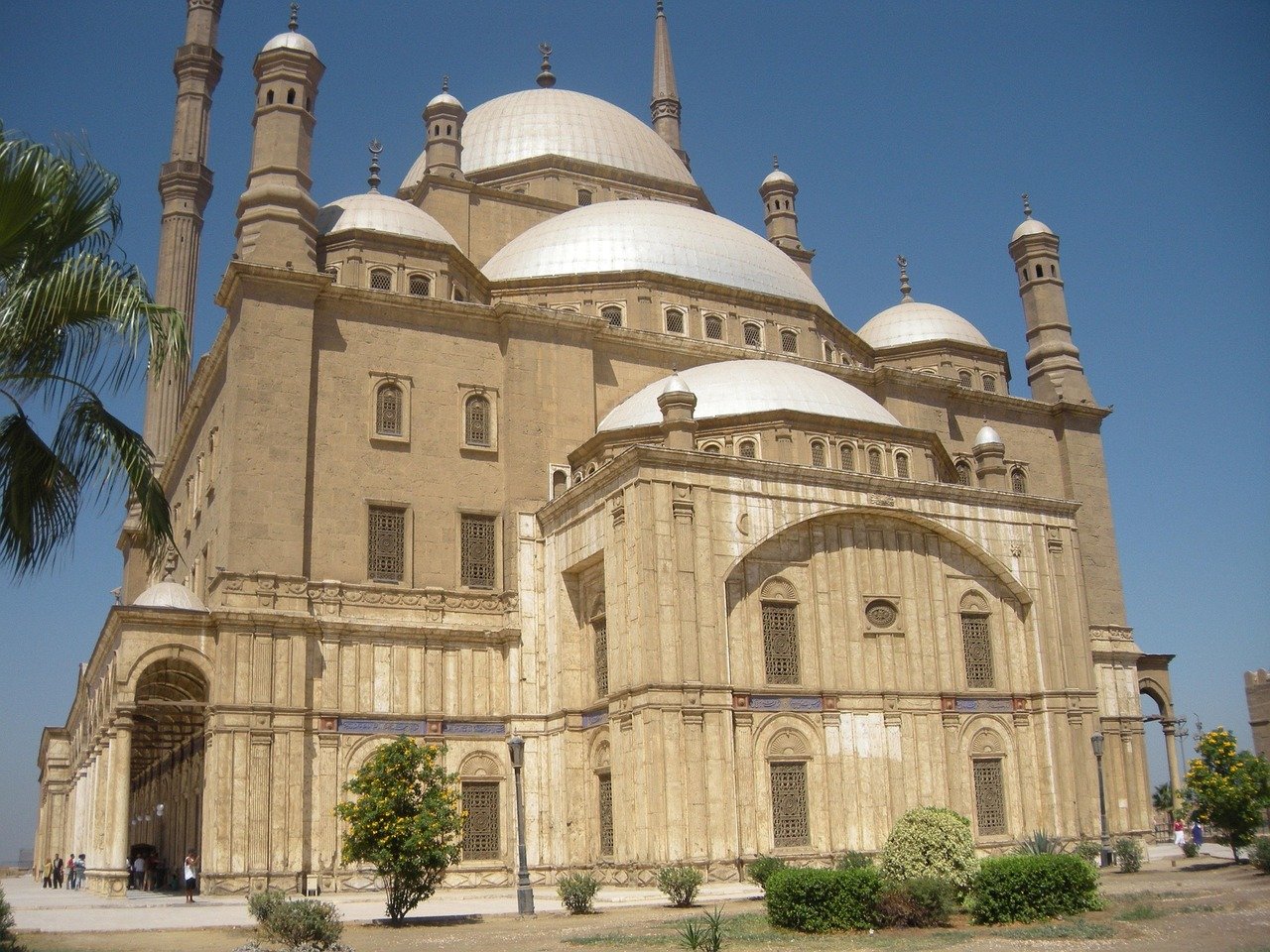
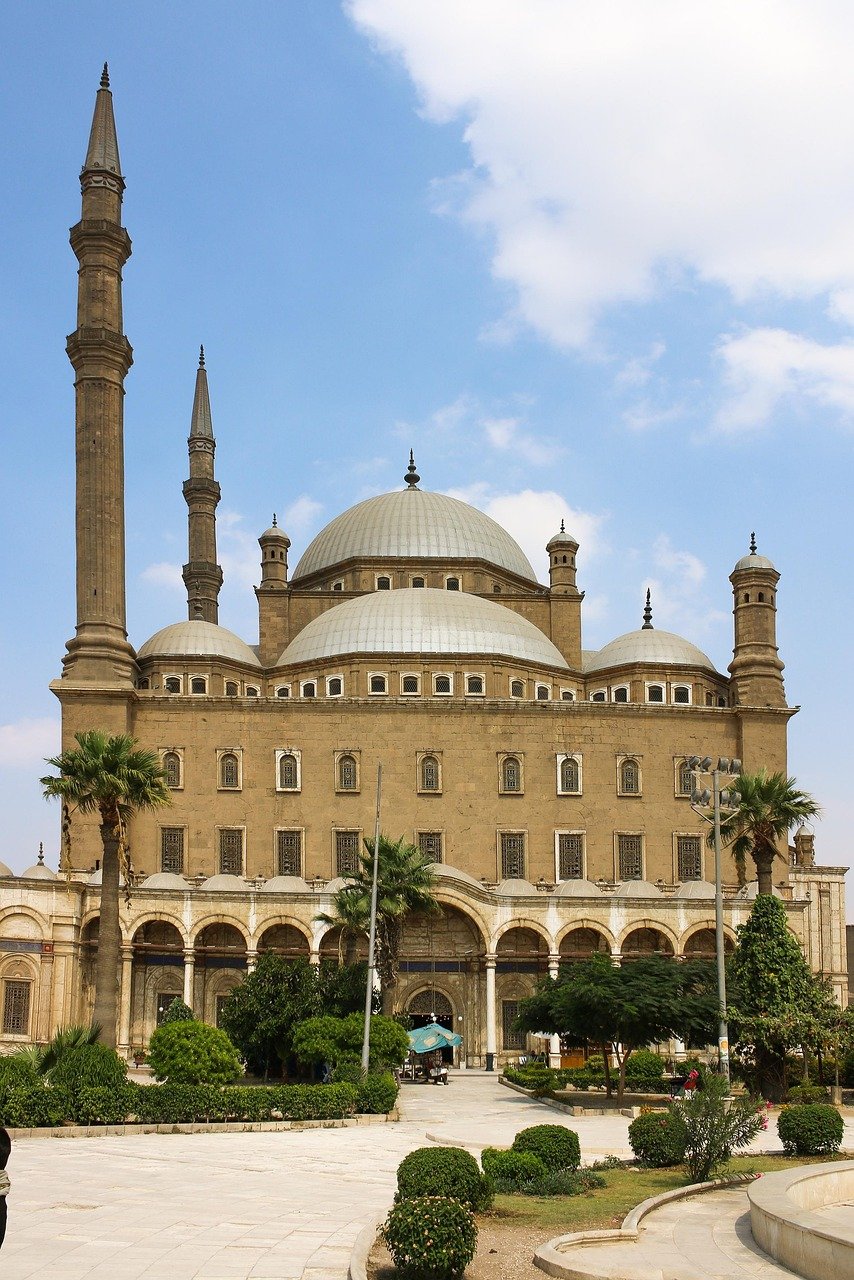
Ibn Tulun is distinct from Cairo’s other great mosques in several important ways. The Mosque of Muhammad Ali atop the Citadel (19th century) is grander in its Ottoman Baroque styling but far younger. Al-Azhar Mosque (970 AD) is the more famous religious institution and has been continuously functioning as a center of Islamic learning, but has been so heavily rebuilt over centuries that little of its original Fatimid structure remains. Ibn Tulun offers what neither of those can: genuine architectural continuity with the 9th century, a meditative quietude, and a scale that allows you to feel small and humbled in the way that great sacred architecture is meant to do. For architectural history enthusiasts, it is Cairo’s single most important building.