
Hill Inlet
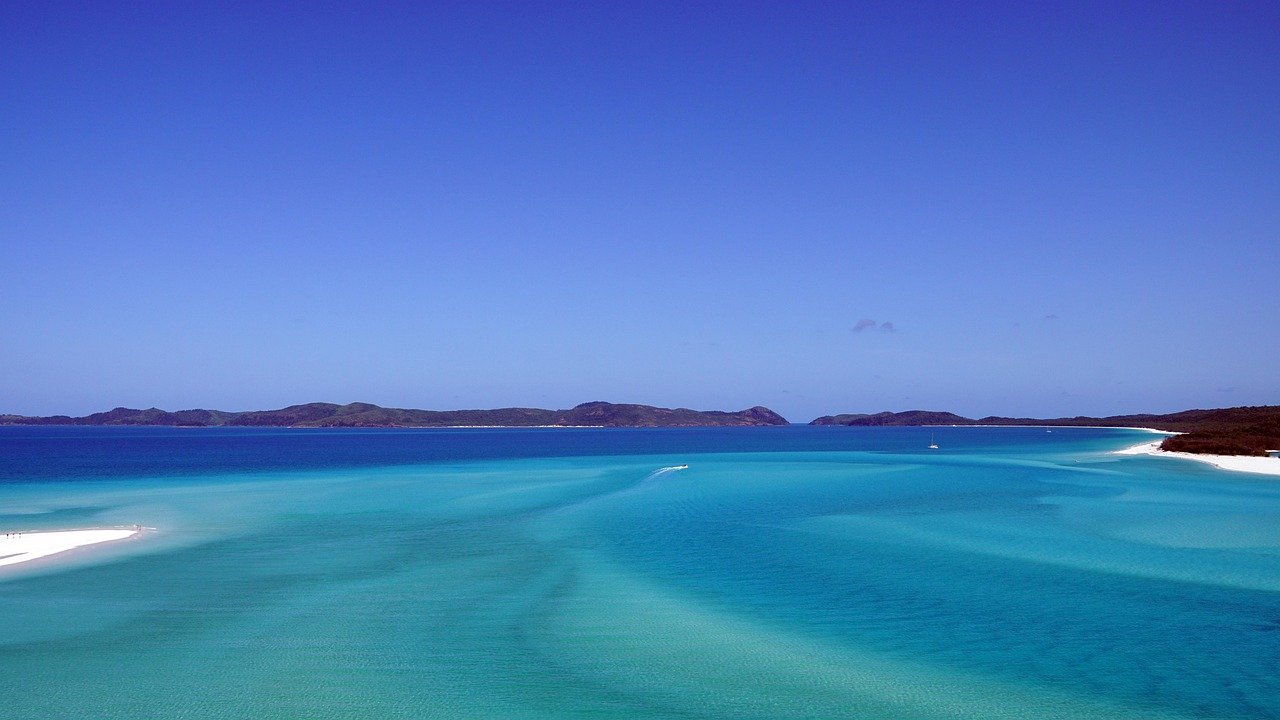
From the air, Hill Inlet looks like a painting made by someone who could not decide between turquoise and white — the silica sand of Whitehaven Beach swirling into the tidal waters in patterns that change with every hour as the tide moves in and out. On the ground, standing on a headland above the inlet at low tide with the Coral Sea glittering around Whitsunday Island, the scene is so improbably beautiful that it feels like a film set. This is one of the most photographed natural sites in Australia, and it earns every frame.
History of Hill Inlet
Whitsunday Island and the surrounding archipelago were named by Captain James Cook in 1770 when he sailed through the passage on Whitsunday — the seventh Sunday after Easter in the Christian calendar. The naming followed Cook’s general practice of recording geographical discoveries on the date of their European observation. The Ngaro Aboriginal people had lived in this region for thousands of years before Cook’s arrival, using outrigger canoes to travel between islands and fishing the reef systems that still support extraordinary marine biodiversity. The Ngaro Sea Trail, a network of kayaking and camping routes through the Whitsundays, commemorates their maritime culture.
The Whitsundays were designated part of the Great Barrier Reef Marine Park in 1975, providing formal protection for both the coral reef systems and the islands themselves. Whitehaven Beach — the 7-kilometer stretch of silica sand adjacent to Hill Inlet — has consistently ranked among the world top beaches and is entirely within national park and marine park boundaries. No development is permitted on the island, which remains accessible only by boat, seaplane, or helicopter from the mainland towns of Airlie Beach, Proserpine, and Hamilton Island.
What to See
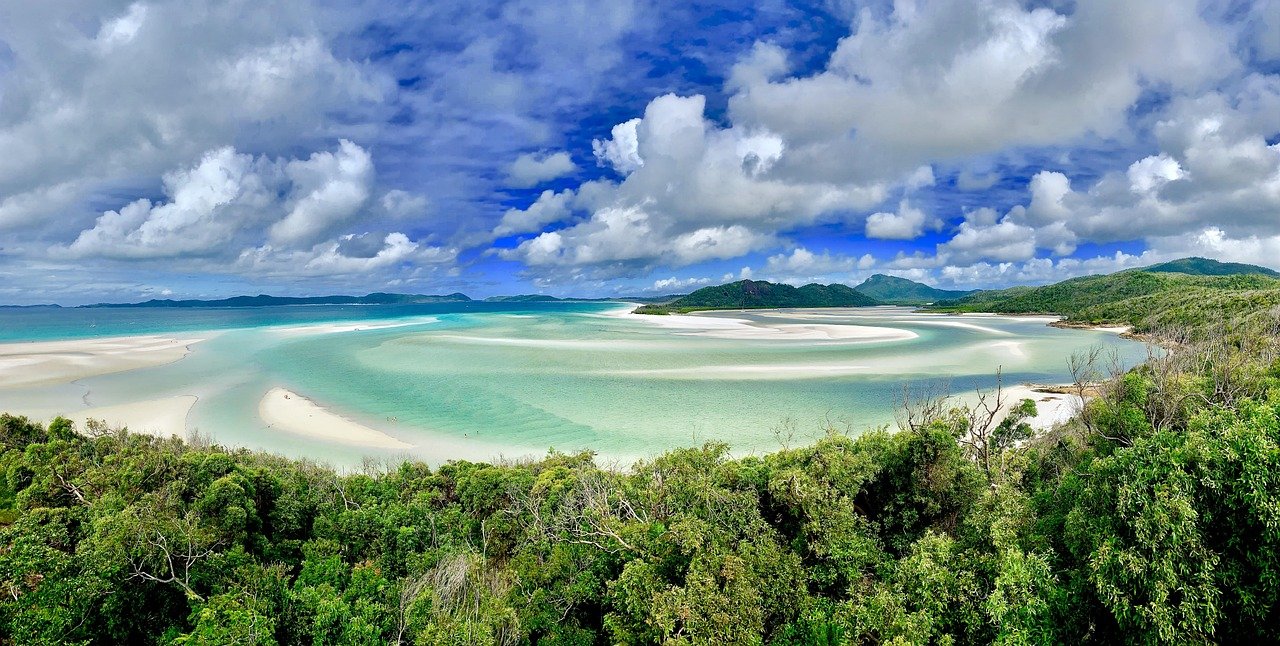
Hill Inlet itself is best viewed from the Whitsunday Lookout, a 20-minute uphill walk from the northern end of Whitehaven Beach. The lookout provides the classic aerial-style perspective of the swirling sand and water — best at mid-tide when the patterns are most dynamic, though the view is extraordinary at any stage of the tide. The walk to the lookout through the island forest passes stands of hoop pine and diverse coastal vegetation, with occasional views of the Coral Sea through the trees.
Whitehaven Beach itself, reached by continuing south from the lookout, is the main attraction for most visitors: 7 kilometers of 98% pure silica sand that is so white it reflects the heat rather than absorbing it, staying relatively cool underfoot even in the tropical sun. The water is clear to extraordinary depth — you can see the bottom in 5-6 meters of water without a mask. Snorkeling from the beach reveals a reef system with good coral coverage and abundant reef fish, including juvenile green turtles that are regularly sighted in the inlet itself.
The Silica Sand
What makes Whitehaven Beach and Hill Inlet visually extraordinary — and scientifically interesting — is the purity and whiteness of the sand. At 98% silica, it is among the purest silica sand deposits in the world. Unlike calcium carbonate beach sands derived from broken coral and shells (which are cream or yellowish), silica sand has a refractive index that produces brilliant white reflectance. The sand also has an extremely fine grain size, which creates the characteristic swirling patterns in Hill Inlet as tidal currents move through the shallow inlet, suspending and redepositing the grains in shifting formations.
The patterns visible from the Hill Inlet lookout change with every tide cycle — no two photographs taken on different days will show exactly the same configuration of sand and water. The most dramatic swirling occurs at mid-tide when water is actively moving through the inlet; high tide reduces the visible sand area while low tide can expose extensive flat sand banks. Photographers typically prefer the mid-morning light with a half-outgoing tide, which produces both the richest color contrast and the most dynamic swirling patterns from the standard lookout viewpoint.
Practical Information
- Tickets: No entry fee for the national park. Access costs depend on your transport: day tours from Airlie Beach from AUD 120-180 per person; scenic flights from AUD 180-450; full sailing charters vary widely.
- Opening hours: The island is open all year but has no facilities — bring everything you need including water and sunscreen. Day tours typically arrive mid-morning and depart mid-afternoon.
- Best time to visit: June-August for the clearest water and most stable weather. April-October is the dry season in the Whitsundays — the wet season (November-March) brings rain and higher humidity but also fewer visitors.
- Duration: Most day tours allow 4-6 hours at the beach and inlet. Overnight anchoring by sailing charter allows sunrise and sunset at the lookout.
- Booking: Book day tours in advance from Airlie Beach, Hamilton Island, or Proserpine; the most popular departure times fill up in peak season (June-September).
Local Insights
What locals know that guidebooks do not always tell you:
- The lookout viewpoint is at its photographic best 2-3 hours after low tide — check the Airlie Beach tide chart the day before and plan your tour departure accordingly to hit the best light and patterns.
- Box jellyfish (Chironex fleckeri) are present in inshore Whitsunday waters from October to May — stinger suits are available from all reputable tour operators and should always be worn for swimming during these months.
- Overnight sailing charters are the most rewarding way to experience the Whitsundays — you can be at Hill Inlet for sunrise before the day tour boats arrive, which is one of the most peaceful experiences available in Queensland.
- The beach sand at Whitehaven is so fine that it acts as a natural polishing compound — your feet will be notably softer after walking on it. Do not bring electronics with exposed ports onto the beach in windy conditions.
- Hamilton Island has direct flights from Sydney and Melbourne — flying into Hamilton Island rather than Proserpine (Whitsunday Coast) gives you easier access to the best boat tours to Whitehaven.
Getting There
- By boat from Airlie Beach: Day tour vessels depart from Abel Point Marina daily — a wide range of operators offer half and full day tours. Journey time approximately 1.5-2 hours each way.
- From Hamilton Island: Water taxi and tour vessels connect Hamilton Island to Whitehaven Beach — a shorter crossing of about 45 minutes.
- Scenic flight: Seaplane and helicopter flights from Airlie Beach and Hamilton Island provide the iconic aerial view of Hill Inlet — roughly AUD 180-450 per person depending on flight duration.
- Sailing charter: Bareboat or crewed charter yachts depart from Airlie Beach — the most flexible option for those wanting to set their own timetable.
Frequently asked questions
What is the best time to visit Hill Inlet lookout?
The most dramatic views occur at mid-tide when tidal movement creates the characteristic swirling patterns in the sand. Check local tide charts and plan to be at the lookout approximately 2-3 hours after low tide for the optimal combination of visible sand patterns and clear water color.
Is Whitehaven Beach suitable for swimming?
Yes — the water is clear, calm within the inlet, and the sandy bottom is visible at depth. From October to May, stinger suits are strongly recommended due to box jellyfish in inshore waters. June to September is generally considered the safest swimming season.
Can I camp on Whitsunday Island?
Yes — designated campsites exist at Whitehaven Beach and Dugong Beach on the island. Permits must be obtained in advance from Queensland Parks and Wildlife. Campers must be fully self-sufficient as there are no facilities. Numbers are limited to protect the environment.
How do I get to the Whitsundays from Sydney or Melbourne?
Fly to Hamilton Island (HIA) or Whitsunday Coast Airport (Proserpine/PPP) — both have direct and connecting flights from major Australian cities. From Hamilton Island, water taxis and tours access Whitehaven Beach directly. From Proserpine, transfer to Airlie Beach for tour departures.
What marine life can I see at Hill Inlet and Whitehaven Beach?
Green sea turtles are regularly seen in the inlet, particularly around the northern end of the beach. Rays and reef sharks are occasionally spotted in the shallows. Snorkeling from the beach reveals coral bommies with reef fish. The adjacent reef systems have far richer diving, usually accessed as a separate activity from Airlie Beach.