
Heart Reef
Somewhere in the Hardy Lagoon of the Whitsunday Islands, the Great Barrier Reef has arranged itself into a perfect heart. It’s a formation that seems almost too convenient — nature’s most cliched symbol of love, realised in living coral in the middle of the world’s largest reef system. From a helicopter at 300 metres the heart sits in its azure lagoon like a jewel on silk, surrounded by the impossible blues and greens of the Coral Sea. It is one of the most photographed views in Australia, and the only way to see it is from the air.
About Heart Reef
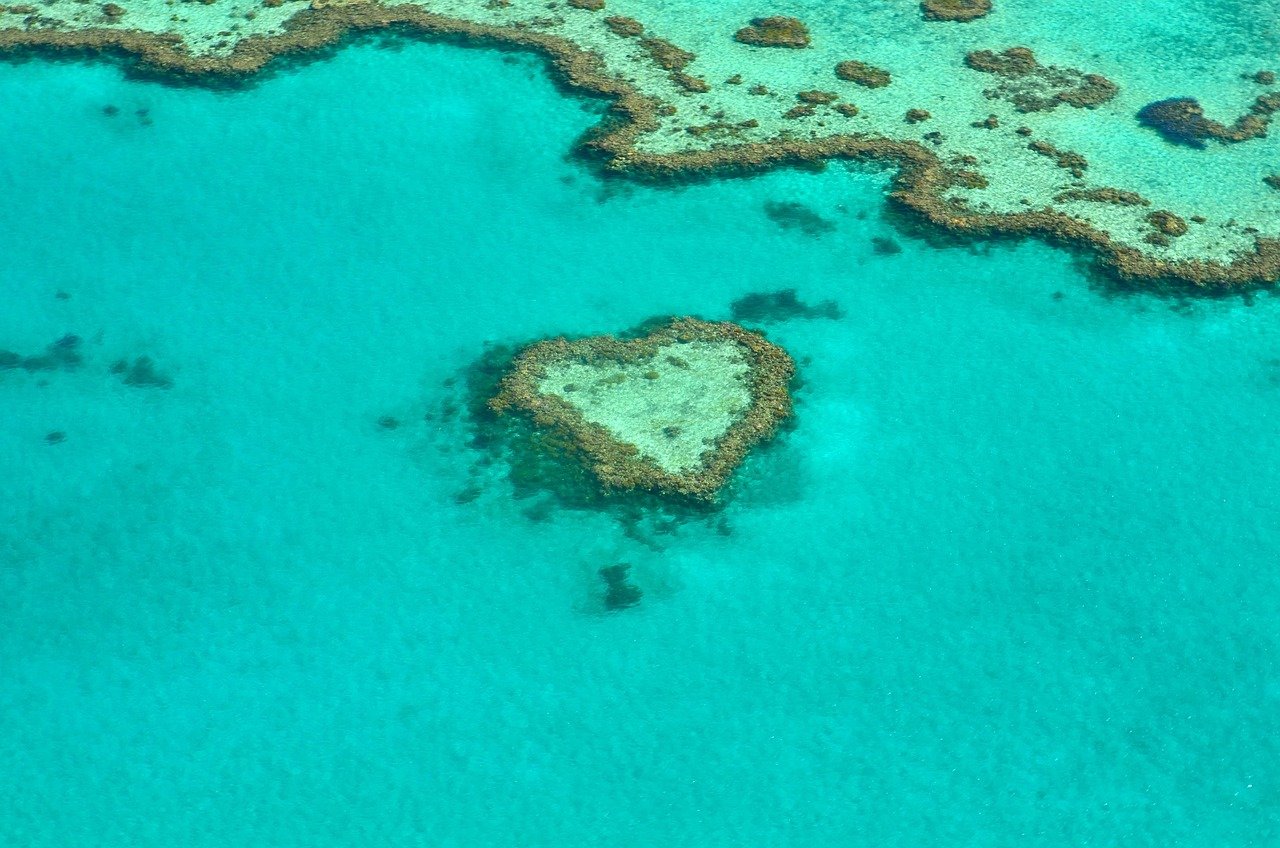
Heart Reef (also called Heart Island) is a small coral formation located within the Hardy Lagoon of the Whitsunday Islands, approximately 55 kilometres off the coast of Airlie Beach in Queensland. The reef earned its name from its clearly heart-shaped outline — a naturally formed structure that has become one of Australia’s most iconic images. The reef sits within the boundaries of the Great Barrier Reef Marine Park, the world’s largest coral reef system, which stretches for over 2,300 kilometres along the Queensland coast and is a UNESCO World Heritage Site.
Unlike most of the Great Barrier Reef, which visitors typically experience through snorkelling or diving from pontoons and boats, Heart Reef is exclusively viewable from the air. Swimming and diving directly at Heart Reef is prohibited to protect its delicate coral ecosystem from the impact of human contact. This restriction has, paradoxically, made it more famous: the aerial photography taken during helicopter tours has created the image that most people associate with the Whitsunday Islands and the Great Barrier Reef.
How to See Heart Reef
Helicopter tours to Heart Reef depart from Airlie Beach, Hamilton Island, and Proserpine (Whitsunday Coast Airport). The standard scenic flight takes 30-60 minutes and typically includes passes over Heart Reef, Whitehaven Beach (considered one of the world’s most beautiful beaches), and Hill Inlet — a tidal inlet where the silica sand and turquoise water create constantly shifting patterns when viewed from above. Prices vary by operator and flight duration, starting at around AUD 250-350 per person for shorter flights, with premium packages that include landing on the reef pontoon and snorkelling starting from AUD 970 per person.
The premium experience offered by some operators includes landing on a private pontoon moored in the Hardy Lagoon, where visitors can take a glass-bottom boat tour around the perimeter of Heart Reef at water level, snorkel in the surrounding reef, and swim in the lagoon. This combination of aerial view and water-level experience gives a complete sense of the formation and the extraordinary reef ecosystem that surrounds it.
The Whitsunday Islands
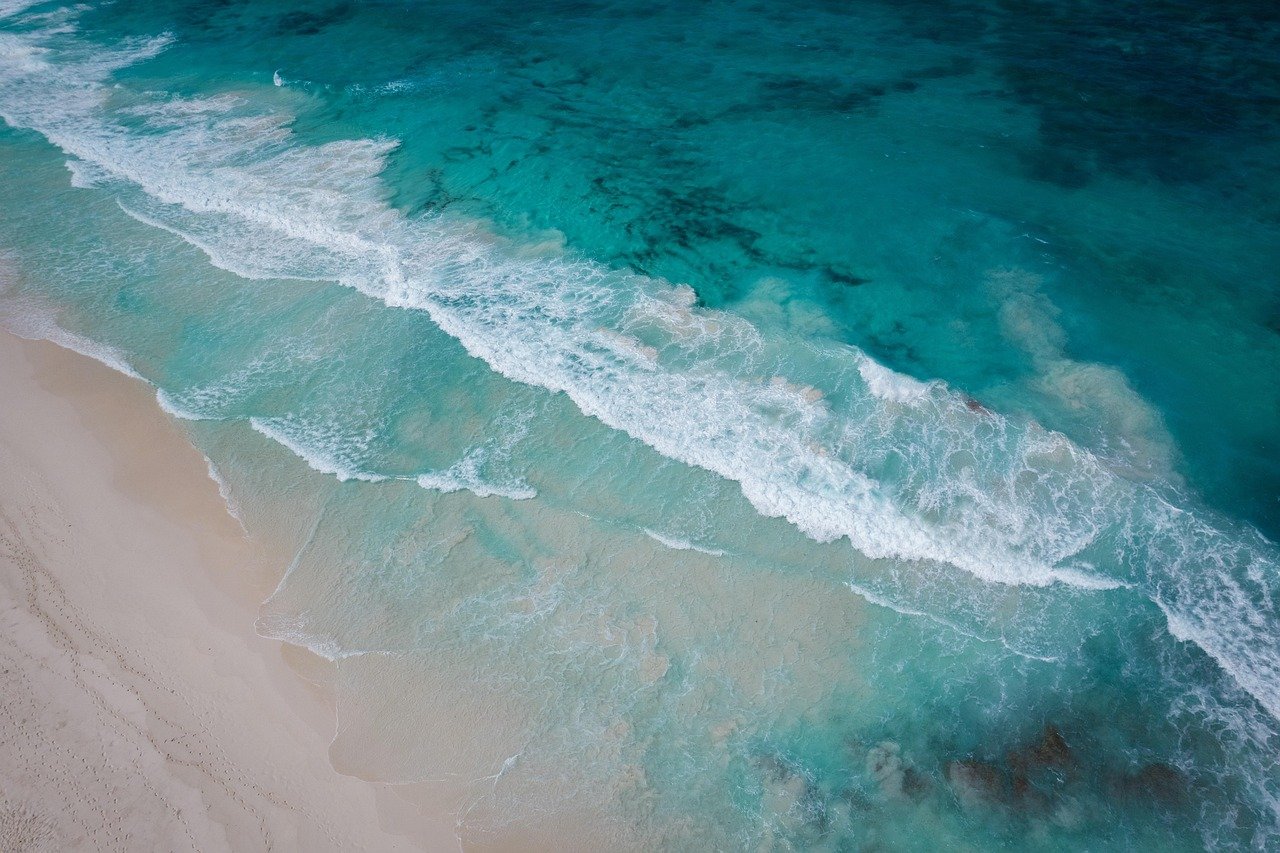
The 74 islands of the Whitsunday group sit precisely in the middle of the Great Barrier Reef system, making them the ideal base for exploring both the reef and the islands themselves. The islands are largely uninhabited — only Hamilton Island and Hayman Island have significant resort infrastructure — and the national park that covers most of the group is protected in near-pristine condition. Whitehaven Beach on Whitsunday Island is a 7-kilometre stretch of 98% silica sand that is among the whitest in the world; it squeaks underfoot and stays cool in the sun because it reflects rather than absorbs heat.
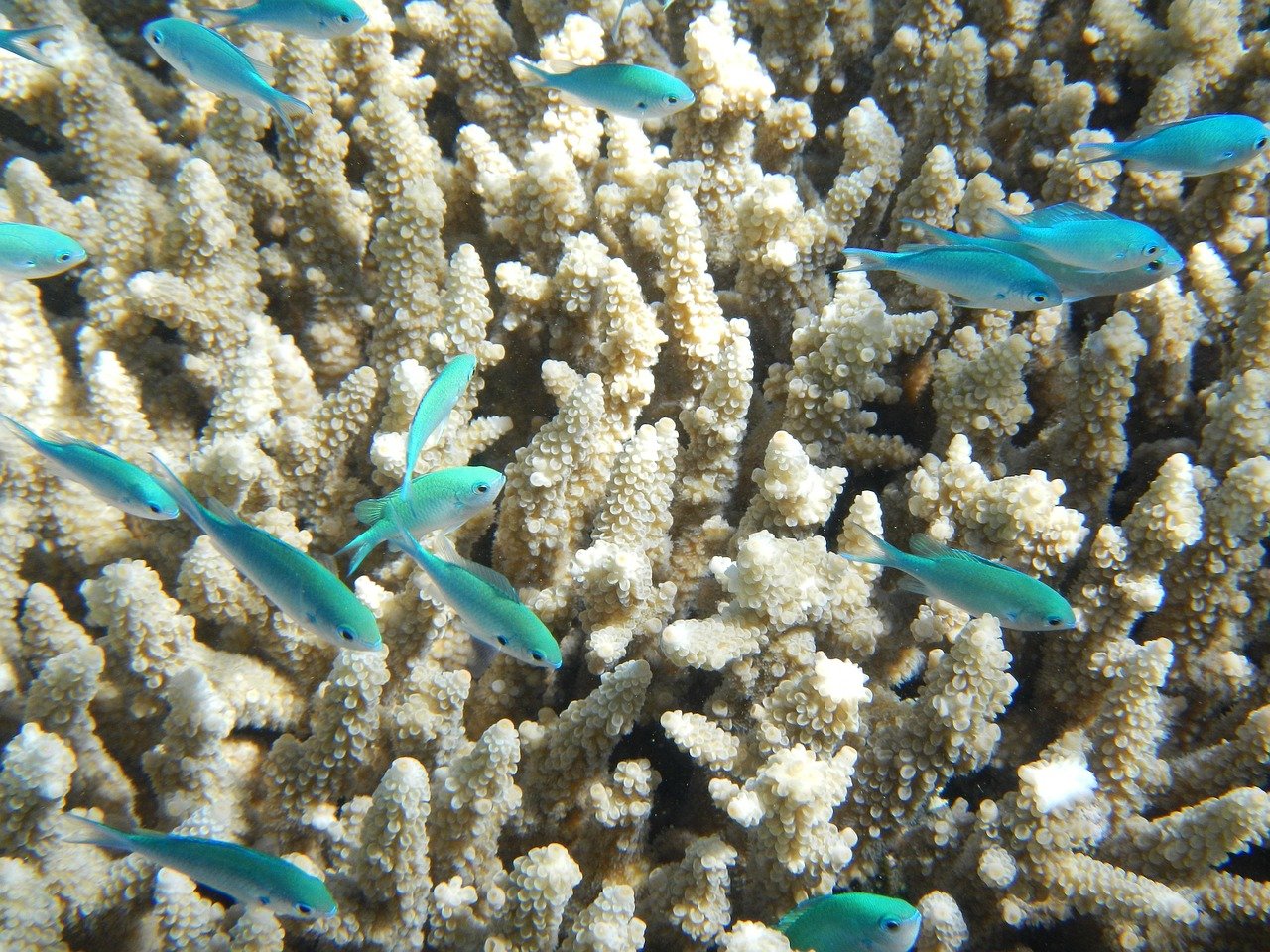
The waters between the islands teem with marine life: reef sharks, manta rays, turtles, dolphins, and the extraordinary diversity of tropical fish that the Great Barrier Reef supports. Sailing is the traditional way to explore the Whitsundays, and overnight sailing trips that combine island hopping with snorkelling and fishing remain the most popular way to experience the group. The Whitsunday Passage, the sheltered waterway between the islands and the mainland, is considered one of the finest sailing grounds in the world.
Practical Information
- Scenic flight prices: From approximately AUD 250-350 for 30-minute flights; premium pontoon packages from AUD 970 per person
- Departure points: Airlie Beach (mainland), Hamilton Island, Proserpine/Whitsunday Coast Airport
- Best time to visit: May to October (dry season) for clearest skies and best visibility; avoid monsoon season (December-March)
- Duration: 30-60 minutes for scenic flight alone; 4-6 hours for premium pontoon packages
- Booking: Essential – popular operators sell out weeks in advance during peak season
Local Insights
What locals know that guidebooks don’t always tell you:
- Book morning flights for the best visibility and photography – afternoon haze and cloud build-up can reduce visibility significantly in summer.
- The premium pontoon packages are significantly more expensive but provide a genuinely different experience: being at water level near Heart Reef makes the scale and colour of the reef system viscerally real in a way aerial views alone cannot.
- Whitehaven Beach is included in most helicopter tours and is worth the trip in its own right – the Hill Inlet view changes with every tide and no two visits look the same.
- Operators flying from Hamilton Island can be cheaper than mainland departures; if you are already on Hamilton, check prices at the island aviation centre first.
- Combine your reef visit with a sailing trip from Airlie Beach – multi-day sailing trips that include Heart Reef overflight options provide the best overall Whitsunday experience.
Getting There
- To Airlie Beach: Fly to Proserpine/Whitsunday Coast Airport from Brisbane (1.5 hrs) or Sydney (2.5 hrs); Airlie Beach is a 30-minute transfer
- To Hamilton Island: Direct flights from Sydney, Melbourne, and Brisbane to Hamilton Island Airport
- From Airlie Beach: Helicopter and seaplane tour bases are on the Airlie Beach waterfront; most offer hotel transfers
- By sea: High-speed ferries connect the mainland to Hamilton Island and the Whitsunday islands; sailing charters depart from Abel Point Marina in Airlie Beach
Frequently asked questions
Can I swim at Heart Reef?
No – swimming and diving directly at Heart Reef are prohibited by the Great Barrier Reef Marine Park Authority to protect the coral. You can snorkel in the surrounding reef system from the pontoon, and glass-bottom boats allow you to see the reef at water level without touching it.
What happens if the weather is bad on my flight day?
Most reputable operators will reschedule or offer refunds if conditions make flying unsafe or reduce visibility significantly. Check the cancellation policy carefully before booking, and consider travel insurance for long-trip planning.
Is the Great Barrier Reef still worth visiting given reports of bleaching?
The Whitsundays section of the reef is in better condition than many northern sections. Bleaching affects the reef unevenly; the Hardy Lagoon area where Heart Reef is located has retained more of its colour and coral diversity than more northerly parts. It remains one of the most spectacular marine environments on Earth.
What other reefs can I snorkel near Airlie Beach?
Hardy Reef, Bait Reef, and Hook Reef are all accessible on day trips from Airlie Beach and offer excellent snorkelling without the Heart Reef access restrictions. Cruise Whitsundays operates regular pontoon trips to these outer reef sites.
Is Heart Reef appropriate for non-swimmers and children?
The aerial view is accessible to everyone including non-swimmers. The pontoon experience requires comfort in water for snorkelling; glass-bottom boat tours are available for those who prefer to stay dry.