
Great Pyramid of Giza (Khufu Pyramid)
You have to crouch to enter. The original entrance to the Great Pyramid of Khufu is a narrow, robber-cut hole near the base of the north face, and the moment you duck inside, the scale of the world outside becomes irrelevant ? all that exists now is the close limestone darkness, the slight incline, and the knowledge that you are inside a structure that has stood for 4,500 years. The Great Pyramid is the oldest and largest of the Giza trio, the only surviving Wonder of the Ancient World, and the most ambitious building project in human history. Its engineering still puzzles experts. Its purpose still sparks debate. And standing at the heart of it, in the red granite King’s Chamber, with Khufu’s empty sarcophagus before you and millions of tonnes of stone pressing in from above, you will feel the full weight of those unsolved mysteries.
History of the Great Pyramid of Khufu
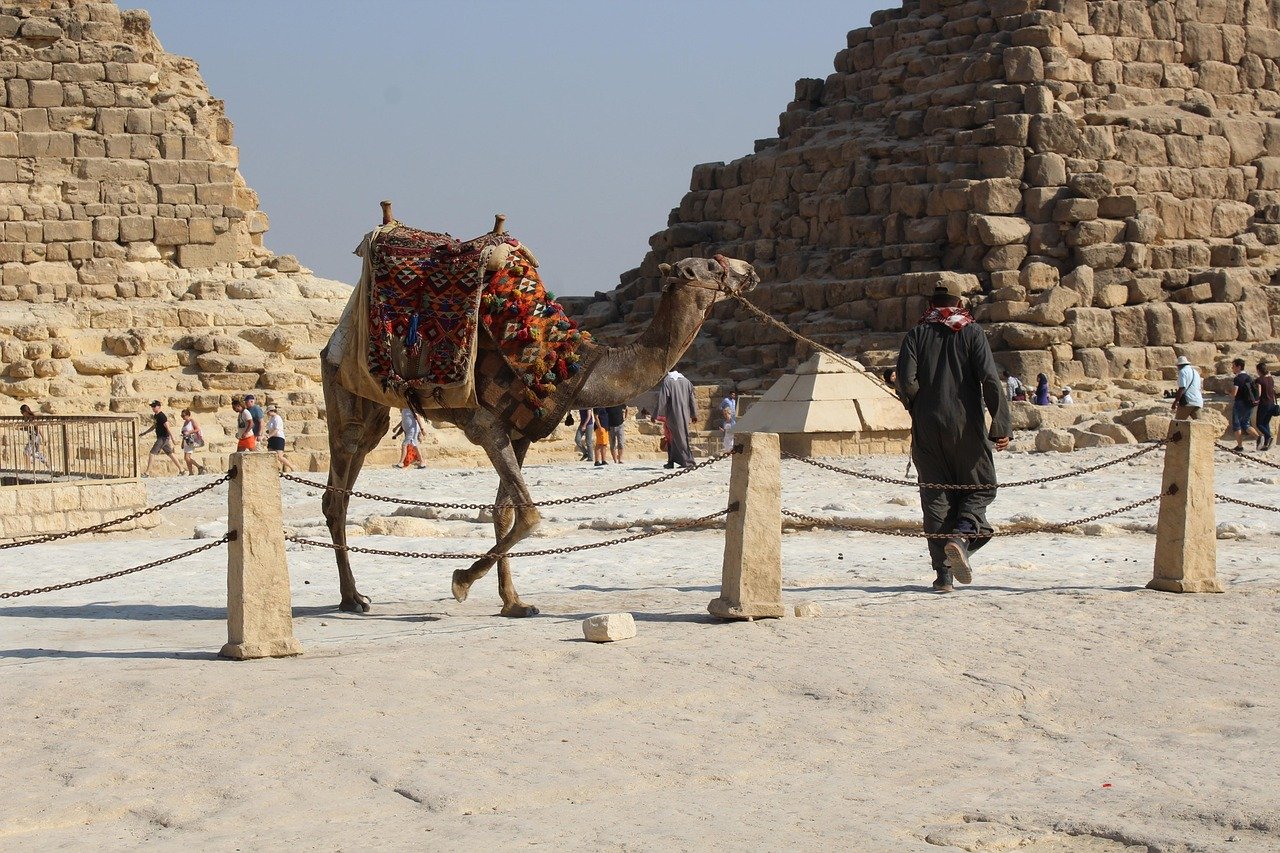
Pharaoh Khufu ? Khnum-Khufu in the original Egyptian, Cheops to the Greeks ? ruled Egypt’s Fourth Dynasty around 2589 to 2566 BCE. His pyramid was likely begun within the first years of his reign and took an estimated 26 years to complete. The logistics were staggering: approximately 2.3 million limestone and granite blocks were quarried, transported, shaped, and placed, totaling around 6 million tonnes of stone. The majority of the limestone came from quarries immediately east of the plateau ? still visible today ? while the red granite for the King’s Chamber and its relieving chambers was brought from Aswan, more than 800 kilometres upstream along the Nile. Ancient papyri discovered at Wadi al-Jarf, dating to the reign of Khufu, document the daily operations of this supply chain: the workers’ rations, the boats, the administrative records of a project that mobilized an entire nation.
Contrary to the popular image of enslaved workers, modern archaeology has established that the pyramid’s builders were skilled laborers ? organized into rotating teams with poetic names like “Friends of Khufu” and “Drunkards of Menkaure.” They lived in a purpose-built workers’ village south of the plateau, ate well by ancient standards, received medical treatment when injured, and were buried with honor near the monument they built. The pyramid originally stood 146.5 metres tall and was encased in polished Tura limestone that would have caught the sunlight and made it visible for hundreds of kilometres across the desert. That casing is almost entirely gone today ? stripped for medieval Cairo’s buildings ? leaving the stepped courses of rougher core limestone we see now. The capstone, or pyramidion, has been lost entirely.
What to See at the Great Pyramid of Khufu
The Grand Gallery
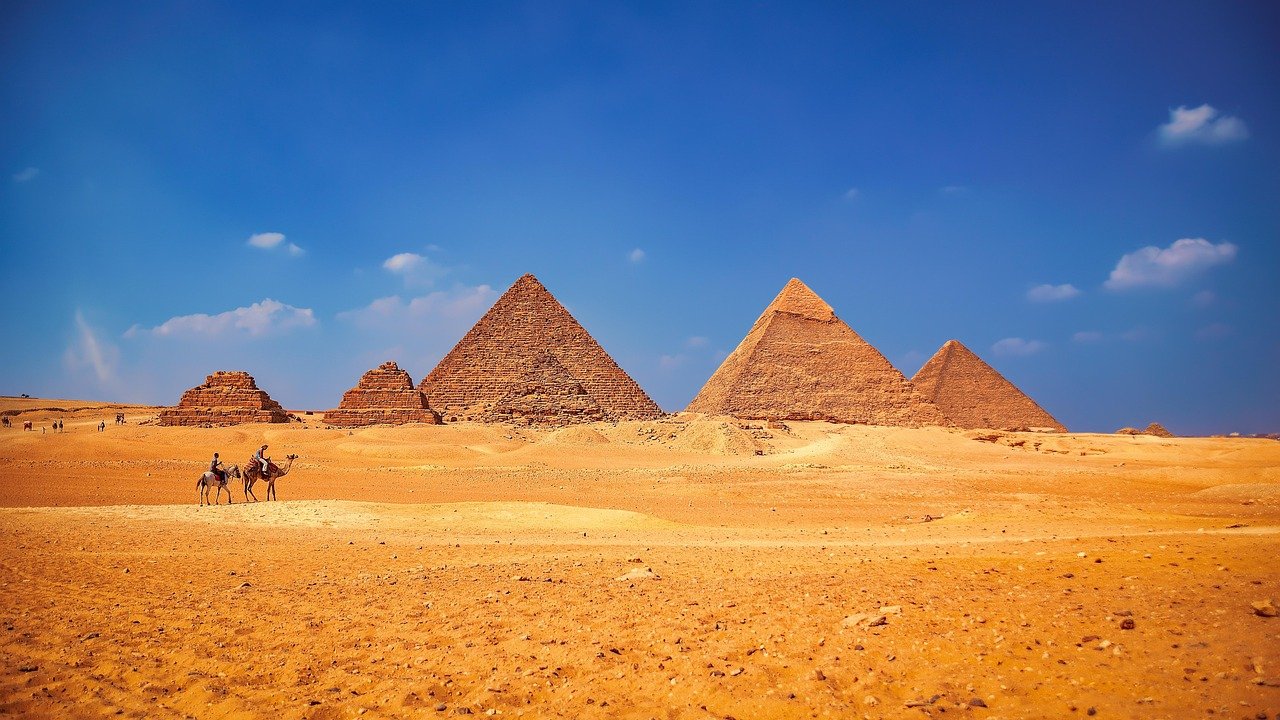
The interior of the Great Pyramid is accessed through the ascending passage, which branches off the main descending corridor about 18 metres from the entrance. After a low crawl along this ascending corridor, you emerge into the Grand Gallery: one of the most breathtaking architectural spaces in the ancient world. It is approximately 46 metres long, rises to a corbelled ceiling nearly 8.6 metres high, and narrows progressively toward the top in a technique that distributes the enormous stone weight above. The walls are fitted with 27 pairs of notches whose exact purpose remains debated ? they may have held the wooden sleds or ropes used to drag the massive granite blocks that would plug the passage after the king’s burial. Walking its length, hunched slightly beneath the converging ceiling, gives you an immediate sense of the precision and scale of engineering that characterizes the entire pyramid.
The King’s Chamber
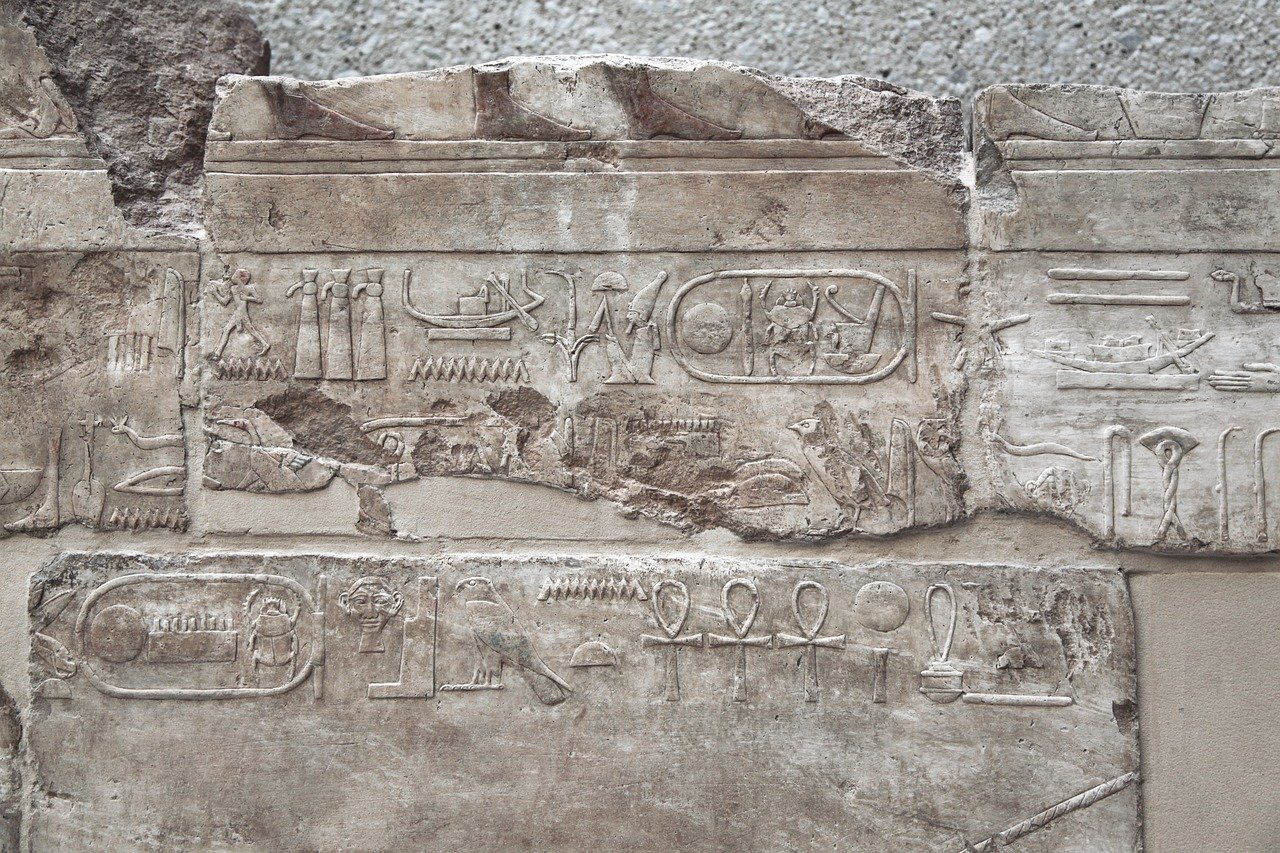
At the upper end of the Grand Gallery, through a low antechamber fitted with granite portcullises (now propped open), you reach the King’s Chamber ? Khufu’s intended burial room. The chamber is entirely lined in red Aswan granite: the walls, the ceiling, even the floor. It measures approximately 10.5 metres by 5.2 metres by 5.8 metres high. In the western end of the room stands the only object in the chamber: Khufu’s open granite sarcophagus, slightly too large to have been brought in through the passages, meaning it was placed here during construction. The lid is missing ? likely removed by ancient tomb robbers. The chamber is plain, almost shockingly so given its context: no inscriptions, no paintings, no artifacts. Above the King’s Chamber are five relieving chambers ? hollow spaces between massive granite beams ? designed to distribute the enormous downward pressure of the pyramid’s mass. The topmost of these, called Campbell’s Chamber, contains ancient graffiti left by the construction crews, including cartouches of Khufu himself ? some of the earliest written evidence of his name.
The Queen’s Chamber and Subterranean Chamber
The pyramid contains two additional chambers accessible to researchers but not typically open to regular visitors. The Queen’s Chamber sits roughly halfway between the pyramid’s base and the King’s Chamber, measuring approximately 5.2 by 5.2 metres with a pointed limestone ceiling. Despite its name, it was almost certainly not built for a queen ? the name was assigned by Arab explorers centuries ago. Air shafts angled from the Queen’s Chamber wall toward the stars Sirius and Orion have inspired numerous astronomical theories about the pyramid’s celestial alignment. The Subterranean Chamber, carved into the bedrock beneath the pyramid about 30 metres below ground level, is rough-walled and unfinished, suggesting construction was redirected upward during the building process. Robotics exploration of the pyramid’s blocked shafts in recent decades has revealed small doors and spaces whose nature remains tantalizingly unknown.
In 2023, the ScanPyramids project ? a multinational scientific team using muon tomography (a technique that uses cosmic-ray particles to image dense structures, similar to X-ray imaging) ? confirmed the existence of a large previously unknown corridor near the north face of the Great Pyramid, approximately 9 metres long and positioned just above the main entrance. The discovery was announced by the Egyptian Ministry of Tourism and Antiquities and represents the first major internal discovery in the pyramid since the 19th century. What this corridor connects to, and whether it leads to further undiscovered spaces, remains under active scientific investigation. The finding serves as a reminder that the Great Pyramid, despite centuries of study, has not yet given up all its secrets.
Local Insights
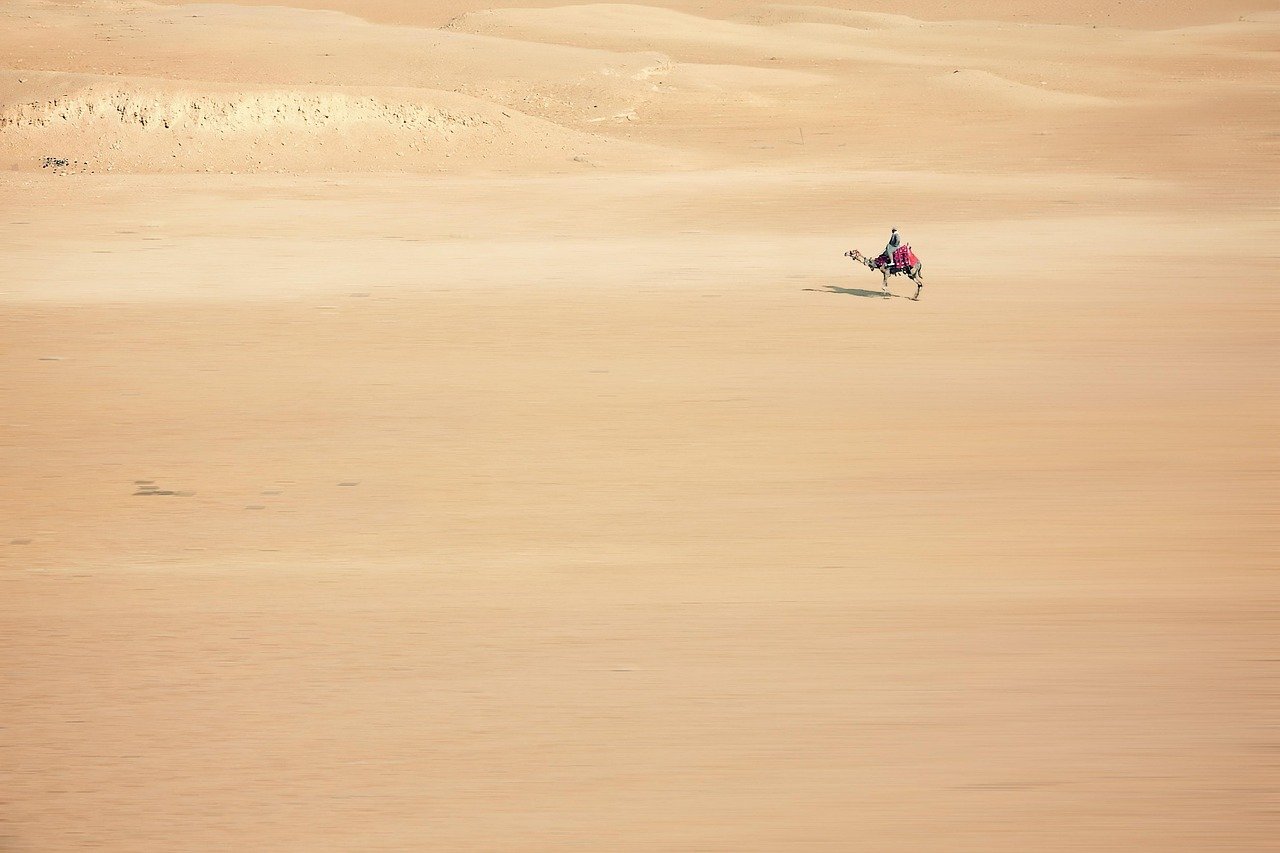
Visiting the interior of the Great Pyramid is a genuinely special experience ? but it requires preparation. Here is what you need to know before you go:
- The interior is hot, narrow, and steep. The ascending passage requires a crouched, slightly duck-walking posture for much of the approach. The air inside is warm and humid ? around 25?28?C with high moisture from visitors’ breath. Wear comfortable, flexible clothing and closed shoes with grip. Anyone with claustrophobia, serious cardiac conditions, or mobility limitations should consider the exterior experience only.
- Interior tickets sell out ? sometimes days in advance. The Egyptian government limits daily visitors to the Khufu interior. Tickets cost 900 EGP (~$18 USD) above the plateau entrance fee and are available at egymonuments.gov.eg online or at the on-site booth starting at 7 am. During peak season (November through March), booking at least 2?3 days ahead is strongly recommended.
- The Solar Boat Museum is immediately adjacent and worth the extra stop. On the south side of the Great Pyramid, the museum houses a fully reconstructed 43-metre cedarwood boat dismantled and buried in a pit beside the pyramid around 2500 BCE. It may have been used to transport Khufu’s body, or it may be a symbolic solar barque for his afterlife journey. Either way, it is extraordinary ? and often less crowded than the pyramid itself.
- Photography inside the pyramid is permitted but difficult. The interior is dimly lit and phone cameras struggle in the narrow, moving-crowd conditions. A small flashlight improves orientation. Tripods are not permitted. The best images of the interior are often taken in the Grand Gallery looking up at the corbelled ceiling.
- Morning visits are dramatically better for the exterior too. The north face of the Great Pyramid catches morning light directly, making 7?9 am the ideal window for exterior photographs. The crowd of tour buses and organized groups typically does not arrive until 9?10 am, giving early visitors near-solitude at the world’s most famous ancient monument.
Planning Your Visit
- Tickets: Plateau entrance: 700 EGP (~$14 USD) for adults, 350 EGP for students. Khufu interior access: 900 EGP extra (~$18 USD) per person. Solar Boat Museum: additional fee payable on-site. Other pyramid interiors (Khafre, Menkaure): 280 EGP each.
- Opening hours: Giza Plateau open daily 7:00 am ? 5:00 pm (last entry approximately 4:00 pm). Interior access available during plateau hours, subject to daily ticket limits.
- Best time: October through April for comfortable weather. Early morning (7?9 am) for smallest crowds and best light. Avoid summer midday ? the plateau is exposed and temperatures regularly exceed 38?C with no shade.
- Duration: Interior visit alone takes 30?60 minutes including queuing and the self-guided walk through the passages. Allow 3?4 hours for the Great Pyramid with its exterior, interior, and the Solar Boat Museum. Budget a half-day if also visiting the Sphinx and other pyramids.
- Booking: Strongly recommended for the Khufu interior ? tickets are limited and sell out during peak season. Book at egymonuments.gov.eg. Plateau entrance tickets can be purchased at the gate.
Getting There
- Metro: Cairo Metro Line 2 to El-Giza station, then taxi or microbus onward (approximately 20?25 minutes, 30?50 EGP). Metro fare from central Cairo is around 12 EGP and takes 15 minutes.
- By car: Drive west on Pyramids Road (Sharia Al-Haram) to the Giza Plateau. Since April 2025, the main visitor entrance is the Fayoum Desert Road gate. Parking is available at the gate. GPS: 29.9773? N, 31.1325? E.
- On foot: Not practical from central Cairo (roughly 20 km). From the Giza Metro station it is approximately 9 km ? possible by bicycle but not advisable on foot, especially in summer heat.
- Taxi/ride-share: Uber and Careem offer the most transparent pricing (approximately 120?200 EGP from central Cairo or downtown hotels). Standard taxis require pre-negotiated fares ? establish the price before getting in. Ask to be dropped at the Fayoum Road main entrance gate.
Frequently asked questions
Is it worth going inside the Great Pyramid of Khufu?
For most visitors who have an interest in history and are physically comfortable with enclosed spaces, yes ? unreservedly. The Grand Gallery is one of the most impressive architectural spaces of the ancient world, and standing in the King’s Chamber beside Khufu’s granite sarcophagus is an experience that stays with you. However, it is not for everyone: the passages are narrow, steep, and require crouching; the air is warm and humid; and the experience is relatively brief ? most people spend 15 to 30 minutes inside. If claustrophobia, heart conditions, or mobility limitations apply to your group, the exterior of the pyramid is magnificent on its own terms.
How many blocks does the Great Pyramid contain?
Estimates based on the pyramid’s volume and the average block size suggest approximately 2.3 million stone blocks, with a combined weight of around 6 million tonnes. The core blocks average about 2.5 tonnes each, while the granite ceiling beams of the King’s Chamber weigh up to 80 tonnes apiece. The base is almost perfectly level ? deviating only 2.1 centimetres across its entire 230-metre side ? and the four sides are aligned with the cardinal directions to within 0.05 degrees. This precision was achieved without modern instruments, using the stars, plumb bobs, and setting squares. How exactly the blocks were lifted to such heights remains one of archaeology’s great unanswered questions.
Who built the Great Pyramid and how long did it take?
The Great Pyramid was built for Pharaoh Khufu (also known as Cheops) during his reign in Egypt’s Fourth Dynasty, around 2560 BCE. Construction took an estimated 26 years, though some scholars argue the timeline could have been somewhat shorter with larger labor forces. The builders were paid Egyptian workers ? not slaves ? organized into rotating teams. Evidence from the Wadi al-Jarf papyri, discovered in 2013, gives direct documentary evidence of the logistics: boats delivering Tura limestone across the Nile, ration records, and administrative logs showing an extraordinarily well-organized national operation.
What is inside the Great Pyramid today?
Three main chambers survive inside the Great Pyramid, connected by passages. The Subterranean Chamber is carved into the bedrock below the pyramid and appears to have been abandoned before completion. The Queen’s Chamber sits within the pyramid’s masonry at an intermediate level and contains a corbelled niche of uncertain purpose. The King’s Chamber, at the heart of the pyramid, is entirely lined in red Aswan granite and contains Khufu’s open, lidless granite sarcophagus ? the only large artifact remaining. Above the King’s Chamber are five relieving chambers bearing construction-era graffiti including Khufu’s cartouche. All chambers are empty of treasures, which were removed by tomb robbers in antiquity.