
Gothic Quarter (Barri Gòtic)
The alley narrows until buildings on either side are close enough to touch simultaneously, then opens without warning onto a sunlit square where a fountain plays and pigeons compete for the attention of cafe terrace regulars. You have been in Barcelona Gothic Quarter for twenty minutes and you are already lost — which is, in the Barri Gotic, precisely the point. This two-thousand-year-old urban core, built on the bones of the Roman colony Barcino, is one of the densest accumulations of historical layers in Europe: Roman walls, medieval Gothic palaces, baroque churches, and the imprint of a Jewish community that flourished here for centuries before expulsion in 1391.
History of the Gothic Quarter
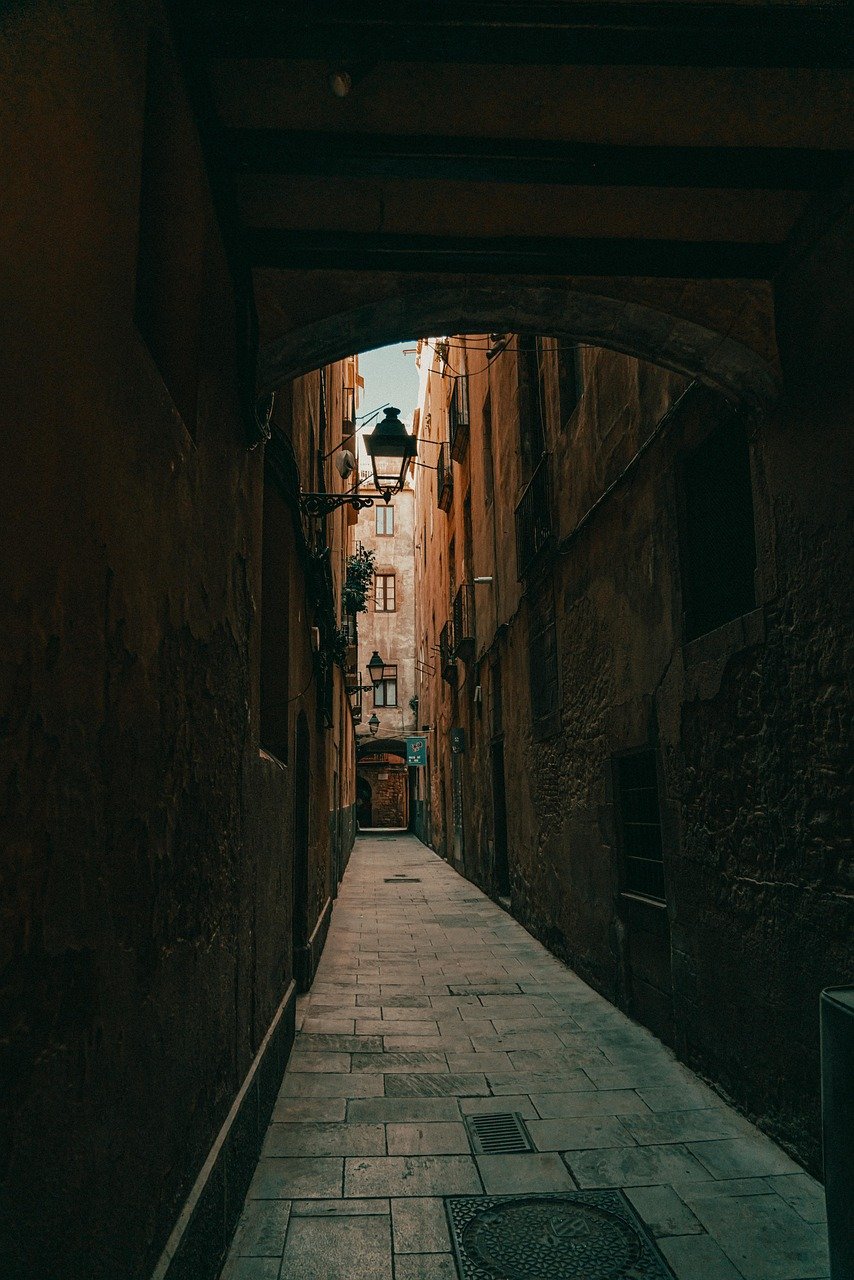
The Gothic Quarter occupies the site of the original Roman colony of Barcino, founded around 10 BCE as a military settlement on a low hill between two rivers. The colony was small by Roman standards — covering about 10 hectares enclosed by walls — but its location gave it strategic importance and commercial potential. Substantial remains of the Roman settlement survive today: a section of original wall with towers running along Carrer del Bisbe and Placa Nova, and four columns from the Temple of Augustus hidden in a medieval courtyard within the Museu d’Historia de la Ciutat complex.
The medieval city that grew within and beyond the Roman walls reached its greatest importance in the 14th century, when Catalonia was the dominant power in the western Mediterranean. The Cathedral of Barcelona, the Palau de la Generalitat (government palace), and the Palau del Rei Mayor (royal palace) were all built during this period of Catalan maritime power, creating the architectural ensemble that defines the Gothic Quarter. The name “Barri Gotic” is actually a somewhat misleading 20th-century invention: many of the buildings are not strictly Gothic, the quarter is mixed with buildings from many eras, and some structures were “gothicized” in the early 20th century as part of a romantic nationalist renovation project.
What to See
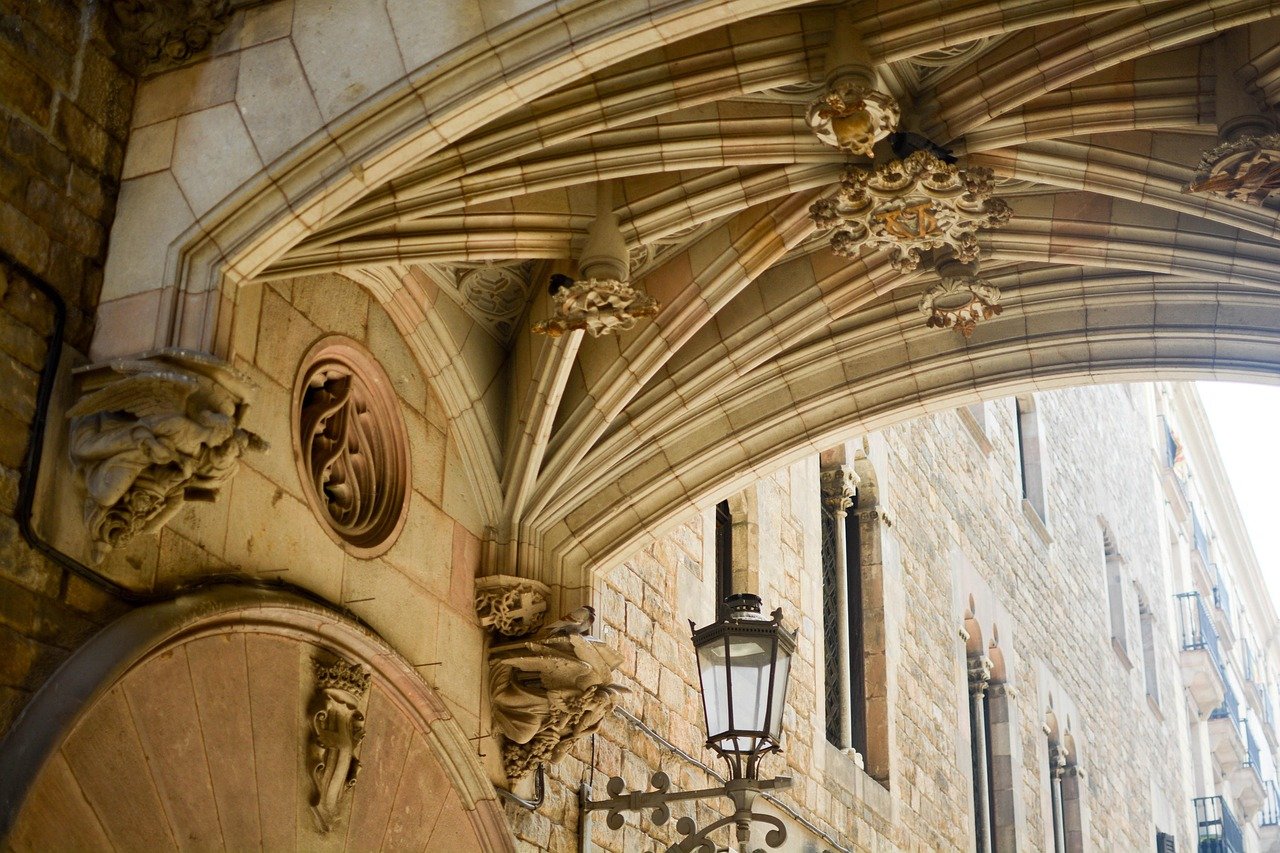
The Barcelona Cathedral (La Seu), begun in 1298 and largely completed by 1450, anchors the northern end of the Gothic Quarter with its spectacular neo-Gothic facade (added in 1882). The cloister, accessible from several gates around the cathedral, contains a garden with 13 white geese — a tradition linked to the 4th-century martyr Santa Eulalia, one of Barcelona patron saints. The cathedral treasury holds significant medieval art and relics. Entry to the cathedral is free early morning; a small charge applies during main visiting hours.
Placa del Rei — the square of the former royal palace — is one of the most evocative medieval spaces in Europe: ringed by the Palau del Rei Major, the chapel of Santa Agata, and the Tinell hall, it preserves a nearly intact 14th-century royal ensemble. Below the square, the Museu d’Historia de la Ciutat descends through the layers of Roman Barcino in an extraordinary underground archaeological circuit. The Call — Barcelona medieval Jewish quarter — occupies the southwestern corner of the Gothic Quarter, centered on Carrer del Call and Sant Domenic del Call, where the remains of the main synagogue can be visited.
Roman Barcino Underground

Beneath the medieval and modern streets of the Gothic Quarter lies an extraordinarily preserved Roman city. The Museu d’Historia de la Ciutat (MUHBA) provides access to 4,000 square meters of underground Roman archaeology — more complete than almost any other Roman city in Western Europe. Visitors walk through the ruins of Roman fish salting facilities (garum production was a major industry), laundry facilities, a winery, water storage tanks, and streets and buildings that were occupied continuously from the 1st century BCE until the medieval period built directly on top of them.
The four columns of the Temple of Augustus, visible from an interior courtyard of the Casa Padellàs on Carrer del Paradis, are the most dramatic single Roman survival above ground. The temple occupied the highest point of the Roman hill and its Corinthian columns remain to their full height — a remarkable preservation explained by the fact that they were incorporated into a medieval building and thus never demolished. The Roman walls themselves, reconstructed sections of which stand along the Avinguda de la Catedral and Placa de Ramon Berenguer el Gran, date from the 3rd-4th century CE and incorporate earlier elements from the 1st century BCE.
Practical Information
- Tickets: The Gothic Quarter streets are free to walk. MUHBA (Roman ruins + historical museum): EUR 7 adults, reduced for students and seniors. Barcelona Cathedral: free before 12:30, EUR 7 during main hours.
- Opening hours: Streets are always open. MUHBA: Tuesday-Saturday 10:00-19:00, Sunday 10:00-20:00. Cathedral: daily 09:30-17:30 (Sunday 14:00-17:30).
- Best time to visit: Early morning for empty streets; weekday afternoons for museums with manageable crowds. Avoid Las Ramblas-adjacent streets at peak tourist hours.
- Duration: 2-3 hours for wandering plus Cathedral; half a day including MUHBA underground and the Call.
- Booking: No booking needed for wandering. MUHBA tickets available at the entrance or online. Cathedral timed entry recommended in summer.
Local Insights

What locals know that guidebooks do not always tell you:
- Placa de Sant Felip Neri — a small, bullet-scarred square away from the main tourist routes — is one of the most atmospheric corners of the Gothic Quarter and is often completely empty even in peak tourist season.
- The four columns of the Temple of Augustus on Carrer del Paradis are accessible for free during the courtyard opening hours — an extraordinary survival of Roman Barcelona that most visitors walk right past.
- The Call (Jewish Quarter) streets are less visited than the Cathedral area but contain some of the oldest surviving architecture in the city and a fascinating small synagogue that can be visited independently.
- The Gothic Quarter becomes genuinely unpleasant in the middle of a summer afternoon (mid-July to mid-August) — the heat trapped between the narrow buildings and the tourist density make a midday visit difficult. Go early morning or after 18:00.
- Pickpocketing is common around Las Ramblas and the tourist-dense areas near the Cathedral. Keep valuables secure, particularly in crowded squares and when distracted by performers or maps.
Getting There
- Metro: Line 3 (Liceu) or Line 4 (Jaume I) stations put you at the edge of the Gothic Quarter.
- On foot: 15 minutes walk from Barcelona Sants station through the Eixample; 5 minutes from Las Ramblas.
- Bus: Routes 14, 59, and 91 serve the Gothic Quarter perimeter. The Bus Turistic stops at the Cathedral.
- By car: Not recommended — the Gothic Quarter has very limited vehicle access and parking is extremely scarce and expensive nearby.
Frequently asked questions
Is the Gothic Quarter actually from the Gothic period?
Partially. The quarter contains genuine medieval Gothic architecture including the Cathedral, Plau del Rei, and elements of the royal palace. However, some buildings were renovated or embellished with Gothic elements in the early 20th century as part of a Catalan nationalist revival of medieval forms. The Roman substructure beneath is from a much earlier period (1st century BCE onwards).
Is the Gothic Quarter safe?
Generally yes, but pickpocketing is a significant issue in crowded tourist areas, particularly around Las Ramblas, the Cathedral, and popular squares. Keep bags zipped and in front, do not display expensive cameras or phones openly in crowds, and be aware in tourist-dense situations.
What is the best thing to do in the Gothic Quarter for free?
Wandering the narrow streets and discovering squares like Placa de Sant Felip Neri and Placa de Sant Just is entirely free and infinitely rewarding. The Cathedral cloister (with the famous geese) is free before 12:30. The four columns of the Temple of Augustus can be seen through a courtyard entrance for free.
How long does it take to walk the Gothic Quarter?
The core of the Gothic Quarter can be crossed in 15-20 minutes on a direct route, but meaningful exploration of its alleys, squares, and historical layers takes 2-4 hours depending on your pace and interests. MUHBA adds another 1-2 hours.
What is near the Gothic Quarter?
El Born/Sant Pere district is immediately to the east — home to the Picasso Museum and the Santa Maria del Mar basilica. Las Ramblas is the western boundary. Barceloneta beach is 20 minutes walk south through the Port Vell area.