
Glienicke Bridge
On a cold February morning in 1962, downed U-2 spy plane pilot Francis Gary Powers walked across a mist-shrouded bridge over the Havel river, heading toward freedom while Soviet intelligence officer Rudolf Abel walked in the opposite direction. The Glienicke Bridge — a graceful steel structure linking what was then West Berlin to East German Potsdam — became the most famous Cold War exchange point in the world. Filmed by Alfred Hitchcock and later immortalised in Steven Spielberg’s film “Bridge of Spies,” this bridge is not merely a crossing; it is a monument to the icy geopolitical standoff that divided the world for half a century. Today visitors walk freely across it for free, the ghosts of Cold War tension mingling with joggers, cyclists, and families enjoying the riverside scenery.
History of Glienicke Bridge
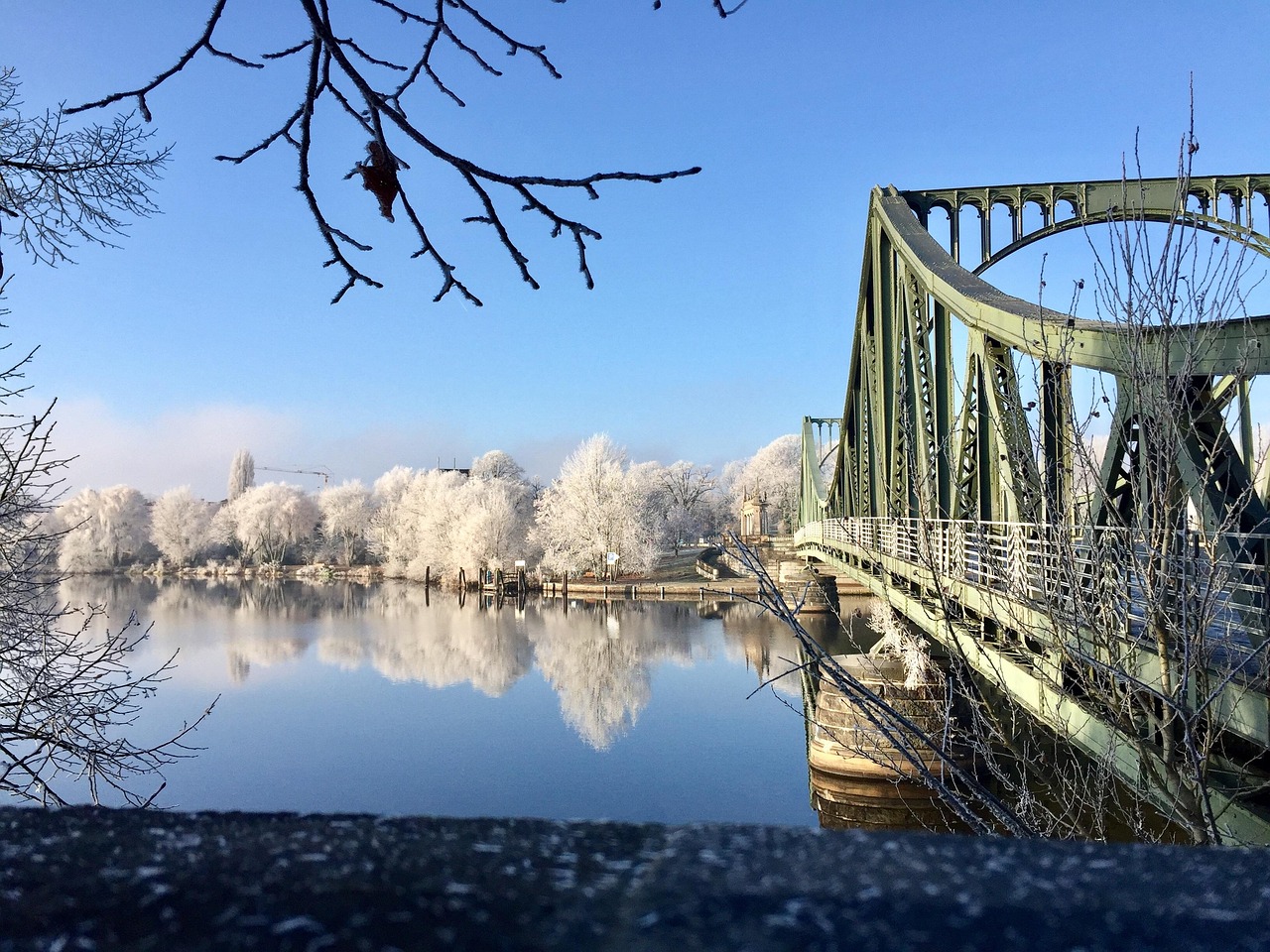
A bridge at this location on the Havel river dates back to the seventeenth century, when a wooden toll crossing served the Prussian court at Potsdam. The current iron bridge was constructed in 1907, designed to connect the affluent villa district of Wannsee with the royal parks of Potsdam. For the first half of the twentieth century it was an unremarkable but scenic crossing enjoyed by Berliners as part of the wider Prussian landscape garden designed by master landscape architect Peter Joseph Lenné, whose work transformed the entire Potsdam-Berlin corridor into one of Europe’s great horticultural achievements.
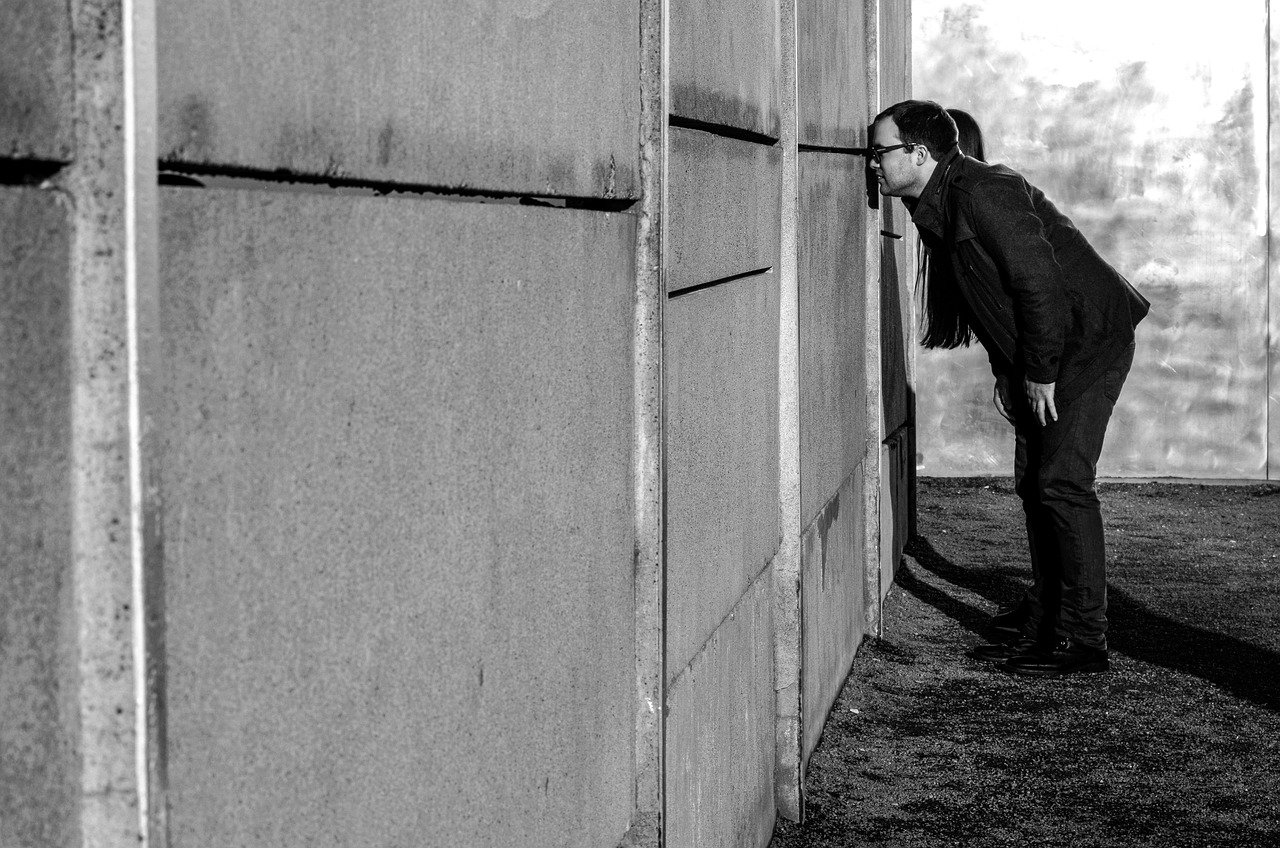
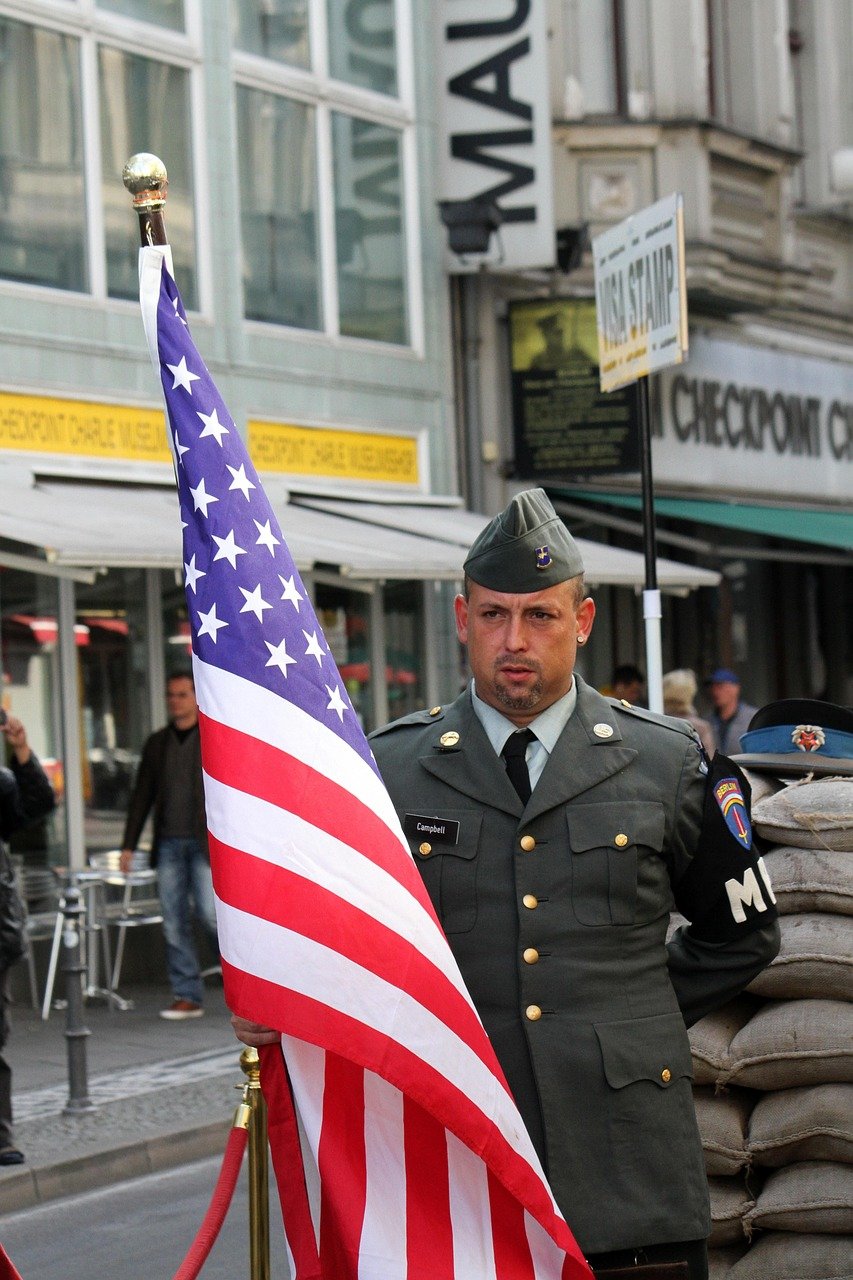
Everything changed with the post-World War II division of Germany. The bridge suddenly became a Cold War frontier: the western end sat in the American sector of West Berlin while the eastern end fell under East German jurisdiction. Between 1952 and 1989, the bridge was closed to ordinary traffic and became one of the most tightly controlled crossing points on the Iron Curtain. It was here that intelligence agencies on both sides choreographed prisoner swaps with a precision that seemed almost theatrical — and in fact inspired considerable fiction and film. The most celebrated exchange was the Powers-Abel swap of February 1962, followed by the 1986 exchange involving Soviet dissident Natan Sharansky alongside four Western agents. On 10 November 1989 — the day after the Berlin Wall fell — jubilant crowds streamed across the Glienicke Bridge for the first time in nearly four decades, making it one of the iconic images of German reunification.
What to See at Glienicke Bridge
The Bridge Itself and the Midpoint Marker
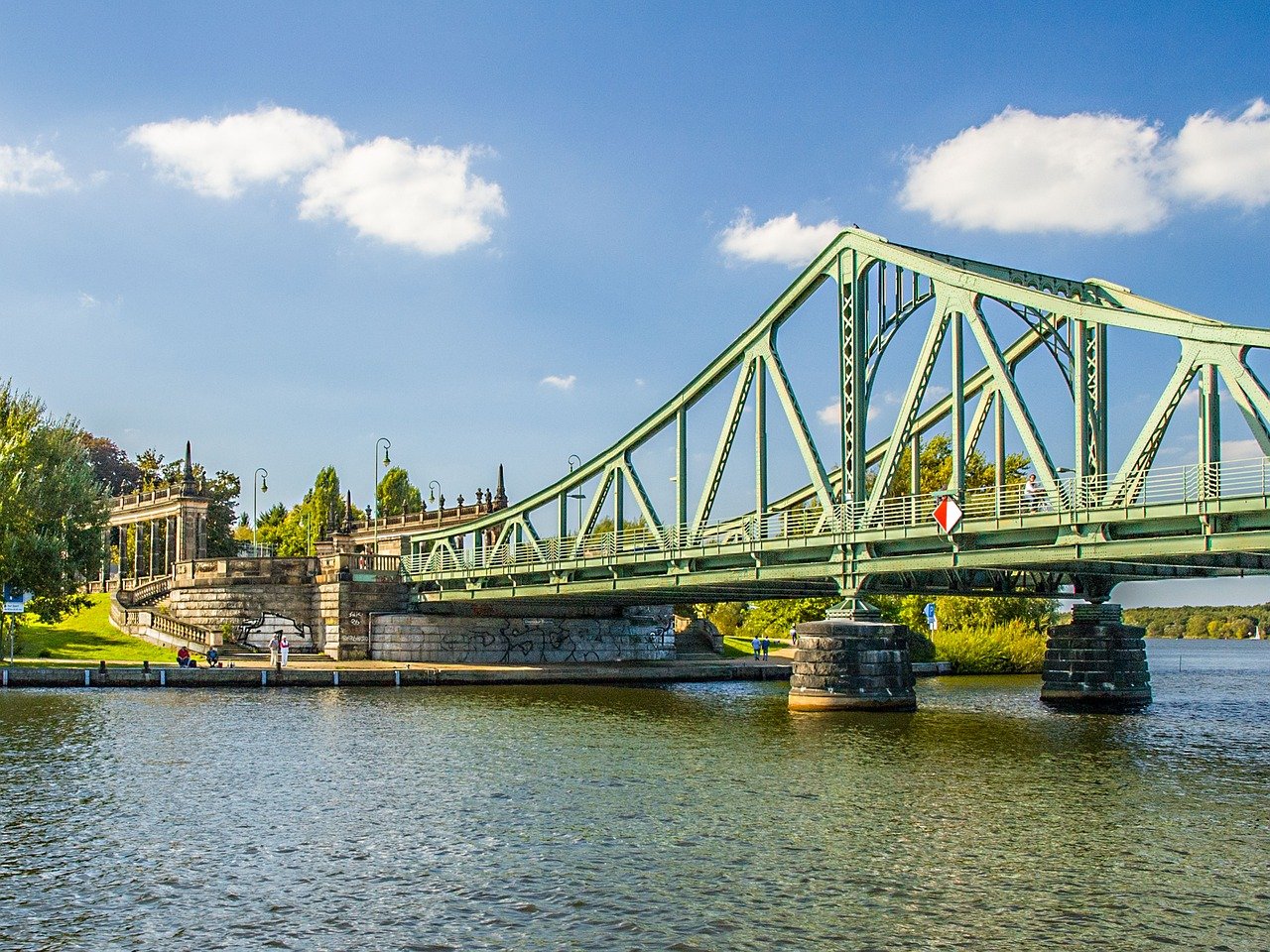
The bridge itself is the main attraction, and it rewards careful attention. The pale blue-painted steel structure spans 128 metres across the Havel river, its clean industrial lines framing superb views of the Babelsberg Palace on one bank and the wooded Glienicke landscape on the other. At the exact centre of the bridge you will notice a change in the pavement markings — a line that once represented the border between West Berlin and East Germany. Informational plaques in German and English explain the history of the spy exchanges and the bridge’s role in Cold War diplomacy. Many visitors spend time on the midpoint simply absorbing the atmosphere — the realisation that you are standing on the precise spot where some of history’s most dramatic spy swaps unfolded is surprisingly affecting. Cyclists and pedestrians cross freely throughout the day; there are no barriers, no fees, and no checkpoints, which feels like a quiet triumph over the decades of division that made this spot famous.
Glienicke Palace and Park
On the western (Berlin) side of the bridge sits the Glienicke Palace, a neoclassical summer residence built for Prince Karl of Prussia in the 1820s and 1830s under the direction of the architect Karl Friedrich Schinkel. The pale yellow palace and its sweeping grounds form part of the UNESCO World Heritage-listed Palaces and Parks of Potsdam and Berlin — a designation that recognises the extraordinary cultural landscape created by the Prussian royal family across this stretch of the Havel. The park surrounding the palace is freely accessible and provides a lovely setting for a stroll before or after crossing the bridge. A small casino building designed by Schinkel sits at the water’s edge, offering views across the Havel that explain why the Prussian royal family fell in love with this location. The combination of Cold War history and royal Prussian grandeur makes the Glienicke area one of the most historically layered spots in the entire Berlin-Potsdam region.
The Babelsberg Connection and Potsdam Sights
The eastern end of the bridge opens onto the Babelsberg district of Potsdam, home to the equally magnificent Babelsberg Palace — another UNESCO-listed Schinkel creation set in a romantic English landscape garden. From the bridge, a pleasant 20-minute walk through the park brings you to the palace and its clifftop views over the Havel. Potsdam’s wider historic centre, with its Dutch Quarter, the gardens of Sanssouci Palace, and the film studios of Babelsberg, is reachable by bus from near the bridge’s eastern end. Many visitors use the Glienicke Bridge as a starting point for a half-day or full-day Potsdam exploration, crossing on foot and then spending several hours in one of Brandenburg’s most beautiful historic towns before returning to Berlin by train or S-Bahn.
Local Insights
Here are essential tips for getting the most from your visit to one of Berlin’s most historically resonant outdoor attractions.
- Visit early morning or at dusk for the best atmosphere: The bridge is at its most evocative in low light, when mist rises off the Havel and the pale blue steel catches the slanting sun. Early mornings are also the quietest time; by mid-morning on weekends, the bridge attracts steady foot traffic. Sunset visits in autumn and winter have a particularly haunting, cinematic quality that recalls the atmosphere of the famous spy films set here.
- Watch “Bridge of Spies” before you visit: Steven Spielberg’s 2015 film, starring Tom Hanks as the American negotiator James Donovan, dramatises the Powers-Abel exchange in detail. Watching it beforehand gives the actual bridge visit an extraordinary sense of recognition and depth. The film is historically accurate in its broad outlines, and standing on the midpoint marker while recalling those scenes is genuinely moving.
- Combine with Glienicke Park for a full half-day: The surrounding Schinkel-designed park is freely accessible and beautifully maintained. A 90-minute circuit taking in the palace exterior, the Schinkel casino pavilion, and the Havel riverbank makes for an excellent complement to the bridge visit. Bring a picnic in warmer months — there are good spots on the riverbank near the casino with views across to Babelsberg.
- Cross into Potsdam and return by train: Rather than retracing your steps, consider walking across the bridge into Babelsberg and catching a bus or tram into central Potsdam, then returning to Berlin by S-Bahn from Potsdam Hauptbahnhof. The S7 line runs directly to central Berlin stations including Wannsee, Charlottenburg, and Hauptbahnhof, turning a bridge visit into a satisfying cross-border day trip.
- Look for the Cold War interpretive panels carefully: The information panels on and near the bridge are excellent but easy to walk past if you are moving quickly. Take time to read each one — they include original photographs of the spy exchanges, maps of the Cold War border in this area, and biographical notes on the key figures involved. Together they function as a compact open-air museum without any entry fee.
Planning Your Visit
- Tickets: Free — Glienicke Bridge is a public bridge with no admission charge. Walking across and reading the interpretive panels costs nothing. Entry to Glienicke Palace interior (when open) requires a separate ticket typically around €6-8; the surrounding park is always free.
- Opening hours: 24/7 open public bridge — you can walk across at any time of day or night. The park surrounding Glienicke Palace is generally accessible during daylight hours. Palace interior opening times vary seasonally; check the Prussian Palaces foundation website for current schedules.
- Best time: Autumn (September to November) offers beautiful foliage, atmospheric mists on the Havel, and fewer crowds than summer. Spring (April to May) when the palace gardens are in bloom is another excellent time. Winter visits can be dramatic in fog or light snow but dress warmly as the bridge is fully exposed to wind off the river.
- Duration: Allow 30 to 45 minutes for the bridge and its immediate surroundings. Add 1.5 to 2 hours if you plan to explore Glienicke Park and the palace exterior. A full day is needed if you intend to cross into Babelsberg and continue to central Potsdam.
- Booking: No booking required. This is a public outdoor site accessible at all times without reservation or advance planning.
Getting There
- Bus: Take Bus 316 from Wannsee S-Bahn station directly to the Glienicke Bridge stop (Glienicker Brücke) — the journey takes around 10 minutes and runs frequently throughout the day. This is the most convenient public transport option from central Berlin.
- S-Bahn: Travel on the S1 or S7 to Wannsee station, then transfer to Bus 316. Wannsee is about 35 minutes from Alexanderplatz and 25 minutes from Berlin Hauptbahnhof. The journey is scenic, passing through the Grunewald forest district.
- By car: Drive south along Königstraße toward Wannsee, then follow signs for Glienicker Brücke. Limited parking is available in a small lay-by near the western bridge approach and along Königstraße. Arrive early on weekends to secure a space as parking fills quickly in good weather.
- On foot or by bicycle: The bridge is a popular cycling destination. From Wannsee station, the route along the Havel riverbank path is approximately 3 kilometres and takes around 35 to 40 minutes on foot or 15 minutes by bicycle. Bike hire is available at Wannsee station.
- Taxi/ride-share: Ask for “Glienicker Brücke, Königstraße” — most Berlin Uber and Bolt drivers know the bridge. Drop-off is at the western end near the Glienicke Palace gate. Expect fares of around €25-35 from central Berlin depending on traffic.
Frequently asked questions
How many spy exchanges actually took place on Glienicke Bridge?
Three major exchanges took place on the Glienicke Bridge during the Cold War. The first and most famous was on 10 February 1962, when U-2 pilot Francis Gary Powers was exchanged for Soviet intelligence officer Rudolf Abel. The second occurred on 11 June 1985, when 23 Western agents were swapped for four Eastern bloc agents in a large-scale exchange. The third and final exchange on 11 February 1986 involved Soviet dissident Natan Sharansky alongside three Western intelligence figures. Each exchange was meticulously choreographed with both sides walking from opposite ends to meet in the middle, a procedure that gave rise to the bridge’s enduring nickname “the Bridge of Spies.”
Is the Glienicke Bridge area part of a UNESCO World Heritage Site?
Yes — the palaces, parks, and cultural landscape surrounding the Glienicke Bridge form part of the UNESCO World Heritage Site “Palaces and Parks of Potsdam and Berlin,” inscribed in 1990 and extended in subsequent years. This designation recognises the outstanding universal value of the Prussian royal landscape designed in the nineteenth century, encompassing Glienicke Palace, the Schinkel-designed casino pavilion, Babelsberg Palace across the water, and the broader network of parks created by the landscape architect Peter Joseph Lenné. The Cold War history is therefore layered over a landscape that was already of profound cultural and historical significance, making the entire area unusually rich for visitors interested in both architectural heritage and modern political history.
Can I cycle across the Glienicke Bridge into Potsdam?
Yes, absolutely. Cycling across the Glienicke Bridge is popular and well-suited to a Berlin-Potsdam day trip. The bridge has a shared pedestrian and cycling path alongside the vehicle lane, and the route on the Potsdam side connects easily to the Babelsberg park cycle paths and onward to central Potsdam. From Wannsee station, the flat riverside bike path to the bridge is approximately 3 kilometres. You can extend the trip by cycling through the Babelsberg park to the Potsdam historic centre and returning by the same route or by loading your bike onto the S-Bahn at Potsdam Hauptbahnhof. The S7 line accepts bikes outside peak hours.
What is the best way to understand the history before visiting?
Several excellent resources help prepare for a Glienicke Bridge visit. Steven Spielberg’s “Bridge of Spies” (2015) is the most accessible starting point, portraying the 1962 Powers-Abel exchange with strong historical fidelity. Giles Whittell’s book “Bridge of Spies” — the source material for the film — provides deeper historical context. For broader Cold War Berlin background, David Clay Large’s “Berlin: A Modern History” and Anna Funder’s “Stasiland” both illuminate the world in which the bridge exchanges took place. The interpretive panels on the bridge itself are also thorough and include original archival photographs, functioning as a concise on-site historical introduction that requires no prior preparation to appreciate.