
Gayer-Anderson Museum
Tucked behind the ancient walls of the Mosque of Ibn Tulun in Islamic Cairo, the Gayer-Anderson Museum is one of Egypt’s most atmospheric and overlooked treasures. Two restored Ottoman townhouses — one built in 1540, the other in 1632 — open onto each other through a series of hidden doorways, rooftop terraces, and richly decorated reception rooms. British Major Robert Gayer-Anderson lived here from 1935 to 1942, filling every room with an extraordinary private collection of art, furniture, and curiosities gathered from across Egypt, Turkey, Persia, and China. Cinephiles may recognize the rooms from a famous James Bond film. History lovers will simply be overwhelmed by the sense of stepping into a living domestic world that has barely changed in four centuries.
History of the Gayer-Anderson Museum
The story of what we now call the Gayer-Anderson Museum begins with two separate houses built more than a century apart. The older house, Beit al-Kiritliyya, dates to 1540 and takes its name from a Cretan woman who once owned it. It stands as a classic example of Mamluk domestic architecture — high ceilings, painted wooden ceilings, intricate mashrabiyya screens, and a central courtyard shaded by a fountain. The second house, Beit Amna bint Salim, was constructed in 1632 during the Ottoman period and added a more refined layer of decoration, including elaborate plasterwork and tiled recesses that reflect Ottoman taste filtering through Cairo’s cosmopolitan merchant culture. The two properties were eventually joined by a bridge and shared courtyard to create one sprawling residence.
The houses might have fallen into neglect had it not been for Robert Grenville Gayer-Anderson Pasha — a British army doctor turned passionate collector who convinced the Egyptian government to allow him to live here rent-free in exchange for his restoration work and the promise that he would leave his collection to Egypt upon his departure. Between 1935 and 1942, he meticulously restored each room, sourcing antique mashrabiyya screens from demolished Cairo houses, commissioning artisans to recreate lost ceilings, and filling the interiors with thousands of objects he had collected during decades of travel. When he left Egypt in 1942, he donated everything to the state. The museum opened to the public shortly after and has changed surprisingly little since. In 1977, the house gained international fame when it appeared as the villain’s lair in the James Bond film The Spy Who Loved Me, with its rooftop terrace standing in for a secret laboratory — a detail guides still point out with visible pride.
What to See at the Gayer-Anderson Museum
The Reception Rooms and Themed Galleries
The museum is organized around a series of themed rooms that Gayer-Anderson himself arranged, and the effect is somewhere between a private library, an Orientalist fantasy, and a genuine piece of living history. The Persian Room is perhaps the most visually dramatic: its walls are lined with 17th-century Persian tiles in turquoise and cobalt, and the ceiling is a painted wooden masterpiece. The Damascus Room features inlaid woodwork of extraordinary intricacy, brought from a dismantled Syrian merchant’s house. The Queen Anne Room stands out for its unlikely European furniture — a reminder that Gayer-Anderson was an Englishman who wanted to feel at home even in the heart of Islamic Cairo. Each room leads into the next through low doorways and narrow corridors that disorient in the best possible way, encouraging slow exploration rather than a straight march from gallery to gallery. Scattered throughout are Gayer-Anderson’s personal artworks, including portraits he painted himself and bronze cats given pride of place as he was a known admirer of the ancient Egyptian cat goddess Bastet.
The Ancient Egyptian Room and the Bronze Cat
Among all the objects in the collection, one stands out above the rest: the Gayer-Anderson Cat, a magnificent Late Period bronze statue of the goddess Bastet, dating to around 664–332 BCE. This iconic piece became so celebrated that the British Museum acquired a replica, and it has appeared on countless book covers and exhibition posters over the decades. In the museum, it sits on its own plinth in the Ancient Egyptian Room, surrounded by other pharaonic antiquities including a gold mummy case, ancient amulets, and a map of Egypt engraved — with remarkable precision — on the surface of an ostrich egg. The Ancient Egyptian Room is a smaller, more intimate space compared to the showier reception rooms, but its contents are uniquely personal: these were the pieces Gayer-Anderson treasured most from a civilization he clearly adored. Seeing the Bastet cat in this domestic context — not behind glass in a vast hall but placed quietly in a private room where someone once actually lived — makes it feel more human and more mysterious at the same time.
The Rooftop Terrace and Mashrabiyya Gallery
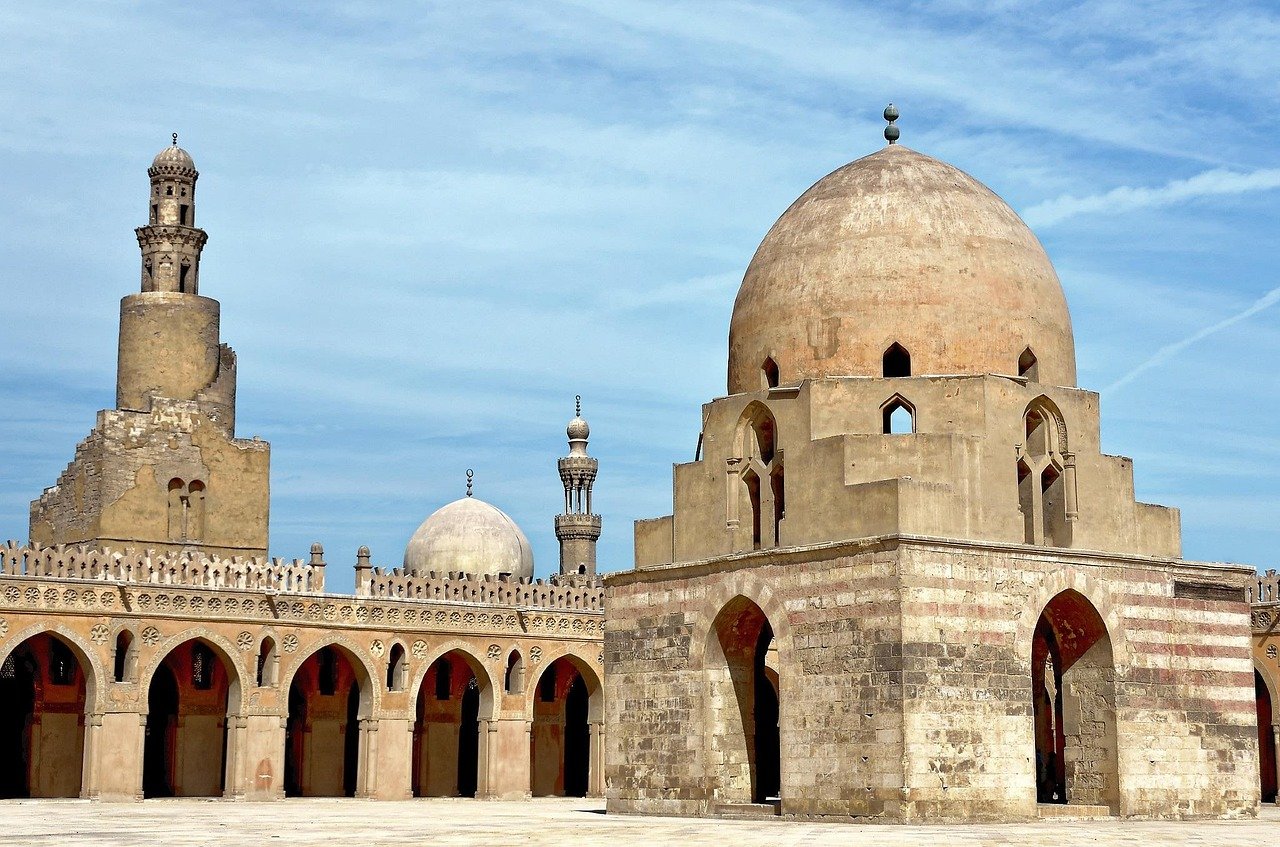
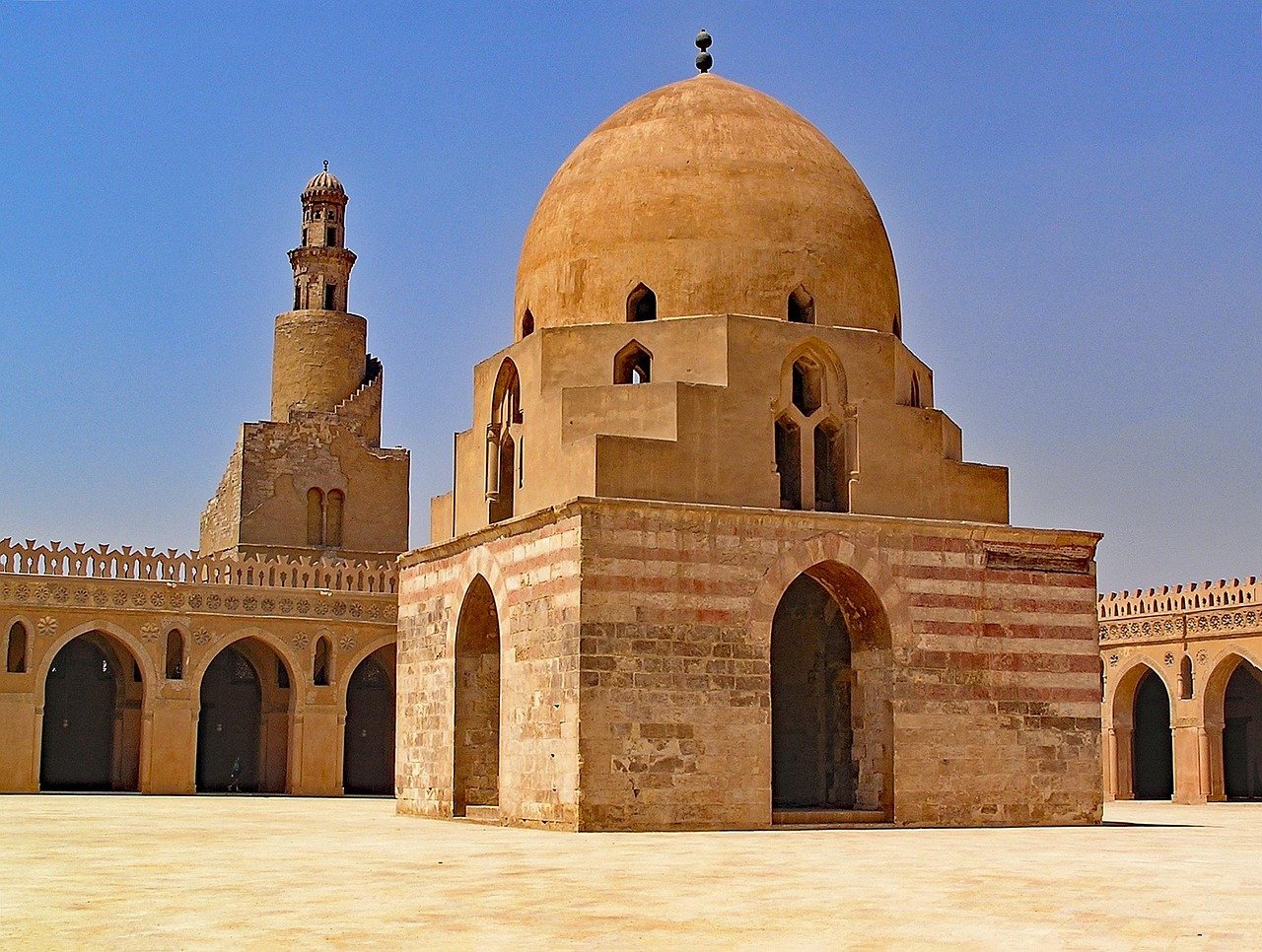
Ascending the narrow stairs to the rooftop terrace rewards visitors with one of the most distinctive views in Islamic Cairo: the spiral minaret of the Mosque of Ibn Tulun rising against the skyline, with the dense medieval city stretching in every direction. Gayer-Anderson used the terrace for entertainment and photography — he was an avid amateur photographer — and on a clear morning, the quality of light up here is extraordinary. Just below the rooftop level, a covered loggia runs along the interior courtyard, its wooden mashrabiyya screens filtering light into shifting geometric patterns on the stone floors below. These latticed wooden screens, called mashrabiyya in Arabic, served a practical purpose in Ottoman-era houses — allowing women in purdah to observe guests without being seen — but here they have become purely aesthetic, casting patterns across every surface they touch. Take time to pause on this level and appreciate the craftsmanship: each screen is hand-carved, no two panels exactly the same. The courtyard itself, shared between the two houses, contains an ancient stone fountain and several large terracotta water jars — simple domestic objects that bring the space suddenly and poignantly to life. Gayer-Anderson once hosted foreign dignitaries here for evening receptions, and it is easy, standing in the filtered afternoon light, to understand why his guests were so captivated by the place. The rooftop also offers the clearest sense of the museum’s relationship with its neighborhood — reminding you that Islamic Cairo is not a museum district but a living city, full of sound and life on every side.
Local Insights
The Gayer-Anderson Museum rewards those who take their time. Here are five insider tips to make your visit richer.
- Visit on a weekday morning — The museum opens at 9 AM and tour groups typically arrive mid-morning. Arriving at opening on a Tuesday or Wednesday gives you the run of the rooms in near-solitude. The quality of early morning light in the Damascus Room and on the rooftop terrace is particularly magical.
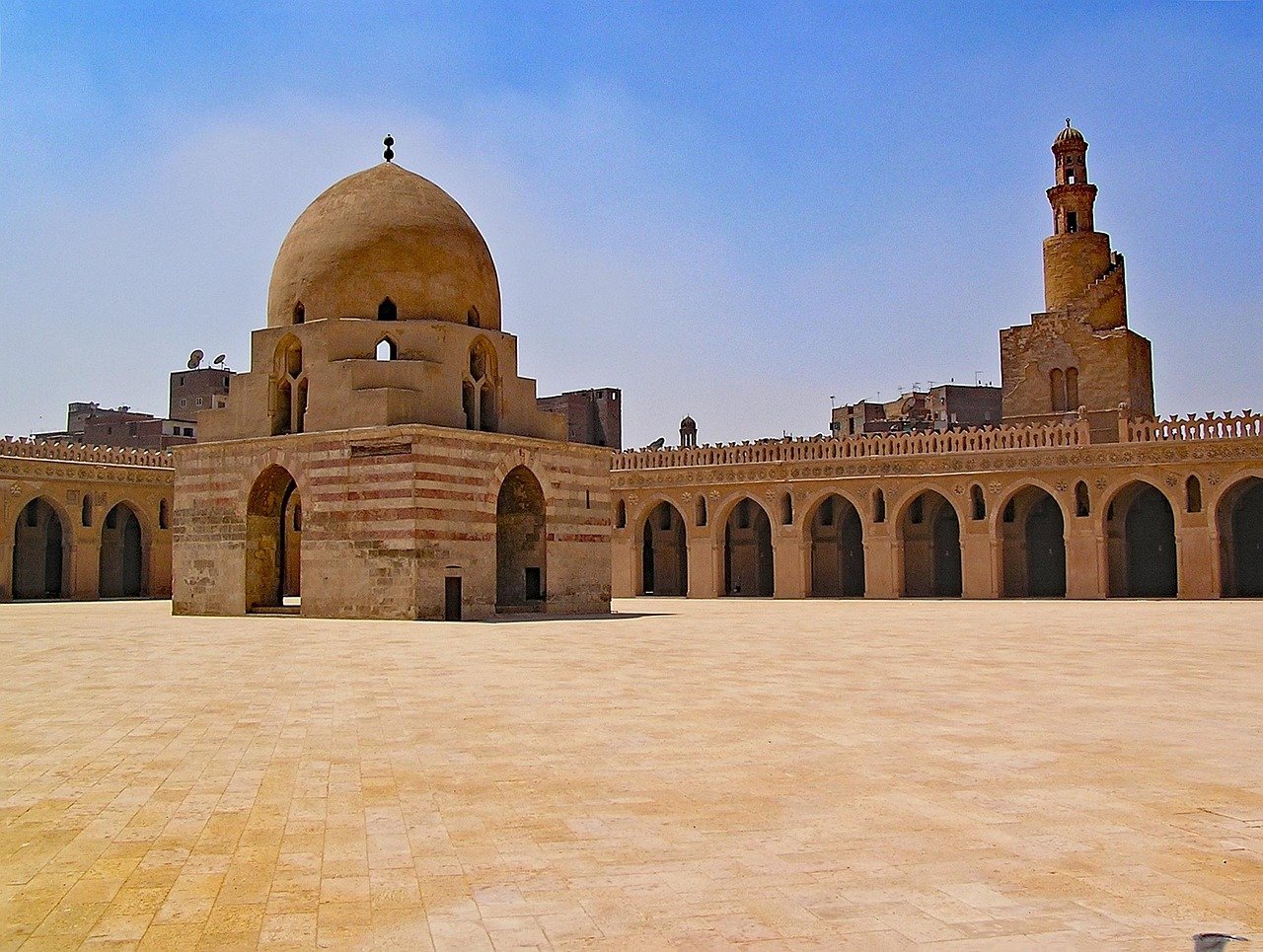
- Combine with Ibn Tulun next door — The Mosque of Ibn Tulun, built in 879 CE and one of Cairo’s oldest and largest mosques, shares a courtyard wall with the museum. Climbing its spiral minaret costs just a few extra Egyptian pounds and gives you an aerial perspective on the museum’s rooftops. Budget at least half a day for both.
- Seek out the Bond connection — Ask the staff or your guide to show you the specific room and rooftop view used during filming of The Spy Who Loved Me (1977). The rooms look largely the same as they did on screen, and staff are often happy to recreate the camera angles for photographs.
- Photography requires a camera ticket — Still photography with a smartphone is generally permitted, but if you’re carrying a camera with a detachable lens or a tripod, you may be asked to purchase a separate photography permit at the entrance. Check at the ticket desk when you arrive to avoid disappointment inside.
- Hire a licensed guide at the gate — Independent guides often wait near the entrance and can be hired for a negotiated fee. The rooms have minimal English-language labeling and the collection’s depth — thousands of objects accumulated over decades — really benefits from expert commentary. Agree the fee (usually 100–200 EGP) before starting.
Planning Your Visit
- Tickets: Adults 60 EGP (approx. $1.20 USD); students with valid ID 30 EGP. Separate photography permit may apply for professional cameras.
- Opening hours: Daily 9:00 AM – 4:00 PM. Closed on Fridays. Last admission typically 30 minutes before closing.
- Best time: October through March for comfortable temperatures. Weekday mornings for smallest crowds. Avoid Friday entirely as the museum is closed.
- Duration: Allow 1.5 to 2.5 hours. With Ibn Tulun Mosque next door, budget a full half-day.
- Booking: No advance booking required. Purchase tickets at the entrance booth on arrival.
Getting There
- Bus: Bus lines #1 or #2 from Tahrir Square stop near the museum area (approximately 2.50 EGP fare). Ask the driver to let you off at Ibn Tulun Mosque.
- By car: Limited parking is available near the museum. From central Cairo take Salah Salem Road toward the Citadel, then follow signs to the Ibn Tulun area. A taxi from downtown Cairo costs approximately 30–50 EGP.
- On foot: The museum is a 20-minute walk from the Cairo Citadel (Sultan Hassan Mosque end). From the Citadel, walk northwest through the medieval streets of the Sayyida Zeinab district following signs to Ibn Tulun Mosque.
- Taxi/ride-share: Uber and Careem both serve the area. Ask for “Gayer-Anderson Museum” or “Beit el-Kiritliyya” — both names are recognized. Drop-off is on the street adjacent to the mosque.
Frequently asked questions
Is the Gayer-Anderson Museum part of the Egyptian Museum collection?
No. The Gayer-Anderson Museum is a separate institution managed by Egypt’s Ministry of Antiquities. It is not affiliated with the Egyptian Museum on Tahrir Square or the Grand Egyptian Museum in Giza. The collection was donated by Major Gayer-Anderson to the Egyptian state and is displayed in the original houses where it was assembled, making it unique among Cairo’s museums in preserving an authentic domestic context rather than a purpose-built exhibition space.
Can I visit the Gayer-Anderson Museum without a guide?
Yes, independent visits are fully permitted and many visitors explore the museum on their own. However, the collection contains thousands of objects across multiple rooms with limited English labeling. Hiring a licensed guide at the entrance for 100–200 EGP significantly enhances the experience. Alternatively, several English-language guidebooks to Islamic Cairo include detailed room-by-room descriptions of the collection that can serve as a self-guided tour companion if you prefer to go at your own pace.
What is the James Bond connection to the Gayer-Anderson Museum?
The 1977 film The Spy Who Loved Me, starring Roger Moore as James Bond, used several rooms and the rooftop terrace of the Gayer-Anderson Museum as the private headquarters of the film’s villain, Maximilian Largo. The museum’s atmospheric interiors — particularly the Persian Room and the rooftop overlooking Ibn Tulun’s minaret — proved an ideal cinematic backdrop. The rooms have been little changed since filming, and guides can still point out exactly where key scenes were shot.
Is the Gayer-Anderson Museum wheelchair accessible?
Accessibility is limited. The museum consists of two historic Ottoman houses connected by narrow staircases and uneven stone floors, and there are no ramps or elevators. Many of the best rooms — including the Ancient Egyptian Room, the rooftop terrace, and the mashrabiyya gallery — require climbing stairs. Visitors with significant mobility restrictions may find that only a portion of the museum is accessible to them. It is worth calling ahead to ask staff which areas can be reached without stairs before planning your visit.
What is the Gayer-Anderson Cat and where can I see it?
The Gayer-Anderson Cat is one of the most famous ancient Egyptian artefacts in existence — a Late Period bronze statue of the cat goddess Bastet, dating to approximately 664–332 BCE, and measuring about 42 centimetres tall. Gayer-Anderson acquired it during his years in Egypt and it became the centrepiece of his collection. When he donated his collection to the Egyptian state in 1942, the cat remained here in the museum. It is displayed in the Ancient Egyptian Room on the ground floor of the older house, Beit al-Kiritliyya. The British Museum in London holds a celebrated replica that has become one of their most popular merchandise items, but the original — and considerably more atmospheric — version remains in Cairo. If you are visiting specifically to see the cat, ask at the entrance to be directed to the Ancient Egyptian Room immediately rather than following the standard tour sequence, as group schedules can occasionally mean crowds concentrate there later in the morning.