
Führerbunker
In the corner of a quiet Berlin parking lot on In den Ministergärten, just south of the Brandenburg Gate, a simple information board marks one of the most significant — and most absent — sites in the city. This is the location of the Führerbunker, the underground command post where Adolf Hitler spent the final weeks of the Second World War in Europe before taking his own life on 30 April 1945. There is nothing left to see; the bunker was systematically destroyed, its remains sealed beneath layers of earth and concrete. What remains is a plaque, a parking lot, and the weight of history pressing down upon an ordinary Berlin street. For those who understand what happened here, that ordinariness is itself a profound statement.
History of the Führerbunker
The Führerbunker was constructed in two phases beneath the Reich Chancellery garden. The upper portion, the Vorbunker, was built in 1936 and expanded in 1943 as Allied bombing intensified. The lower section — the Führerbunker proper — was completed in late 1944 as the military situation deteriorated dramatically. This lower bunker lay approximately eight metres below the surface, encased in concrete walls some four metres thick. It consisted of around 30 rooms including Hitler’s private study and sitting room, a conference room, rooms for Eva Braun, a medical room, and facilities for senior Nazi officials including Joseph Goebbels and Martin Bormann. The complex had its own water supply, ventilation system, and electrical generators, designed to function as a self-contained command centre even under direct aerial bombardment.
Hitler arrived at the bunker in January 1945 and, with brief absences, remained there until the end. The final weeks were characterised by an increasingly disconnected command issuing orders to armies that barely existed, while Soviet forces closed in from all directions. On 29 April 1945, Hitler married Eva Braun in a small ceremony in the bunker, and the following afternoon, with Soviet troops only blocks away, both took their own lives. Goebbels and his wife followed the next day, having also killed their six children. The Nazi leadership used the bunker’s cyanide supplies and firearms in what amounted to a final chapter of collective destruction. Soviet forces reached the site on 2 May 1945 and subsequently conducted a thorough investigation of the bunker and its contents.
The postwar fate of the bunker was complex. Soviet and later East German authorities conducted demolition operations in 1959 and 1988, partially destroying the structure and filling sections with concrete. After German reunification in 1990, the site — now in the heart of the newly unified capital — became the subject of debate about commemoration and memory. A deliberate decision was made not to create a memorial or museum at the actual bunker site, partly to avoid creating a place of Nazi pilgrimage. Instead, a small informational installation consisting of an archaeological diagram and historical text was placed nearby. The actual underground remains are sealed and inaccessible, buried beneath what is now a car park and apartment building development. This calculated ordinariness is itself a form of historical statement — a refusal to glorify or dramatise the site’s association with the Nazi leadership.
What to See at the Führerbunker Site
The Information Plaque and Historical Panel

The centrepiece of the Führerbunker site today is an information installation consisting of a large panel with floor plan diagrams, photographs, and text in both German and English. The panel provides an overview of the bunker’s structure, its historical function during the final period of the Nazi regime, and the postwar history of the site including the demolition decisions made by successive East German governments. Photographs from 1945 show the bunker interior as Soviet investigators found it, offering a rare visual record of what has since been erased. Reading the panel carefully — which takes around 15 to 20 minutes — provides a genuinely sobering and historically detailed account of what occurred here. There are no dramatic displays, no reconstructions, and no cinematic enhancements. The simplicity of the installation is intentional and, for many visitors, more affecting than any elaborate museum exhibit could be.
The Surrounding Government District
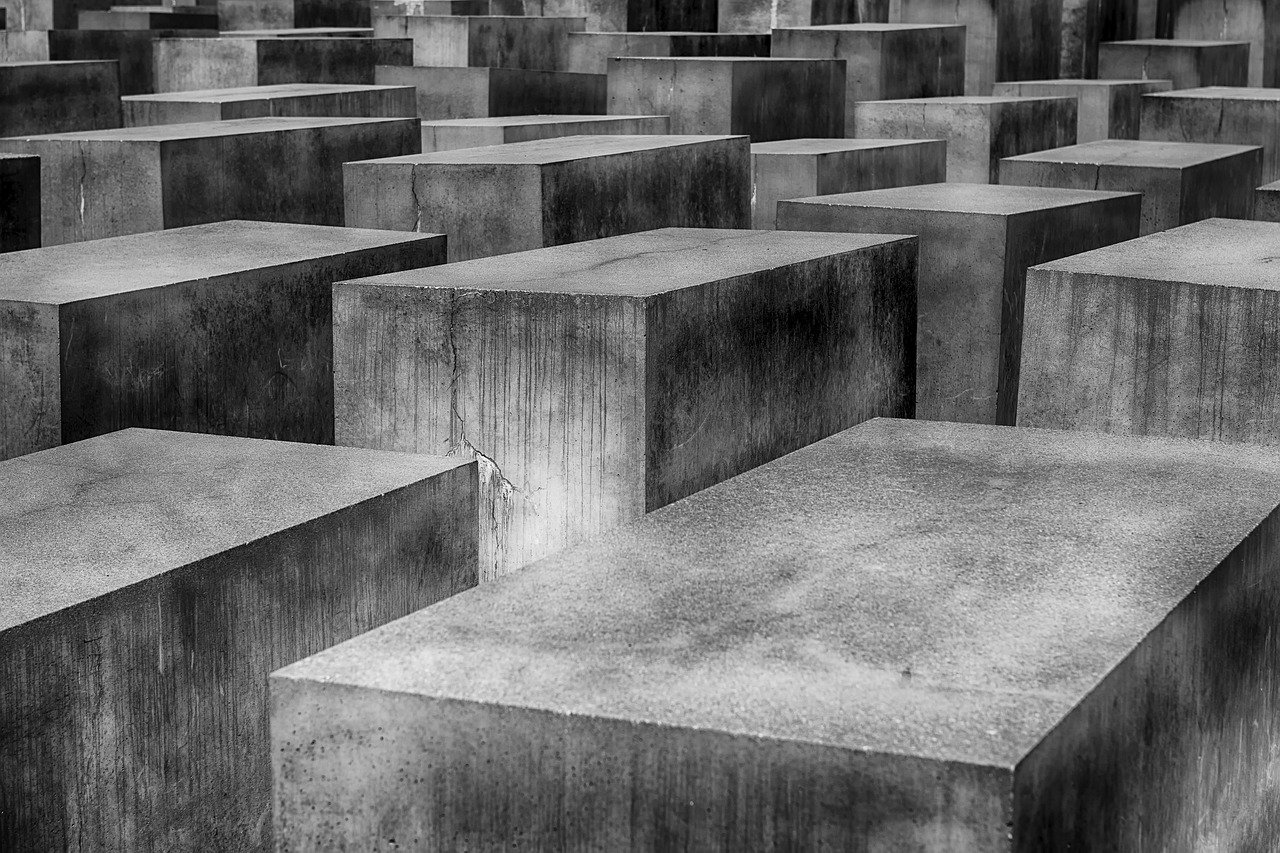
The Führerbunker location sits within one of the most historically dense corridors in Europe. A short walk in any direction brings you to sites of extraordinary significance. Immediately to the north is the Brandenburg Gate, symbol of German unity and one of the most recognisable architectural landmarks in the world. To the east, along Wilhelmstraße, stand the remaining walls of the former Reich Chancellery and other Nazi-era government buildings now repurposed or demolished. The Memorial to the Murdered Jews of Europe — the Holocaust Memorial, designed by architect Peter Eisenman — is located just minutes away, its 2,711 concrete stelae covering an entire city block in a deeply affecting geometric landscape. Topographie des Terrors, the open-air and indoor exhibition documenting the crimes of the SS and Gestapo, occupies the site of the former SS headquarters a short walk south. Together these sites form a commemorative landscape of unparalleled concentration and historical weight.
Contextual Memory Walk Through the Government Quarter
One of the most meaningful ways to experience the Führerbunker site is as part of a self-guided memory walk through Berlin’s government and ministerial quarter. Starting at Potsdamer Platz, you can walk north along the line of the former Berlin Wall (marked with brass cobblestones and plaques), pass the Topographie des Terrors exhibition, continue to the Führerbunker plaque, then walk to the Holocaust Memorial and conclude at the Brandenburg Gate. This circuit covers approximately 2 kilometres and takes around two to three hours if you engage seriously with each site along the way. Free audio guides and walking maps are available from Berlin’s tourist information offices and through several free mobile applications, allowing self-guided visitors to experience rich historical commentary without the cost of a structured tour.
Local Insights

Visiting the Führerbunker site requires a particular kind of preparation and mindset. These tips will help you approach the experience with the depth it deserves.
- Visit during daylight hours for reading the plaque: The information panel contains detailed text and photographs that are best read in good natural light. Morning visits between 9:00 and 11:00 tend to offer the clearest light with fewer crowds gathered around the panel. The site is technically accessible around the clock, but the plaque content is the primary experience and requires proper visibility to engage with meaningfully.
- Prepare yourself emotionally before visiting: Unlike a museum with curated gallery flow, the Führerbunker plaque sits in an ordinary public space that offers no emotional scaffolding. Many visitors find the sheer banality of the location — a car park, apartment buildings, people going about their day — to be unexpectedly powerful and destabilising. Reading about the site’s history and the events of April 1945 before you arrive helps contextualise the experience and allows for deeper engagement with the material.
- Combine with the Topographie des Terrors for fuller context: The free Topographie des Terrors exhibition on Niederkirchnerstraße, a 10-minute walk from the Führerbunker plaque, provides the most comprehensive open-air and indoor documentation of the Nazi regime’s criminal infrastructure available anywhere in Berlin. Visiting Topographie first gives the Führerbunker plaque enormous additional resonance, and the reverse order works equally well. Together they form the most historically thorough half-day itinerary on this period available in the city.
- The Holocaust Memorial is five minutes’ walk away — do not skip it: Peter Eisenman’s Memorial to the Murdered Jews of Europe, located on Cora-Berliner-Straße, is one of the most profound pieces of commemorative architecture in the world. Its underground information centre provides detailed documentation of individual Jewish lives destroyed by the Nazi regime. The contrast between the memorial’s careful, deeply considered design and the deliberate unremarkability of the Führerbunker site nearby illuminates the full range of approaches Germany has taken to confronting its history.
- Respect the site’s quiet and reflective atmosphere: The Führerbunker plaque is visited by people from all over the world, many of whom have personal or family connections to the events it documents. Maintain a respectful and subdued manner at the site — this is not a place for theatrical reactions or boisterous behaviour. Photography of the plaque and surroundings is not prohibited, but should be approached with appropriate sensitivity.
Planning Your Visit
- Tickets: Free — the Führerbunker site is an outdoor public space with no admission charge. The information plaque is freely accessible at all times. There is no museum to enter, no ticket office, and no donation required.
- Opening hours: 24/7 outdoor site — the location is accessible at any time. Daylight hours are strongly recommended for engaging properly with the informational panel content.
- Best time: Daytime, ideally morning, when natural light is best for reading the detailed historical panel. Weekday mornings are quieter than weekends. The surrounding government quarter is peaceful early in the day before tourist groups arrive at the Brandenburg Gate and Holocaust Memorial.
- Duration: Allow 20 to 30 minutes at the Führerbunker plaque itself. Plan 2 to 3 hours for the full memory walk circuit taking in Topographie des Terrors, the Holocaust Memorial, and the Brandenburg Gate.
- Booking: No booking required. This is an outdoor public site with open access at all times.
Getting There
- U-Bahn: Take the U2 line to Potsdamer Platz or the U55 to Brandenburger Tor station. From Potsdamer Platz, walk north along Hannah-Arendt-Straße for approximately 8 minutes. From Brandenburger Tor, walk south on Ebertstraße for about 5 minutes then east on In den Ministergärten.
- S-Bahn: The S1, S2, S25, and S26 lines all stop at Potsdamer Platz, making the site easily reachable from central Berlin, Hauptbahnhof, and Friedrichstraße. The S-Bahn station entrance on the Potsdamer Platz square is approximately 10 minutes’ walk from the plaque.
- By car: Parking in this central government district is extremely limited and expensive. Paid parking is available at Potsdamer Platz underground car park but charges are high. Public transport is strongly recommended for this area of Berlin.
- On foot: From the Brandenburg Gate, walk south along Ebertstraße past the Holocaust Memorial and continue to In den Ministergärten — approximately 5 minutes. From Checkpoint Charlie, walk north along Wilhelmstraße for around 15 to 20 minutes, passing the Topographie des Terrors site along the way.
- Taxi/ride-share: Request “In den Ministergärten, Mitte” or “near the Holocaust Memorial” — drivers will know the area. Drop-off is easy on the surrounding streets. Expect fares from Alexanderplatz of around €10-12; from Potsdamer Platz approximately €6-8.
Frequently asked questions
Can visitors enter the Führerbunker itself?
No. The actual bunker structure is sealed, partially demolished, and completely inaccessible to the public. Following detailed investigation by Soviet forces in 1945 and demolition work in 1959 and 1988, the remaining underground spaces were filled with concrete and earth. A deliberate decision was made by successive German governments not to excavate, restore, or open the bunker to visitors, in order to prevent the creation of a site that might attract neo-Nazi pilgrimage or glorification. What visitors see at the surface is an informational plaque and floor plan diagram explaining the bunker’s former layout. The bunker’s physical remains lie below a private car park and adjacent apartment complex, and there are no plans to alter this arrangement.
Why is such a significant historical site so low-key?
The deliberate understatement of the Führerbunker site is the result of careful, considered policy rather than neglect. German memory culture — developed over decades of confronting the Nazi past through education, law, and public commemoration — has consistently favoured nuanced, contextual approaches over dramatic reconstruction. The decision not to create a museum or memorial at the bunker site reflects a concern that doing so might inadvertently create a place of Nazi tourism or glorification rather than genuine historical engagement. The sophisticated commemorative landscape nearby — particularly the Holocaust Memorial and Topographie des Terrors — reflects where German society has channelled its investment in confronting this history, focusing on the victims and the institutional machinery of terror rather than on Hitler personally.
What exactly happened in the Führerbunker in April 1945?
The final weeks in the Führerbunker were characterised by military delusion, recrimination, and violence. Hitler ordered increasingly fantasy-based military operations, issued death sentences for desertion, and refused to countenance escape or surrender. On 29 April 1945 he married Eva Braun in a brief civil ceremony and dictated his political testament, blaming Jews for the war he had initiated. The following day, 30 April, Hitler shot himself while Eva Braun took cyanide. Their bodies were burned in the Chancellery garden as instructed. Joseph and Magda Goebbels, who had moved into the bunker with their six children, poisoned the children and then killed themselves on 1 May. The German military surrender was signed on 8 May 1945, ending the war in Europe.
Are there guided tours of the Führerbunker area?
Yes — several Berlin tour operators include the Führerbunker site as part of broader Third Reich or WWII history walking tours that cover the government quarter. These tours typically last three to four hours and include the Topographie des Terrors, the Holocaust Memorial, the former Reich Chancellery site on Wilhelmstraße, and related sites. Companies such as Context Travel, Berlin Walks, and several German-language operators offer these tours with experienced historian guides who provide rich contextual depth unavailable from reading the plaque alone. Booking in advance is recommended for English-language group tours, which typically operate daily during the main tourist season from April through October.