
East Side Gallery
The East Side Gallery is the world’s largest open-air gallery and one of the most important public art installations of the 20th century — 1.3 kilometres of the original Berlin Wall, preserved and painted in 1990 by 118 artists from 21 countries as a collective act of creative celebration after the Wall’s fall. Walking its length feels like reading a diary of a world caught between relief and resolve, painted with an intensity that 35 years of sun and rain have only partially faded.
History of the East Side Gallery
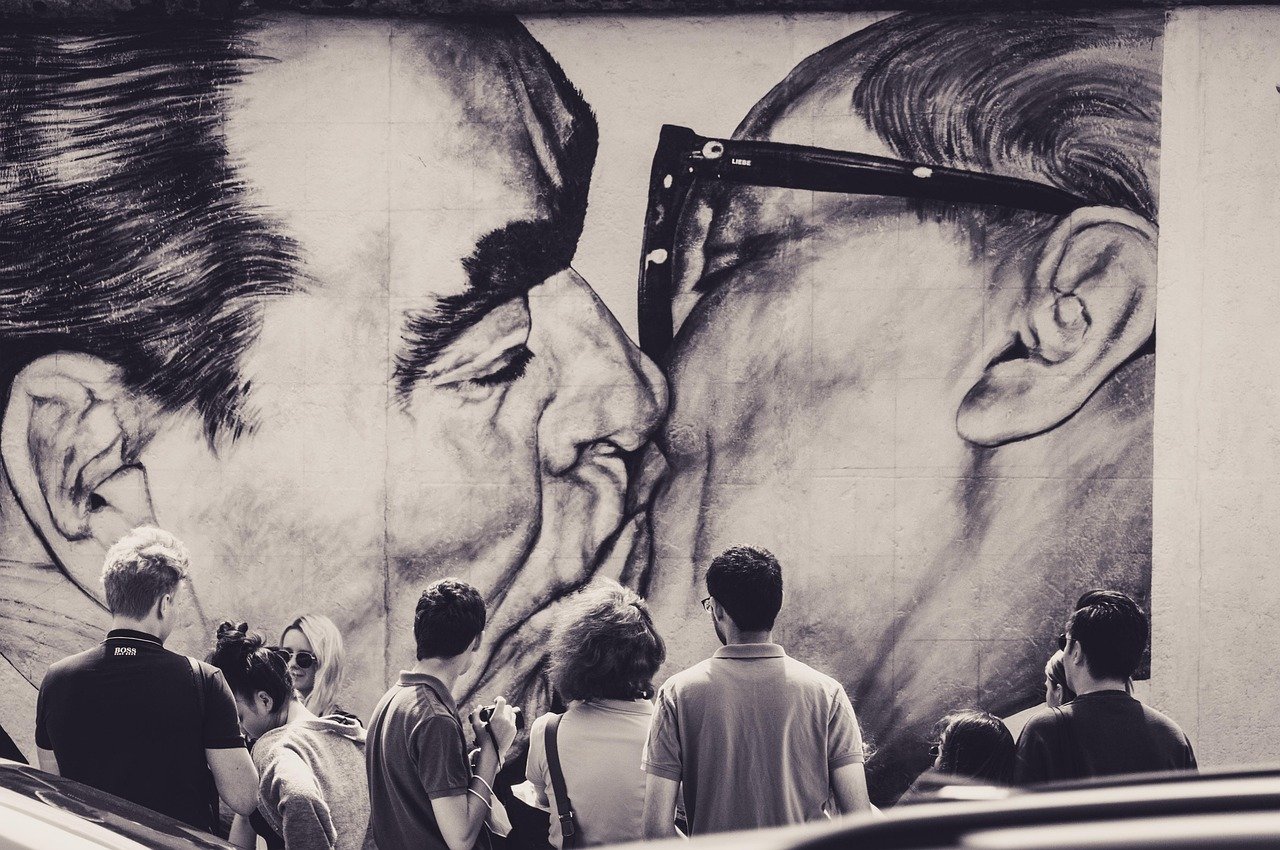
This section of the Berlin Wall ran along the Spree River on the eastern bank, separating the Friedrichshain district from the Kreuzberg district across the river. When the Wall fell on November 9, 1989, this stretch remained standing — sufficiently intact and sufficiently long to warrant preservation as a historical monument. In 1990, artists were invited by the East Side Gallery association to paint the inner (western-facing) surface of the Wall, creating what became a remarkable document of the optimism and political energy of the immediate post-Cold War moment.
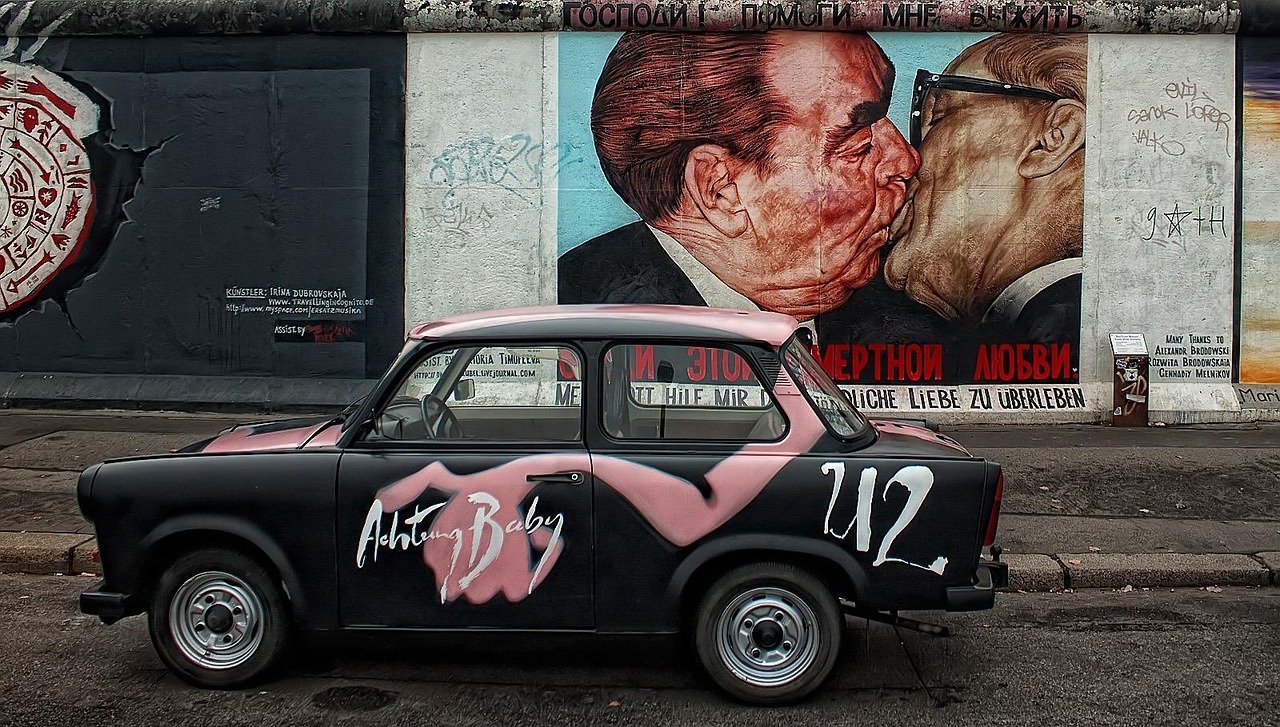
The most famous works include Dmitri Vrubel’s “My God, Help Me to Survive This Deadly Love” — showing East German leader Erich Honecker and Soviet leader Leonid Brezhnev locked in a fraternal kiss — and Birgit Kinder’s “Test the Best,” showing a Trabant car breaking through the Wall. These images have been reproduced so widely that millions of people know them without knowing their context. Standing before the originals (restored in 2009 after decades of graffiti and weathering) on the crumbling concrete surface of the actual Wall gives them a physical weight that no reproduction can replicate.
What to See Along the Gallery
The 1.3-kilometre stretch runs along Mühlenstraße between the Ostbahnhof (East Station) and the Oberbaumbrücke bridge. Walking the full length takes about 30–45 minutes at a slow browse pace. Each of the 105 surviving paintings (some artists painted multiple sections) is labelled with the artist’s name and country. The styles range from photorealist to abstract, from politically charged to celebratory, from technically sophisticated to raw. The variety itself is part of the historical record — this was a spontaneous, collaborative exercise rather than a curated exhibition.
The physical condition of the Wall is part of the experience. Weather, time, and despite restoration efforts, new layers of graffiti have given the surface a layered, almost archaeological quality. Sections that were carefully restored in 2009 are visibly newer than sections where the original paint has been allowed to age naturally. The concrete itself — rough, heavily reinforced, stained with rust from rebar — is a sobering reminder that this was a fortification system that killed and imprisoned people, not merely a canvas.
The Art and Its Context
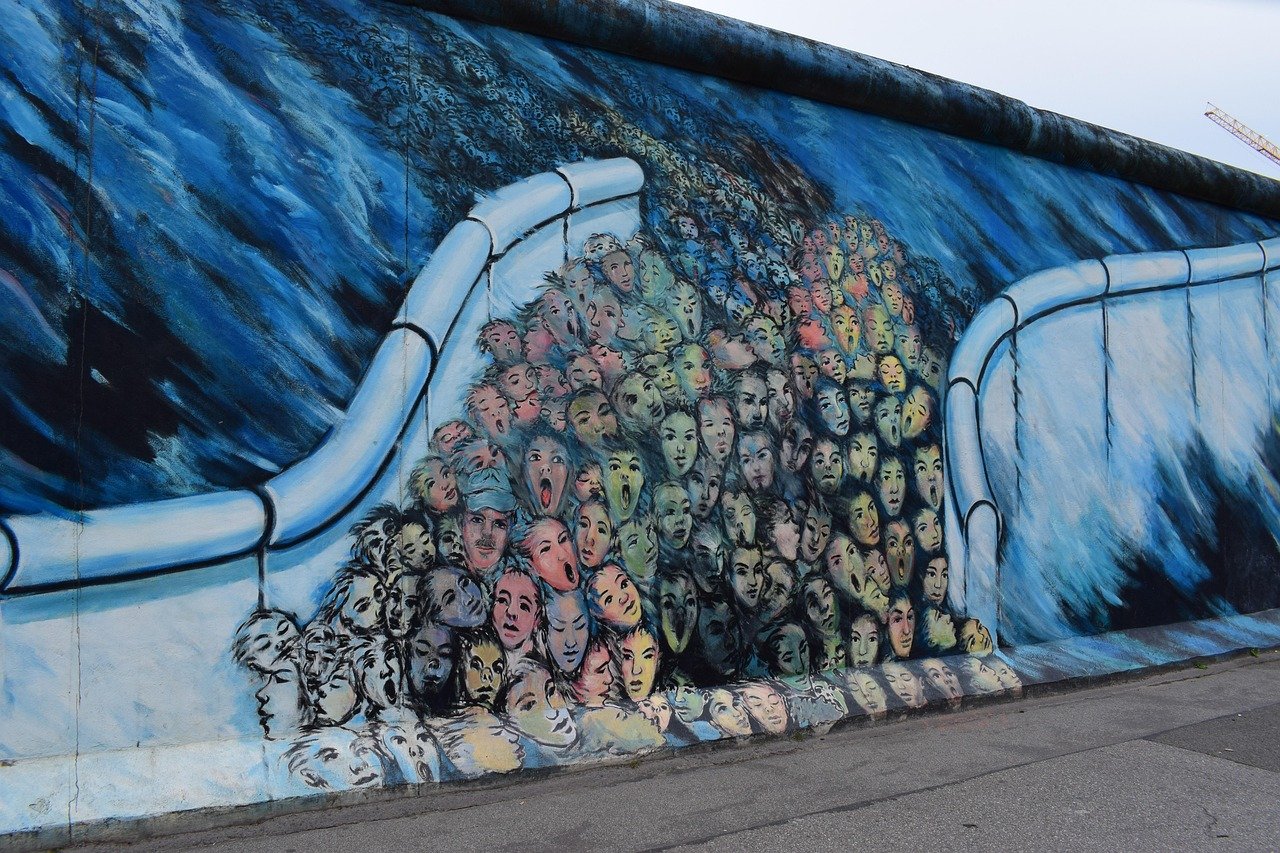
The paintings were created in a specific historical moment — the first year after the Wall fell — and reflect the mood of that moment with striking directness. Many works address themes of freedom, transformation, and the dangers of nationalism with an urgency that felt acute in 1990 and has only become more resonant. Kani Alavi’s “Es geschah im November” (It Happened in November) shows a crowd of faces pressing through a gap in the Wall, expressions ranging from joy to terror to disbelief — painted from the artist’s memory of watching the Wall’s opening from his studio window in Kreuzberg.
The gallery has been threatened by development several times — sections were removed to allow construction of luxury apartments in 2013, sparking protests from locals and artists and eventually a partial reversal. The tension between preserving this historical monument and developing the valuable riverside land it occupies continues, making each visit a kind of act of witness to a monument whose existence is not guaranteed.
Practical Information
- Tickets: Free — the East Side Gallery is an outdoor public monument accessible at all hours
- Opening hours: Always accessible; best visited in daylight hours for viewing the artwork
- Best time to visit: Early morning (07:00–09:00) for minimal crowds and best photography light; avoid midday in summer when tour groups are densest
- Duration: 45–90 min for the full walk
- Booking: No booking required
Local Insights
What locals know that guidebooks don’t always tell you:
- The most famous paintings (Brezhnev-Honecker kiss, Trabant car) are at the Ostbahnhof end (eastern end) of the gallery — start there and walk west toward the Oberbaumbrücke.
- The original Wall had a “death strip” several metres wide on the eastern side — the current location of the gallery was actually within the restricted zone, not the Wall’s public face. The painting surface faces what was East Berlin.
- The information plaques beside each painting include the artist’s name, nationality, and brief statement — reading them adds depth that makes the walk twice as meaningful.
- The Oberbaumbrücke at the gallery’s western end is one of Berlin’s most beautiful bridges and connects to the Kreuzberg district, which has excellent cafes and bars for post-gallery refreshment.
- The Wall documentation at the nearby Berlin Wall Memorial (Bernauer Straße, 20 min by U-Bahn) provides important historical context that the East Side Gallery’s celebratory register doesn’t fully convey.
Getting There
- S-Bahn: S3, S5, S7, S9 → Ostbahnhof (eastern end of gallery); U1 → Warschauer Straße (middle of gallery)
- Bus: 347 along Mühlenstraße runs the length of the gallery
- On foot: 10 min from Warschauer Straße; 20 min from Alexanderplatz via the riverside path
- Cycling: A dedicated cycle path runs alongside the gallery; bike hire available at Ostbahnhof
Frequently asked questions
Is the East Side Gallery still the original Wall?
Yes. This is original Berlin Wall concrete, not a reconstruction. Some sections were relocated by a few metres to accommodate infrastructure, but the concrete slab material is authentic. The paintings were restored in 2009 but applied to the original surface.
Why are there new graffiti tags over the artworks?
Vandalism by taggers is an ongoing problem. The gallery is an outdoor public space with no feasible round-the-clock protection. Restoration work is carried out periodically but cannot prevent new tags from appearing between restoration cycles.
Can I touch the Wall?
Yes. The Wall is publicly accessible. Be aware that touching and scratching the painted surface damages it — the artworks are irreplaceable.
How long does it take to see the full gallery?
Walking the 1.3 km at a casual pace takes about 20–25 minutes. Reading the plaques and pausing at each painting takes 45–90 minutes.
Is there parking at the East Side Gallery?
Limited street parking is available on adjacent streets. The site is easily reached by public transport and cycling is strongly encouraged.