
DDR Museum
Open the drawer of a strangers’ kitchen. Flick through their family photo albums. Sit in the back seat of their car with the radio on. This is precisely what the DDR Museum invites you to do — not metaphorically, but literally. Opened in 2006 on the banks of the Spree, directly opposite Berlin Cathedral, this small, wildly interactive museum puts you inside the lived experience of the German Democratic Republic. For the 16 million East Germans who grew up behind the Wall, the crammed Plattenbau flats and blue-smoke Trabant interiors will trigger waves of recognition. For everyone else, the exhibits deliver a visceral, often darkly funny crash-course in what daily life felt like under state socialism — the shortages, the surveillance, the surprising moments of warmth and community, and the absurdities that could only exist when a government controlled everything from your apartment furniture to your holiday destination.
History of DDR Museum
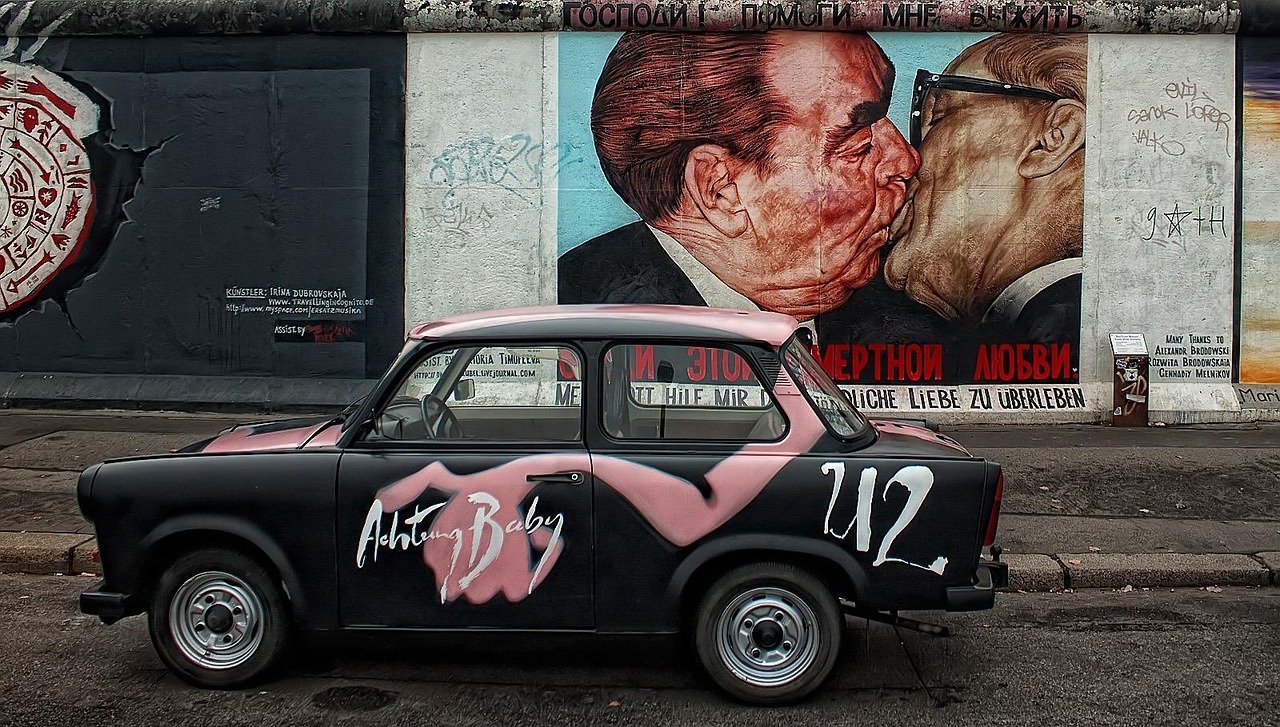
The DDR Museum was conceived and founded by ethnologist Peter Kenzelmann, who identified a significant gap in Berlin’s otherwise dense museum landscape. For years after reunification in 1990, the experience of ordinary East German citizens — as distinct from the political and military history already well-documented — had no dedicated public home. Official GDR objects were disappearing from living rooms and attics as families renovated and modernised, and within a generation the material culture of East Germany risked vanishing almost entirely. Kenzelmann collected objects, built partnerships with former citizens willing to share their stories, and in July 2006 opened the DDR Museum at Karl-Liebknecht-Straße 1, one of the city’s most symbolically loaded addresses — directly facing the reconstructed Berlin Palace (Humboldt Forum) and metres from where the Communist government had demolished the historic City Palace in 1950.
The museum grew quickly, becoming one of the most visited in Berlin — a fact that surprised many critics who initially dismissed it as a nostalgic “Ostalgie” project. What the visitor numbers reflected was something more nuanced: genuine public curiosity about how 16 million people actually lived under state socialism, beyond the well-worn narratives of Stasi surveillance and political repression. The museum now holds a collection of approximately 360,000 everyday objects from the GDR era — kitchen appliances, school textbooks, holiday postcards, party membership cards, Stasi listening devices — presented through 27 themed exhibition areas across two floors. A purpose-built DDR Museum Depot in Berlin-Marzahn provides storage for objects not on public display and occasionally hosts additional exhibitions.
What to See at DDR Museum
The Plattenbau Flat
The centrepiece of the DDR Museum is a meticulously reconstructed Plattenbau apartment — the prefabricated concrete panel flat that housed the majority of East German urban dwellers. You step inside and find a fully furnished living room, kitchen, and bedroom representing the typical family home of the 1970s and 1980s. Nothing is roped off. Pull open kitchen drawers to find original GDR-brand food packaging — Halloren chocolates, Club-Cola bottles, and the distinctive geometric patterns of Minol motor oil cans. Open the wardrobes and riffle through period-appropriate clothing. Sit on the sofa and watch GDR television broadcasts on a period Robotron television set. The attention to detail is remarkable: the Cleo hairspray on the bathroom shelf, the Dederon shopping bags folded by the door, the state-issued furniture catalogue on the coffee table. For visitors old enough to have lived it, the experience can be overwhelmingly nostalgic; for younger visitors, it functions as a perfectly preserved time capsule with a human scale that no archive photograph can match.
The Trabant Driving Simulator

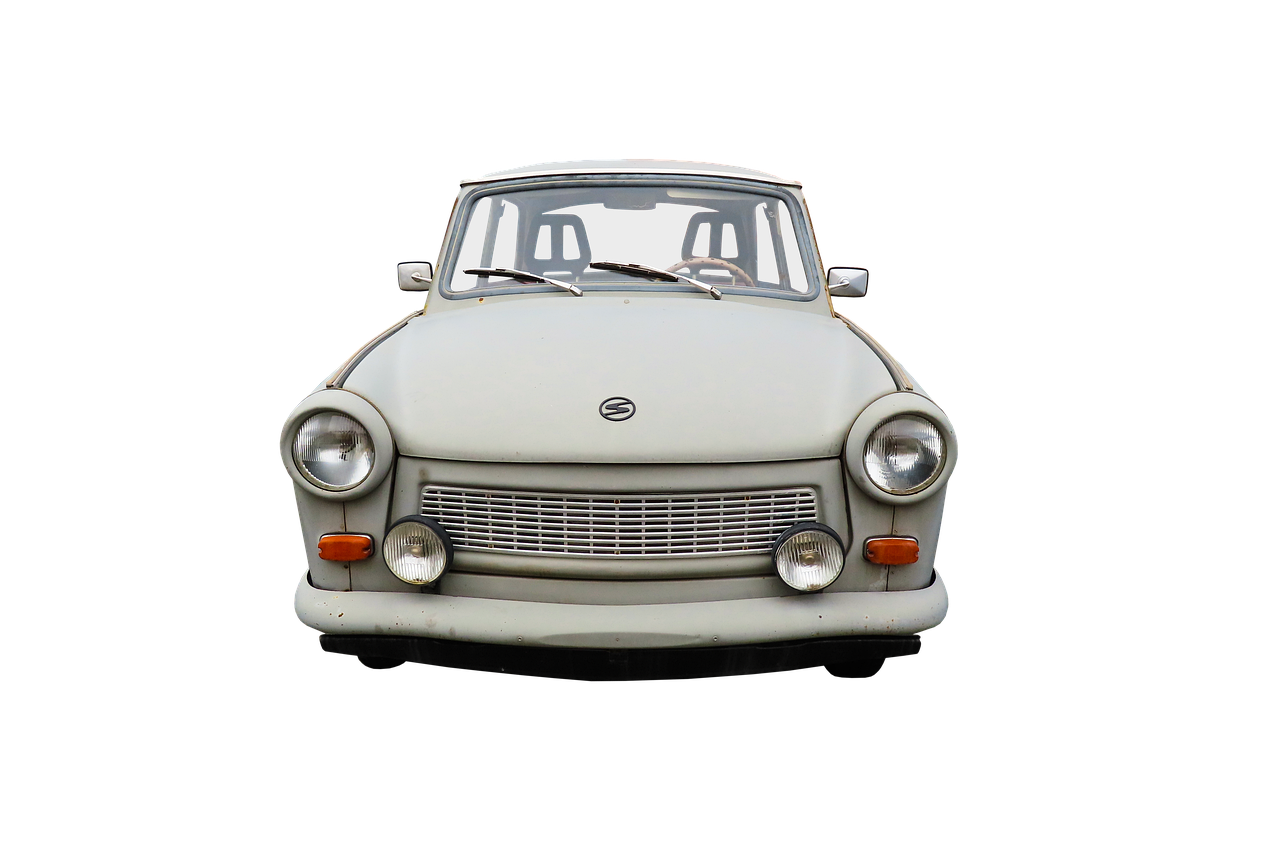
No single object better captures the contradictions of East German daily life than the Trabant — the two-stroke, fibreglass-bodied car produced from 1957 until 1991 that was simultaneously the only car most East Germans could afford, the object of a five-to-ten-year waiting list, and a source of genuine affection among its owners. The DDR Museum houses an original Trabant in which visitors can take a seat at the wheel and experience a driving simulation on East German roads — complete with the era’s distinctive street scenes and the characteristic two-stroke engine sound. The wait times for the Trabant in real life (up to 16 years for a new model) are not replicated here; visitors simply queue for the simulator and take a turn. The exhibit succeeds in making abstract the statistics of GDR consumer shortages into something immediate and personal: you understand instinctively, sitting behind that steering wheel, what it meant to wait years for a consumer good that the rest of the industrialised world bought without a second thought.
The Stasi Surveillance Room
Among the 27 themed areas of the museum, the exhibition section devoted to State Security — the Staatssicherheit, universally known as the Stasi — is among the most sobering. East Germany maintained the highest ratio of secret police to population of any state in history: at its peak in the 1980s, the Stasi employed approximately 91,000 full-time officers and relied on a further 173,000 unofficial informers (Inoffizielle Mitarbeiter) to monitor 17 million citizens. The museum presents original Stasi listening devices — hidden in watering cans, picture frames, and electrical sockets — alongside file photographs and intercepted personal correspondence. A reconstructed surveillance room demonstrates how agents documented citizens’ movements, relationships, and private opinions. Critically, the museum contextualises the human impact alongside the bureaucratic machinery: personal testimony from those who discovered after reunification that a spouse, colleague, or friend had been reporting on them for years. It is one of the most quietly devastating sections in any museum in Berlin.
Local Insights
The DDR Museum is compact — roughly two hours covers it thoroughly — but a few insider habits will make your visit significantly better:
- Book tickets online the morning of your visit. The museum regularly sells out, especially on weekends and during school holidays. Online booking costs the same as the door price and guarantees entry at a specific slot. Arriving without a ticket and finding it sold out is a common disappointment that a quick online booking prevents entirely. Check the museum’s own website rather than third-party resellers for the best prices.
- Go on a weekday morning for the best Trabant access. The driving simulator attracts long informal queues, particularly on weekends. Visiting on a Tuesday or Wednesday at opening time (9:00) gives you first crack at the most popular interactive exhibits — the Plattenbau flat tends to be less crowded too, which makes the experience of rummaging through its drawers much more immersive.
- Combine with a walk along the Spree riverfront. The museum sits on the bank of the Spree with direct views of the Berlin Cathedral dome. After your visit, the riverfront promenade south toward Museum Island is one of central Berlin’s most pleasant walks — especially in warm weather when the pop-up beach bars open. The contrast between the Cathedral’s Wilhelmine grandeur and the museum’s GDR-era contents is itself a form of Berlin storytelling.
- Read the Stasi file exhibit slowly. Many visitors rush the documentary sections in favour of the interactive rooms. But the Stasi exhibit — including reproduced personal files and intercepted letters — rewards careful reading. Bring a translation app if your German is limited; the emotional weight of the primary sources doesn’t require fluency to comprehend, but the detail enriches the experience enormously.
- Check the special exhibition schedule. Beyond the permanent collection, the DDR Museum runs temporary exhibitions on specific aspects of GDR life, culture, and history. In recent years these have covered Baltic Sea holidays, GDR fashion, and Cold War-era espionage. Check the museum website before visiting to see whether the current temporary show adds to your itinerary — entry is included in the general admission price.
Planning Your Visit
- Tickets: Adults €13.90; Concessions €8.50; Children under 6 free; Groups (10+) €9.00 per person; School groups €5.50 per person
- Opening hours: Monday–Sunday 9:00–21:00 (last entry 20:00); 24 and 31 December 9:00–16:00
- Best time: Tuesday–Thursday mornings at opening (9:00–11:00) for fewest crowds and best access to interactive exhibits
- Duration: 1.5–2 hours for the full permanent collection; add 30–45 minutes for the current temporary exhibition
- Booking: Online booking recommended, especially for weekends and school holidays — book via ddr-museum.de; walk-in tickets available subject to capacity
Getting There
- U-Bahn: U5 to Museumsinsel — the museum entrance is a 2-minute walk north along the Spree riverbank
- S-Bahn: S3/S5/S7/S9 to Hackescher Markt, then a 7-minute walk south-west along the river
- By car: Limited street parking in the area; nearest public car park at Rathausstraße. Central Berlin is heavily congested — public transport strongly recommended
- On foot: 5-minute walk from the eastern end of Unter den Linden via Schlossbrücke; 10 minutes from Alexanderplatz heading west along the Spree
- Taxi/ride-share: Uber and Free Now available throughout Berlin; ask for drop-off at Karl-Liebknecht-Straße 1 (the museum’s address, directly on the riverfront)
Frequently asked questions
What is the DDR Museum about?
The DDR Museum (DDR is the German abbreviation for Deutsche Demokratische Republik — the German Democratic Republic, or East Germany) documents everyday life in communist East Germany from its founding in 1949 to its dissolution in 1990. Unlike most political history museums that focus on leaders and events, the DDR Museum concentrates on the lived experience of ordinary citizens — their homes, workplaces, leisure activities, consumer goods, and the pervasive presence of State Security (Stasi) surveillance. Its approach is deliberately interactive: most exhibits can be touched, opened, and explored rather than viewed behind glass.
How long should I spend at the DDR Museum?
Most visitors spend between 90 minutes and two hours in the museum. The 27 themed exhibition areas are compact but dense with interactive elements — it is easy to linger longer than planned, especially in the reconstructed Plattenbau apartment and the Stasi surveillance room. If there is a current temporary exhibition included in your admission, add another 30 to 45 minutes. The museum is relatively small by Berlin standards, so it pairs well with a visit to the nearby Berlin Cathedral or a walk along Museum Island in the same afternoon.
Do I need to book tickets in advance?
Online pre-booking is strongly recommended, particularly for weekend visits and during German and European school holidays when the museum frequently sells out. Tickets can be purchased directly through the museum’s official website (ddr-museum.de) at the same price as the door rate — there is no booking surcharge for online purchases. Walk-in tickets are sometimes available if the museum has not reached capacity, but this cannot be guaranteed. Group visits (10 or more people) should always book in advance to secure the discounted group rate and ensure adequate space.
Is the DDR Museum suitable for children?
Yes — the DDR Museum is one of Berlin’s most child-friendly history museums, largely because its approach is hands-on rather than display-case-oriented. Children can sit in the Trabant driving simulator, open kitchen drawers in the reconstructed apartment, and play with original GDR toys from the collection. The Stasi surveillance section covers some sobering material about political repression, but it is presented without graphic imagery and at a level that older children (10+) can engage with thoughtfully. The museum recommends the experience for children aged 8 and above; younger children may find the limited space restrictive.
What are the most interactive exhibits at the DDR Museum?
The DDR Museum is designed from the ground up for hands-on engagement — it is one of the most touchable history museums in Europe. The most popular interactive elements include the Trabant driving simulator, where visitors take the wheel of the iconic East German two-stroke car and experience a simulated drive through GDR-era streets. The reconstructed Plattenbau flat allows complete rummaging: open every drawer, sit on every piece of furniture, browse authentic GDR-era product packaging. A working Robotron computer terminal lets visitors interact with East German technology firsthand. Children particularly enjoy the GDR toy collection — original Sandmann puppets, plastic soldiers, and board games from the era — which can be handled and played with in the dedicated family section. The museum also features audio listening stations with GDR radio broadcasts and television excerpts that immerse visitors in the era’s media environment. Virtually nothing is kept behind ropes or glass.
How does the DDR Museum compare to other Berlin Cold War sites?
Berlin has an exceptionally rich set of Cold War heritage sites, and the DDR Museum occupies a distinctive niche within it. The Stasi Museum in Lichtenberg focuses on the bureaucratic machinery of the secret police in the actual former Stasi headquarters — essential but more archival in character. Checkpoint Charlie, just south of the museum, provides the famous border-crossing context and a commercial but informative outdoor display. The Gedenkstätte Berliner Mauer on Bernauer Straße is the most comprehensive outdoor memorial to the Wall itself. The DDR Museum complements all of these by filling the gap none of them address: the texture of ordinary everyday life — what citizens ate, wore, drove, watched, and whispered to each other. If you have time for only one Cold War site, the DDR Museum delivers the broadest human story most accessibly; if you have a day, combining it with the Stasi Museum creates a rounded picture of the era from both sides of the surveillance relationship.