
Dahshur 💎 Hidden Gem
An hour’s drive south of Cairo, far beyond the tour buses and postcard vendors of Giza, two extraordinary pyramids stand almost alone in the desert. Dahshur is where Egypt learned to build. The Bent Pyramid’s tilted silhouette and the Red Pyramid’s perfect proportions are not simply two monuments from the same era — they are evidence of an experiment in real time, the architectural equivalent of a first draft and a finished masterpiece, built one after the other by the same pharaoh. Come here if you want to understand how the great smooth-sided pyramids actually came to be.
History of Dahshur
Dahshur’s pyramids were commissioned by Pharaoh Sneferu, the founder of the Fourth Dynasty and the father of Khufu — the builder of the Great Pyramid of Giza. Sneferu reigned from approximately 2613 to 2589 BCE and was, by any measure, history’s most ambitious pyramid builder. He constructed not one, not two, but three large pyramids over the course of his reign — starting at Meidum, continuing at Dahshur with the Bent Pyramid, and completing his program with the Red Pyramid, also at Dahshur. In terms of stone volume, Sneferu’s building programme exceeded that of any pharaoh who came after him, including his own son.
The Bent Pyramid was begun around 2600 BCE with an ambitious angle of 54 degrees — steeper than anything previously attempted. Midway through construction, the angle was abruptly reduced to 43 degrees, almost certainly because the foundations were showing signs of stress under the weight of so much stone piled so steeply. The change created the distinctive kinked profile that gives the pyramid its name. Despite the structural compromise, the Bent Pyramid retains more of its original polished Tura limestone casing than any other pyramid in Egypt — its smooth white flanks gleam in the morning light in a way that makes it easy to imagine how all the great pyramids once looked. Sneferu then began the Red Pyramid nearby, this time applying the gentler 43-degree angle from base to apex. The result was Egypt’s first true smooth-sided pyramid and the template for the Giza plateau.
Sneferu’s engineering evolution at Dahshur had ramifications that extended far beyond his own reign. The lessons learned — about angle, foundation loading, and the behaviour of massive limestone cores under their own weight — were passed directly to the next generation of builders. His son Khufu applied them at Giza, achieving the Great Pyramid’s near-perfect proportions. A fragment of Sneferu’s mummy was found in the Red Pyramid’s antechamber — the only direct physical remains of this foundational pharaoh. Middle Kingdom rulers also chose Dahshur for their burial monuments: the Black Pyramid of Amenemhat III (c. 1850 BCE) and several satellite pyramids cluster around the older structures, making the plateau a canvas of Egyptian architectural ambition spanning nearly a millennium. The sparse tourist infrastructure at Dahshur today makes it possible to stand between these ancient structures and feel, almost viscerally, the weight of deep time. Unlike Giza — where the pyramid complex is essentially surrounded by the Cairo suburbs — Dahshur sits at the desert’s true edge, the plateau dropping away to agricultural green on one side and stretching into open sand on the other.
What to See at Dahshur
The Bent Pyramid
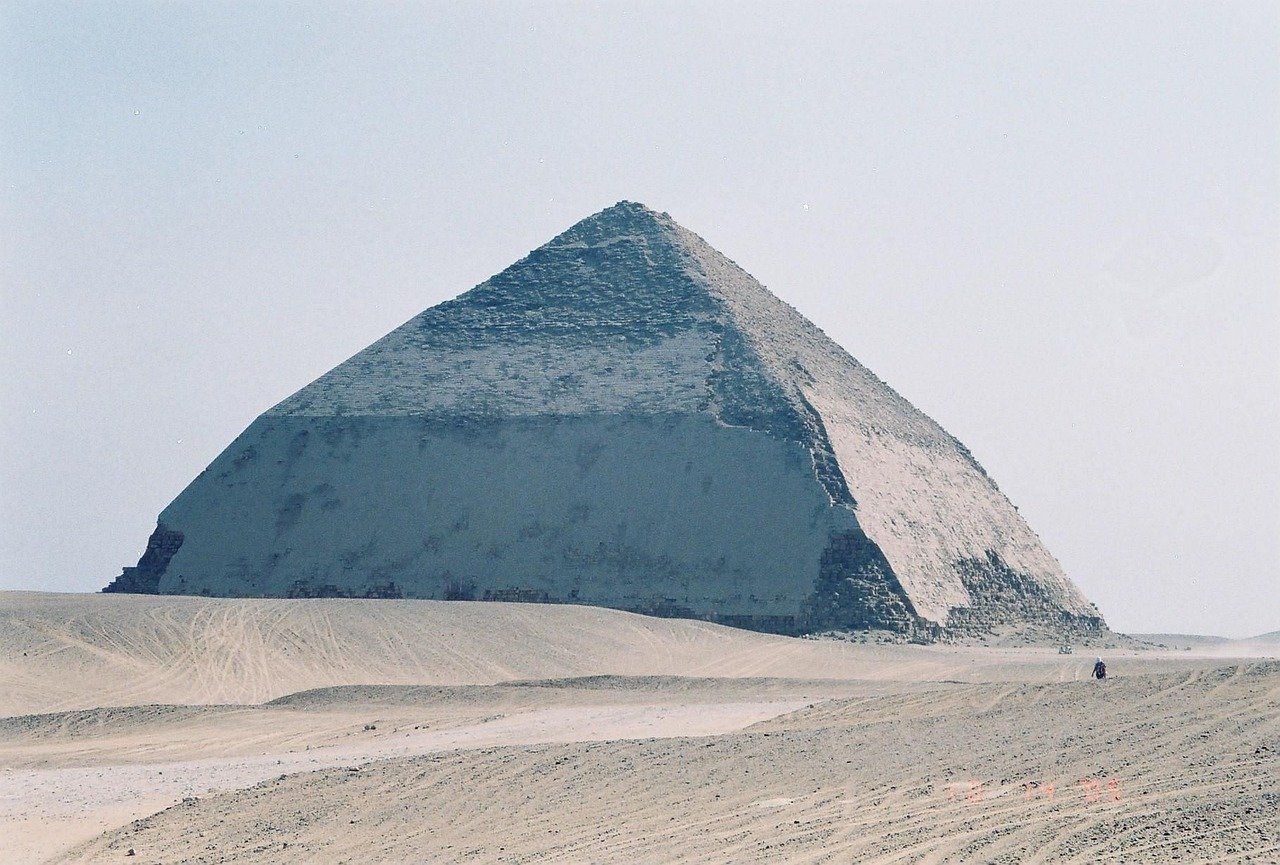
The Bent Pyramid is without question one of the most visually arresting monuments in all of Egypt. Stand close and look up: you can trace the precise line where the angle changes from steep to shallow, a kink in the masonry that is simultaneously an ancient engineering error and a work of accidental visual poetry. The casing stones covering the lower two-thirds of the monument are some of the best-preserved Tura limestone on any pyramid — their smooth surfaces catch the early morning sun in a warm honey-gold. Interior access reopened in 2019, and visitors can now enter the original 79-metre descending passage, crawl through a connecting tunnel between the two internal chambers, and emerge from a second entrance on the pyramid’s west face. The chambers are not decorated — no painted walls or carved texts — but the corbelled ceiling construction is structurally fascinating, and the scale of the passageways, at full human height rather than the near-crawl required by most pyramid entrances, makes the experience remarkably accessible.
The Red Pyramid
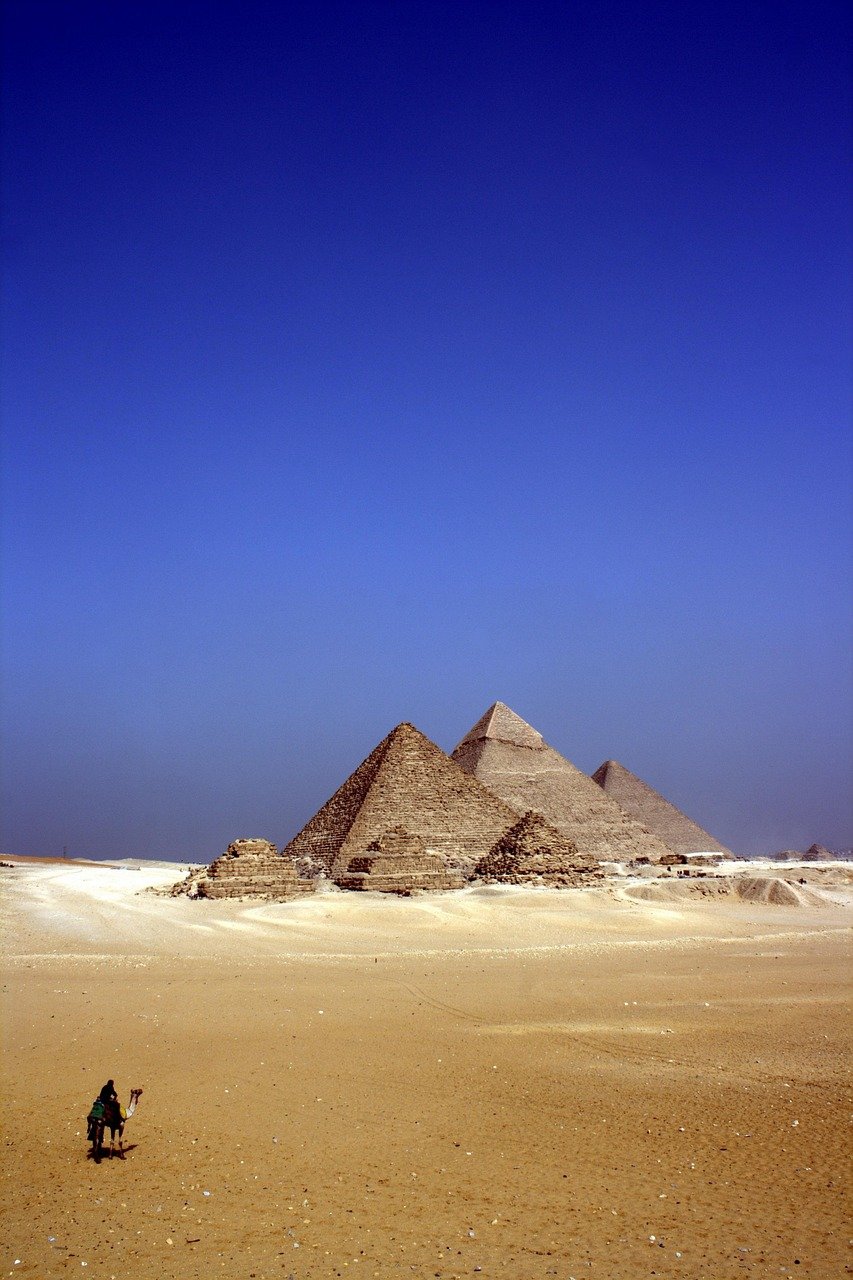
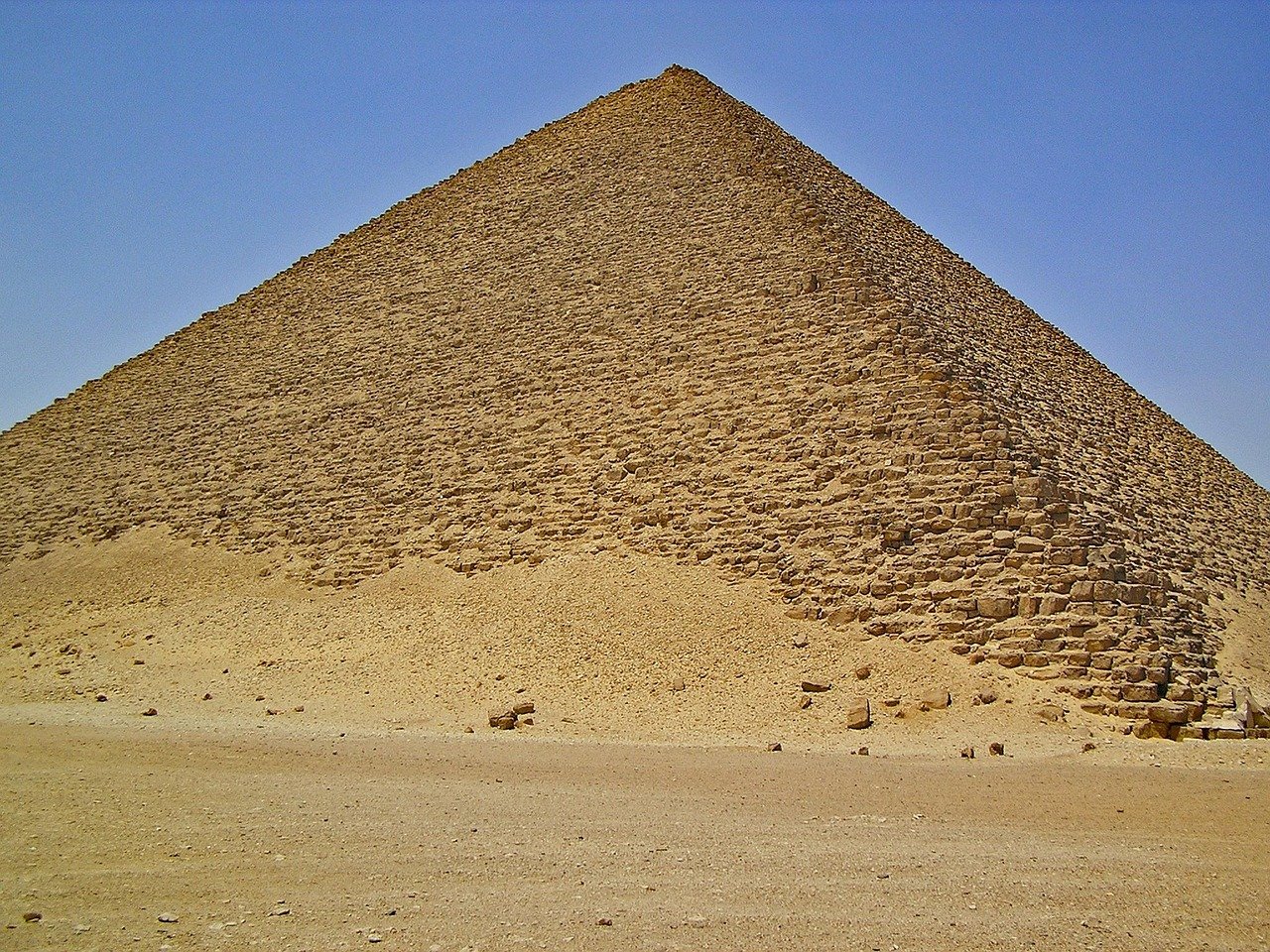
The Red Pyramid is the fourth-tallest ancient pyramid in Egypt, rising 105 metres on a perfectly consistent angle of 43 degrees. Its name comes from the warm reddish hue of its Tura limestone core, which is exposed because most of the original white casing was stripped for use in medieval Cairo. The interior descent is one of the best pyramid experiences available anywhere: a 61-metre passage at a steep 27-degree gradient leads to three corbelled chambers stacked one above another, the top one reaching nearly 15 metres in height. The corbelling — each successive course of stone projecting slightly inward until the courses almost meet — is an engineering solution of breathtaking elegance. It is worth noting that a strong ammonia odour from centuries of bat habitation lingers in the passages; bring a scarf or mask. At the base of the exterior, a small excavation trench displays fragments of original casing stones, letting visitors appreciate the pyramid’s original polished-white appearance.
The Black Pyramid Ruins and Valley Temple
Beyond the two main pyramids, Dahshur’s quieter corners reward exploration. The Black Pyramid — built by the Middle Kingdom pharaoh Amenemhat III around 1850 BCE — is now a crumbled mound of mud brick and rubble, its fine stone casing long since robbed. It has a dark, brooding silhouette at sunset that contrasts dramatically with its neighbours’ clean geometry. A short walk south, the remains of Sneferu’s Valley Temple sit partially excavated near the site entrance; the few inscribed limestone blocks visible at the surface hint at decoration that was once as fine as anything at Giza. The entire Dahshur plateau is refreshingly uncrowded compared to the Saqqara or Giza circuits, and the wide-open desert landscape — camels occasionally visible on the horizon — creates a sense of solitude and scale that is increasingly rare in Egypt’s popular tourist corridor.
Local Insights

Dahshur is easy to visit independently but a few insider tips will sharpen the experience considerably.
- Enter the Bent Pyramid from the west face exit if you go in from the north face first. The two entrance passages connect through a mid-pyramid crawl tunnel, creating a complete through-journey. Most visitors enter and exit the same way; going through to the west exit means you walk back across the pyramid’s base in the open air — a perspective that makes the casing stones impossible to miss.
- Bring a torch (flashlight) for the Red Pyramid interior. Basic electric lighting illuminates the passages but the corbelled chambers at the top are partially in shadow. A pocket torch allows you to see the individual stone courses clearly and appreciate the engineering. The descent passage is steep — hold the rope rail with both hands on the way down.
- The Bent Pyramid interior passages are at full standing height — a rarity. Unlike most pyramid interiors that require crouching or crawling, the Bent Pyramid’s main descending corridor is approximately 1.7 metres tall. Visitors with back problems who want to experience a pyramid interior and have ruled out the Red Pyramid’s steep angle may find this the more accessible option.
- Arrive first at Dahshur if combining with Memphis and Saqqara. Dahshur is the farthest point south from Cairo (40–45 km), so starting here and working north saves significant backtracking. The logical sequence is Dahshur → Memphis (15 km north) → Saqqara (10 km further north). The whole circuit fits in one long day.
- No food or water is sold on the Dahshur plateau. The ticket office area has a single kiosk that is not reliably stocked. Bring at least 1.5 litres of water per person, snacks, and sunscreen. There is no shade between the pyramids; the walk from the Bent to the Red is roughly 750 metres of open desert track.
Planning Your Visit
- Tickets: 200 EGP adults / 100 EGP students (approximately USD 4 / USD 2 at current exchange rates). This covers entry to both pyramids and their interiors. No separate photography fee. Purchased at the entrance kiosk; cash only, Egyptian pounds preferred.
- Opening hours: Daily 8:00 AM – 5:00 PM year-round; last entry 4:00 PM. During Ramadan (approximate dates vary annually) hours are reduced to 9:00 AM – 3:00 PM. The site is open on Egyptian public holidays.
- Best time: October through April for comfortable temperatures. Early morning (8–10 AM) in any season for the best light on the Bent Pyramid’s casing stones, cooler pyramid interiors, and near-empty pathways. Midsummer afternoons can exceed 40°C on the exposed plateau.
- Duration: 1.5–2 hours for both pyramids including interiors. Add 30 minutes if you want to explore the Black Pyramid ruins and Valley Temple area.
- Booking: No advance booking required. Tickets purchased on arrival at the entrance gate. Organised day tours from Cairo including Dahshur should be booked through GetYourGuide or local operators at least a day in advance.
Getting There
- By tour / private vehicle: The standard approach. Full-day Dahshur–Memphis–Saqqara private tours depart from Cairo hotels; prices start around USD 45–70 per person. Alternatively, hire a Cairo taxi for the day at a negotiated flat rate of 500–750 EGP.
- By car: Take the Desert Road or Corniche el-Nil south from Cairo toward Badrasheen. Follow signs for Dahshur from the main road. Parking is available at the entrance gate. The drive from central Cairo takes 45–60 minutes depending on traffic.
- On foot / public transit: Not practical. Microbus services run from Giza (Midan Remaya) toward the Dahshur area but drop passengers on the main road 2–3 km from the site. A local tuk-tuk completes the final stretch for around 30–50 EGP.
- Taxi / ride-share: Uber and Careem both serve Dahshur from Cairo at approximately 150–220 EGP one way. Arrange a return pickup in advance or with your driver before they depart, as ride availability at the site itself is limited.
Frequently asked questions
Can you actually go inside the pyramids at Dahshur?
Yes — both the Bent Pyramid and the Red Pyramid are accessible to visitors and both offer interior access that is included in the standard entrance ticket. The Red Pyramid’s descending passage runs 61 metres at a 27-degree slope into three stacked corbelled chambers. The Bent Pyramid has two internal chambers connected by a mid-pyramid tunnel, with passages at an unusually comfortable standing height. Neither pyramid has decorated interiors — no paintings or hieroglyphs — but the structural drama of the corbelled ceilings is remarkable. Strong footwear and a torch are recommended for both.
Is Dahshur worth visiting if you have already seen the Giza Pyramids?
Absolutely, and many travellers argue Dahshur is more interesting. Giza shows you the finished product — pyramids at their most colossal and polished. Dahshur shows you how that product was developed through trial and error by a single ambitious pharaoh. The Bent Pyramid’s preserved casing stones reveal how all pyramids originally appeared — gleaming white limestone — in a way that Giza no longer can. The near-total absence of crowds adds a meditative quality that Giza’s busy plateau cannot offer. The two sites tell different chapters of the same story and complement each other perfectly.
How long should I spend at Dahshur?
Plan for 1.5 to 2 hours if you want to enter both pyramid interiors and walk around their exteriors. The distance between the Bent and Red Pyramids is roughly 750 metres across open desert, so factor in a 10-minute walk each way. If you are combining Dahshur with Memphis and Saqqara in a single day, keep your Dahshur visit to 90 minutes to allow sufficient time at the other two sites. The Black Pyramid ruins add another 20–30 minutes and are most enjoyable for travellers with a strong interest in Egyptian archaeology beyond the Pharaonic highlights.
What makes the Bent Pyramid unique compared to other Egyptian pyramids?
The Bent Pyramid stands apart for three reasons. First, it is the only major pyramid in Egypt that retains a substantial portion of its original polished limestone casing — roughly 60% of the exterior remains intact, giving a vivid impression of how all pyramids once gleamed. Second, its kinked silhouette is unique; no other pyramid in the world changes angle midway up. Third, it has two separate entrances on different faces connected internally, a structural anomaly that makes the interior exploration experience unlike anything else at Egyptian pyramid sites. For architectural historians and Egyptology enthusiasts, the Bent Pyramid is among the most intellectually fascinating monuments in Egypt.