
Copacabana Beach (Praia de Copacabana)
Four kilometres of white sand curve between the headlands of Leme and Arpoador, and for most of the day that beach is more city than coast — a humming, colour-saturated extension of Rio de Janeiro where football matches, volleyball games, capoeira circles, and vendor routes all operate on unofficial but rigidly observed territorial grids. Copacabana is not a place you merely visit; it is a place you enter, and it adjusts you to its own frequency within an hour.
History of Copacabana Beach
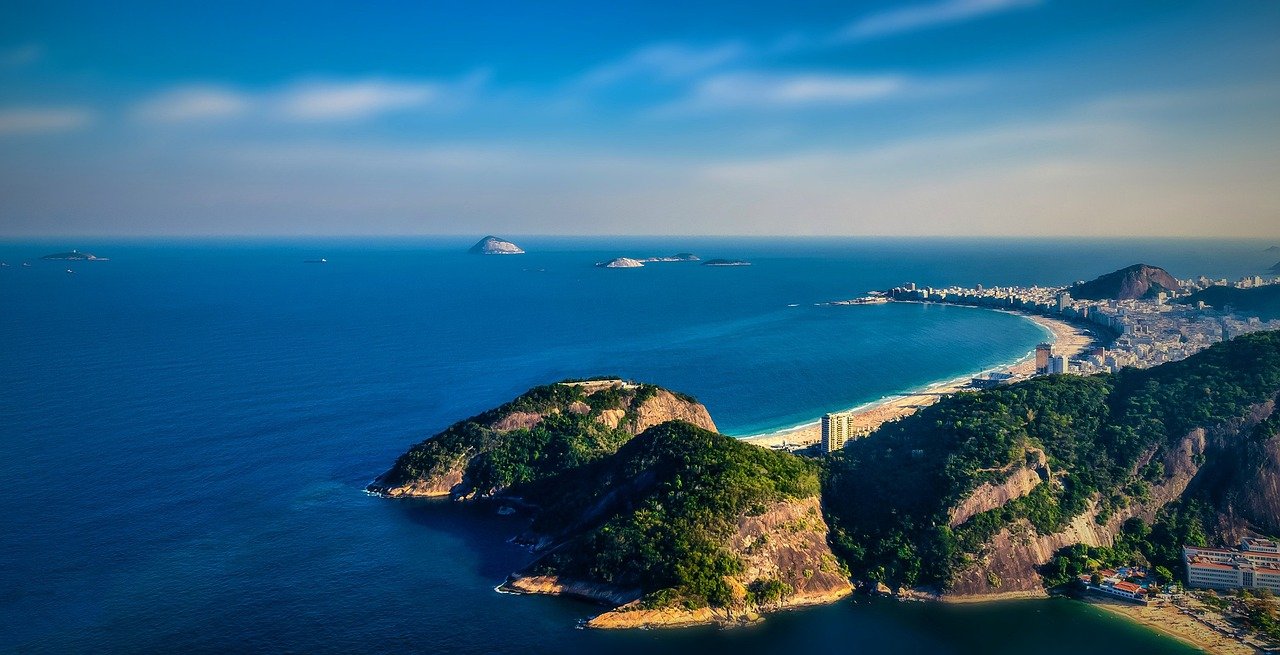
Copacabana’s name derives from a Bolivian chapel in the area, relocated from the Bolivian altiplano, containing a famous statue of Our Lady of Copacabana — the patron saint of Bolivia. The neighbourhood was a quiet fishing village until the Túnel Velho (Old Tunnel) was cut through the mountain in 1892, connecting it to the Botafogo district and opening it to Rio’s expanding urban population. The construction of the Copacabana Palace Hotel in 1923, designed by architect Joseph Gire in a French palazzo style, was the moment that transformed the beach from local resort to international destination. Kings, presidents, and Hollywood celebrities became regulars through the 1930s and 1940s, establishing a glamour that the neighbourhood has never entirely shed.
The famous black-and-white wavy mosaic promenade (the Calçadão de Copacabana) was designed by landscape architect Roberto Burle Marx and laid in 1970 — the original pattern of undulating waves derived from traditional Portuguese pavement designs has been copied on beachfronts around the world. The beach itself became global history on July 21, 1994, when three million people gathered here for one of the largest outdoor concerts ever performed — Rod Stewart’s New Year’s Eve concert — a record that was subsequently surpassed by the estimated 4.2 million people who attended a 2006 New Year’s Eve celebration on the same sands.
What to See and Do

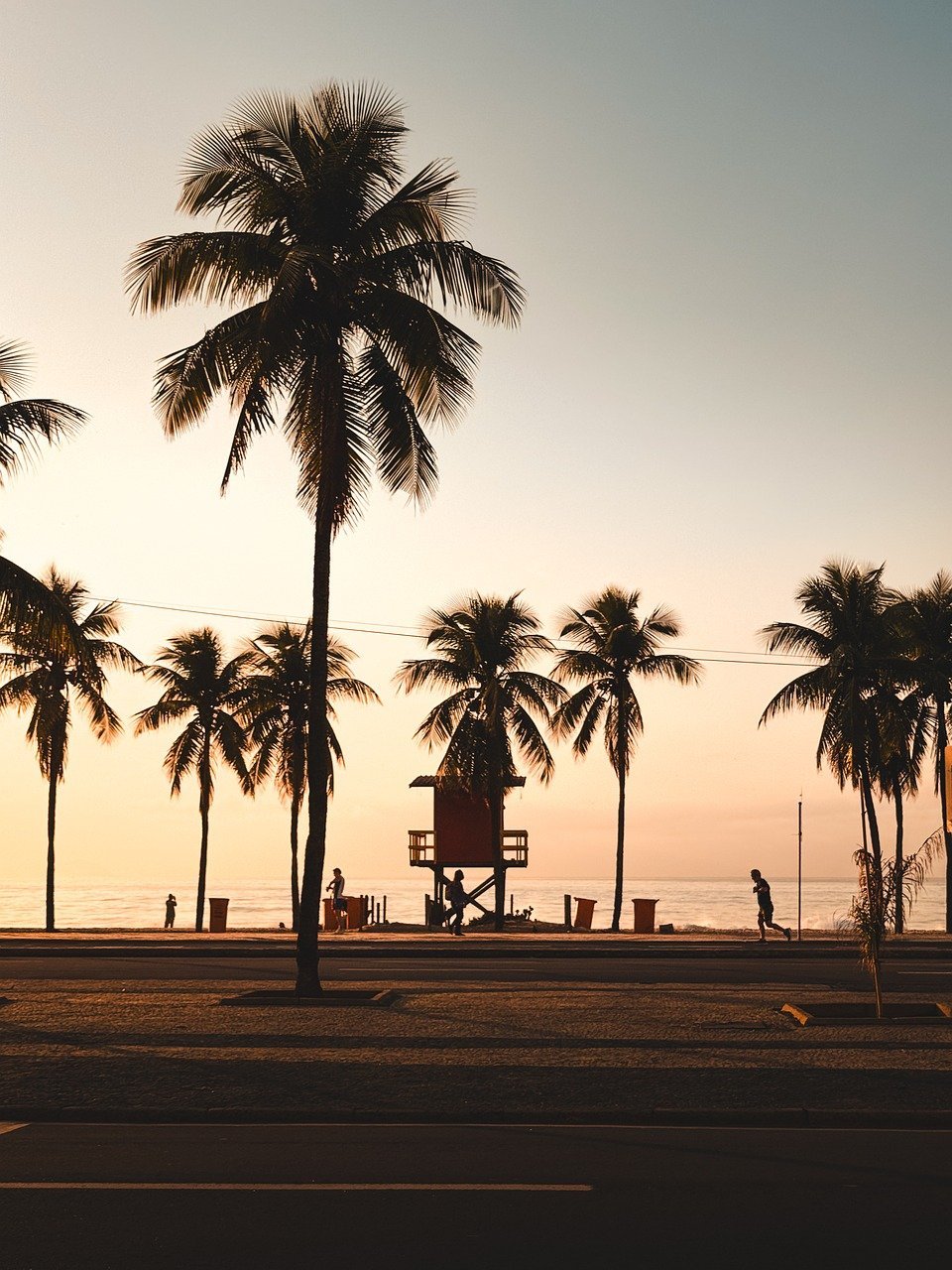
The beach is divided into sections by its posto (lifeguard station) numbers, and each section has its unofficial character. Posto 2 near Leme is quieter and popular with older locals. Postos 5 and 6 in the centre are the most vibrant, with permanent beach volleyball courts, football pitches, and the highest density of vendors. The Arpoador end (Posto 9) is where surfers gather and where the rocky point of Arpoador itself — worth climbing at sunset for views across both Copacabana and Ipanema beaches simultaneously — extends into the sea.
The Avenida Atlântica promenade is as interesting on foot as the beach itself: a four-lane road lined with kiosks, restaurants, and the Copacabana Palace Hotel, separating the beach from the residential towers of the neighbourhood. Joggers use the outer lane of the road (closed to traffic on weekends) from 5am onward. At night the kiosks fill with caipirinhas and live samba, and the promenade becomes a genuine social space. The Fort Copacabana at the southern end of the beach is open for visits, with a military history museum and a rooftop café with exceptional views.
New Year’s Eve and Major Events
No event in the world is quite like Copacabana’s New Year’s Eve (Réveillon). The celebration combines European fireworks tradition with Afro-Brazilian religious ceremony: the Candomblé and Umbanda communities conduct offerings to Iemanjá (goddess of the sea) from the beach at midnight, releasing flower-laden boats into the surf, while millions of people dressed in white — white being the traditional colour of good luck for the new year — gather on the sand to watch the fireworks displays launched from six barges positioned offshore. Arriving before midnight means commitment; the beach fills from mid-afternoon and there is no easy exit until well after 2am.
Carnival in Rio de Janeiro also spills onto Copacabana streets, though the official samba school parades take place in the Sambódromo inland. Blocos (street carnival groups) parade through the neighbourhood in the weeks before Ash Wednesday, with some of the largest and most vibrant in the city. Carnival accommodation on Copacabana is extraordinarily expensive — book a year in advance for the main weekend.
Practical Information
- Tickets: Free beach access. Fort Copacabana approx. BRL 6 entry. Copacabana Palace Hotel restaurant: expensive (book ahead).
- Opening hours: Beach open 24 hrs; lifeguard patrols active from early morning; kiosk bars open until midnight or later
- Best time to visit: December–March for summer beach weather; New Year’s Eve for the Réveillon celebration; avoid Carnival period for accommodation if visiting for the beach
- Duration: Half-day to full day
- Booking: No booking for beach access; advance bookings essential for New Year and Carnival accommodation
Local Insights
What locals know that guidebooks don’t always tell you:
- Leave valuables at the hotel. Petty theft on the beach (particularly phone snatching while you are distracted) is common. Bring only what you need and keep it close. This is stated plainly in every Rio guide because it is genuinely necessary.
- The Arpoador rock at the Ipanema end of the beach is free, open to the public, and offers arguably the best sunset view in Rio. Locals applaud when the sun touches the horizon — join them.
- Mate (cold brewed mate tea), served from large thermoses by beach vendors, is the authentic beach drink of Rio de Janeiro. Order by calling out “maté” — cold, slightly bitter, and perfect on a hot day. Cost is negligible.
- Sunday mornings the Avenida Atlântica is closed to traffic and open to cyclists, rollerbladers, and walkers — the full four-kilometre length without cars is the best time to walk the promenade.
- The neighbourhood directly behind the beach (particularly the side streets around Rua Bolivar and Rua Ronald de Carvalho) has excellent, reasonable lunch restaurants used by locals rather than hotels — ask for the prato feito (fixed-price daily special) for the best value.
Getting There
- Metro: Line 1 → Cardeal Arcoverde, Siqueira Campos, or Cantagalo stations (all walking distance to beach)
- Bus: Numerous lines from the city centre and Zona Sul (South Zone) run along Avenida Atlântica and Avenida N. S. de Copacabana
- Taxi/Rideshare: Readily available; Uber and 99 widely used in Rio
- On foot from Ipanema: 20-min walk along the beach from Arpoador Point
Frequently asked questions
Is Copacabana Beach safe?
Copacabana is safe for most visitors who exercise basic awareness. Don’t display expensive jewellery or cameras; keep your phone in your pocket when not actively using it; don’t carry large amounts of cash. The beach itself during the day is generally safe; late at night, stick to the well-lit promenade.
What is the Réveillon celebration?
Rio’s New Year’s Eve celebration on Copacabana Beach — the world’s largest outdoor New Year’s party. Millions of people dressed in white gather for fireworks, music, and Candomblé offerings to Iemanjá. The celebration typically runs from early evening through 3-4am the following morning.
How far is Copacabana from Ipanema?
About 2 km — a 20-minute beach walk from Arpoador Point, or 10 minutes by Metro. The two beaches have very different characters: Copacabana is busier and more democratic; Ipanema is slightly more expensive and fashionable.
Can I surf at Copacabana?
Yes. Arpoador (at the Ipanema end) is the main surf spot, with consistent waves suitable for intermediate to advanced surfers. Beginner lessons are available on the Copacabana end of the beach.
Is there good food near Copacabana Beach?
Excellent food, at various price points. The street-food vendors on the beach sell pastéis, grilled cheese, and açaí bowls. The side streets of the neighbourhood have traditional lunch spots with good value. For special occasions, the Copacabana Palace restaurant is one of Rio’s finest.