
Ciutadella Park (Parc de la Ciutadella)
On Sunday mornings Ciutadella Park belongs to Barcelona in a way that no other public space does: families spread picnic blankets under plane trees that have been growing since the 1870s, skateboarders work the smooth paths near the pond, elderly men play petanque with meditative intensity, and the ornate nineteenth-century waterfall fountain — a collaborative project that involved the young Antoni Gaudí — reflects the surrounding greenery in its artificial lake. The Parc de la Ciutadella is 17.4 hectares of green in one of the world’s most densely built cities, and its combination of historical depth, urban energy, and genuine beauty makes it the park that Barcelonans love most.
History of Ciutadella Park

The park’s origins are political and somewhat ironic: the name Ciutadella refers to the massive star-shaped citadel fortress that Philip V of Spain ordered built in 1714 after the siege of Barcelona ended the War of the Spanish Succession. The citadel was built not to defend Barcelona from external enemies but to control its own population — its cannons were pointed inward at the city, not outward toward the sea. To build it, a large working-class neighbourhood called La Ribera was demolished and its 4,000 residents were forcibly relocated, an act of state violence that Catalans have never forgotten. For 150 years the fortress was used as a military prison and barracks, and Barcelonans repeatedly petitioned for its demolition.
Relief came in 1869, when the Spanish government finally ceded the citadel to the city and its demolition was ordered. Barcelona’s progressive mayor Francisco de Paula Rius i Taulet commissioned the landscape architect Josep Fontserè to design a public park on the cleared ground, and work began in 1872. The 1888 Universal Exhibition — which introduced Barcelona to the world and which produced the Arc de Triomf at the park’s entrance — gave the park its major permanent features. The monumental waterfall (Cascada Monumental) was designed by Fontserè with contributions from the young Gaudí, who was studying architecture at the time; the iron-and-glass Hivernacle (winter garden) was built for the exhibition and remains one of the finest examples of nineteenth-century industrial architecture in the city.
What to See

The Cascada Monumental is the park’s most spectacular single feature: a tiered waterfall backed by a theatrical architectural composition of arches, columns, and sculptural groups in a style that blends neo-Baroque with the early ornamental instincts of Gaudí, who contributed to the grotto design beneath the main falls. On sunny afternoons the fountain catches the light in a way that makes photography from the rowing boat lake directly in front of it exceptionally rewarding. The rowing boats on the lake are rentable by the hour and provide one of the best perspectives on the entire park landscape.
The Zoological Museum (Museu de Zoologia), now rebranded as the Natural Sciences Museum, occupies the Castell dels Tres Dragons — a medieval-style brick fortress built by Lluís Domènech i Montaner for the 1888 Universal Exhibition. The museum’s collections are strong on Iberian natural history and include a significant palaeontology section. The park also contains the Barcelona Zoo, accessed from a separate gate with its own admission, housing more than 300 species across a site that integrates relatively well with the park’s historic gardens. Adjacent to the zoo entrance is the controversial statue of the Lady with the Umbrella — a small nineteenth-century bronze that has become one of Barcelona’s most-photographed public artworks despite (or because of) its complete lack of grandeur.
Arc de Triomf and the Walk to the Park

The walk from the Arc de Triomf to Ciutadella Park is one of Barcelona’s finest urban promenades: a broad palm-lined boulevard paved with red brick, flanked by nineteenth-century lamp posts and benches, leading from the Moorish-revival arch (built as the ceremonial entrance to the 1888 Universal Exhibition) to the park’s main gate. On warm evenings the boulevard fills with strollers, children on scooters, street performers, and the outdoor tables of adjacent cafés, creating an atmosphere of cheerful public life. The Arc de Triomf itself — built entirely as a decorative ceremonial structure rather than to commemorate a military victory — is Barceloneta’s most distinguished piece of nineteenth-century urban design.
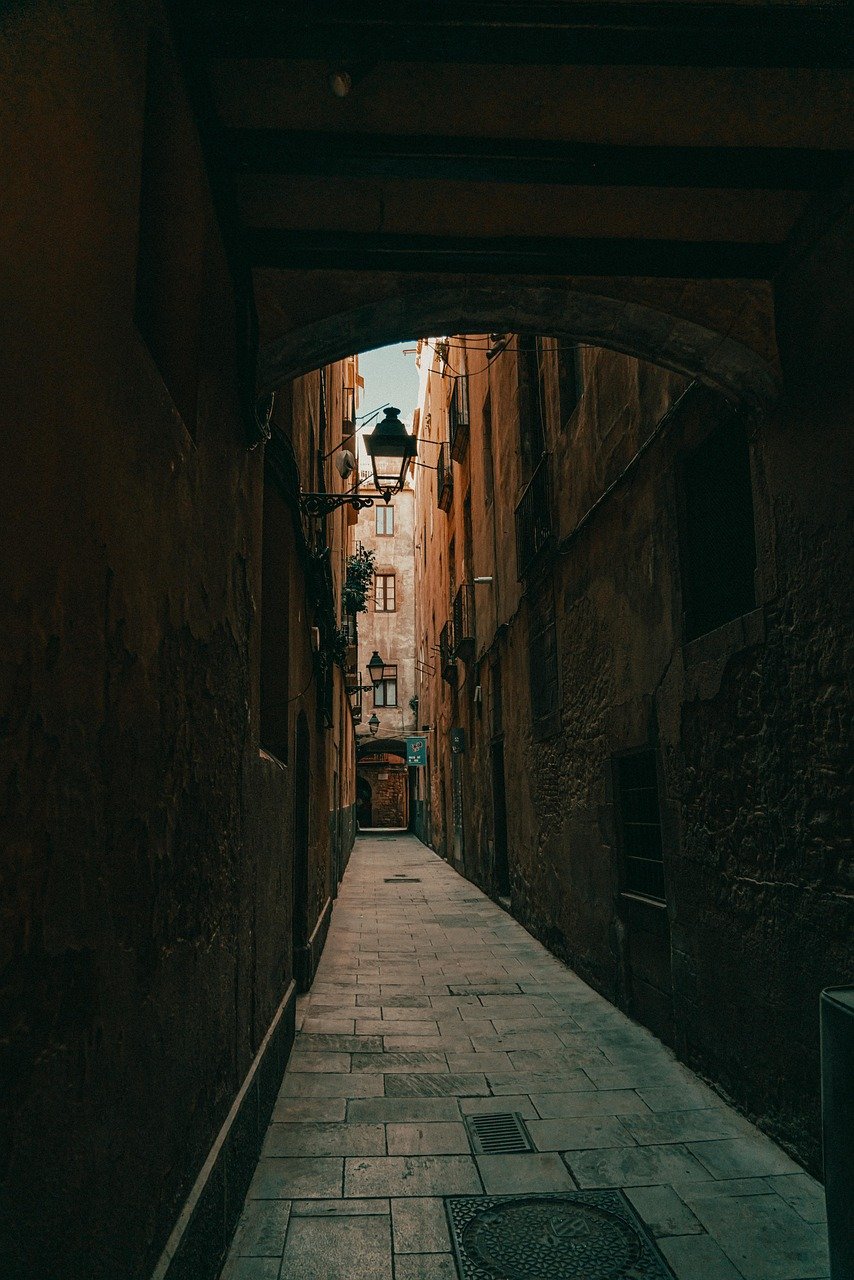
The surrounding Born neighbourhood, immediately west of the park, is one of Barcelona’s most creative districts: a dense grid of medieval streets around the Gothic Santa Maria del Mar basilica (among the finest Gothic churches in Spain) and the Mercat de Santa Caterina, with its extraordinary Hundertwasser-esque ceramic mosaic roof. Combining Ciutadella Park with a morning in the Born produces one of Barcelona’s ideal urban days.
Practical Information
- Tickets: Park admission is free; rowboat rental approximately €6–10 per 30 minutes; Barcelona Zoo has its own admission (adults approx. €20)
- Opening hours: Park open daily 10:00 am–10:30 pm (summer); 10:00 am–8:00 pm (winter)
- Best time to visit: Sunday mornings for the most vibrant local community atmosphere; spring (April–May) for flowering trees; autumn for golden leaf colour
- Duration: 2–3 hours for the park; half-day if including the zoo and Born neighbourhood
- Booking: No booking required for the park; Barcelona Zoo tickets available online
Local Insights
What locals know that guidebooks don’t always tell you:
- The Hivernacle (winter garden), a cast-iron and glass greenhouse built for the 1888 Exhibition, hosts free jazz and classical concerts on summer Thursday evenings — check the Barcelona City Parks programme for dates.
- The park’s parliament building (Parlament de Catalunya) is not normally accessible to visitors but its exterior and the surrounding formal gardens are among the park’s finest sections and rarely crowded.
- The statue of the Sleeping Lady (La Dama del Paraigua) — the famous Lady with the Umbrella — is beside the zoo entrance and is small enough to miss; look for the group of smartphone cameras aimed at something knee-high.
- Rowboating on the park lake is considerably better in the first two hours after opening than in the afternoon, when queues build and the boats are all occupied simultaneously.
- The Born neighbourhood immediately outside the park’s west gate contains the ruins of the neighbourhood demolished in 1714 to build the original Citadel — visible beneath a modern glass roof at the Mercat de Born — providing historical closure to the park’s origin story.
Getting There
- Metro: L1 (Red line) to Arc de Triomf or L4 (Yellow line) to Barceloneta; both a 5–10 minute walk to park entrances
- Bus: H16, V15, and multiple city routes serve the park perimeter on Passeig de Picasso and Passeig de Pujades
- On foot: 15 minutes from El Born through the neighbourhood; 10 minutes from Barceloneta beach
- Taxi/Rideshare: Ask for “Parc de la Ciutadella, Passeig de Picasso” — plentiful Uber availability throughout Barcelona
Frequently asked questions
Did Antoni Gaudí design the fountain in Ciutadella Park?
Gaudí contributed to the Cascada Monumental fountain as a student — specifically to the grotto section beneath the main cascade. The overall design was by the park’s architect Josep Fontserè. Gaudí’s contribution was relatively minor but genuine, and the waterfall is considered one of the few places in Barcelona where early Gaudí work can be seen.
Is Ciutadella Park free?
Yes, the park itself is entirely free to enter. The Barcelona Zoo within the park has its own admission charge. The rowboats on the lake charge a small rental fee. All gardens, paths, the Hivernacle, and the fountain area are free.
Can I have a picnic in Ciutadella Park?
Absolutely — picnicking is one of the park’s primary activities and deeply embedded in Barcelona weekend culture. Bring your own supplies or pick up food from the Mercat de Santa Caterina in Born, a 5-minute walk from the park’s western entrance.
Is the park safe?
The park is generally very safe during daylight hours. As with any urban park, be aware of your surroundings and don’t leave valuables unattended. The area around the park and the Born neighbourhood is one of Barcelona’s more tourist-heavy districts; standard big-city precautions apply.
What is the best way to combine Ciutadella Park with other Barcelona attractions?
The Born neighbourhood and Santa Maria del Mar church are a natural pairing. Barceloneta beach is 10 minutes on foot to the east. The Picasso Museum is 10 minutes to the west. The park sits at the intersection of several of Barcelona’s most interesting neighbourhoods and serves as an ideal midday rest stop on a long day of sightseeing.