
Church of St. Barbara
Down a quiet lane in Old Cairo, past the ancient Roman towers of Babylon Fortress and the souvenir stalls outside the Hanging Church, a doorway leads into the Church of St. Barbara — one of the oldest surviving Coptic Christian churches in Egypt. Founded in the 7th century and dedicated to a young martyr whose relics rest here to this day, the church stands about 140 centimetres below modern street level, reached by descending a set of worn stone steps that seem to drop you into another millennium entirely. The world quiets the moment you step down. Inside, the air smells of incense and beeswax, the marble columns are ancient enough to have witnessed the Arab conquest of Egypt, and the carved wooden iconostasis gleams with painted saints. This is not a monument to visit and tick off a list — it is a place that rewards patient attention.
History of the Church of St. Barbara
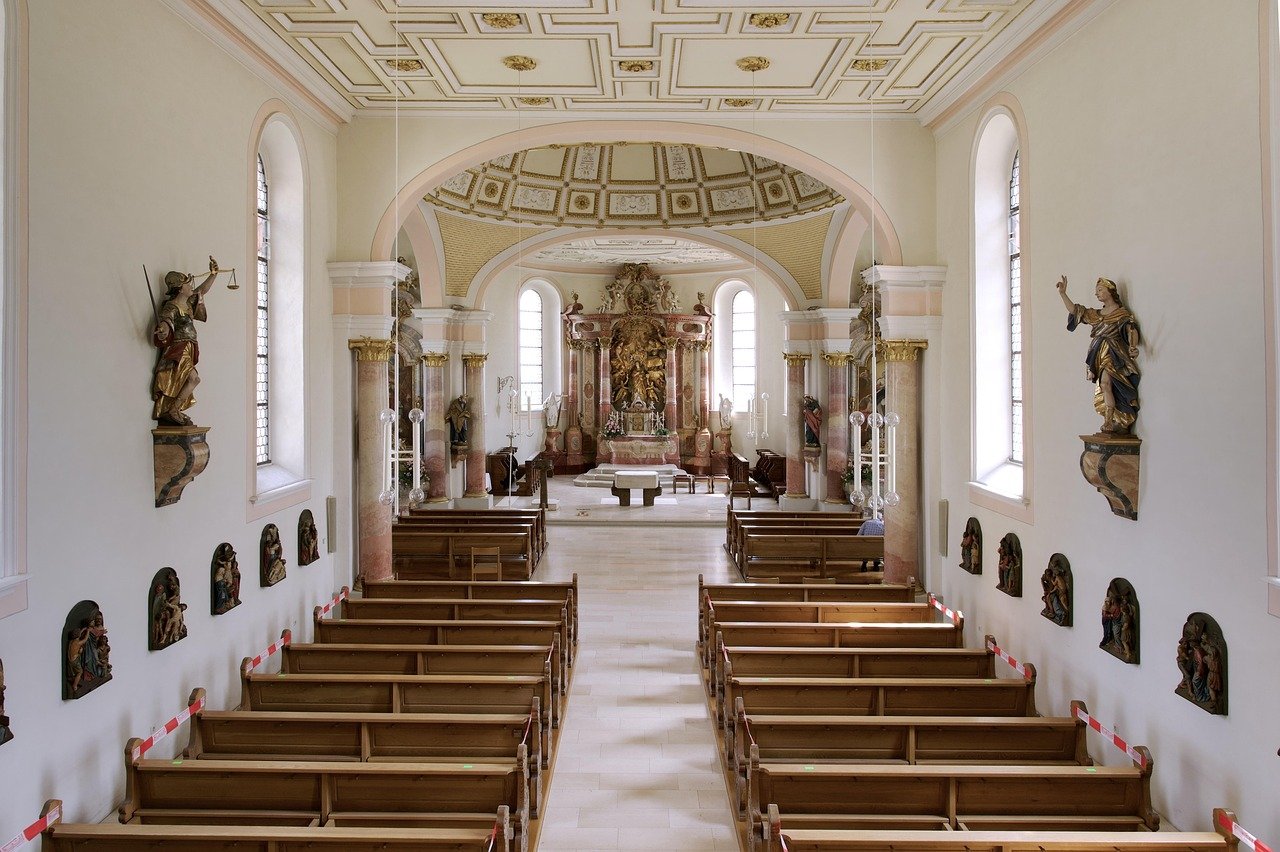
The church’s origins stretch back to the late 7th century, when a wealthy scribe named Athanasius — serving under the Umayyad governor Abd al-Aziz ibn Marwan — built a small place of worship on this site and dedicated it to Saints Cyrus and John, the physician martyrs venerated throughout early Christian Egypt. The site was already sacred: the eastern wall of the Roman Babylon Fortress formed its outer boundary, and the surrounding district was one of the most densely settled Christian neighborhoods in a city that had long coexisted with multiple faiths. The church was substantially rebuilt and enlarged in the 11th century under Patriarch Christodoulos, the 66th Pope of Alexandria, and it was at this time that it was rededicated to Saint Barbara, following the transfer of her relics to the church from an earlier location. Barbara was a young woman martyred for her Christian faith in the 3rd century CE, probably in Asia Minor, and her feast day on December 4th remains one of the most significant celebrations in the Coptic calendar.
The church survived the fires that swept through Coptic Cairo in the 8th and 12th centuries, though it required significant restoration after each. A major restoration campaign between 1910 and 1922 repaired structural damage and preserved many of the medieval decorative elements that might otherwise have been lost. Further conservation work has continued into the present century, balancing the needs of an active parish — services are still held here regularly — against the demands of preservation and the steady flow of visitors who come to see one of Cairo’s most evocative ancient interiors. The church stands at the eastern end of the Babylon Fortress complex, sharing the Coptic Cairo precinct with the Hanging Church (Al-Muallaqah), the Coptic Museum, the Church of SS Sergius and Bacchus, and the Ben Ezra Synagogue.
What to See at the Church of St. Barbara
The Nave, Aisles, and Ancient Marble Columns
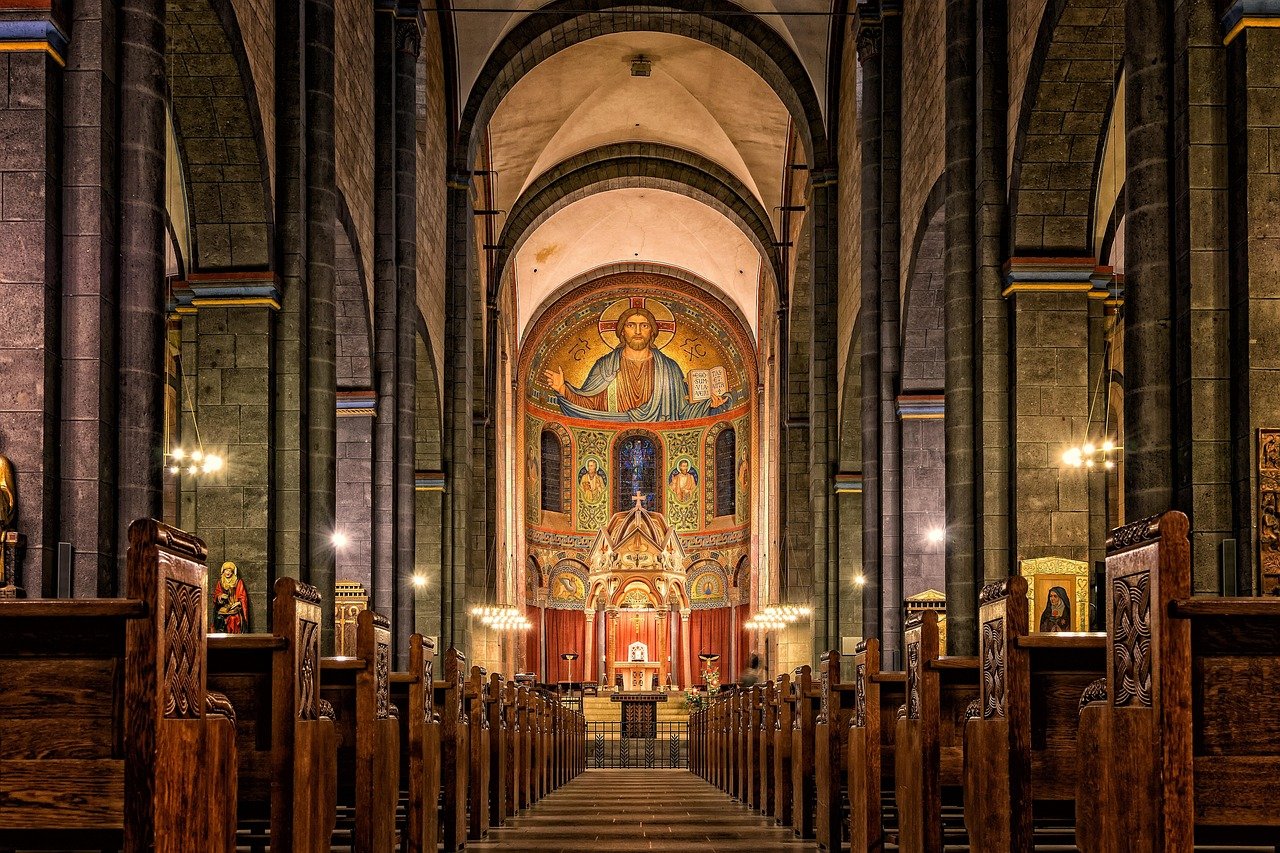
The Church of St. Barbara follows the classic Coptic basilica plan: a long nave flanked by two aisles, separated by marble columns of varying heights and origins — several are clearly reused Roman-era pieces, their capitals an eclectic mix of styles accumulated over centuries of building, demolition, and rebuilding. The nave measures 26 metres long, 14.5 metres wide, and 15 metres high — substantial dimensions for a building that now sits well below the modern street level outside. As your eyes adjust to the dim interior after the Cairo sunlight, the columns emerge from the shadows in a long perspective that is genuinely beautiful in its simplicity. The floor is ancient stone, worn smooth by generations of worshippers. Light enters through high windows and filters through the incense-heavy air, creating a quality of illumination that changes slowly through the day. The narthex at the entrance — a transitional vestibule between the street entrance and the main nave — contains some of the oldest decorative elements in the building, including traces of carved stonework that predate the 11th-century reconstruction.
The Carved Wooden Iconostasis
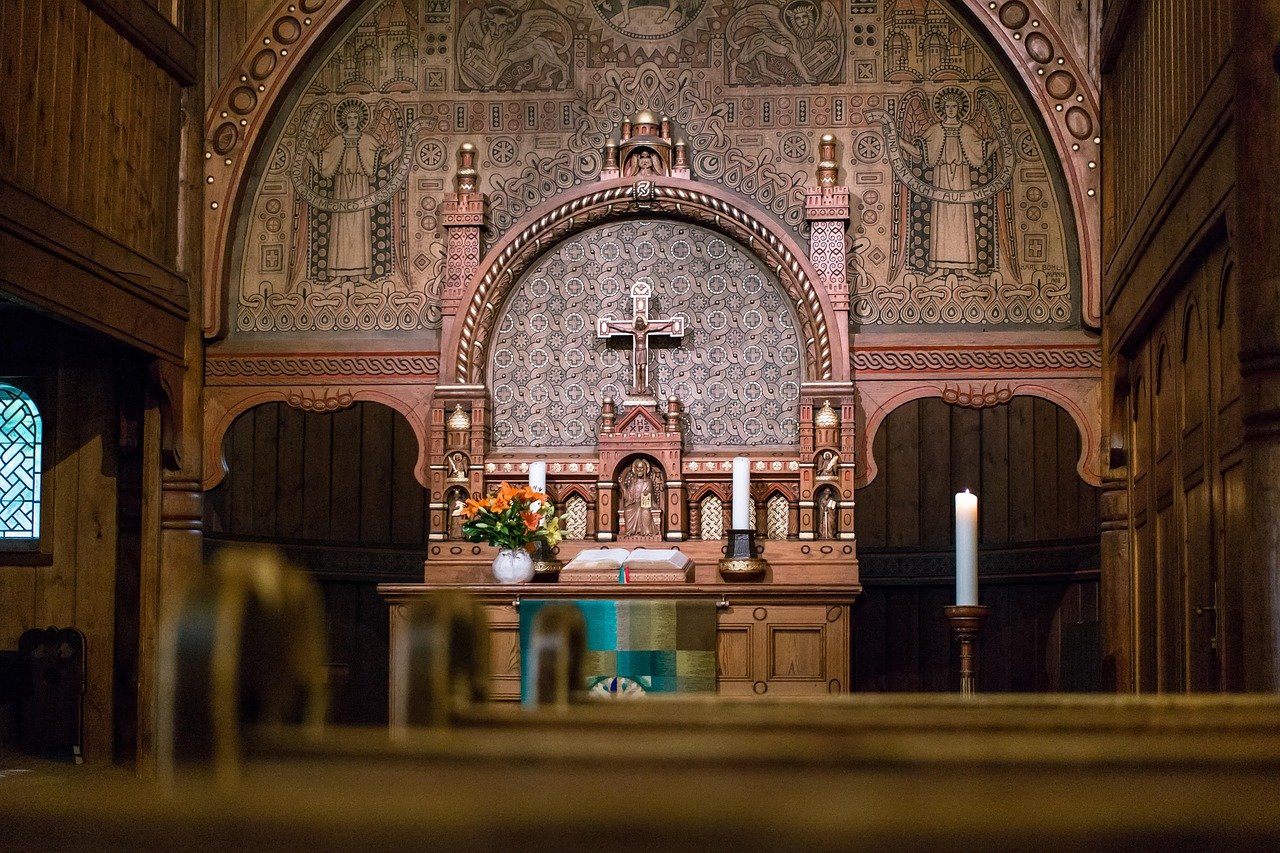
The visual centerpiece of the church interior is the triple iconostasis — three carved wooden screens separating the nave from the three sanctuaries at the eastern end of the building. Coptic iconostases are among the most complex and beautiful examples of medieval Christian woodworking, and St. Barbara’s ranks among the finest in Cairo. The screens are inlaid with intricate geometric patterns, ivory panels, and ebony detailing; they are densely covered in carved figures of saints and angels, their faces painted in the flattened, large-eyed Coptic style that descends directly from ancient Egyptian portrait painting. The central screen, which faces the principal sanctuary, is particularly ornate, with the painted icons arranged in rows according to the liturgical hierarchy of the Coptic church. It is worth examining closely: the level of craftsmanship in the inlay work and the survival of the ivory panels across so many centuries is remarkable. Visitors are welcome to look but should remember that the iconostasis is a functioning liturgical screen, not a museum display — services continue to be held in the church and the sacred character of the space should be respected throughout your visit.
The Chapel of the Relics and Saint Barbara’s Feast Day
To one side of the main nave, a dedicated chapel houses the relics of Saint Barbara herself — transferred here in the 11th century and venerated continuously ever since. The chapel is small and intimate, with painted icons of Barbara covering the walls and an incense holder always burning near the reliquary. For Coptic Christians, this is a pilgrimage destination of genuine spiritual significance, and you may encounter worshippers praying here regardless of what time of day you visit. The most dramatic time to visit the church is December 4th, the feast day of Saint Barbara, when the precinct fills with pilgrims, incense clouds the air, and the church holds special liturgical services that run through the night. If your Cairo visit coincides with this date, the experience of the feast day is one of the most vivid windows into living Coptic Christian practice available to an outside visitor.
Local Insights
Coptic Cairo rewards visitors who approach it with patience and respect. Here are five tips for getting the most from your time at St. Barbara and the surrounding precinct.
- Visit the whole Coptic Cairo complex in one go — The Church of St. Barbara sits within a pedestrianized precinct that also contains the Hanging Church, the Coptic Museum, the Church of SS Sergius and Bacchus (traditionally associated with the Holy Family’s flight into Egypt), and the Ben Ezra Synagogue. Budget a full half-day to explore the whole complex without rushing. The Coptic Museum alone deserves at least 90 minutes.
- Arrive via Metro Line 1 to Mar Girgis Station — The Metro station at Mar Girgis (St. George) deposits you directly beside the northern entrance to the Coptic Cairo complex. The journey from central Cairo takes under 15 minutes and costs a few Egyptian pounds, making this the simplest and most affordable way to arrive. Walking from the station to St. Barbara takes about five minutes through the compound.
- Dress modestly for all churches in the complex — Shoulders and knees should be covered in all places of worship in Coptic Cairo, including St. Barbara. Scarves and lightweight sarongs are available from vendors near the entrance if you arrive unprepared, but bringing your own is more comfortable. Women should carry a head covering in case it is requested inside.
- Visit during weekday mornings to avoid tour groups — The Coptic Cairo complex is on the standard Cairo day-tour itinerary and receives large groups between approximately 9:30 and 11:30 AM on most days. Arriving before 9 AM or after 2 PM significantly reduces crowding. The church is small enough that a group of 30 tourists completely fills the nave.
- Entry is free — but donations are welcomed — The Church of St. Barbara charges no admission fee. The church is an active parish dependent on donations for its ongoing maintenance, and a contribution in the donation box near the entrance is a respectful gesture toward the community that has preserved this extraordinary building for 14 centuries.
Planning Your Visit
- Tickets: Free admission. No entry fee charged. Donations to the church welcome.
- Opening hours: Daily 9:00 AM – 5:00 PM. The church may close temporarily during liturgical services; brief waits at the entrance are occasionally required.
- Best time: Weekday mornings before 9 AM or after 2 PM to avoid tour groups. December 4th for the feast of Saint Barbara — a special experience if your visit coincides.
- Duration: Allow 30–45 minutes for the church itself; 3–4 hours for the full Coptic Cairo complex including the Hanging Church and Coptic Museum.
- Booking: No booking required. Walk in during opening hours. No reservation system exists.
Getting There
- Metro: Cairo Metro Line 1 (Helwan–New El-Marg) to Mar Girgis Station. The station exit opens directly adjacent to the entrance of the Coptic Cairo complex. Journey time from Tahrir Square (Sadat Station) is approximately 10–12 minutes.
- By car: The Coptic Cairo precinct is located in the Misr al-Qadima (Old Cairo) district, off Sharia Mari Girgis (Saint George Street). Parking is limited in the narrow surrounding streets; arriving by Metro or taxi is strongly preferred.
- On foot: From the Nile Corniche, the complex is a 10–15 minute walk south along the riverbank and then inland along Sharia Mari Girgis. The Roman towers of the Babylon Fortress are visible from the main road and serve as landmarks.
- Taxi/ride-share: Uber and Careem both serve the area. Search for “Coptic Cairo” or “Mar Girgis” as the destination. Drop-off is on Sharia Mari Girgis directly outside the compound entrance. Fares from downtown Cairo run approximately 25–40 EGP.
Frequently asked questions
Who was Saint Barbara and why is she venerated in Egypt?
Saint Barbara was a young Christian martyr, traditionally believed to have died in the 3rd century CE, probably in Asia Minor (modern Turkey). According to hagiographic tradition, she was killed by her own father for refusing to renounce her Christian faith — a story of extraordinary courage that made her one of the most beloved saints in early Christianity. In the Coptic tradition, she is venerated as a martyr of uncommon bravery, and her relics — housed in the chapel at this Cairo church since the 11th century — are a focus of genuine pilgrimage devotion. Her feast day on December 4th is one of the major celebrations in the Coptic liturgical calendar.
Is the Church of St. Barbara still an active church?
Yes, absolutely. The Church of St. Barbara is not a museum but an active Coptic Orthodox parish where regular liturgical services are held. Visitors are welcome throughout opening hours, but may occasionally need to wait briefly at the entrance if a service is in progress. When services are taking place, visitors who enter should remain quiet and respectful, avoid moving between sections of the nave, and follow any guidance given by the church attendants. The living character of the church — the smell of incense, the sound of prayers, the presence of worshippers — is part of what makes visiting it so different from a conventional heritage site.
How old is the Church of St. Barbara and is it the oldest church in Cairo?
The Church of St. Barbara was founded in the late 7th century CE, making the site approximately 1,300 years old. However, the building has been rebuilt, enlarged, and restored multiple times, so the present structure dates primarily from the 11th-century reconstruction under Patriarch Christodoulos, with later restorations. It is not definitively the oldest church in Cairo: the nearby Church of SS Sergius and Bacchus (Abu Serga) is also claimed to occupy a site of similar or earlier origin, and both churches stand within the same Coptic Cairo precinct. What is not disputed is that St. Barbara is one of the finest surviving examples of medieval Coptic Christian architecture in Egypt.
What else should I see in Coptic Cairo near the Church of St. Barbara?
The church sits within the Coptic Cairo precinct, which is one of the world’s most concentrated collections of early Christian heritage. Within a ten-minute walk you can visit the Hanging Church (Al-Muallaqah), built above two Roman towers and Cairo’s most famous Coptic church; the Coptic Museum, housing the largest collection of Coptic art and artifacts in existence; the Church of SS Sergius and Bacchus, reputedly built over a cave where the Holy Family rested during their flight into Egypt; and the Ben Ezra Synagogue, the oldest surviving Jewish house of worship in Cairo. Budget a full half-day minimum for the precinct and consider hiring a guide who specializes in Coptic Cairo — the layered history here richly rewards expert interpretation.