
Christ the Redeemer Statue (Cristo Redentor)
Rising 38 metres above the jungle-covered peak of Corcovado Mountain, the Cristo Redentor statue extends its arms over Rio de Janeiro in a gesture of welcome that has become one of the most recognisable images on earth. From 710 metres above sea level the statue surveys the panoramic splendour of the city: Guanabara Bay, the Tijuca National Park forest, Sugarloaf Mountain, the white arc of Ipanema beach, and the dense urban fabric of one of the world’s great cities spread below. It is simultaneously a work of religious art, an engineering triumph, and the symbol of a nation.
History of Cristo Redentor
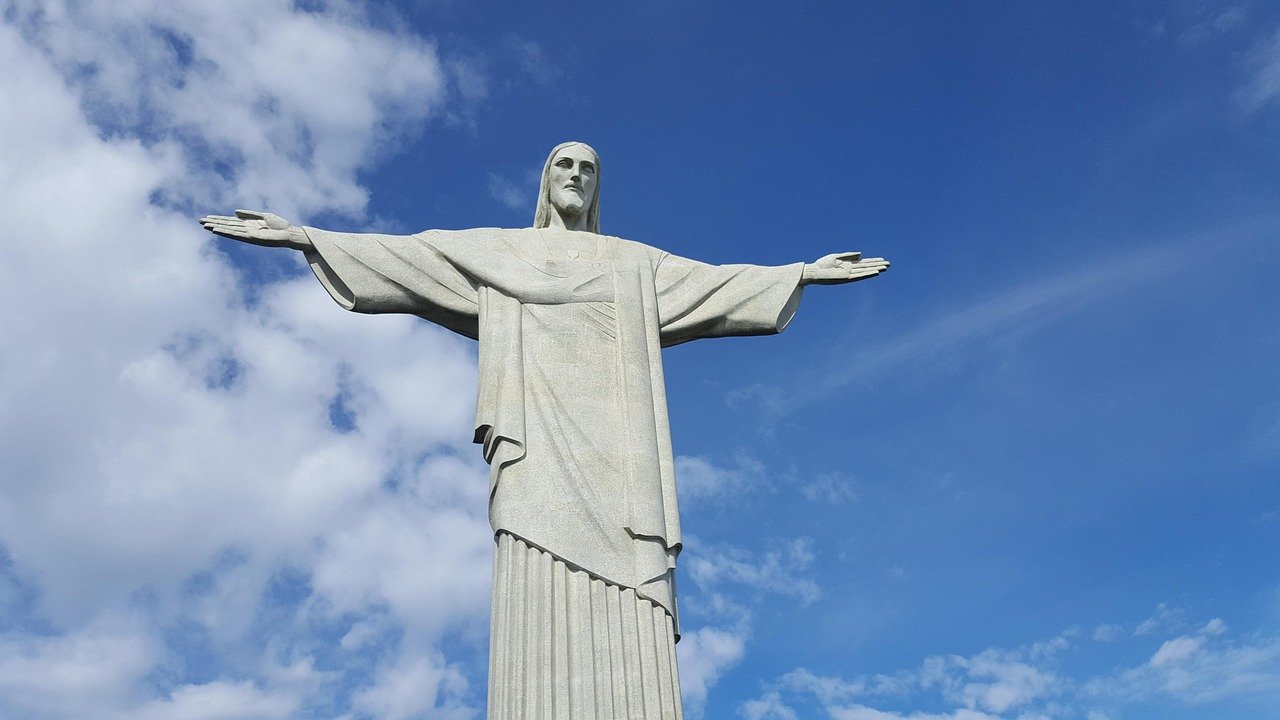
The project that became Cristo Redentor began in earnest in the 1920s as Brazil prepared to mark its centennial of independence. The design by engineer Heitor da Silva Costa and sculptor Paul Landowski was chosen in 1922. Construction began in 1926 using reinforced concrete and soapstone from Brazil’s Minas Gerais state.
The statue was inaugurated on 12 October 1931 with an innovative electric light ceremony organised by Guglielmo Marconi from Italy. In 2007 Cristo Redentor was named one of the New Seven Wonders of the World by a global public vote. The statue has survived several lightning strikes requiring periodic restoration.
What to See

The outstretched arms span 28 metres, the head alone measures 3.75 metres, and each thumb is taller than a person. The soapstone cladding glows warm in direct sunlight and takes on purple and grey tones in cloud. Viewing galleries around the base provide 360-degree panoramic views over Rio de Janeiro.
The summit platform offers one of the world’s great urban panoramas: Guanabara Bay with Sugarloaf Mountain, the green Tijuca Forest, the curves of Ipanema and Copacabana beaches to the south, and the distant Serra dos Orgaos mountains. Early morning visits often include low cloud swirling around the statue, creating an almost supernatural atmosphere.
Getting to the Summit

The classic approach is by the Corcovado rack railway, which has been climbing the mountain through the Tijuca Forest since 1884. The 3.8-kilometre journey takes around 20 minutes, ascending through lush Atlantic Forest vegetation before emerging at the summit station below the statue. The railway offers photogenic moments as it winds through the forest canopy.
Alternative access is by official van from Paineiras. At the top, escalators and lifts provide access from the station to the viewing platform. Hiking trails through the Tijuca Forest are among the most rewarding in Rio but should only be attempted with a guide.
Practical Information
- Tickets: Rack railway + monument entry approximately BRL 100-120 per adult
- Opening hours: Daily 8am-7pm; last train varies seasonally
- Best time to visit: Early morning before 9am for fewest crowds and clearest skies
- Duration: Half-day including travel to and from the base station
- Booking: Book online at trem.rio well in advance; slots fill quickly on weekends
Local Insights
Cariocas have a complicated relationship with Cristo Redentor — it’s simultaneously their city’s greatest symbol and the most tourist-crowded place they never personally visit.
- Book the first train of the day: clouds often roll in by late morning, obscuring the panoramic views
- The statue is illuminated at night and visible throughout the city — a free alternative viewpoint from Ipanema or Copacabana
- Bring sunscreen and water: the summit has little shade and the sun is intense even in overcast conditions
- Photography is best in early morning golden light or just before sunset when the statue glows warm orange
- Allow 30 minutes at Cosme Velho station before boarding: there are cafes, stalls, and a historical museum of the rack railway
Getting There
- Rack railway: Corcovado rack railway from Rua Cosme Velho 513 in Cosme Velho neighbourhood
- Van: Official vans from Paineiras Hotel checkpoint; no private vehicles allowed on the summit road
- Bus: Bus 583 and 584 from Copacabana to Cosme Velho; walk 200m to the rack railway station
- Taxi/rideshare: To Rua Cosme Velho for the rack railway; cars cannot proceed beyond the checkpoint
Frequently asked questions
How do I get to Cristo Redentor?
The most popular way is the Corcovado rack railway from Rua Cosme Velho 513. The 20-minute ride through Tijuca Forest is itself a highlight. Official vans from Paineiras are an alternative. Private cars cannot reach the summit.
What are the opening hours?
The monument is open daily from 8am to 7pm. The last rack railway train departs the top at approximately 6:30pm. Hours may vary on special religious holidays when mass is celebrated at the summit chapel.
Do I need to book tickets in advance?
Yes, strongly recommended. Timed entry slots fill up days and sometimes weeks in advance, especially on weekends. Book at trem.rio as soon as your travel dates are confirmed.
Is Cristo Redentor accessible for wheelchair users?
The monument has elevators and escalators connecting the railway station to the viewing platform. Advance contact with the operator is recommended for visitors with mobility limitations.
Can you see Cristo Redentor at night?
The statue is illuminated at night and visible from much of Rio de Janeiro, including Ipanema, Copacabana, and Guanabara Bay. The monument is closed after 7pm, but the nighttime view from the city below is spectacular and free.