
Bungle Bungle Range
From the air they look like a field of giant beehives, thousands of rounded sandstone domes in perfect alternating bands of orange and dark grey, packed tightly in clusters and separated by deep gorges carved by ancient watercourses. On the ground, the scale becomes personal: you walk through narrow slot canyons with walls that rise forty metres above your head, the light filtering down in golden shafts, the silence complete except for your own breathing. The Bungle Bungle Range in Purnululu National Park is one of Australia most extraordinary landscapes, a geological marvel and a UNESCO World Heritage Site.
History of the Bungle Bungle Range
The Gija and Jaru Aboriginal peoples have lived in and around Purnululu for thousands of years, and the landscape carries deep spiritual significance in their culture. The name Bungle Bungle is likely derived from a Gija word; the Aboriginal name for the entire area is Purnululu. The distinctive banding of the domes is not painted: the orange bands are caused by iron and manganese compounds in the sandstone, while the darker grey-black bands result from algae and cyanobacteria growing on the rock surface in zones where moisture is retained.
Despite their scale and visual impact, the Bungle Bungle domes were largely unknown to non-Aboriginal Australians until 1983, when a documentary film crew filmed them from the air. Purnululu was gazetted as a national park in 1987 and declared a UNESCO World Heritage Site in 2003, one of only 19 natural World Heritage properties in Australia.
What to See
The park has two main visitor zones accessible by walking trails. The southern zone contains Cathedral Gorge, a natural amphitheatre with acoustics so perfect that voices echo clearly around the circular walls of towering sandstone, and Piccaninny Gorge, a longer walk through ever-narrowing chasms. The northern zone contains Echidna Chasm, a slot canyon so narrow and deep that sunlight only reaches the floor at midday during summer months.
Helicopter flights over the Bungle Bungles are available from Warmun (Turkey Creek) and from within the park airstrip, and an aerial view is genuinely transformative: the scale and extent of the dome field, which covers some 450 square kilometres, only becomes apparent from the air.
The Geology
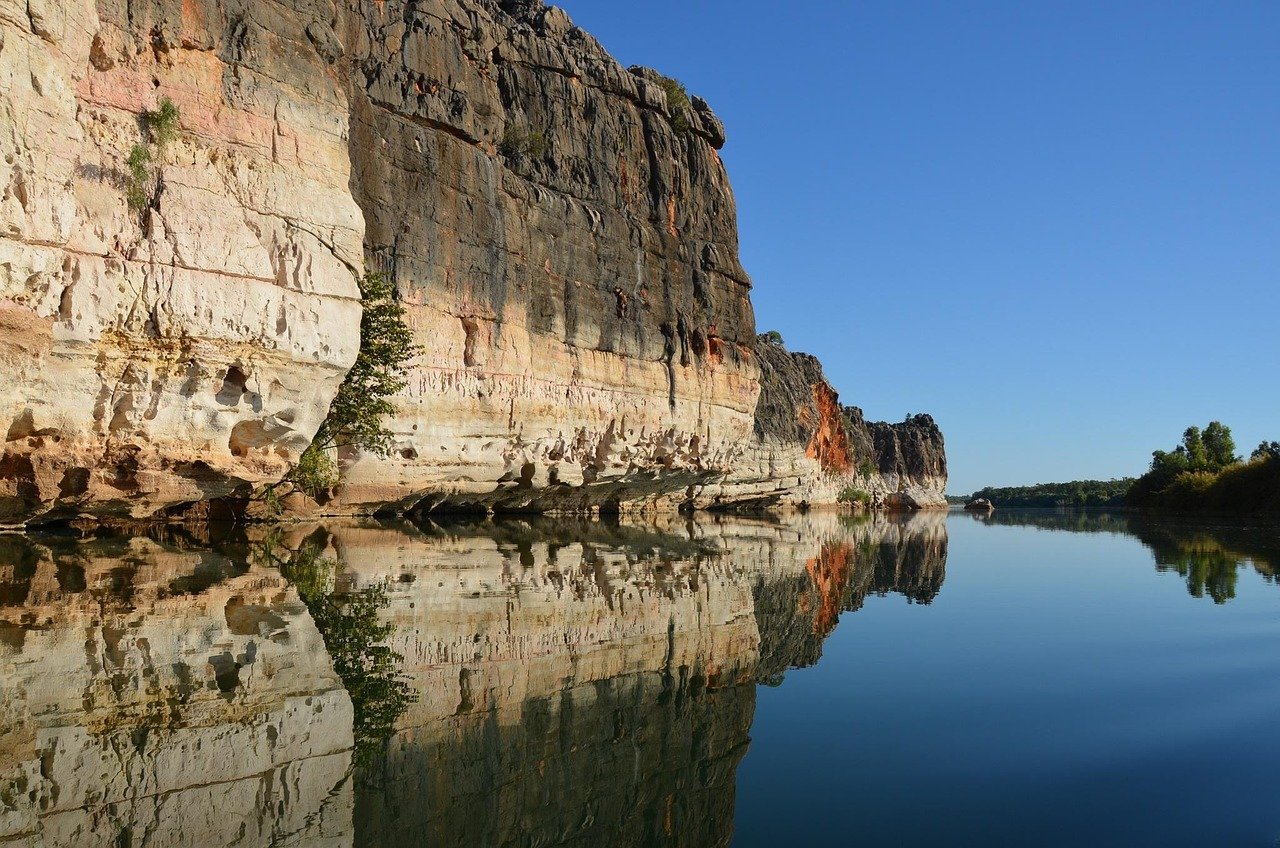
The Bungle Bungle domes are formed from ancient sandstone deposited roughly 360 million years ago during the Devonian period. The sandstone was subsequently buried under younger sediments, then progressively uplifted and exposed by erosion over the past 20 million years. The banding is the product of differential permeability in the rock layers: the orange crust forms where silica seals the surface and the dark bands where more porous layers allow moisture to accumulate and support biological crusts.
The dome shapes are exceptionally well-developed here because of the particular combination of sandstone type, climate, and erosional history. The narrow gorges between the domes were carved by ephemeral streams that flow only after rain; in the wet season (November-April) these peaceful slot canyons can become raging flood channels.
Practical Information
- Tickets: Park entrance fee approximately AUD 13 per person; payable at the visitor centre
- Opening hours: Park open April to October (wet season closure November-April); visitor centre 8:00-16:00 daily when open
- Best time to visit: April-May for wildflowers; June-August for cooler temperatures; avoid wet season when the park closes
- Duration: Minimum 2 days; 3 days to see all walking trails and take a helicopter flight
- Booking: No advance booking required for park entry; helicopter flights and guided tours bookable through Warmun and Kununurra operators
Local Insights
What locals know that guidebooks do not always tell you:
- Cathedral Gorge is at its most magical very early in the morning before tour groups arrive; walk in as the first light filters down the walls and have the amphitheatre to yourself.
- The 53-km Spring Creek Track to the park entrance is rough 4WD only; allow 2.5-3 hours and check conditions at Warmun before you leave.
- There is NO fuel available inside the park; fill your tank in Kununurra and ensure you have enough for at least 300 km.
- The Kimberley dry season nights are cold even in April-May; temperatures can drop to near zero. Bring warm sleeping gear even if daytime temperatures are pleasant.
- Fly-in day tours from Kununurra or Broome are available and include a helicopter flight; the only option if you do not have a 4WD vehicle.
Getting There
- By car (4WD only): Turn off the Great Northern Highway approximately 250 km from Kununurra; 53 km on the Spring Creek Track (2.5-3 hrs)
- By air: Fly into Kununurra from Perth, Darwin, or Broome; charter flights land at the park airstrip for fly-in day tours
- By tour: 4WD tour operators run multi-day camping tours from Kununurra and Broome
- Helicopter: Scenic helicopter flights available from Warmun (Turkey Creek) near the park entrance and from Kununurra
Frequently asked questions
Do I need a 4WD vehicle to visit Purnululu?
Yes. The Spring Creek Track is accessible by 4WD and high-clearance off-road single-axle trailers only. Standard vehicles and caravans cannot access the park.
When is the park open?
The park is generally open April to October, with closure during the wet season (approximately November to April). Check with the Department of Biodiversity, Conservation and Attractions (DBCA) for current season opening dates.
Can I take a helicopter flight without visiting by road?
Yes. Fly-in day tours from Kununurra include a helicopter scenic flight over the domes and a landing at the park airstrip with guided walks.
Is there accommodation inside the park?
Yes. Two camping areas (Walardi and Kurrajong) have basic facilities including toilets and cold showers. No power is available. Book through Parks and Wildlife Western Australia.
What should I bring to visit the Bungle Bungles?
Large quantities of water (minimum 1 litre per hour of walking), food for your entire stay (no shops inside), fuel for 300+ km, sun protection, insect repellent, and warm clothes for cold nights. There is no phone coverage inside the park.