
Buenos Aires National Museum of Fine Arts (Museo Nacional de Bellas Artes)
On a broad avenue in Recoleta, one of Buenos Aires’ most elegant neighbourhoods, a neoclassical building of unhurried grandeur opens its doors every day to anyone who cares to walk in — completely free of charge. The Museo Nacional de Bellas Artes is Argentina’s premier art museum, housing over 12,000 works spread across 34 galleries that span pre-Columbian ceramics, European Old Masters, Argentine nineteenth-century painters, and contemporary installations. Where many great art museums demand both an entrance fee and prior planning, Buenos Aires’ finest cultural institution simply asks for your curiosity. That generosity alone would be reason enough to visit. The quality of what awaits inside is reason to linger for hours.
History of BA National Museum of Fine Arts
The Museo Nacional de Bellas Artes was founded in 1895, making it one of Latin America’s oldest art institutions. Its origins were modest: a small collection drawn from private donations and state acquisitions, initially housed in the Galerías del Bon Marché — a commercial space that could hardly have seemed a permanent home for national cultural heritage. A subsequent move to Plaza General San Martín brought more space, but the museum’s identity truly crystallised in 1932 when it relocated to its current building on Avenida del Libertador, a structure that had previously served Buenos Aires as a pumping station for the city’s water supply. Architect Alejandro Christophersen oversaw its transformation into a Beaux-Arts cultural palace, retaining the industrial skeleton and dressing it in grand neoclassical facades that have since become one of Recoleta’s defining landmarks.
The museum’s collection grew rapidly through the twentieth century, driven by the philanthropy of Argentina’s cultivated elite. Major donors including Eduardo Schiaffino — himself a painter and the museum’s first director — and successive Argentine governments assembled the works that now constitute the permanent collection. The approach was deliberately eclectic: rather than concentrating exclusively on Argentine art, the museum sought to position Buenos Aires as a city in dialogue with the great European traditions. Works were acquired directly from Paris, Madrid, and Amsterdam at a moment when Argentina’s economy gave it genuine international purchasing power. The result is a collection that places Goya alongside Schiaffino, Monet alongside Pío Collivadino, and Rodin alongside the Argentine sculptors he influenced — a conversation across continents that gives the MNBA its distinctive intellectual character.
What to See at BA National Museum of Fine Arts
The European Masters Collection
The international rooms of the MNBA constitute a condensed survey of Western painting from the fifteenth century to the early twentieth. The collection includes genuine masterworks: a rare El Greco, Flemish canvases by Rubens and his circle, Rembrandt’s luminous etchings, and Spanish works by Goya that rank among the most important examples of his portraiture outside of Europe. The Impressionist and Post-Impressionist gallery is the emotional core of the international wing: canvases by Monet, Manet, Renoir, Pissarro, Degas, Gauguin, and Cézanne hang in relatively intimate rooms that allow close examination impossible at the Musée d’Orsay on a crowded Saturday. The Van Gogh holdings — modest in number but arresting in quality — and a group of works by Toulouse-Lautrec complete what is, by any measure, an Impressionist collection of world significance. Picasso is represented by several works across different periods of his career, and a room devoted to twentieth-century international painting adds Rivera, Pollock, and Chagall to a collection that consistently surprises in its breadth.
Argentine Art from Colonial Period to the Twentieth Century
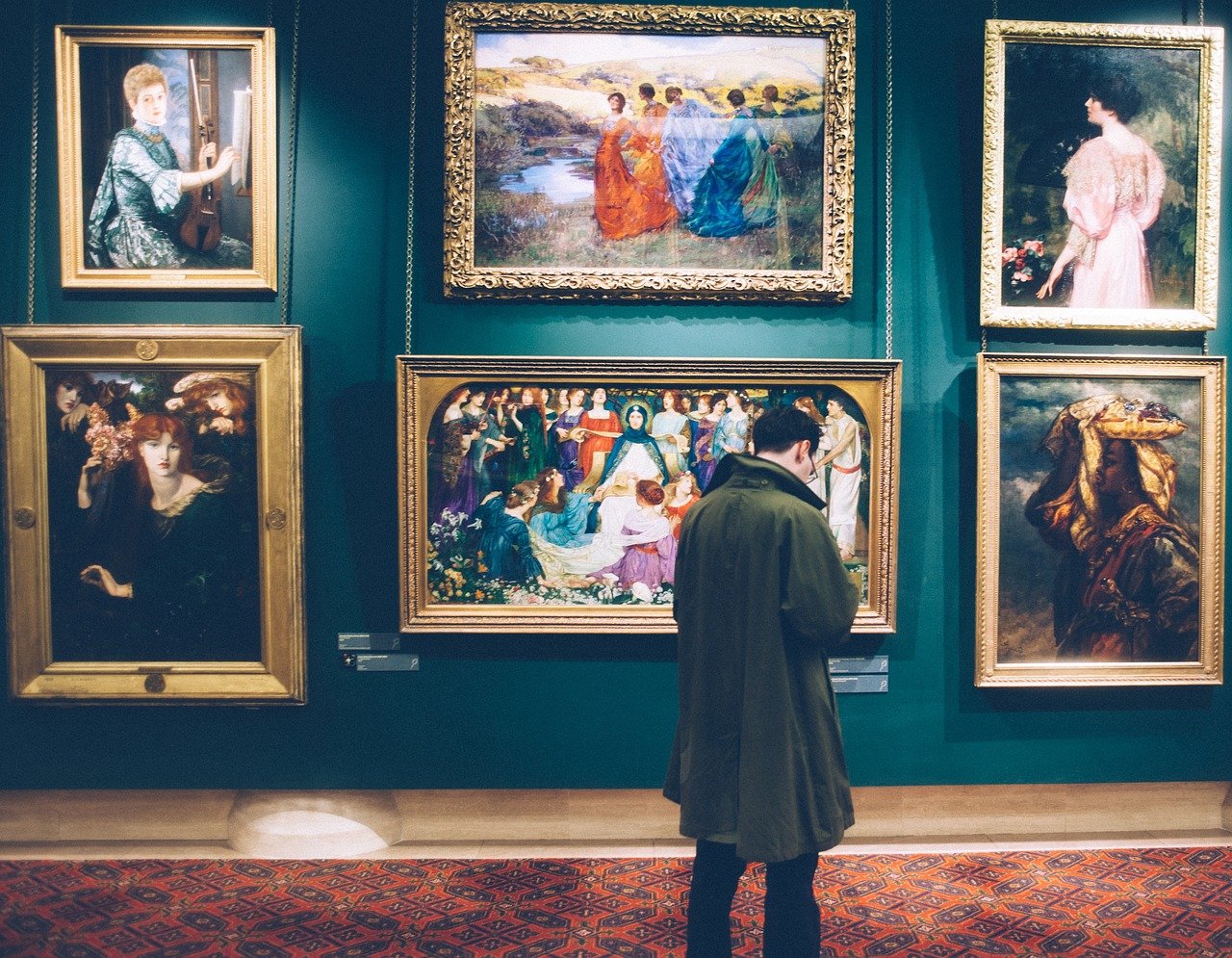
The museum’s Argentine collections are equally compelling, tracing the country’s artistic development from colonial religious imagery through the independence-era landscapes and portraits that shaped national identity, and onward through successive avant-garde movements of the twentieth century. The nineteenth-century rooms chart the European-trained generation who returned to Buenos Aires with Impressionist techniques and applied them to the specific light of the pampas — artists like Pío Collivadino, Fernando Fader, and Martín Malharro, whose canvases capture the melancholy beauty of the Argentine interior in ways that feel simultaneously familiar and revelatory to international visitors. Later rooms document the Buenos Aires modernist period of the 1920s and 1930s, the concrete art movement of the 1940s, and the avant-garde provocations of the 1960s — a decade of extraordinary artistic vitality in Buenos Aires that coincided with parallel movements in New York and Paris. Works by Xul Solar, whose visionary canvases mix mysticism, invented language, and geometric abstraction, constitute some of the most singular paintings in any Argentine collection.
The Sculpture Collection and Rodin Works
The museum holds a significant sculpture collection that includes several works by Auguste Rodin — among them pieces that were cast under the sculptor’s direct supervision and constitute some of the finest examples of his work in the Americas. The Rodin holdings are displayed in dedicated gallery spaces designed to allow circulation around the three-dimensional works, and the quality of the bronzes — their textured surfaces, the urgency of gesture — rewards the kind of slow, close looking that the uncrowded galleries facilitate. Argentine sculpture is represented across multiple rooms by artists who studied in Paris and Rome and returned to Buenos Aires with a rigorous technical mastery. The interplay between European and Argentine works in the sculpture galleries effectively illustrates the cultural exchanges that defined Buenos Aires’ artistic identity in the late nineteenth and early twentieth centuries. The museum’s gardens and exterior spaces also hold a rotating selection of large-format sculptures, providing a pleasant transition between the internal galleries and the Avenida del Libertador boulevard outside.
Local Insights
Buenos Aires residents treat the MNBA as a neighbourhood living room — these are their practical tips for international visitors.
- Visit on Saturday or Sunday morning for the best atmosphere. Weekend mornings, particularly between 10:00 and noon, see a pleasant cross-section of porteño life: families with children, students sketching in front of canvases, elderly couples on habitual rounds through favourite galleries. The energy is engaged without being overwhelming. Weekday afternoons are the quietest of all — near-solitary in some wings — if you prefer undisturbed contemplation.
- Pick up the floor plan at the entrance desk. The MNBA’s 34 galleries spread across multiple wings and levels, and without a map the layout can disorient first-time visitors. The free map (available in English) organises galleries by period and nationality, allowing you to plan a coherent route. The Impressionist wing and the Rodin gallery are on the upper level; the Argentine nineteenth-century collection anchors the ground floor.
- Allow at least 2–3 hours, or split across two visits. The collection is genuinely too large to absorb in a single focused pass. If your schedule allows, consider two shorter visits — morning for the international collection, afternoon for the Argentine rooms — rather than one exhausting marathon. Readmission on the same day is free; even readmission on a different day costs nothing.
- Combine with the Recoleta neighbourhood. The museum sits within easy walking distance of the Recoleta Cemetery (where Eva Perón is buried), the cultural centre CCBA, and the weekend craft fair at Plaza Francia. A morning at the MNBA followed by lunch at one of the Recoleta restaurants and an afternoon at the cemetery makes an exceptionally full and rewarding day in one of Buenos Aires’ finest districts.
- Check the temporary exhibition programme before visiting. The museum hosts major international loan exhibitions several times per year — recent seasons have brought works from Spanish and French institutions that are rarely seen in South America. The temporary exhibition galleries occupy the west wing; check bellasartes.gob.ar for the current programme and any associated events or guided tours.
Planning Your Visit
- Tickets: Free admission. No reservation required for general visits. Certain special exhibitions may charge a separate entry fee — check the official website for current temporary exhibition pricing.
- Opening hours: Tuesday to Friday 11:00 a.m. to 7:30 p.m.; Saturday and Sunday 10:00 a.m. to 7:30 p.m. Closed Mondays and on the following holidays: January 1, May 1, June 27, December 24, 25, and 31.
- Best time: Saturday and Sunday mornings (10:00–noon) for atmosphere; weekday afternoons (2:00–5:00 p.m.) for solitude. Avoid arriving within an hour of closing — the permanent galleries are large and the staff begin encouraging visitors toward exits 30 minutes before official closing time.
- Duration: Allow 2–3 hours for a thorough visit to the permanent collection. Add 45–60 minutes for a temporary exhibition. Speed visits of 90 minutes are possible if you focus on the Impressionist and Rodin sections.
- Booking: No booking required for free general admission. Guided tours in Spanish and English are offered on select days — check bellasartes.gob.ar for the current schedule and to register, as tour spaces are limited.
Getting There
- Bus: Multiple bus lines stop directly on Avenida del Libertador near the museum: lines 10, 37, 38, 41, 59, 60, 67, 92, 93, 95, 102, 108, 110, 118, 124, 128, and 130. Bus travel in Buenos Aires is inexpensive and the routes are well signposted in the SUBE card app.
- By car: The museum is at Av. del Libertador 1473, Recoleta. Street parking is available along Av. del Libertador and the adjacent side streets, though spaces fill on weekend mornings. Paid car parks operate on Junín and Pueyrredón, both within a five-minute walk.
- On foot: A 15-minute walk from the Recoleta Cemetery along Av. del Libertador, or 20 minutes from the Palermo parks along the same boulevard. From the BA Subte, the closest station is Facultad de Medicina on Line H (10-minute walk).
- Taxi/ride-share: Uber and Cabify drop off directly at the museum entrance on Av. del Libertador. From central Buenos Aires (Microcentro) the journey takes 15–25 minutes depending on traffic. Both apps work reliably in Recoleta at all hours.
Frequently asked questions
Is the National Museum of Fine Arts really free?
Yes — the permanent collection is entirely free of charge, with no reservation or timed-entry ticket required. You can walk in during opening hours, collect a floor plan from the entrance desk, and move freely through all 34 permanent galleries. This policy has been in place since the museum’s founding and reflects its mission as a genuinely public cultural institution. Certain major temporary exhibitions, particularly those involving significant international loans, may charge a separate admission fee, but these are the exception rather than the rule. Check bellasartes.gob.ar for current exhibition schedules and any associated fees.
How does the MNBA compare to other Buenos Aires museums?
The MNBA is widely considered Buenos Aires’ finest fine art institution by breadth and quality of collection. For European art — particularly Impressionists and Old Masters — it has no peer in Argentina. The Museo de Arte Latinoamericano de Buenos Aires (MALBA) is the better choice for Latin American twentieth-century and contemporary art, while the Museo Nacional de Arte Decorativo occupies the Recoleta mansion next door and specialises in decorative arts. Many visitors to Recoleta combine the MNBA and the Decorative Arts museum in a single afternoon, as the two institutions complement each other well and are a short walk apart.
Are audio guides available in English?
Audio guides in English are available for rent at the museum’s entrance desk for a modest fee (typically ARS 2,000–3,000). The guides cover the key works in the permanent collection across all major gallery wings, with commentary on approximately 80 selected works from the international and Argentine collections. Alternatively, the museum’s official app (available for iOS and Android) provides free audio commentary that can be downloaded in advance on a Wi-Fi connection and used offline during your visit — particularly useful if you prefer not to carry a separate device. Guided tours in English are also scheduled on select days; check the website for current availability.
What is the best way to combine the MNBA with other Recoleta attractions?
The MNBA is ideally combined with a visit to Recoleta Cemetery (a 12-minute walk along Av. del Libertador), where elaborate mausoleums house Argentina’s most famous historical figures including Eva Perón. The weekend artisans’ fair at Plaza Francia, directly behind the CCBA cultural centre, runs every Saturday and Sunday from morning until evening and is a lively counterpoint to the museum’s contemplative atmosphere. The Recoleta neighbourhood’s café scene — particularly along Av. Alvear and the streets around Plaza Francia — provides excellent options for a meal break mid-day. The entire circuit — museum, cemetery, fair, and lunch — fills a rewarding full day without requiring any transport between stops.