
Barcelona Cathedral (Catedral de Barcelona)
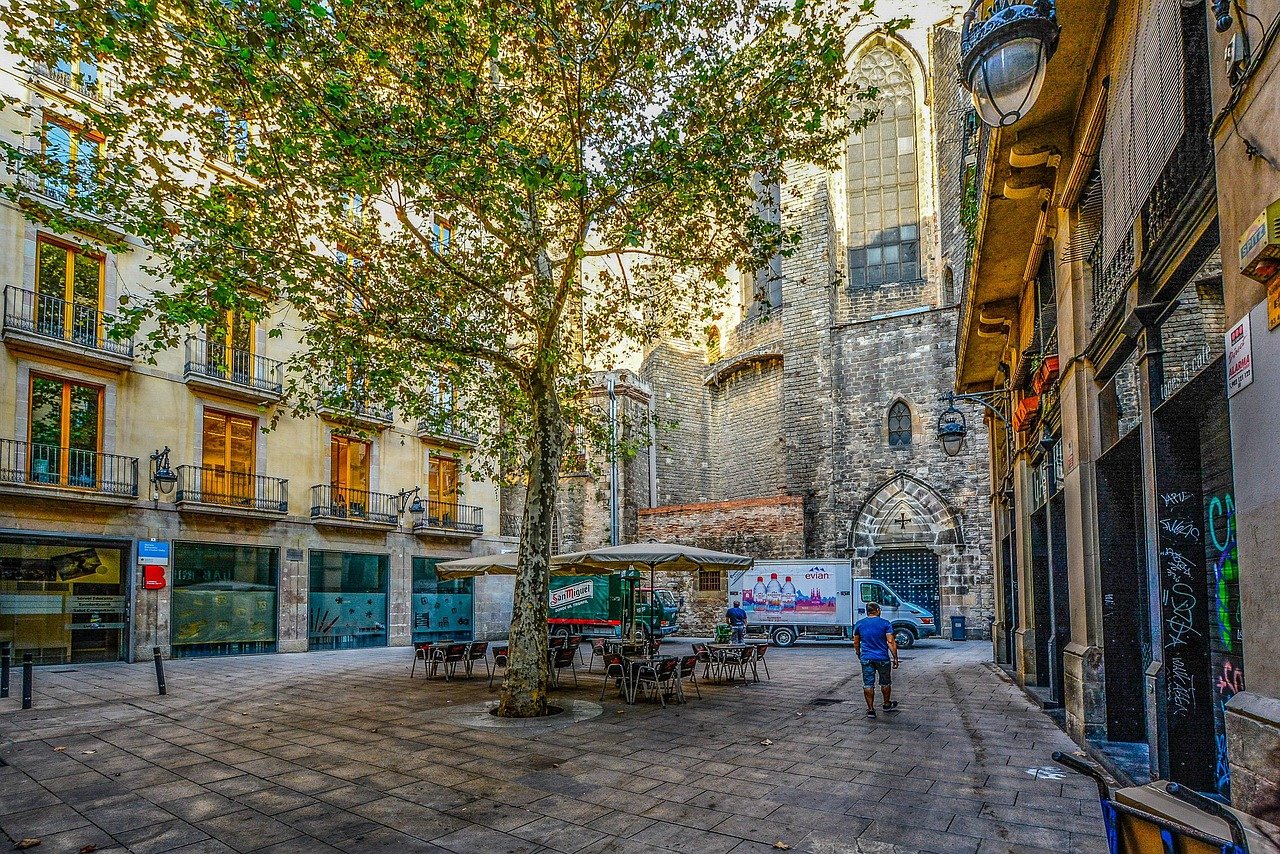
The Gothic Quarter of Barcelona is compressed, dark, and medieval in its proportions — narrow lanes, sudden squares, buildings that lean toward each other overhead as if exchanging secrets. The Barcelona Cathedral rises from this maze with extraordinary authority: its twin octagonal towers and elaborate Gothic facade visible from streets away, its presence in the neighbourhood absolute. Inside, the cool darkness smells of incense and stone, and the sound of the city outside fades to a distant murmur. In the cloister, 13 white geese circle their garden fountain, keeping watch as they have for centuries.
History of Barcelona Cathedral

Construction of the current Barcelona Cathedral began in 1298, on the site of an earlier Romanesque cathedral that had itself been built on the ruins of a Visigothic basilica. The main body of the church — the soaring nave, the ambulatory, the spectacular Gothic vaulting — was largely completed by the 15th century, but the elaborate Neo-Gothic facade that tourists recognise today was not added until 1913, designed in a style consistent with the medieval building but executed seven centuries after the original work began. The result is a cathedral that looks medieval throughout but actually spans from the 13th to the 20th century in its construction.
The cathedral is dedicated to the Holy Cross and Saint Eulalia, a young Barcelona girl who according to legend was martyred by the Romans in 304 AD for refusing to renounce her Christian faith. Her remains are housed in a 14th-century alabaster sarcophagus in the cathedral’s crypt, which is accessible to visitors. The crypt and the story of Eulalia — who was subject to 13 torments corresponding to the 13 geese kept in the cloister — are central to the cathedral’s identity as a place specifically of Barcelona, not just a generic Gothic monument.
What to See

The interior of the cathedral is impressive for its scale: five aisles separated by soaring Gothic columns, the central nave rising to 26 metres, and 28 side chapels around the perimeter each with their own altarpieces and devotional imagery. The choir stalls, decorated with the heraldic shields of the knights of the Order of the Golden Fleece (whose chapter meeting took place here in 1519 under the presidency of the Holy Roman Emperor Charles V), are among the finest medieval woodwork in Spain. The organ, positioned above the entrance, dates from the 16th century.
The rooftop terrace, accessible by lift, provides one of the best views available in the Gothic Quarter: a close-up of the cathedral’s pinnacles and gargoyles, and sweeping views across the dense medieval roofscape toward the sea. The cloister — entered from the ambulatory — is the highlight for many visitors: a peaceful Gothic garden with a central fountain, surrounded by 14th-century arcade and housing the famous 13 white geese whose presence here has been maintained without interruption since the cathedral’s earliest centuries.
The Geese of the Cloister

The 13 white geese in Barcelona Cathedral’s cloister are not a tourist gimmick but an ancient religious tradition. Each goose represents a year of Saint Eulalia’s life when she was martyred (she was 13 years old), and their presence in the cloister has been maintained for centuries as a living memorial to her. The geese have their own dedicated keeper and live in considerably greater comfort than their counterparts in a farmyard; they have become such a part of the cathedral’s identity that replacing a dead goose is treated as a matter of institutional importance.
The cloister dates from the late 14th and early 15th centuries. Its arcade of pointed arches and carved capitals is excellent Gothic work, and the central garden of palm trees and magnolias creates a quiet green space remarkably insulated from the noise of the Gothic Quarter outside. On Thursday mornings and Sunday afternoons, sardana dancers perform in the square in front of the cathedral — a Catalan folk dance performed in a circle that is one of Barcelona’s most distinctive cultural traditions.
Practical Information
- Tickets: EUR 11 adult for the tourist visit (includes cloister and museum); rooftop add-on EUR 3; children under 7 free
- Tourist visit hours: Monday-Friday 9:30-18:30, Saturday 9:30-17:15, Sunday 14:00-17:00
- Free access: The cathedral is free for worship outside tourist visit hours; check the cathedral website for mass times
- Best time to visit: Weekday mornings for the quietest atmosphere and shortest queues
- Duration: 1-1.5 hours including cloister, interior, and rooftop
Local Insights
What locals know that guidebooks don’t always tell you:
- Attending Mass (free) gives access to the cathedral at quieter hours when the tourist visit is not running – an entirely different and more genuine experience of the space.
- The rooftop terrace is worth the extra EUR 3 – the close-up views of the gargoyles and the panorama over the Gothic Quarter are not available from anywhere else.
- The cathedral’s lesser-known rival in beauty is Santa Maria del Mar in El Born, 10 minutes walk away – built by the people rather than the church, it’s architecturally purer and less crowded.
- The square in front of the cathedral is the best place in Barcelona to watch sardana dancing (Thursday noon, Sunday noon) – a completely free and entirely local tradition.
- The 14th-century Baptist chapel on the west side of the cathedral contains one of Barcelona’s earliest fonts – it’s usually overlooked because most visitors don’t step off the main tourist route.
Getting There
- Metro: Line 4 to Jaume I station; 5-minute walk through the Gothic Quarter
- On foot: 10 minutes from La Rambla through the Gothic Quarter lanes; signs point toward the cathedral
- Bus: Multiple routes stop at Via Laietana, 5 minutes walk
- Address: Pla de la Seu, Barcelona 08002 – the main facade faces Placa de la Seu
Frequently asked questions
What is the difference between Barcelona Cathedral and Sagrada Familia?
Barcelona Cathedral (La Seu) is the medieval Gothic bishop’s church in the heart of the Gothic Quarter, completed in the 15th century with a later facade. Sagrada Familia is Gaudi’s extraordinary modernist basilica on the other side of the city, still under construction and architecturally completely different. Both are worth visiting; neither substitutes for the other.
Why does Barcelona Cathedral have geese in the cloister?
The 13 geese represent the 13 years of life of Saint Eulalia, Barcelona’s patron saint and co-dedicatee of the cathedral, who was martyred at age 13 by the Romans in 304 AD. Their presence has been maintained for centuries as a living symbol of the saint’s memory.
Can I visit the cathedral for free?
The paid tourist visit runs at specific hours and includes the cloister, museum, and rooftop access. Outside those hours the cathedral is open for worship and accessible without charge. Attending Mass provides the experience of the space in its primary function.
Is the rooftop worth visiting?
Yes – the rooftop terrace provides excellent close-up views of the Gothic spires, gargoyles, and pinnacles, as well as panoramic views of the surrounding city. The lift access makes it accessible to all visitors. The extra EUR 3 is well spent.
What sardana dancing can I see at the cathedral?
Sardana groups (cobles) perform in the square in front of the cathedral on Thursday lunchtimes and Sunday lunchtimes, typically starting around noon. The performance is free, open for all to watch, and involves a community circle dance that is distinctly Catalan.