
Auckland Harbour Bridge
From the water, the Auckland Harbour Bridge is a magnificent sweep of steel arching over the Waitemata Harbour, connecting the city’s CBD to the leafy North Shore. From the top of the bridge, 64 metres above the harbour, you see why Auckland is called the City of Sails: hundreds of white-masted yachts dotting the blue harbour below, the volcanic cones of the city’s distinctive skyline on one side and the Hauraki Gulf islands disappearing toward the horizon on the other. Climbing to that vantage point is one of Auckland’s most memorable experiences.
History of Auckland Harbour Bridge
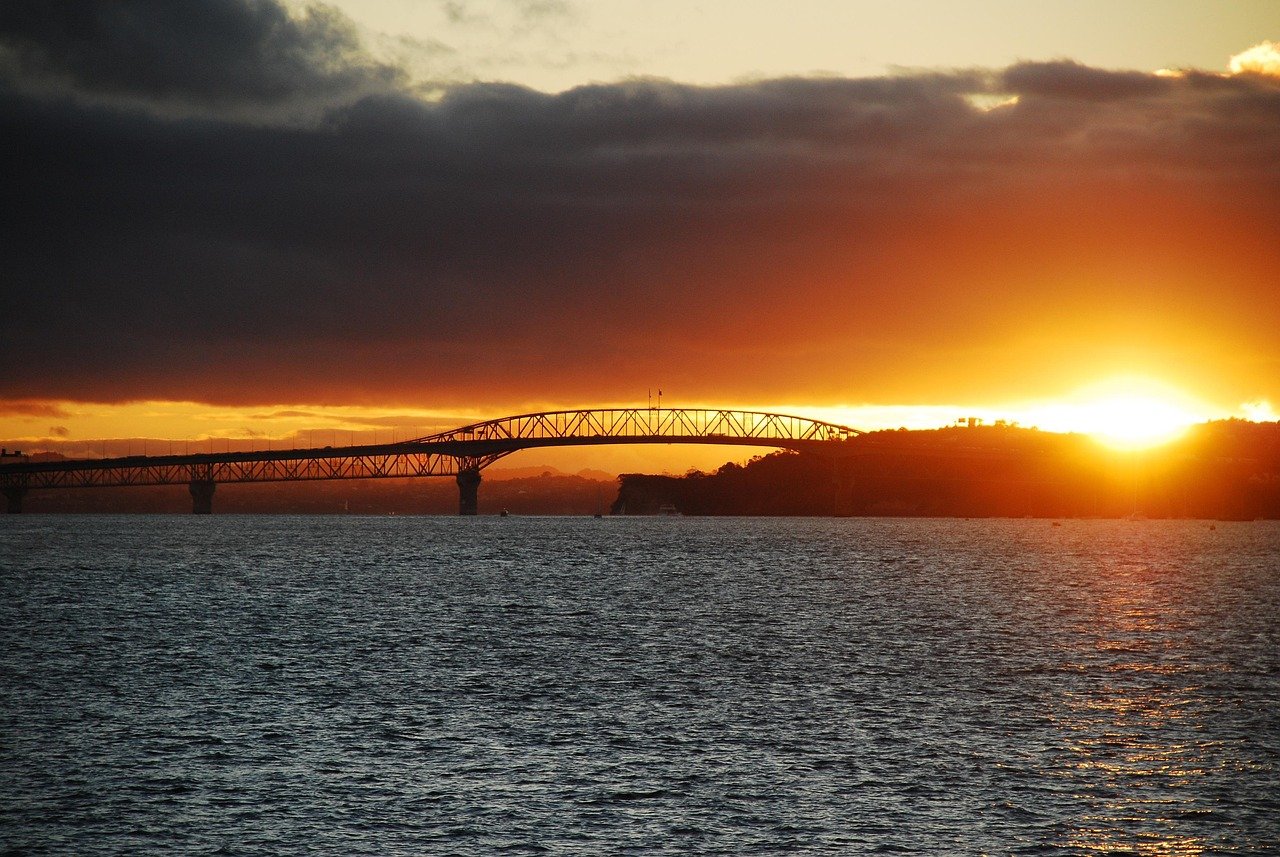
Before the bridge opened in 1959, crossing the Waitemata Harbour required a ferry — a journey that could take 40 minutes and was subject to wind and weather. The idea of a harbour crossing had been discussed since the 1920s, but it was not until the post-war economic expansion of the 1950s that construction finally began. The bridge opened in July 1959 with just four lanes of traffic, immediately creating bottlenecks as Auckland’s car culture embraced it enthusiastically.
The solution came from a surprising source: in 1969, a Japanese consortium (Ishikawajima-Harima Heavy Industries) added two additional lanes to each side of the bridge in a project so seamlessly executed that the additions are essentially invisible from below. Aucklanders, with their characteristic dry humour, nicknamed these additions the “Nippon Clip-ons.” The bridge now carries eight lanes of traffic and is New Zealand’s busiest road, handling over 170,000 vehicle crossings daily. A walking and cycling lane was never included in the original design — an omission the city has debated correcting ever since.
The Bridge Climb Experience
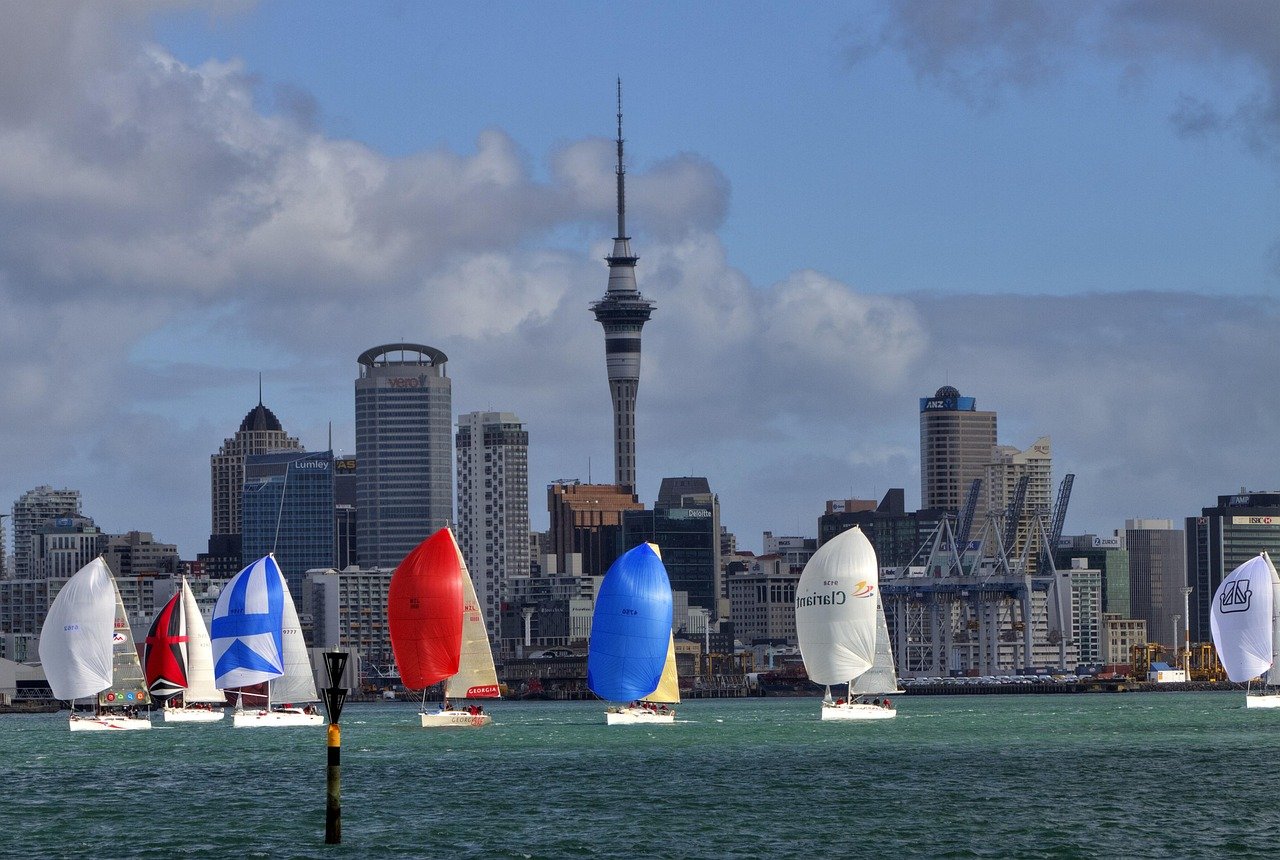
The Auckland Harbour Bridge Climb, operated by AJ Hackett (the New Zealand company famous for inventing commercial bungee jumping), takes climbers up through the bridge’s steel arch structure to the very top, 64 metres above the water. The climb takes approximately 1.5 hours and is guided throughout, with a series of platforms and viewpoints that reveal different perspectives on the harbour and city as you ascend. All safety equipment is provided, and the climb is rated suitable for participants aged 7 and above.
The views from the top are exceptional on clear days, stretching from the volcanic cones of Rangitoto and Motutapu islands in the Hauraki Gulf to the Waitakere Ranges in the west. Your guide provides commentary on the city’s history, the bridge’s construction, and the marine and cultural significance of the harbour below. Bungy jumping from the bridge is also available for those seeking a more adrenaline-charged encounter with the Auckland waterfront.
The Harbour Below
The Waitemata Harbour that the bridge spans is a complex marine environment with strong tidal currents. The name Waitemata comes from Maori and translates roughly as “sparkling obsidian waters,” a reference to the way sunlight catches the harbour’s chop. The harbour was the foundation of Auckland’s growth as a city: first as a site of Maori settlement for centuries before European arrival, then as the port through which the expanding colonial economy flowed. The fishing industry, international shipping, and the yacht-racing culture that has made Auckland famous all grew from these waters.
Looking west from the bridge top, the Viaduct Harbour — Auckland’s premier dining and marina precinct, redeveloped for the 2000 America’s Cup — is clearly visible. Looking north, the bridge connects to the North Shore city of Northcote, whose residential suburbs climb the ridge of the North Shore toward the beaches of Takapuna and Devonport.
Practical Information
- Bridge Climb tickets: NZD 195 for adults; NZD 130 for children (ages 7-15); bungy add-on available
- Climb duration: Approximately 1.5 hours including briefing and gear fitting
- Best time to visit: Early morning or late afternoon for best light; evening climbs are available and spectacular at sunset
- Minimum age: 7 years; minimum weight 35 kg, maximum 150 kg
- Booking: Essential — book online through AJ Hackett at least 24-48 hours in advance, especially in summer
Local Insights
What locals know that guidebooks don’t always tell you:
- Book the twilight or evening climb for dramatic lighting over the harbour and city lights below; these sessions sell out fastest.
- The base for the bridge climb is at Westhaven Marina (105 Curran St extension), not at the bridge itself — allow extra time for the short walk from the car park.
- Free pickup is available from the Sky Tower; this is useful if you want to combine the bridge climb with SkyWalk or SkyJump on the same day.
- For a free (and equally impressive) harbour view, take the ferry to Devonport or Waiheke Island and look back at the bridge and city skyline from the water.
- The bridge itself has no pedestrian lane, but Harbour Bridge Park on the North Shore approach offers excellent ground-level views and a picnic area with the structure overhead.
Getting There
- Bridge Climb base: 105 Curran St extension, Westhaven Marina, Herne Bay – 10 minutes from Auckland CBD
- By car: Free parking available at Westhaven Marina adjacent to the climb base
- By bus: Take bus to Westhaven Drive then a short walk
- Free shuttle: AJ Hackett offers free pickup from the Sky Tower for bridge climb bookings
Frequently asked questions
How fit do I need to be to do the Auckland Harbour Bridge Climb?
The climb is rated as easy-moderate and is suitable for a wide range of fitness levels. You will be walking up stairs and ladders within the bridge structure; no technical climbing skills are required. The main physical requirement is the ability to walk for 1.5 hours including some steep sections.
What happens if it rains during my climb?
The bridge climb operates in light rain and most weather conditions. It will be postponed in the case of lightning or very high winds. AJ Hackett typically offers rebooking at no cost if weather forces a cancellation.
Can I take photos during the climb?
A dedicated camera (not a phone) can be attached to a strap during the climb. Professional photos are taken by the guide and available for purchase. Phones and loose items must be secured before the climb.
Is the bridge climb suitable for those with a fear of heights?
Guides are experienced at helping nervous climbers, and many participants who begin with height anxiety report that the gradual ascent and guided nature of the experience makes it manageable. However, those with severe acrophobia should consider whether this is appropriate for them.
What else is near the bridge on the city side?
The Viaduct Harbour with its restaurants and bars, the New Zealand Maritime Museum, and the ferry terminal for Waiheke and Devonport are all within easy walking distance of the bridge’s CBD approach.