
Atlas Mountains 💎 Hidden Gem
The Atlas Mountains rise dramatically behind Marrakech as one of Africa’s great mountain ranges, a vast spine of peaks, valleys, and Berber villages that stretches across Morocco, Algeria, and Tunisia for over 2,500 kilometres. From Marrakech the High Atlas is astonishingly accessible – the snow-capped peak of Jebel Toubkal, North Africa’s highest mountain at 4,167 metres, is visible from the city on clear days, and the mountain villages of the Ourika Valley and Imlil can be reached in under two hours. Few places in the world offer such a dramatic juxtaposition of desert city and Alpine landscape.
Geography and Culture
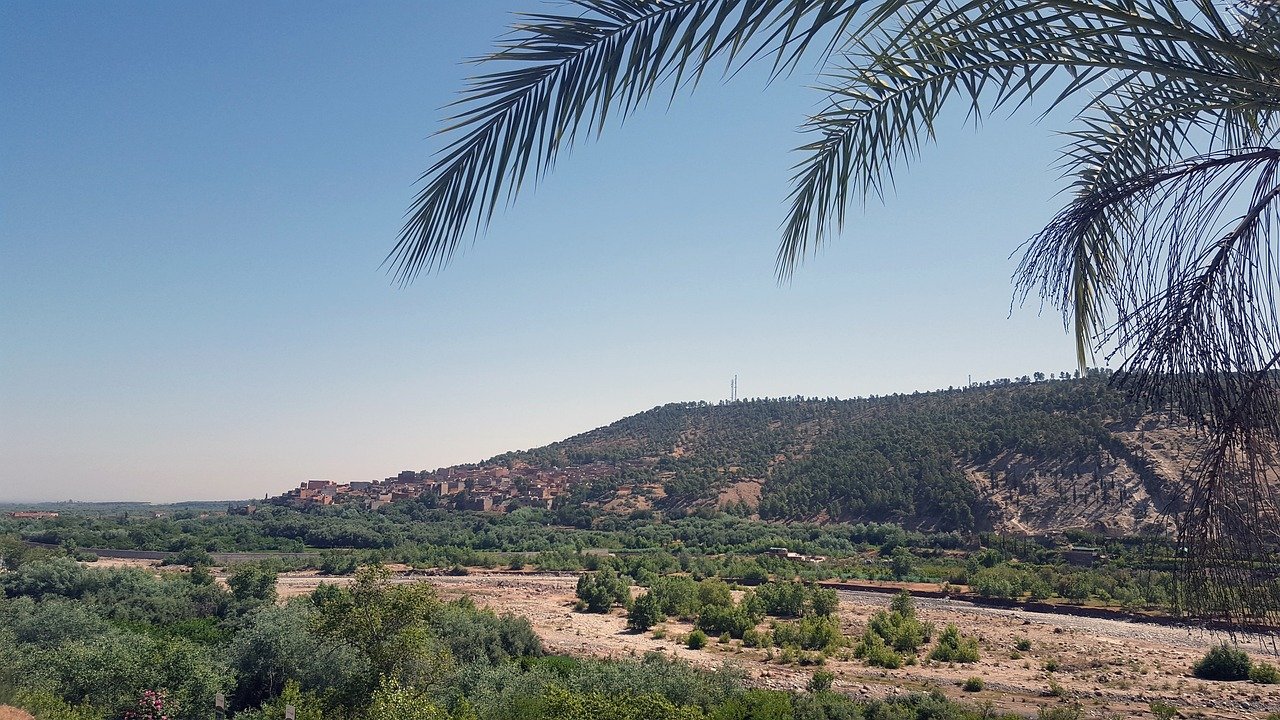
The High Atlas near Marrakech is home to the Amazigh (Berber) people, who have inhabited these mountains for thousands of years and maintained their distinct language, culture, and traditions throughout centuries of Arab, French, and Spanish rule. The mountain villages are built of pisee (rammed earth) and stone, terraced into the hillsides with remarkable ingenuity, surrounded by cultivated terraces of grain, vegetables, and fruit trees irrigated by ancient water channel (seguia) systems.
The Toubkal National Park, centred on the Toubkal massif, covers 380 square kilometres of dramatic High Atlas terrain and is the most-visited protected area in North Africa. Jebel Toubkal can be climbed by fit non-technical walkers via a two-day route from the village of Imlil, making it one of the most accessible high-altitude summits in the world.
- Jebel Toubkal at 4,167m is the highest peak in North Africa
- Toubkal National Park protects 380 square kilometres of High Atlas terrain
- Traditional Amazigh (Berber) villages built of rammed earth on mountain terraces
- The Ourika Valley offers accessible day trips from Marrakech (45 minutes)
- Imlil village is the base for Toubkal summit climbs (two days minimum)

What to See and Experience
The most popular day trip from Marrakech runs along the Ourika Valley (Ourika River valley), winding through increasingly dramatic mountain scenery to the village of Setti Fatma at the end of the paved road, where a popular waterfall is a 45-minute hike away. The valley route passes through numerous Berber villages and is particularly beautiful in almond blossom season (February) and autumn when the valley turns gold.
For more serious trekking, Imlil (1,740m) is the gateway village to the Toubkal massif and offers excellent guesthouses, mule hire, and local guide services. The summit of Toubkal is typically reached via the Neltner Refuge (3,207m) on a two-day trip, but many shorter walks of 2-4 hours from Imlil provide extraordinary mountain scenery without the need to summit.
Practical Information
- Day trips: Ourika Valley and Imlil accessible by grand taxi or organised tour from Marrakech
- Guides: Recommended for Toubkal summit; local guides available at Imlil
- Best season: April-June and September-November; winter summit needs crampons/ice axe
- Accommodation: Mountain huts (refuges) and traditional guesthouses (gites) throughout the range
- Costs: Grand taxi Marrakech-Imlil approximately MAD 250 each way; guide fees around MAD 400/day
Local Insights

- Visit the Ourika Valley in February for almond blossom – one of Morocco most beautiful sights
- Hire a local guide at Imlil for any serious hiking – they provide cultural context as well as navigation
- Try the traditional Amazigh tagine dishes at mountain guesthouses – genuinely different from city food
- The Ourika Valley market at Tnine de l’Ourika (Monday market) is a genuine local experience
- Snow is possible at altitude from November to April – always check conditions before attempting Toubkal
Getting There
- Grand taxi: From Marrakech Bab Rob area; negotiate price upfront; MAD 200-300 to Imlil
- Organised tour: Many Marrakech agencies run Atlas day trips; quality varies widely
- Hire car: Most flexible option; road to Imlil is paved and straightforward
Frequently asked questions
Can I see the Atlas Mountains as a day trip from Marrakech?
Yes, both the Ourika Valley and Imlil are excellent day trips from Marrakech. The Ourika Valley is only 45 minutes away and offers beautiful scenery without any hiking commitment. Imlil at 75 minutes allows for short walks or a full-day mountain experience.
Is climbing Jebel Toubkal difficult?
The standard Toubkal route is non-technical in summer (June-September) and can be done by reasonably fit walkers without climbing experience. However, the altitude (4,167m) and the distance (typically done over two days) make it challenging. In winter, snow and ice require additional equipment.
Do I need a guide to trek in the Atlas Mountains?
A guide is not legally required but is strongly recommended for the Toubkal summit and any multi-day treks. Local guides provide invaluable cultural context, help with logistics, and ensure safety. For short walks from Imlil, a guide is helpful but not essential.
What should I wear for a visit to the Atlas Mountains?
The mountains are significantly cooler than Marrakech, especially at altitude. Even in summer, bring a warm layer for evenings. Sturdy walking shoes are essential for any hiking. Sun protection is crucial at altitude.
What is the best season to visit the Atlas Mountains?
April to June and September to November offer the best conditions – mild temperatures, clear visibility, and accessible trails. The winter months (December-March) are beautiful with snow but cold and the Toubkal summit requires crampons. July and August are popular but hot.