
Amazon Theatre (Teatro Amazonas)
Imagine sailing up the Rio Negro into the heart of the Amazon and finding, rising above the tree canopy, a dome tiled in green and gold, a Renaissance palace adrift in one of the wildest ecosystems on Earth. The Amazon Theatre — Teatro Amazonas — is one of the world’s most improbable buildings: a fully European opera house built at enormous expense in the jungle city of Manaus, Brazil, at the peak of the 19th-century rubber boom. The barons who funded it wanted the world to know that civilization had arrived in the Amazon. Over a century later, the theatre remains both a monument to that vanished era and a living cultural institution that draws musicians and opera lovers from around the globe.
History of Amazon Theatre
The idea of building an opera house in Manaus was first proposed in 1881, when the Amazon rubber boom was transforming the city from a jungle outpost into one of the wealthiest cities in South America. Rubber barons who had grown fabulously rich on the global demand for natural latex wanted a cultural institution worthy of their status. Construction began in 1884 under Italian architect Celestial Sacardim and proceeded in fits and starts as the budget swelled and materials had to be shipped from Europe — an ocean crossing followed by a river journey of more than a thousand miles. The theatre was inaugurated on December 31, 1896, and the inaugural performance of Amilcare Ponchielli’s La Gioconda followed on January 7, 1897.
Almost every element of the building was imported from Europe: steel walls from Glasgow, Carrara marble stairs and columns from Italy, 198 chandeliers including 32 of Murano glass, Louis Quinze furnishings from France, and the famous dome tiles — 36,000 ceramic pieces in the colors of the Brazilian flag — from Alsace. The theatre’s golden age coincided with the rubber boom’s peak, but the invention of Asian rubber plantations after 1913 collapsed the market virtually overnight. The rubber barons lost their fortunes, and the theatre fell into decline, hosting films and boxing matches before a major restoration in the 1990s revived its cultural mission. In 1966 it was designated a National Historic Heritage site, and Vogue magazine has called it one of the most beautiful opera houses in the world.
What to See at Amazon Theatre
The Auditorium and Main Stage
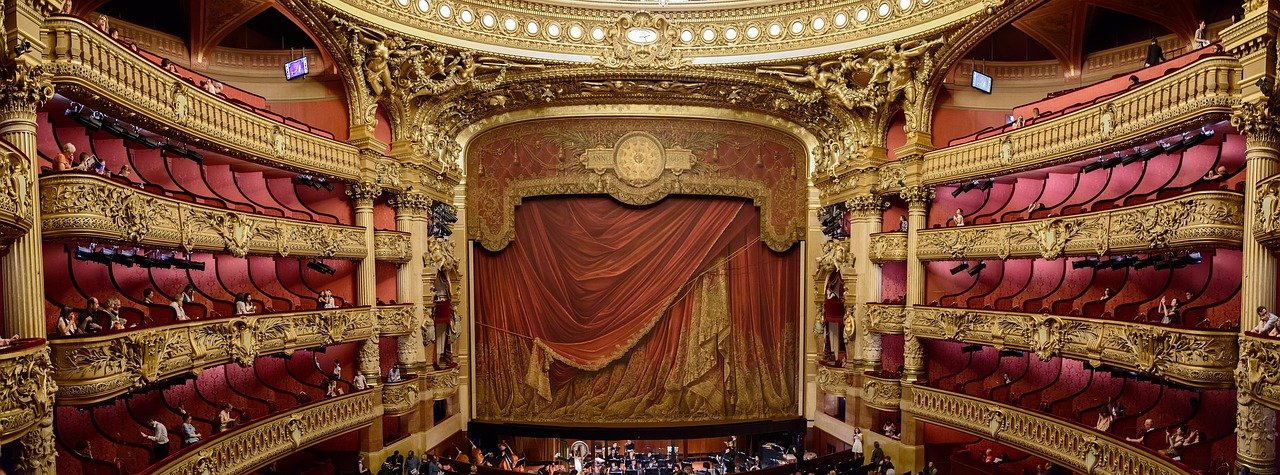
The auditorium seats 701 people across four tiers of horseshoe-shaped balconies, each decorated with Italian Renaissance frescoes and gilded plasterwork. The main stage measures 10.5 meters wide by nearly 12 meters deep — modest by the standards of Vienna or Milan but astonishing given where it sits. The house’s acoustics are remarkably good, shaped by the curved walls and the Brazilian rubber wood used in the original flooring. The painted curtain depicting the Meeting of the Waters — the confluence of the dark Rio Negro and the sandy-yellow Solimões just outside Manaus — was created in Paris and remains one of the theatre’s most celebrated features. Guided tours pass through the auditorium and explain the symbolism woven into every element of the decor.
The Foyer and Architectural Details
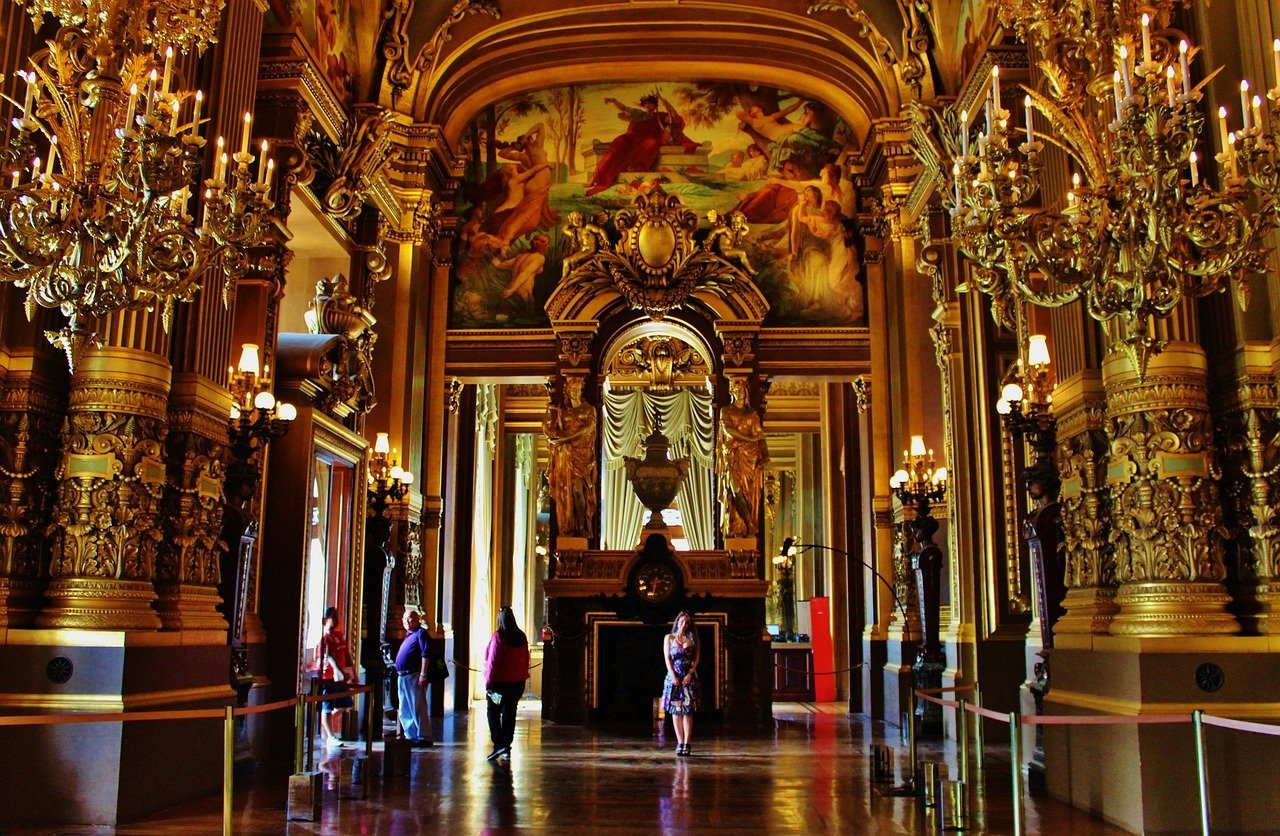
The entrance foyer is where the full extravagance of the rubber barons’ ambitions becomes viscerally apparent. Italian marble floors in intricate geometric patterns catch the light from above, while frescoes depicting scenes from Greek mythology — painted by Brazilian artist Domenico de Angelis — cover the ceiling. The grand staircase, flanked by Corinthian columns and statues, was designed to be seen during the interval, when gowned and tuxedoed patrons paraded in what the rubber elite called their “theatre of social performance.” The exterior’s famous dome, visible from much of central Manaus and from boats approaching the harbor, is covered in those 36,000 glazed ceramic tiles arranged in a diamond pattern replicating the Brazilian flag’s green and yellow, topped with a gilded finial representing the republic.
Live Performances and the Amazonas Philharmonic
The Amazon Theatre is not a static museum piece — it is a working opera house with an active schedule of classical concerts, opera productions, and the annual Festival Amazonas de Ópera, which attracts international singers and conductors each April and May. The resident Amazonas Philharmonic Orchestra performs regularly in the auditorium, and the theatre hosts visiting ensembles from Brazil and abroad. Attending a live performance here is an experience unlike any other: the combination of extraordinary music, the ornate gilded interior, and the knowledge that you are deep in the Amazon basin creates a kind of productive cognitive dissonance — civilization at its most improbable. Check the theatre’s official schedule well in advance and book tickets as soon as they become available, particularly for the opera festival.
The Amazonas Philharmonic Orchestra, founded in 1997 as part of the theatre’s cultural revival, has grown into one of Brazil’s most respected regional orchestras. Its season runs from March through November, with concerts typically on Thursday and Saturday evenings. Ticket prices are extremely affordable by international standards — often R$ 30 to R$ 80 (USD 6–15) — and many performances sell out quickly to local subscribers. Visitors fortunate enough to time their Manaus trip with a philharmonic concert should book through the theatre website immediately upon arrival in Brazil; same-day walk-up tickets are sometimes available at the box office from 1 PM on the day of the performance.
Manaus and the Amazon Context
Understanding the Amazon Theatre requires some grasp of the extraordinary moment that produced it. The Brazilian rubber boom ran roughly from 1850 to 1913, during which the Amazon basin was the world’s near-monopoly supplier of natural rubber — a material essential for the burgeoning industrial economies of Europe and North America. Manaus, strategically positioned at the confluence of the Rio Negro and the Amazon River, became the economic capital of the boom. Rubber barons built palaces, installed electric lighting years before most European cities, and paved streets with ceramic tiles designed to muffle the sound of carriage wheels so as not to disturb the opera-going classes. The theatre was the pinnacle of this gilded excess.
When the British successfully grew rubber trees from smuggled Amazon seeds in Asian plantations — a feat orchestrated largely by Kew Gardens — the Amazon monopoly collapsed within a generation. By 1920, Manaus was economically hollowed out, its grand buildings slowly decaying in the tropical heat. The rubber barons’ descendants watched fortunes evaporate. The theatre soldiered on in diminished form for decades, hosting films and boxing events in its gilded auditorium, before a comprehensive state-funded restoration in the 1990s revived it as a functioning cultural institution. Today the theatre stands as a monument both to extraordinary hubris and to the redemptive power of preservation — proof that something worthwhile can survive the collapse of the system that created it.
Local Insights

Travelers who have made the journey to Manaus to see Teatro Amazonas offer these practical tips.
- Visit during the dry season (June–November): Manaus sits at the heart of the Amazon basin and receives enormous annual rainfall. The dry season brings lower humidity, fewer mosquitoes, and more comfortable sightseeing conditions. River levels drop dramatically, exposing beaches along the Negro and making boat excursions to the Meeting of the Waters far more comfortable for day-trippers combining the theatre with jungle tours.
- Book the guided tour on arrival in Manaus: Tours run Tuesday through Sunday 9 AM to 5 PM (Sunday and holidays 9 AM to 1 PM) and cost R$ 50 (about USD 9). The guides provide context about the rubber boom that transforms what would otherwise be an impressive but puzzling building into a genuinely gripping historical narrative. Photography is permitted throughout the guided visit.
- The square outside (Largo de São Sebastião) is worth time: The theatre faces a black-and-white mosaic plaza flanked by the Igreja de São Sebastião church and a cluster of colonial buildings. It is the most European-feeling space in Manaus, particularly in the evening when the theatre is lit up. Local food vendors set up nearby, and it is a pleasant place to sit and absorb the atmosphere before or after a tour or performance.
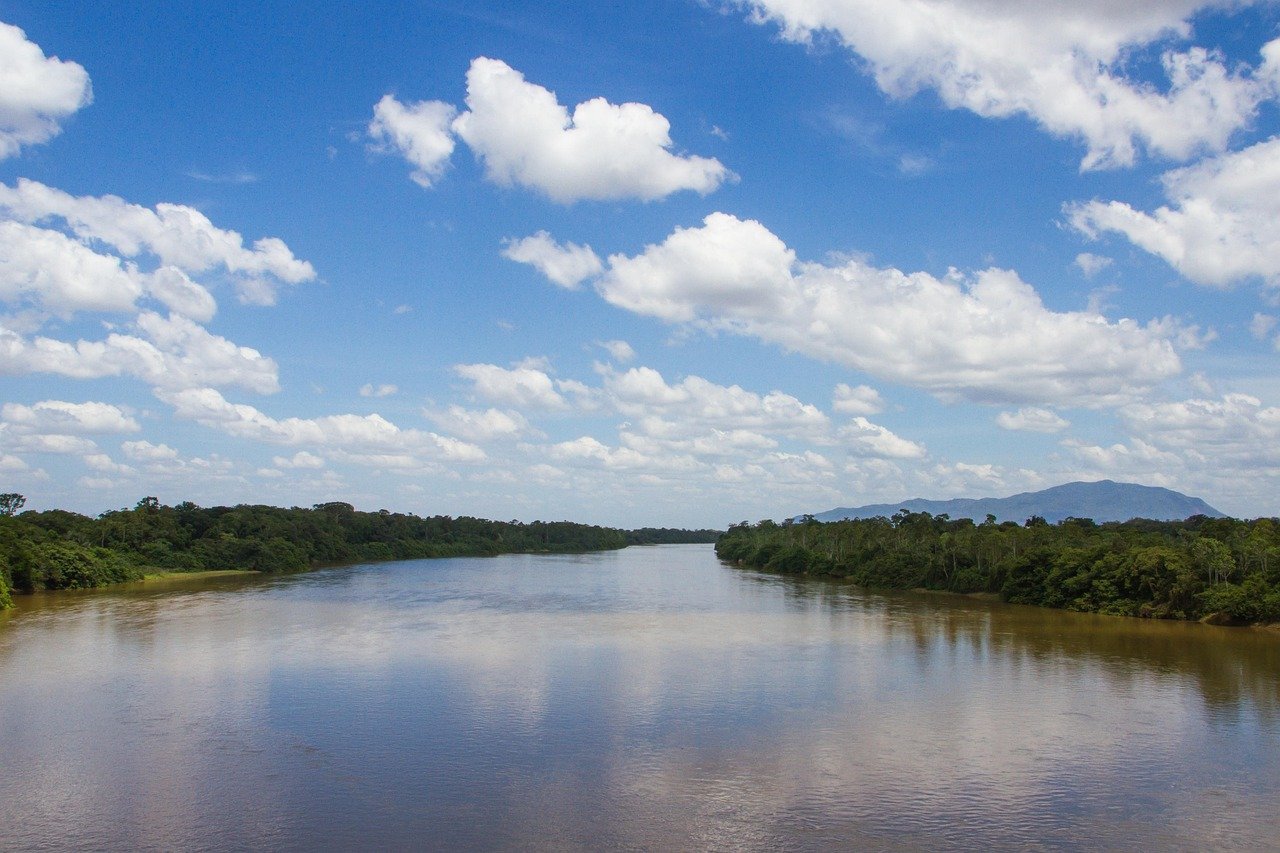
- Combine with the Meeting of the Waters excursion: One of Manaus’s other great natural spectacles is the confluence of the dark Rio Negro and the lighter Solimões river, which flow side by side for several kilometers without mixing due to differences in temperature, speed, and density. Half-day boat tours depart from the Manaus waterfront and are easiest to arrange through your hotel or a reputable local operator. It creates a perfect pairing with a theatre visit.
- Getting to Manaus requires commitment: There are no roads to Manaus from most of Brazil. You arrive either by air — direct flights from Sao Paulo (GRU), Rio de Janeiro (GIG), and Brasília take around 3–4 hours — or by river boat from Belém (4 days). The Eduardo Gomes International Airport (MAO) is about 17 km from the city center; taxis and app-based rides (Uber is available) take 30–45 minutes depending on traffic.
Planning Your Visit
- Tickets: Guided tour R$ 50 (~USD 9); free on select Wednesdays; performance tickets vary — opera festival seats from R$ 60–R$ 300 (~USD 11–56)
- Opening hours: Guided tours Tuesday–Saturday 9 AM–5 PM; Sunday and holidays 9 AM–1 PM; closed Mondays; performance schedule varies — check official website
- Best time: June–November (dry season) for most comfortable weather; April–May for the Festival Amazonas de Ópera (check schedule for exact dates)
- Duration: Allow 1.5–2 hours for a guided tour; 3–4 hours for a tour plus the adjacent square and nearby sights; full evening for a performance
- Booking: Tours are walk-up; performance tickets book through the theatre website (cultura.am.gov.br) or at the box office; opera festival tickets sell out — book months in advance
Getting There
- By air: Eduardo Gomes International Airport (MAO) is the main gateway; direct flights from Sao Paulo (~3.5 hrs), Rio de Janeiro (~4 hrs), and Brasília (~2.5 hrs)
- By car or taxi from the airport: 17 km from airport to city center; taxi or Uber takes 30–45 minutes; ask for Largo de São Sebastião or Teatro Amazonas as the destination
- By river boat: The Manaus waterfront (Porto Flutuante) is about 10 minutes’ walk from the theatre; boats from Belém take 4 days up the Amazon River
- On foot: From the waterfront, walk up Rua Marquês de Santa Cruz past the old market to reach the theatre square in about 10 minutes; the historic center is compact and walkable
Frequently asked questions
Why was an opera house built in the middle of the Amazon?
The Amazon Theatre was the rubber barons’ ultimate status symbol. At the peak of the 19th-century rubber boom, Manaus was generating extraordinary wealth — for a brief period it was richer per capita than almost any city in the world. The rubber elite wanted to signal their cultural sophistication to Europe and to Brazil’s coastal elites, and nothing said civilization quite as loudly as a grand European opera house. Every material was imported from Europe because local alternatives were deemed insufficiently prestigious. The theatre was completed in 1896 and remained a point of civic pride long after the rubber fortunes evaporated.
Can I visit without attending a performance?
Yes — guided tours run throughout the day, Tuesday through Sunday, and provide access to the auditorium, foyer, backstage areas, and rooftop. The tours last approximately 45 to 60 minutes and are offered in Portuguese and English. The entrance fee is R$ 50 (about USD 9), with free admission on certain Wednesdays. The guided tour is actually the preferred way to experience the building’s architectural details, since the guides explain the historical context of the rubber boom and point out decorative elements that a casual visitor would miss entirely.
Is the Festival Amazonas de Ópera worth planning a trip around?
For opera enthusiasts, absolutely. The Festival Amazonas de Ópera, typically held in April and May, brings international singers and conductors to Manaus to perform in one of the world’s most unique settings. Productions are staged in the original auditorium with full orchestral accompaniment by the Amazonas Philharmonic. Ticket prices are remarkably reasonable by international opera standards — a fraction of what equivalent productions cost in Vienna, Milan, or London. Book well in advance as the festival has grown significantly in reputation and seats fill quickly, particularly for principal-cast evenings.
What should I do in Manaus besides the theatre?
Manaus is the gateway to the Amazon, and the theatre makes best sense as part of a multi-day itinerary that combines culture with nature. The Meeting of the Waters — where the dark Rio Negro meets the lighter Amazon River without mixing — is reachable on half-day boat tours and is genuinely spectacular. The Mercado Municipal Adolpho Lisboa, a 19th-century iron market hall near the waterfront, sells Amazonian herbs, spices, fish, and handicrafts. Lodge-based jungle excursions of one to three nights allow sightings of pink river dolphins, caimans, and extraordinary bird life. Many visitors combine Manaus with Presidente Figueiredo, a short drive away with dozens of waterfalls.