
Al-Rifai Mosque (Masjid Al-Rifa’i)
The Al-Rifai Mosque stands opposite the Sultan Hassan Mosque at Salah al-Din Square as a monument of royal Egyptian history, its impressive neo-Mamluk facade concealing one of the most significant royal burial chambers in the modern Middle East. While built much more recently than its medieval neighbour – construction began in 1869 and was only completed in 1912 – the Al-Rifai Mosque serves as the final resting place of Egypt’s royal dynasty and several prominent figures of twentieth century Middle Eastern history.
History and Royal Connections
The mosque was commissioned by Princess Khushyar, the mother of Khedive Ismail, who wanted to create a grand mosque that would serve as a royal mausoleum for Egypt’s ruling dynasty. The design by architect Husayn Fahmi deliberately echoes the Mamluk style of the adjacent Sultan Hassan Mosque, creating a visual dialogue across the centuries between the medieval and the modern. The construction was interrupted several times and finally completed under Khedive Abbas II in 1912.
The royal connection makes Al-Rifai unique among Cairo’s mosques. The mausoleum chambers contain the tombs of King Fuad I, King Farouk I – the last Egyptian king, who was buried here after dying in exile in Rome in 1965 – and King Hussein of Jordan. Most famously for international visitors, it is also the final resting place of Mohammad Reza Shah Pahlavi, the last Shah of Iran, who was buried here in 1980 after being refused a state burial in his homeland following the Islamic Revolution.
- Contains the tombs of Egypt’s last kings: Fuad I and Farouk I
- Final resting place of Shah Mohammad Reza Pahlavi of Iran
- Neo-Mamluk architecture designed to complement the adjacent Sultan Hassan Mosque
- The interior decoration includes fine marble work and stained glass
- Construction spanned over 40 years from 1869 to 1912
What to See and Experience
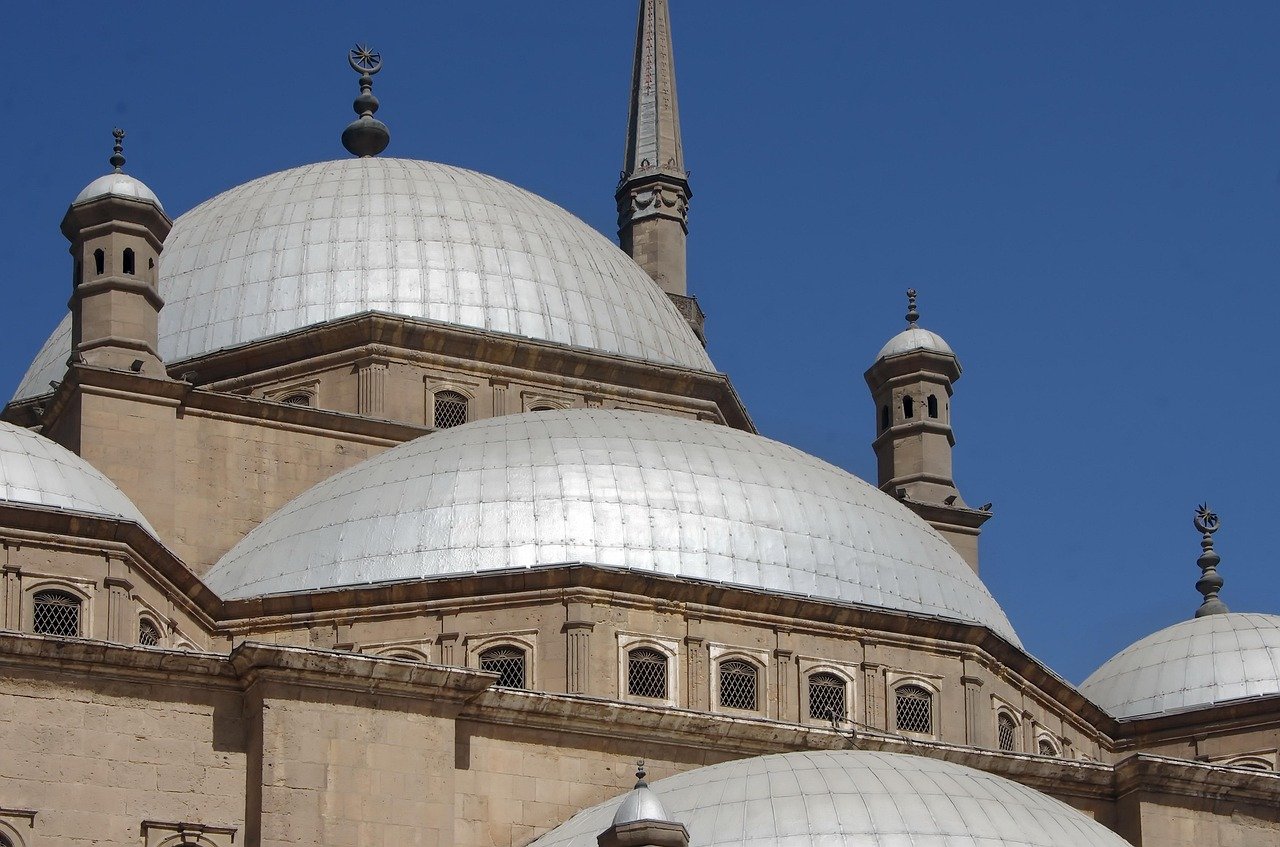
The main prayer hall is vast and richly decorated with marble floors, ornate columns, and elaborate carved plasterwork. The stained glass windows cast coloured light across the interior that shifts beautifully through the day. The central dome and its decorative programme are particularly fine.
The royal mausoleum chambers are the main draw for most visitors. The tombs are marked by simple marble sarcophagi, and the contrast between the grandeur of the surroundings and the austerity of the royal graves is striking. Visiting the tomb of the Shah of Iran has particular historical resonance, serving as a reminder of the dramatic political upheavals of the late twentieth century.
Practical Information
- Entry fee: EGP 180 for foreign visitors
- Opening hours: Daily 8am-5pm
- Dress code: Modest dress required; women must cover hair
- Combination: Visit with Sultan Hassan Mosque just across the square
- Photography: Generally permitted; follow any posted restrictions
Local Insights
- Always visit Al-Rifai together with Sultan Hassan Mosque – they make a perfect pairing
- The view of both mosques together from Salah al-Din Square is one of Cairo greatest architectural panoramas
- The royal tombs are a genuinely moving experience – Egypt history feels very present here
- Arrive early in the morning for the best light and fewer tour groups
- The Citadel of Saladin is just a short walk uphill for a full Islamic Cairo experience
Getting There
- Location: Salah al-Din Square, directly adjacent to Sultan Hassan Mosque
- Taxi/Uber: Ask for Maydan Salah al-Din
- Walking: 10-15 minute walk from Khan el-Khalili bazaar
Frequently asked questions
Who is buried in the Al-Rifai Mosque?
The mosque contains the tombs of Egyptian royalty including King Fuad I and King Farouk I, as well as King Hussein of Jordan and Shah Mohammad Reza Pahlavi of Iran, the last Shah, who was buried here in 1980 after being refused a state funeral in his homeland.
Is Al-Rifai Mosque older than Sultan Hassan Mosque?
No – Sultan Hassan Mosque dates from the fourteenth century, while Al-Rifai was built between 1869 and 1912. Al-Rifai was deliberately designed in a neo-Mamluk style to complement its medieval neighbour.
Can tourists visit the royal tombs inside Al-Rifai Mosque?
Yes, the royal mausoleum chambers are open to visitors and are the main attraction for most tourists. The tombs are marked by simple marble sarcophagi in ornate surroundings.
How long should I spend at Al-Rifai Mosque?
Most visitors spend 45 minutes to 1 hour at Al-Rifai Mosque. Combined with the adjacent Sultan Hassan Mosque, allow 2-3 hours for both sites.
Is the Al-Rifai Mosque still an active place of worship?
Yes, Al-Rifai remains an active mosque holding regular prayers. Visitors are welcome outside prayer times and during the day, but the atmosphere during prayer is especially powerful.