
Sistine Chapel
The Sistine Chapel: A Journey Through Divine Art
The Sistine Chapel represents the absolute zenith of Renaissance art. More than just a room, it is a narrative of human history—from the first spark of creation to the final day of judgment. Below is an expert review of the chapel’s highlights and current 2026 updates.

Panoramic view of Michelangelo’s ceiling vault. Source: Wikimedia Commons [40]
1. Michelangelo’s Vault (1508–1512)
Commissioned by Pope Julius II, Michelangelo spent four years on scaffolding to complete the 12,000 square feet of frescoes. The central panels tell the story of Genesis. The project was so physically demanding that Michelangelo’s style evolved as he moved across the ceiling, with later figures becoming larger and more expressive to be seen clearly from the ground.

The Creation of Adam: The defining image of Western Art. Source: Wikimedia Commons [41]
The Creation of Adam
This is the most famous fresco in the world. The gap between the fingers of God and Adam is a symbolic masterstroke, representing the threshold between the divine and the mortal. Anatomists have noted that the mantle surrounding God resembles the shape of a human brain, suggesting that life is a gift of divine intelligence.

The Last Judgment: A vision of the end of days. Source: Wikimedia Commons [42]
2. The Last Judgment (1536–1541)
Painted 25 years after the ceiling, this work reflects the turbulent times of the Counter-Reformation. Michelangelo replaced the traditional beards of Christ with a muscular, youthful “Apollonian” figure. The painting was famously censored for its nudity, with draperies added by Daniele da Volterra. Look for St. Bartholomew holding a flayed skin; the face on the skin is actually Michelangelo’s own self-portrait.
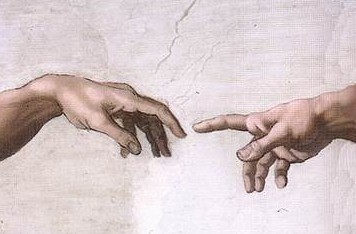
Detail of the fingers of God and Adam. Source: Wikimedia Commons [43]
3. 2026 Restoration Update
If you are visiting in early 2026, be aware that The Last Judgment is undergoing essential maintenance to remove a “white film” caused by humidity and visitor traffic. A high-definition reproduction screen has been placed in front of the scaffolding so you can still appreciate the masterpiece while work continues behind the scenes.
- Dress Code: Cover shoulders and knees. No exceptions.
- Photography: Strictly forbidden inside the chapel.
- Tickets: Book 2 months ahead to skip the 3-hour line.[39]
- Best Time: Weekdays after 3:00 PM for slightly thinner crowds.[36]