
Oscar Niemeyer Museum (Museu Oscar Niemeyer)
Standing in the civic heart of Curitiba, the Oscar Niemeyer Museum stops you in your tracks before you even step inside. Its defining feature — a massive elliptical eye-shaped tower elevated on a concrete column — tilts toward the sky at an audacious angle, as if surveying the city below with calm authority. Nicknamed “O Olho” (The Eye) by locals, the building is itself a work of art. Designed by the legendary architect Oscar Niemeyer at the remarkable age of 95, the museum opened in 2002 and quickly became one of Brazil’s most iconic cultural landmarks. Whether you arrive with an interest in Brazilian modernism, international visual arts, or simply great architecture, MON delivers an experience that stays with you long after you leave.
History of the Oscar Niemeyer Museum

The story of MON begins with Curitiba’s ambition to cement itself as a cultural capital of southern Brazil. The original building on the site — a tower designed in the 1960s for the state’s education secretariat — was already an architectural curiosity, but it was Niemeyer’s transformative expansion that turned the complex into something extraordinary. When the Paraná state government commissioned Niemeyer to redesign the facility in 2001, the then 93-year-old architect responded with one of the most daring projects of his career. He conceived a soaring annex built around an eye-shaped gallery space perched dramatically above the ground on a single flared column — a design that defied expectation and conventional museum architecture.
Oscar Niemeyer was no stranger to bold visions. The architect behind Brasília’s entire civic core, the National Congress building, and the Museum of Contemporary Art in Niterói had spent seven decades reshaping what concrete could express. At MON, he returned to his beloved organic curves and sculptural forms, creating a building that feels simultaneously futuristic and timeless. The museum officially opened on November 22, 2002, and was named in the architect’s honor. Niemeyer himself declared it one of his favorites among all his works. Today, the institution houses approximately 7,000 works across the disciplines of visual arts, architecture, and design, making it the largest art museum in Latin America by exhibition floor area — over 17,000 square meters of gallery space spread across the two connected buildings.
What to See at the Oscar Niemeyer Museum
The Eye Tower and Permanent Collection
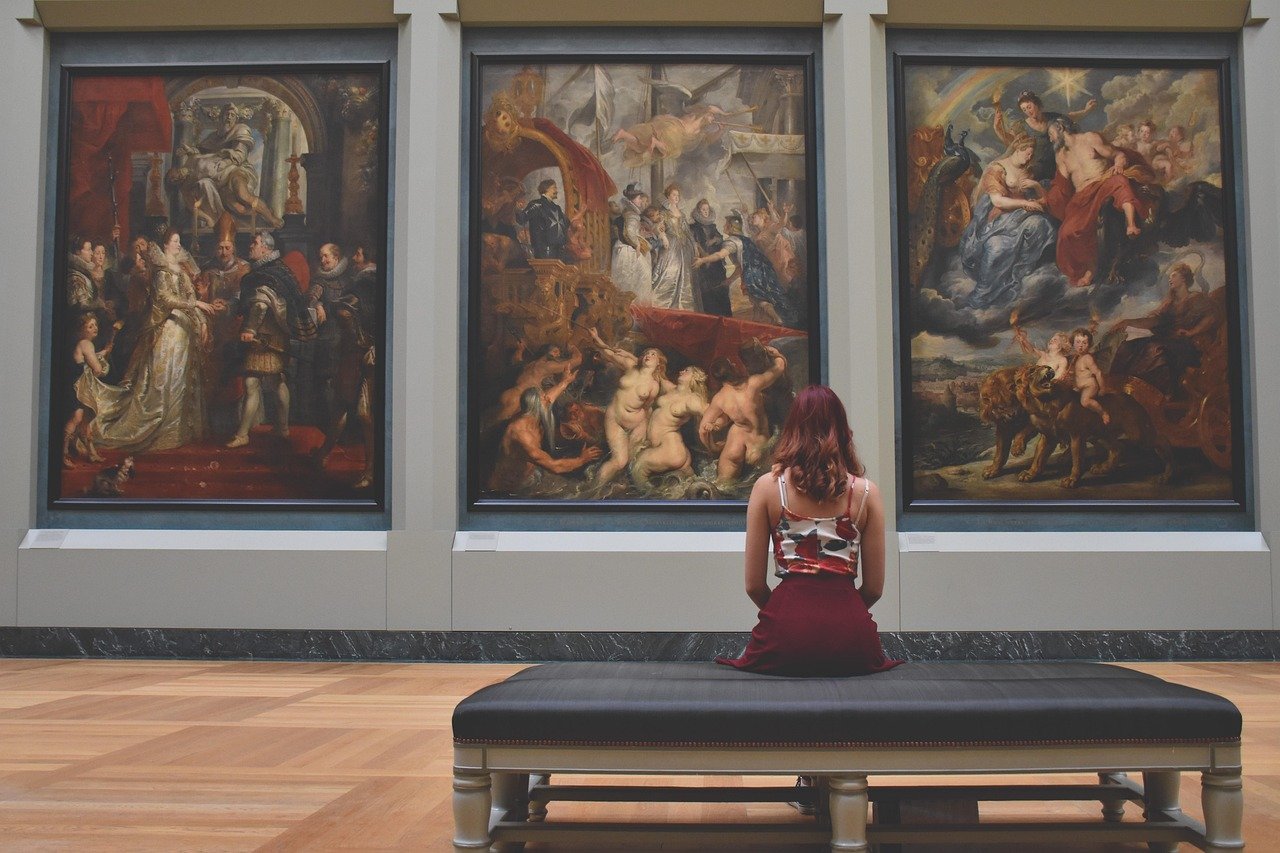
The Eye Tower is the museum’s crown jewel and should be your first stop. Ascending through the interior of the column via ramp and elevator, you emerge into a circular gallery that wraps around the interior of the tilted ellipse. The geometry creates unusual angles and perspectives, with natural light filtering in at unexpected points. MON’s permanent collection includes paintings, sculptures, drawings, prints, and photographs by major Brazilian and international artists. You will encounter works spanning the 20th and 21st centuries — from figurative Brazilian masters to contemporary abstract installations. The curvature of the walls gives every display a unique presentation that a rectangular gallery simply cannot replicate, and the effect is genuinely disorienting in the best possible way.
Temporary Exhibitions and Architecture Gallery
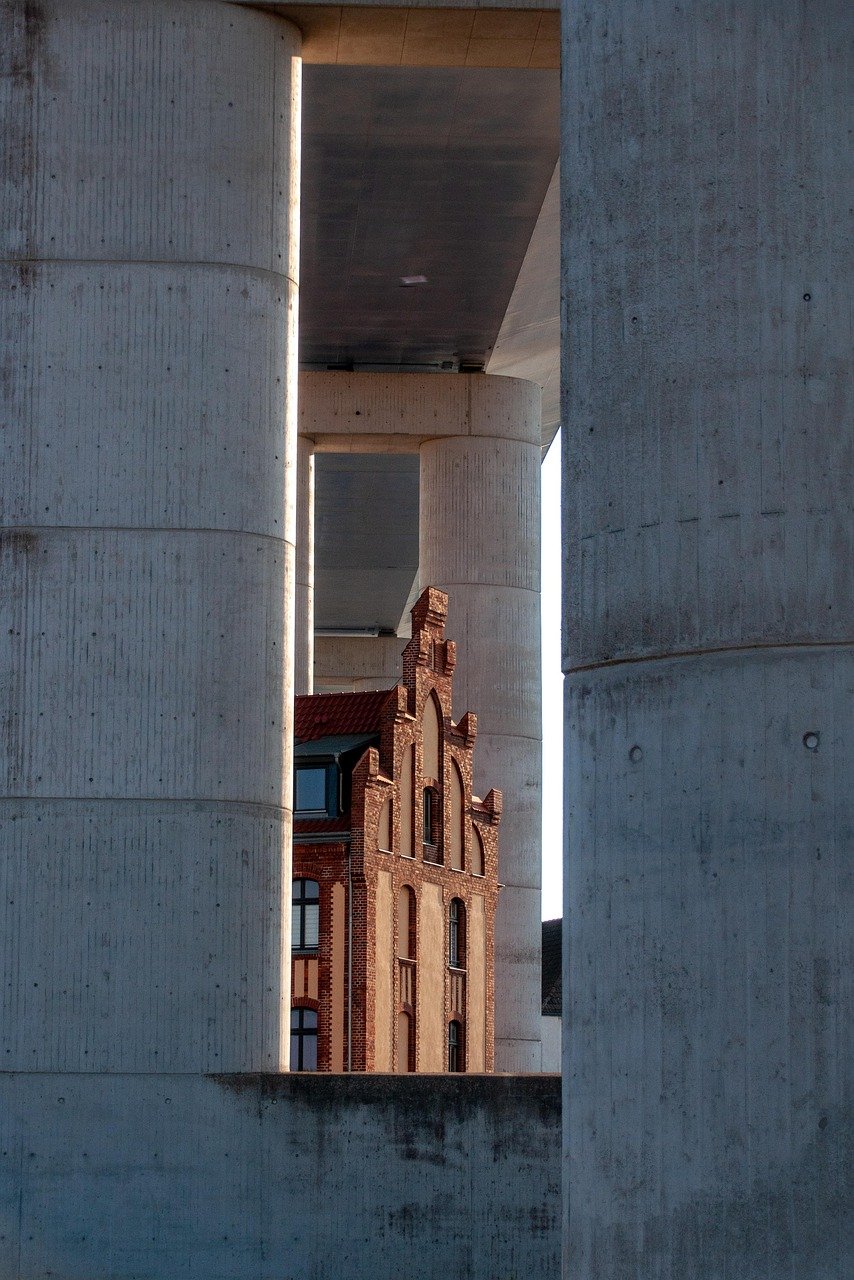
Beyond the permanent collection, MON maintains an ambitious rotating program of temporary exhibitions that draw international artists and traveling shows. The adjacent main building — the original mid-century tower — has been retrofitted with generous gallery floors dedicated to design and architecture. This section frequently showcases Niemeyer’s own architectural drawings and models alongside exhibitions on Brazilian urban planning, modernist housing projects, and contemporary design. For students of architecture and design, this component of the museum is extraordinarily rich — you can spend hours studying hand-drawn plans and scale models of some of the 20th century’s most celebrated buildings. The museum also runs an active program of educational events, talks, and workshops, so check the schedule when planning your visit.
The Exterior Grounds and Civic Center
Do not rush straight inside. Take time to walk the plaza surrounding the museum and absorb the building’s dramatic exterior from multiple angles. The sweeping curved ramp that climbs toward the Eye entrance is itself a sculptural experience — Niemeyer’s trademark. The museum sits within Curitiba’s Civic Center, a planned administrative district that contains several other notable buildings. Walking the area gives you a sense of how Curitiba — long celebrated as one of Brazil’s most liveable cities — integrated modernist architecture and green urban planning. On clear days, the Eye’s white concrete glows brilliantly against the blue Paraná sky, making it one of the most photogenic spots in all of southern Brazil.
Local Insights

Locals and frequent visitors have learned how to make the most of MON’s distinct rhythms. Here is what they know:
- Visit on Wednesday for free entry. Every Wednesday and the last Sunday of the month, admission is completely free. These days can be busy with school groups in the morning, so arrive just before noon or after 2 pm to enjoy the galleries at a more relaxed pace without fighting for space in the Eye gallery.
- The gift shop has excellent architecture books. MON’s gift shop carries a carefully curated selection of books on Oscar Niemeyer, Brazilian modernism, and Latin American art that you will not find in mainstream bookstores. Even if you are traveling light, it is worth browsing — many titles are bilingual Portuguese/English.
- Bring a jacket even in summer. The air conditioning inside the Eye gallery is kept very cold to protect the artworks. Curitiba itself is one of Brazil’s cooler cities — temperatures can drop sharply in the afternoon even in January. A light layer is always useful.
- Photography is allowed without flash. You are welcome to photograph the permanent collection and the architecture for personal use. Flash photography is prohibited to protect works on paper and canvas. The Eye gallery offers some incredible wide-angle shots of the curved interior — bring a wide-lens phone or camera.
- Combine with the Botanical Garden for a full day. Curitiba’s famous Botanical Garden (Jardim Botânico) is about 4 km from MON and easily reached by taxi or rideshare in 10 minutes. Together they make a perfect full-day cultural and natural itinerary, showcasing what makes Curitiba one of Brazil’s most distinctive cities.
Planning Your Visit
- Tickets: R$ 36 full price; R$ 18 half-price (students, seniors over 60, teachers, people with disabilities with ID). Free admission on Wednesdays and the last Sunday of each month.
- Opening hours: Tuesday to Sunday, 10:00 am – 6:00 pm (ticket office closes at 5:30 pm). Closed Mondays.
- Best time: Visit Tuesday, Thursday, or Friday to avoid weekend and school-group crowds. Arriving at opening (10 am) gives you the Eye gallery almost to yourself.
- Duration: Allow 2–3 hours minimum to see both the Eye tower and the main building galleries. Architecture and design enthusiasts may want 4 hours.
- Booking: Tickets can be purchased at the door or online via the museum’s official website. No advance booking required for individual visitors, but booking online saves queuing time on busy days.
Getting There
- By bus: Curitiba’s BRT (Bus Rapid Transit) network serves the Civic Center area. Take routes toward Centro Cívico — ask drivers for “Museu Oscar Niemeyer.” The museum is at Rua Marechal Hermes 999, Centro Cívico.
- By car: The museum has two dedicated parking lots on Rua Marechal Hermes and Rua Manoel Eufrásio. Museum ticket holders receive a 50% parking discount. Parking is free for visitors with disabilities.
- On foot: From Curitiba’s historic Largo da Ordem district, the museum is about 2.5 km north — a 30-minute walk through the city center, passing several other civic landmarks.
- Taxi/ride-share: Uber and 99 (Brazilian ride-share) are widely available in Curitiba. A ride from the city center takes about 10 minutes and costs around R$ 15–25. Ask to be dropped at the museum’s main entrance on Rua Marechal Hermes.
Frequently asked questions
Who designed the Oscar Niemeyer Museum and when did it open?
The museum was designed by Oscar Niemeyer, the legendary Brazilian architect behind Brasília’s civic core and numerous iconic modernist buildings worldwide. Niemeyer was 93 years old when he received the commission and 95 when the museum opened in November 2002. The project involved transforming an existing 1960s state secretariat building and adding the extraordinary Eye tower annex, which became MON’s defining architectural symbol. Niemeyer reportedly considered it one of his personal favorite projects, remarkable given a career spanning more than seven decades.
What kind of art is in the museum’s permanent collection?
MON’s permanent collection holds approximately 7,000 works across three main disciplines: visual arts, architecture, and design. The visual arts collection spans 20th- and 21st-century Brazilian and international works including paintings, sculptures, drawings, prints, and photography. The architecture and design galleries are particularly strong on Brazilian modernism — you will find drawings, models, and documentation from some of the most important building projects in Brazilian history. Temporary exhibitions rotate regularly and frequently bring internationally significant shows to Curitiba that would otherwise only appear in São Paulo or Rio de Janeiro.
Is the Oscar Niemeyer Museum accessible for visitors with disabilities?
Yes. MON is fully equipped for visitors with reduced mobility. Ramps, elevators, and adapted restrooms are provided throughout both buildings, including inside the Eye tower annex. Designated parking spaces are available at no charge for visitors with disability documentation. Guide dogs and certified assistance animals are welcome. Half-price admission is guaranteed for visitors with disabilities and their accompanying caregiver. The museum’s staff are trained to assist visitors with specific needs — it is advisable to call ahead if you require particular arrangements to ensure the best experience.
Can I combine a visit to MON with other Curitiba attractions?
Absolutely — and it is highly recommended. MON sits in Curitiba’s Civic Center, which itself contains several architecturally interesting government buildings. From there, the historic Largo da Ordem neighborhood with its 18th-century churches, craft markets, and street art is 2.5 km south. Curitiba’s famous Botanical Garden is about 4 km east and easily combined for a full-day outing. The Wire Opera House (Ópera de Arame), set inside a quarry, is another unmissable stop about 5 km north. Curitiba’s excellent bus rapid transit network makes it straightforward to string these destinations together without a car.
The Architecture of the Eye Building
To understand the Oscar Niemeyer Museum fully, it helps to understand the man who designed it. Oscar Niemeyer was born in Rio de Janeiro in 1907 and spent nearly a century reshaping the relationship between architecture and the human body. His buildings do not command — they invite. Curved surfaces, sinuous ramps, and floating volumes invite movement and contemplation rather than demanding it. At MON, these principles reach one of their purest expressions. The Eye tower’s exterior — a white elliptical eye canted at roughly 15 degrees from the vertical — is most striking at dawn and dusk when Curitiba’s famously dramatic sky turns shades of rose and violet behind it. The building seems to glow from within, as if the art inside is illuminating it from the outside.
The structural engineering required to realize Niemeyer’s vision was formidable. The Eye tower is supported by a single reinforced concrete column whose base is wider than its shaft, flaring out to meet the ground like a giant foot. The column carries the entire weight of the elliptical gallery above, which extends asymmetrically outward in all directions — a challenge that required engineers to develop a post-tensioned concrete shell system rarely attempted at this scale or in this geometry. Walking beneath the overhang of the Eye and looking up at the underside of the gallery reveals the sheer ambition of the construction: an enormous lens of concrete floating impossibly over the plaza below. The internal ramp that spirals up through the column is another Niemeyer signature — curved, wide, illuminated — designed so that the transition from exterior to interior is itself a choreographed architectural experience rather than a simple transition.
Niemeyer died in December 2012 at the age of 104, just ten years after MON’s opening. He remained professionally active almost to the end, producing drawings and concepts well into his final years. MON stands as one of the most complete late-career statements of a 20th-century architectural master — a building that distills a lifetime of thinking about form, space, and the relationship between art and landscape into a single, startling object. For anyone with an interest in 20th-century architecture, visiting it is not optional.
MON remains a living institution, continuously expanding its collection and programming.