
Mirante Dona Marta
Long before Corcovado had a cable car or Sugarloaf charged admission, Mirante Dona Marta was where Cariocas went to watch the sun come up over their city. Drive fifteen minutes from Botafogo, walk up a short flight of steps, and you are standing on a clifftop shelf in the Tijuca Forest with Christ the Redeemer close enough to see the expression on his face, Sugarloaf rising from the bay below, and the full sweep of the city spread across its hills and waterways. Entry is completely free. No ticket booth, no cable car queue, no tourist infrastructure to navigate — just a paved platform, a guardrail, and one of the most spectacular urban panoramas on the planet. That combination makes Mirante Dona Marta one of Rio’s best-kept secrets among people who have visited more than once.
History of Mirante Dona Marta
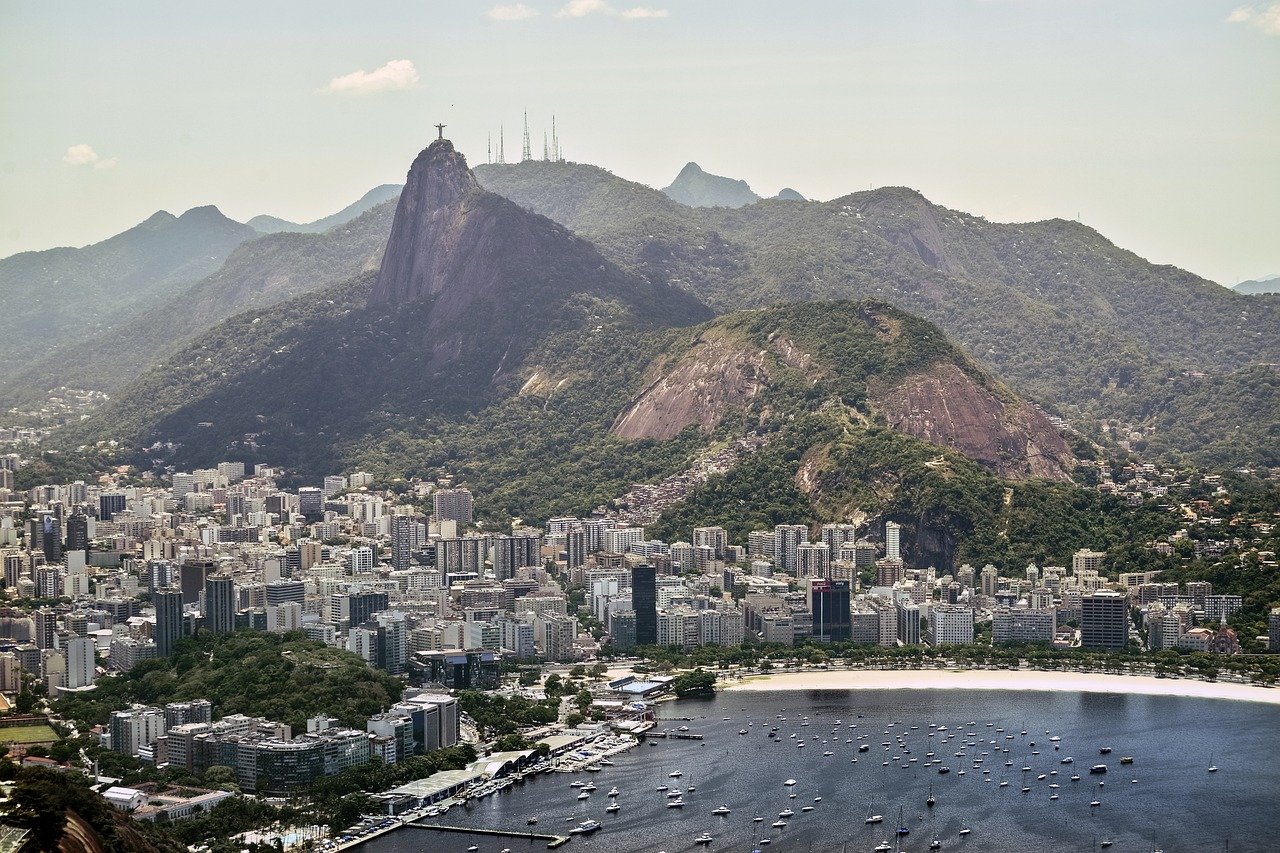
The lookout takes its name from the Morro Dona Marta, a 340-metre peak in the southern portion of Tijuca National Park, the world’s largest urban forest. The mountain itself was named for a colonial-era landowner whose estate once covered much of this part of the Zona Sul. The viewpoint platform was established during Rio’s mid-twentieth century push to develop tourist infrastructure in the city’s green hillsides, part of the same impulse that improved access to Corcovado and created the Floresta da Tijuca road network. For decades it remained a local favourite rather than an international attraction, known primarily to Zona Sul residents who would drive up for Sunday morning coffee and views.
The lookout gained unexpected global fame in 1996 when Michael Jackson filmed the music video for “They Don’t Care About Us” at the adjacent Favela Santa Marta, directed by Spike Lee. Footage of Jackson dancing on the favela steps with a view of the city spreading behind him was shot just minutes from the Mirante, and the film crew used the lookout’s panorama for establishing shots. The connection brought international media attention to both Santa Marta and the Dona Marta viewpoint, and a bronze statue of Jackson was later erected in the favela below as a tribute. Today Mirante Dona Marta attracts a blend of early-rising locals, photographers hunting perfect sunrise light, and travellers who have done their research on Rio’s free attractions.
What to See at Mirante Dona Marta
The Christ the Redeemer Angle
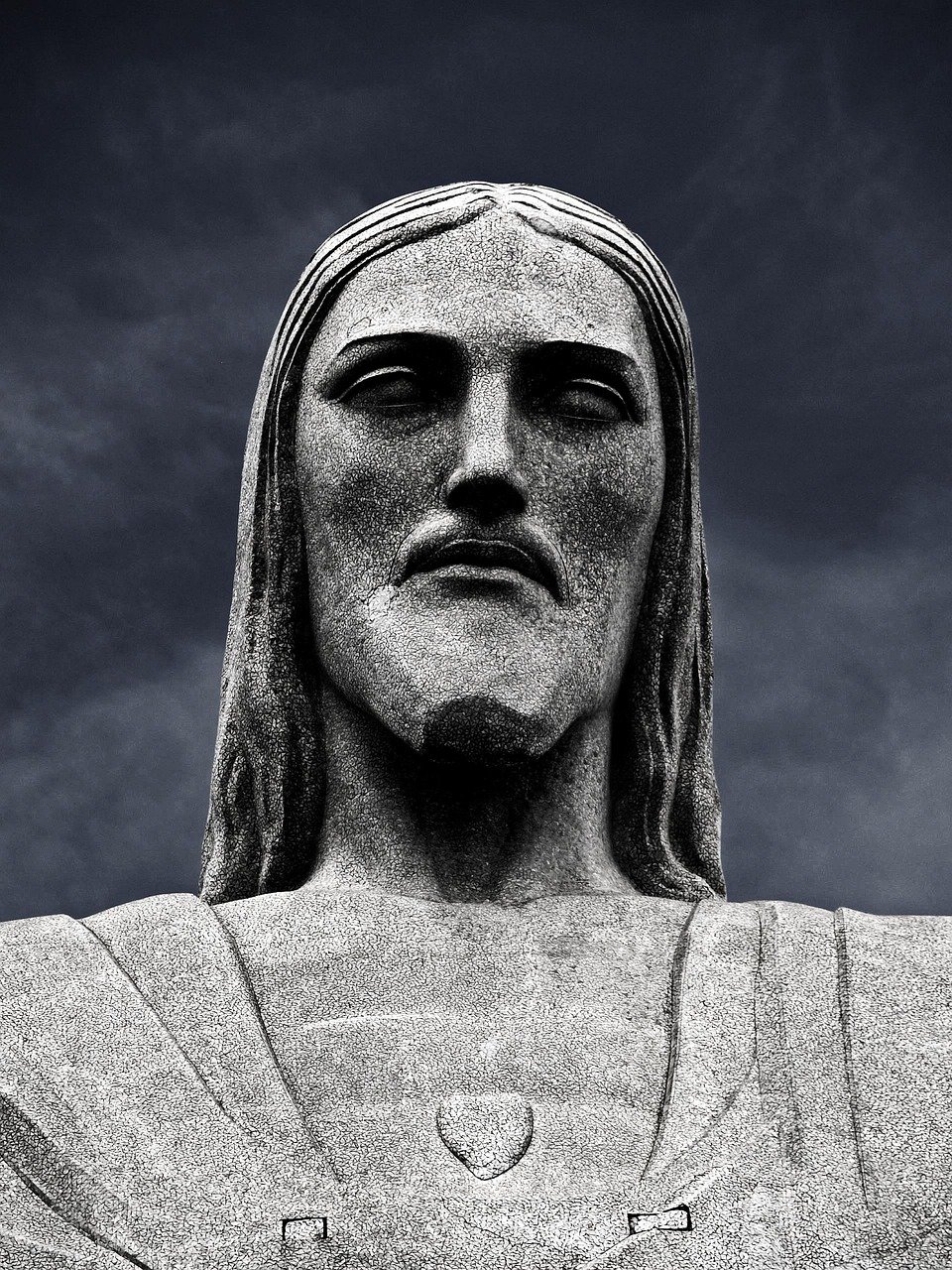
The most striking visual feature of Mirante Dona Marta is the angle it provides on Christ the Redeemer that you simply cannot get from the city below or from the statue platform itself. Standing at roughly the same altitude as the base of Corcovado mountain, you see Christ in profile against the sky — the outstretched arms visible in their full span, the figure clearly three-dimensional rather than the flat silhouette familiar from city level or from tourist photographs taken straight on. On clear mornings, particularly in the first hour after sunrise when the low light rakes across the statue from the east, the detail of the soapstone tiles becomes visible to the naked eye. Photographers consistently rate this as one of the three or four best vantage points for Christ the Redeemer imagery in the entire city, with the advantage that no ticket, queue, or tram ride is required to access it.
The Full City Panorama
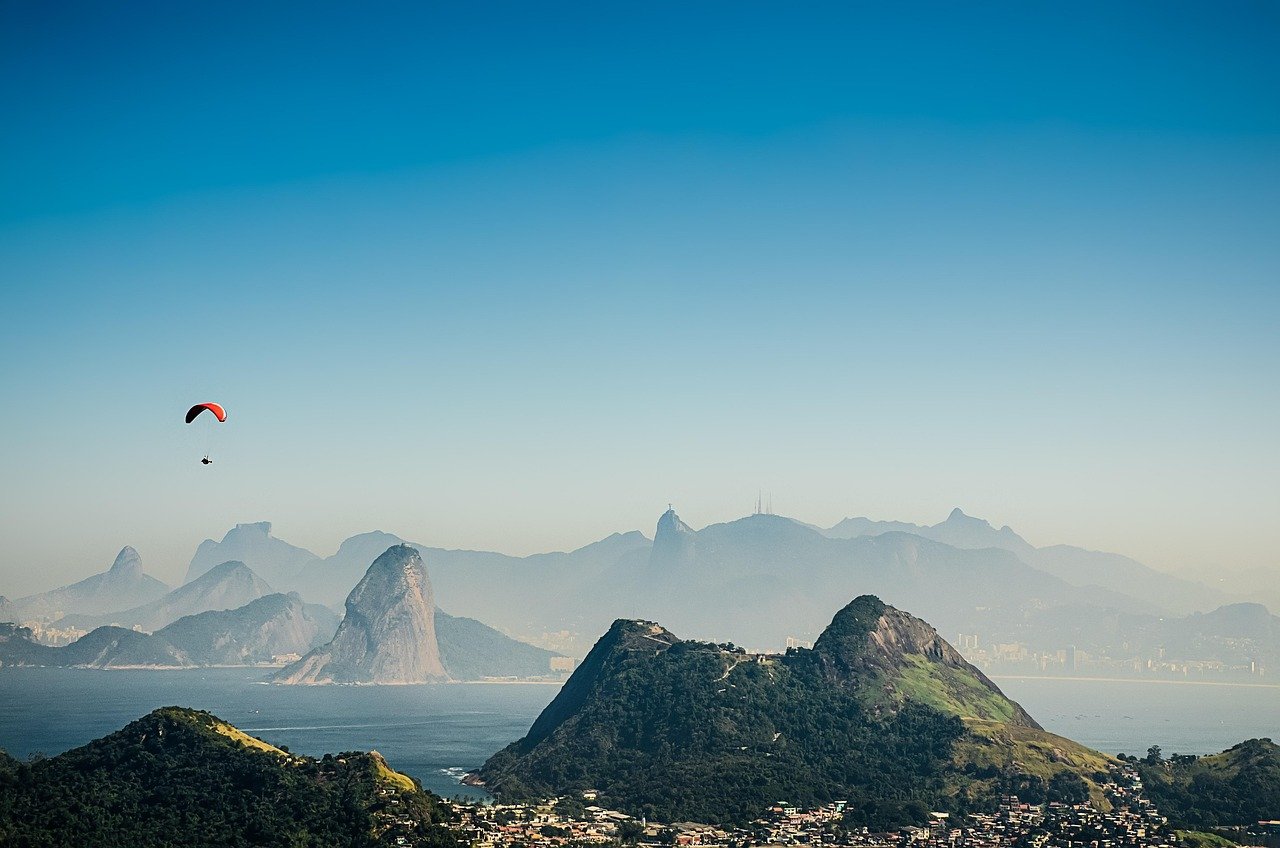
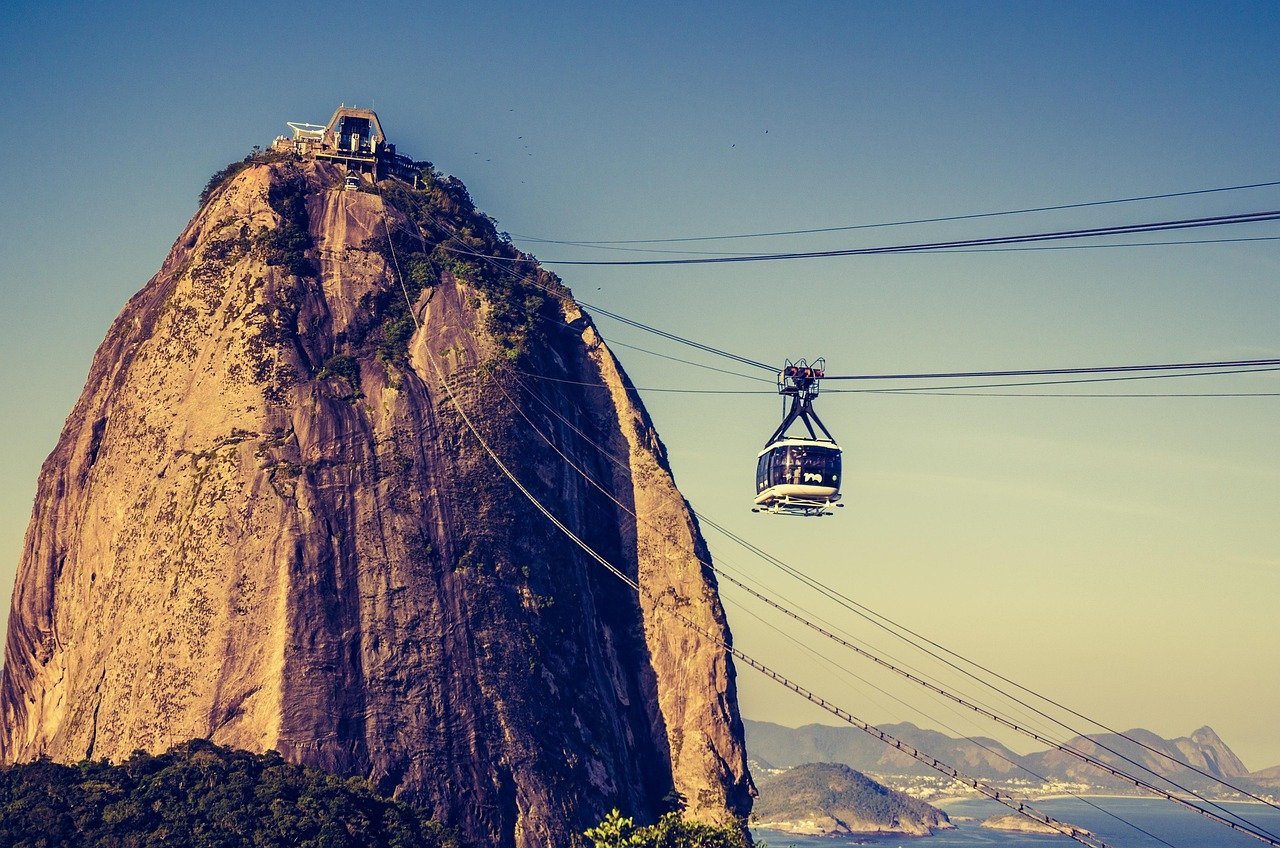
Turning from Christ the Redeemer to face north and west, the panorama from Mirante Dona Marta encompasses virtually the full sweep of Rio de Janeiro’s defining geography. Botafogo’s crescent bay sits directly below, its white apartment buildings reflected in the calm inlet water. Sugarloaf rises beyond it — from here you see the cable car wires running between the two peaks, tiny gondolas sliding back and forth on clear days. The Rio-Niterói bridge traces its curve across the bay to the east. Further north the Maracanã stadium is visible on clear days. To the south, Copacabana and Ipanema stretch along the coast. The layered topography of Rio — the interplay of sea, forest, mountain, and dense urban fabric — is more legible from this platform than from almost any other single point in the city, precisely because you are looking across rather than down.
The Tijuca Forest Approach
The road to Mirante Dona Marta winds through the dense secondary growth of Tijuca National Park, and the approach itself is worth savouring rather than rushing. The park covers more than 32 square kilometres of Atlantic Forest within the city limits and is one of the largest urban forests in the world, home to hundreds of bird species, several primate families including howler monkeys, and a remarkable variety of reptiles and butterflies. The drive or taxi ride from Botafogo takes approximately 15 minutes and gains around 300 metres of altitude through hairpin bends flanked by towering fig trees and strangler vines. At dawn, the forest is alive with birdsong — the three-note call of the Guira cuckoo and the harsher shriek of toucans are particularly common in the early morning hours. The small helicopter landing pad just beyond the main viewpoint platform offers an alternative angle looking back toward Christ the Redeemer and the forest canopy.
Combining Mirante Dona Marta with Santa Marta Favela
The most rewarding way to visit Mirante Dona Marta is to pair it with a walk through Favela Santa Marta, which occupies the slopes directly below the lookout. Santa Marta was pacified in 2008 as the first favela in Rio to receive a permanent police presence under the UPP program, and community tourism has flourished in the years since. Local guides lead walks through the stepped alleyways, past the Michael Jackson statue, and up to rooftop viewpoints that add yet another layer to the Rio panorama. The favela has a cable car of its own: a small community gondola runs up the steep hillside, providing access to upper sections where the views of Botafogo bay rival anything on offer from the main Mirante platform. Combining the two sites into a single two-hour visit, arriving at the Mirante for sunrise and then descending through Santa Marta as the community wakes up, is an experience that consistently ranks among the most memorable things visitors do in Rio de Janeiro.
Local Insights
Those who visit Mirante Dona Marta regularly have figured out a handful of details that dramatically improve the experience.
- Arrive 30 minutes before sunrise for the best light and fewest people. Sunrise in Rio occurs between 5:00 and 6:30 AM depending on season. The lookout faces roughly northeast, meaning the early morning sun illuminates Christ the Redeemer directly and turns the bay below a vivid gold. By 8:00 AM the crowds begin and the light flattens. Book an Uber the night before rather than trying to summon one at 5:00 AM — coverage in this area is thin at pre-dawn hours and wait times can be long.
- Arrange your return transport before you arrive. Uber signal at the lookout is genuinely poor, and waiting 20–30 minutes for a driver to accept a trip in a forest zone is common. The best solution is to negotiate a round-trip with your driver — agree a price for them to wait 30–45 minutes while you visit, then return. Typically R$60–100 for the round trip from Botafogo including waiting time is fair and eliminates the transport headache entirely.
- Walk down to Favela Santa Marta for the Michael Jackson connection. The favela is a 15-minute walk downhill from the lookout via a paved path, and it is open to visitors. The bronze Jackson statue is in the upper portion of the community near where the video was filmed. Community tourism is well established here — guided tours from local organisations run regularly and are worth joining for the cultural context they provide alongside the views.
- Check the helicopter pad behind the main platform. Most visitors stand at the main railing facing north. Walk 50 metres further to the small cleared pad behind and you get a completely different angle: Christ the Redeemer is now directly ahead of you rather than to the side, and the foreground of dense Tijuca Forest canopy creates a striking contrast with the statue. This is the composition that professional photographers favour and it takes two minutes to reach.
- Visit on a weekday during dry season for the clearest air. June through August brings the reliable Southeast trade winds that flush smog and haze from the city, producing the transparency that makes the distant bay, bridges, and mountains visually sharp rather than washed out. Weekend visits at any time of year bring significantly larger crowds, particularly after 9:00 AM when tour groups arrive.
Planning Your Visit
- Tickets: Free admission — no entrance fee, no booking required at any time
- Opening hours: Open at all hours; accessible by car and taxi around the clock. Daylight visits are recommended for safety on the approach road at night
- Best time: Sunrise on a clear weekday in the dry season (June–September) for optimal light, visibility, and the smallest crowds; avoid weekend mornings after 8:00 AM when tour groups arrive
- Duration: 20–45 minutes at the viewpoint is typical; add 1–2 hours if walking down to Favela Santa Marta and back
- Booking: No booking required for the lookout itself; Santa Marta favela community tours can be pre-booked through local tourism operators and are recommended for those wanting guided context
Getting There
- Bus: No direct bus service to the lookout; take bus to Rua Sorocaba in Botafogo and then hire a taxi or Uber for the final 3-kilometre forest road to the summit
- By car: Drive from Botafogo via Rua Sorocaba and follow the signposted Tijuca National Park road toward Mirante Dona Marta; large paved parking area at the summit with space for approximately 30 vehicles
- On foot: Not recommended via the main road — no footpath alongside the switchback approach. However, a hiking trail from Favela Santa Marta climbs to the lookout in approximately 40 minutes; this is the route used by community guide tours
- Taxi/ride-share: Uber to “Mirante Dona Marta” or “Morro Dona Marta viewpoint” from Botafogo takes about 15 minutes; strongly recommend negotiating a round trip with the driver as signal for return rides is unreliable — expect R$60–100 including waiting time
Frequently asked questions
Is Mirante Dona Marta really free?
Yes — Mirante Dona Marta charges absolutely no admission fee and requires no ticket, no registration, and no booking. The viewing platform is a public space within Tijuca National Park, maintained by the city of Rio de Janeiro. The only costs you will incur are transport to and from the lookout. This makes it exceptional value compared to other famous Rio viewpoints: Corcovado with Christ the Redeemer charges over R$100 per person, and the Sugarloaf cable car costs R$160 return. Dona Marta offers comparable or superior views for zero admission cost, which is one of the most compelling reasons experienced Rio visitors rank it among their favourites.
How does Mirante Dona Marta compare to Corcovado and Sugarloaf?
Each of the three lookouts offers a different perspective. Corcovado places you at the base of Christ the Redeemer for close-up access to the statue, with a broad southward view of the city. Sugarloaf gives the highest elevation with a 360-degree panorama. Mirante Dona Marta sits at an intermediate height and offers a unique angled view of Christ the Redeemer in profile — something neither of the other sites can provide — combined with a sweeping northern panorama of Botafogo, Guanabara Bay, and Sugarloaf. The combination of free admission and relative quietness makes Dona Marta many experienced travellers’ preferred choice when ranking the three options.
Is it safe to visit Mirante Dona Marta?
Mirante Dona Marta has a good safety record for daytime visitors. The approach road through Tijuca National Park is a managed park road with no significant security concerns during daylight hours, and the lookout itself is a recognised public viewpoint that receives steady visitor traffic throughout the day. Visits after dark are not recommended as the park road is unlit and isolated. The adjacent Favela Santa Marta has undergone significant community development since its UPP pacification in 2008 and is broadly considered safe for visitors during the day, particularly on organised guided tours. As with anywhere in Rio, avoid displaying expensive jewellery or cameras conspicuously and keep your phone out of sight when not in use.
What is the connection between Mirante Dona Marta and Michael Jackson?
In 1996, Michael Jackson and director Spike Lee chose Favela Santa Marta, which sits on the slopes directly below Mirante Dona Marta, as the filming location for the music video “They Don’t Care About Us.” The favela’s staircase, its rooftop views of Rio, and the proximity to the dramatic Dona Marta cliff backdrop made it the perfect location for what became one of Jackson’s most visually striking videos. The production brought significant international attention to Santa Marta at a time when the community was little known outside Rio. A life-size bronze statue of Jackson was later installed in the upper part of the favela near the filming location and remains a popular stop for visitors who combine a Santa Marta walk with the Mirante Dona Marta lookout.