
Morro da Urca
Most visitors zoom straight past Morro da Urca in their rush to reach Sugarloaf’s famous summit, which is their loss — and your advantage. At 220 metres above Praia Vermelha, this flat-topped intermediate peak is the first stop on Rio’s legendary two-stage cable car, and it offers views of the city that are arguably sharper and more intimate than those from the taller peak above. With a broad terrace, a restaurant, monkeys threading through the tree canopy, and a runway-level view of tiny planes on final approach to Santos Dumont airport, Morro da Urca is a destination in its own right rather than merely a stepping stone to somewhere better. Spend an unhurried hour here and you will understand why regular visitors to Rio deliberately break their journey at the halfway point.
History of Morro da Urca

The cable car connecting Praia Vermelha to Morro da Urca and then to Sugarloaf opened on 27 October 1912, making it only the third aerial tramway to be built anywhere in the world. The visionary behind the project was Brazilian engineer Augusto Ferreira Ramos, who spent years seeking financial backing from Rio’s high society before the project finally secured investment. The original cars were wooden, each carrying just nine passengers at a time, and the engineering challenge of spanning the 600-metre first section across open rock face was considered extraordinary by the standards of the era. The inauguration drew enormous crowds and featured a military band — the cable car was immediately understood as a symbol of Rio’s modernising ambitions at the dawn of the republic.
The system was progressively modernised throughout the twentieth century. In 1972, the wooden cars were replaced with dramatically larger Swiss-built gondolas capable of carrying 75 passengers each, transforming the capacity and the experience. A further replacement came in 2008 when the current generation of Italian-built Leitner cabins was installed — sleek glass-and-steel pods with panoramic windows that make the most of the dramatic views on both stages of the journey. Morro da Urca itself was shaped over the same period: what was once bare rock has been developed into a terrace complex with restaurants, event spaces, and viewing platforms, hosting everything from sunset concerts to outdoor cinema evenings with Guanabara Bay as the backdrop.
What to See at Morro da Urca
The Terrace Views

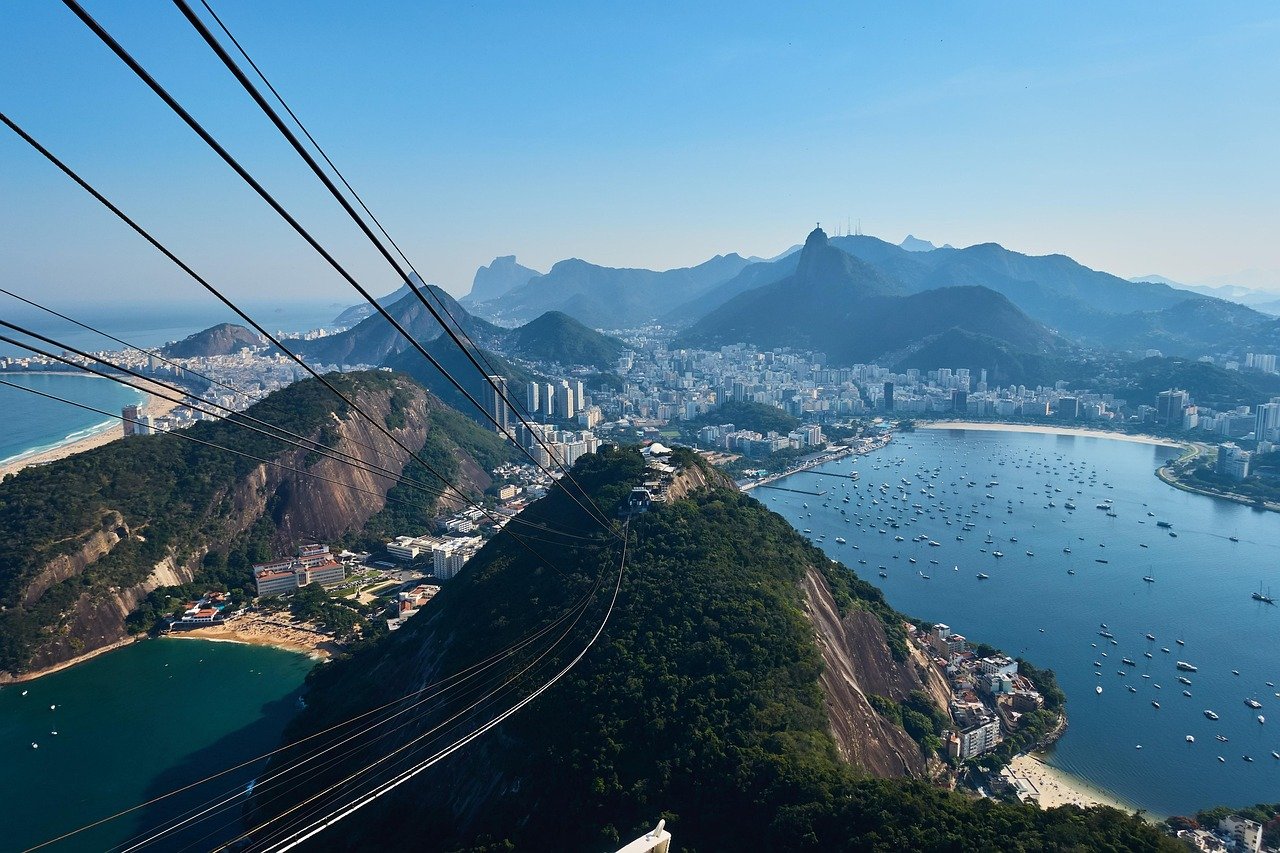
The open terrace at Morro da Urca delivers a perspective on Rio that is qualitatively different from anything the higher Sugarloaf offers. Because you are standing roughly at mid-height between sea level and the summit, the views have a layered, three-dimensional quality: Praia Vermelha and the Urca neighbourhood are directly below, close enough to pick out individual umbrellas on the sand; the Enseada de Botafogo curves gracefully around to the north with its cluster of white apartment buildings; and the Rio-Niterói bridge traces a thin pencil line across the width of Guanabara Bay. Looking back the way you came, the cable car station at Praia Vermelha looks almost toylike. Meanwhile, looking up, Sugarloaf looms almost directly overhead — the proximity gives it a scale and drama impossible to appreciate from ground level. On evenings when the light is right, the bay turns hammered gold beneath a lilac sky, and the terrace becomes one of Rio’s most atmospheric places to be.
Wildlife and Forest
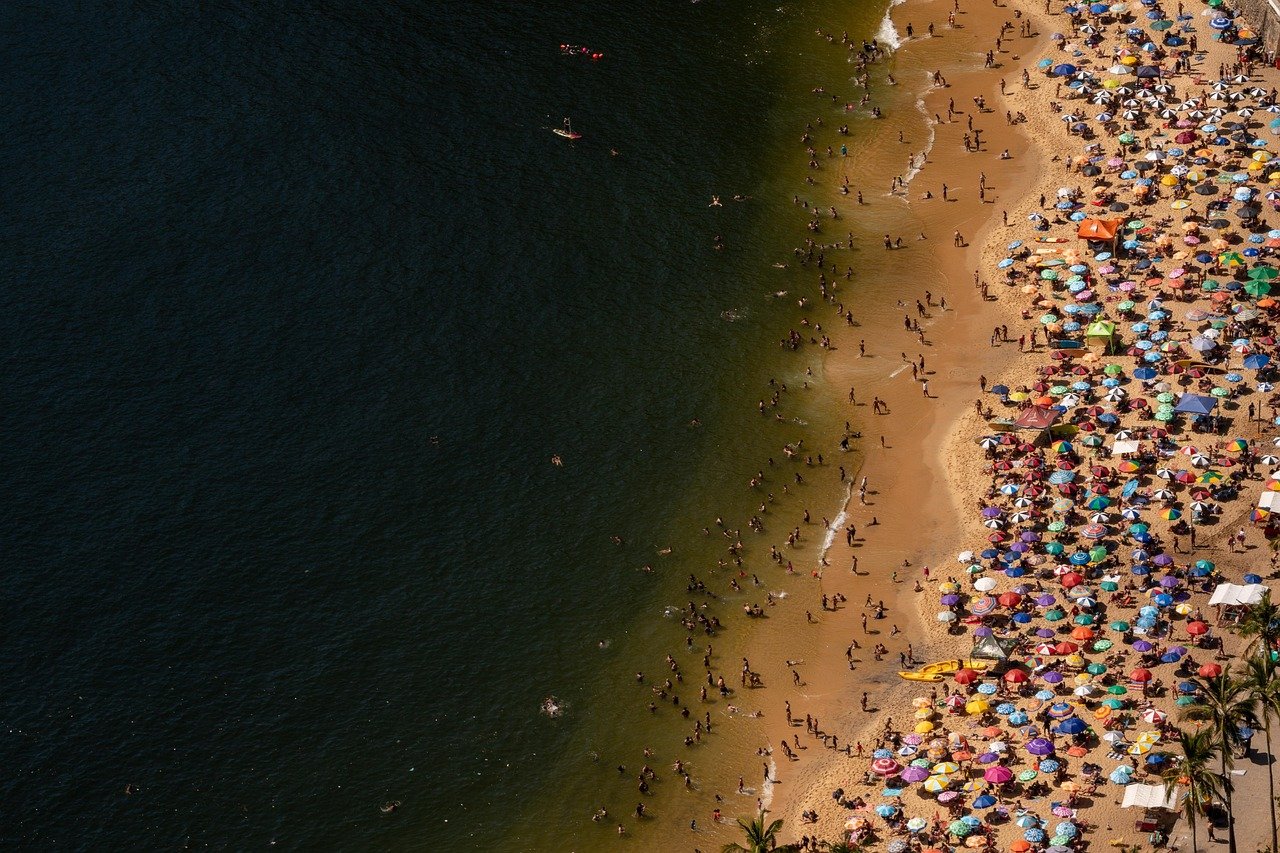
Morro da Urca sits inside the Tijuca National Park umbrella, and its slopes support genuine Atlantic Forest habitat. The most conspicuous wildlife is the marmoset population — tufted-ear marmosets (Callithrix jacchus) have become semi-habituated to visitors and often appear on the railings and café tables, particularly near the restaurant terrace. While endearing, it is important not to feed them: human food disrupts their nutritional balance and encourages aggressive begging behaviour. Beyond the marmosets, the forest edges ring with the calls of tropical birds including various tanagers, toucans, and woodpeckers. The short hiking trail that winds around the base of the peak — accessible from the cable car terminal — offers a gentle forest walk through secondary Atlantic vegetation, with ferns and orchids visible at close range among the roots of old trees. This trail is free of charge to explore between cable car departures.
The Cable Car Experience
The cable car ride itself merits attention as a distinct experience. The first stage, from Praia Vermelha to Morro da Urca, covers 600 metres and takes approximately three minutes at a maximum speed of 6 metres per second. The gondolas hold up to 65 passengers and depart every 20 minutes. Modern glass construction means unobstructed views in every direction during the ascent: the rock face drops away beneath your feet, the bay opens up behind you, and the summit of Morro da Urca grows rapidly ahead. There are no sudden movements or jerks — the ride is smooth and stable, though the exposure can feel dramatic on a windy day when the cable car sways slightly. Children almost universally love it; those with a significant fear of heights may prefer to stand toward the centre of the cabin away from the floor-level glass panels.
Evening Events and Nightlife
One of Morro da Urca most underappreciated attractions is its role as an evening venue. The broad flat terrace transforms after dark into one of Rio most dramatically situated outdoor event spaces, hosting sunset parties, live samba and bossa nova performances, open-air cinema screenings, and themed nights that combine cable car access with food, drinks, and city views. Events are not nightly but rotate through the calendar regularly, listed on the official bondinho.com.br website with ticket prices that typically include the cable car ride. Arriving in the late afternoon, spending the golden hour at the terrace bar watching the light change over Guanabara Bay, and staying for a live set as the city lights up below is one of Rio finest evening experiences and one that very few first-time visitors discover. The music tends toward classic Brazilian genres rather than commercial dance music, making the atmosphere distinctly carioca rather than generic tourist nightlife.
The Urca Neighbourhood Below
Descending from Morro da Urca, the Urca neighbourhood at the base of the cable car is worth an hour of exploration in its own right. This small, quiet district sits between the mountains and the bay and retains an atmosphere of calm prosperity unlike anything in the rest of Zona Sul. The Mureta da Urca, a low sea wall running along the waterfront, is a beloved gathering spot where locals sit with cold beers and fishing rods watching the sunset with Sugarloaf as backdrop. Small seafood restaurants and neighbourhood bars line Rua Sao Joao Batista. The military installations that occupy much of the headland create a sense of quiet order unusual in Rio, and the streets are extremely safe for an evening stroll after descending from the cable car. Combining Morro da Urca with a walk along the Mureta and dinner in Urca makes for a satisfying full afternoon and evening itinerary requiring no great planning beyond buying the cable car ticket in advance.
Local Insights
Regulars who know the system well have developed a set of habits that maximise the Morro da Urca experience.
- Buy the return ticket but treat Morro da Urca as your main stop. The standard ticket (R$160 return as of 2025) covers both peaks and allows you to descend from either. Many experienced visitors spend 45 minutes to an hour on Morro da Urca, take the second car up to Sugarloaf for 20–30 minutes, then come back down through Morro da Urca again for a second look — the light changes the entire atmosphere between morning and late afternoon.
- Arrive at 9:00 AM on a weekday for the shortest queues. The first cable cars of the day carry staff and early-bird visitors, and the 9:00–10:00 AM window is typically the calmest. By 11:00 AM queues can stretch to 40 minutes on busy days. Conversely, arriving around 5:00 PM gives you the sunset, but the last cable car descent is at 8:00 PM — plan accordingly.
- Check the official website for evening events before you book. The terrace at Morro da Urca regularly hosts sunset music events, open-air cinema, and party nights with DJs — dates vary but are listed on bondinho.com.br. Evening event tickets sometimes include the cable car and represent excellent value for a memorable Rio night out.
- Hike up instead of taking the cable car for the first stage. A maintained trail climbs from Praia Vermelha to Morro da Urca through Atlantic Forest in about 45 minutes. The gate closes at 6:00 PM (winter) or 7:00 PM (summer). Hikers can then take the cable car down for free — a great way to see the forest, earn the view, and save part of the ticket price.
- Eat at the café on Morro da Urca rather than waiting for Sugarloaf. The restaurant and snack bar on the intermediate peak are less crowded than Sugarloaf’s equivalent and offer the same quality with significantly better atmosphere — the bay view from a table on the terrace is genuinely spectacular at any time of day.
Planning Your Visit
- Tickets: R$160 return (both peaks) or R$130 one-way (Praia Vermelha to Morro da Urca + Sugarloaf only). Fast-pass R$260. Children under 6 free; reduced rates for children 6–13. Book online at bondinho.com.br to avoid queues
- Opening hours: Weekdays 9:00 AM – 8:00 PM; weekends and public holidays 8:30 AM – 8:00 PM. Last cable car departs for summit at 6:30 PM; hiking trail gate closes 6:00 PM (June–September) / 7:00 PM (October–May)
- Best time: Weekday mornings (9:00–10:00 AM) for shortest queues; late afternoon (5:00 PM onward) for sunset views. Avoid overcast days — low cloud often obscures Sugarloaf and eliminates the main reason to visit
- Duration: 1.5–3 hours for both peaks combined; allow 45–60 minutes if spending meaningful time on Morro da Urca alone
- Booking: Online booking strongly recommended, especially for weekends and holidays — purchase at bondinho.com.br or through authorised resellers; tickets can also be purchased on arrival but queues can be 40+ minutes
Getting There
- Bus: Bus line 107 or 513 from Centro or Botafogo to Praia Vermelha (Urca neighbourhood); the lower cable car station is at the end of Avenida Pasteur — a 2-minute walk from the bus stop
- By car: Drive to Praia Vermelha via Avenida Portugal and Avenida Pasteur through the Urca neighbourhood; paid parking available in a dedicated lot adjacent to the cable car station
- On foot: 25-minute walk from Botafogo Metro station through the Urca neighbourhood along Avenida Portugal; scenic route with views of the bay on the final approach
- Taxi/ride-share: Uber to “Bondinho Pão de Açúcar” or “Estação Praia Vermelha” — approximately R$25–40 from Copacabana or Botafogo; drop-off directly at the cable car entrance
Frequently asked questions
Is it worth stopping at Morro da Urca or should I go straight to Sugarloaf?
Stopping at Morro da Urca is genuinely worthwhile and most returning visitors actually prefer it to Sugarloaf’s summit. The intermediate peak offers a broader, more layered view of the city — you can see down to Praia Vermelha, across to Botafogo and the bay, and up to Sugarloaf all at once. The terrace is typically less crowded than the upper summit, there are marmosets in the forest, and the cable car ride up from here to Sugarloaf gives you a dramatic close-up view of the rock face. Plan to spend at least 30–45 minutes here rather than rushing through.
Can I hike to Morro da Urca instead of taking the cable car?
Yes — a maintained hiking trail climbs from Praia Vermelha to Morro da Urca through Atlantic Forest and takes approximately 45 minutes for an averagely fit adult. The trail is free of charge, well-marked, and offers a completely different experience from the cable car ride, passing through dense secondary forest with birds and marmosets along the route. The gate opens at 8:00 AM and closes at 6:00 PM (winter) or 7:00 PM (summer). After hiking up, you can take the cable car down from Morro da Urca for a discounted one-way fare, combining both modes of transport in a single visit.
What happens if the weather is bad on my visit day?
Low cloud and rain significantly affect the experience at Morro da Urca and Sugarloaf — on cloudy days the summit views are obscured and the cable car may suspend operations for safety during electrical storms. Check the weather forecast the morning of your visit and look at the peaks visually from Botafogo or Flamengo before heading over. If the summits are shrouded in cloud, it is worth postponing by a day. The ticket office offers date changes with advance notice. Rio’s rainy season (December–March) brings frequent afternoon storms, so morning visits in those months are far safer bets.
Are there food and drink options on Morro da Urca?
Yes — Morro da Urca has a sit-down restaurant, a casual snack bar, and a small café. The snack bar serves açaí bowls, pastéis, fresh coconut water, and cold drinks at prices that are elevated compared to street level but not absurdly so. The restaurant offers full meals including grilled fish and local dishes, and the terrace tables have uninterrupted bay views that justify the price premium. Both facilities are less crowded than the equivalent options on Sugarloaf’s summit. Eating at Morro da Urca rather than Sugarloaf is a consistent recommendation from repeat visitors.