
Sambadrome (Sambadrome Marques de Sapucaí)
Every February, something happens in a 700-meter concrete channel in north-central Rio de Janeiro that defies rational description. Tens of thousands of sequin-clad, feathered, and drumming performers from the city’s top samba schools pour through the Sambadrome Marquês de Sapucaí in a competitive spectacle that took months — sometimes years — to prepare. Ninety thousand spectators fill tiered grandstands and private boxes. Judges score everything from percussion to float design. The result is the densest concentration of color, sound, and human creativity assembled anywhere on Earth, repeated over several nights during Carnival. Outside of Carnival season, the Sambadrome is a fascinating architectural landmark and living cultural center that rewards visitors year-round.
History of the Sambadrome
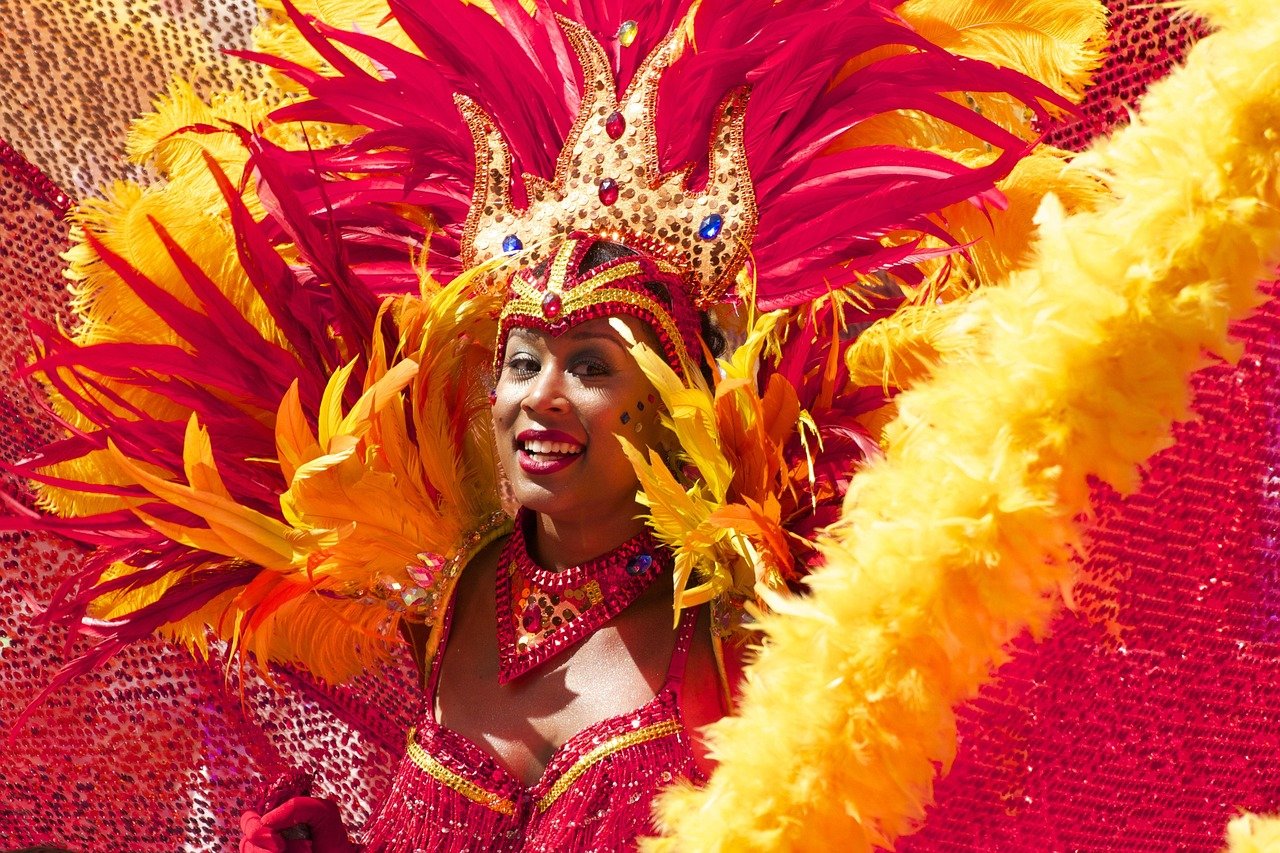
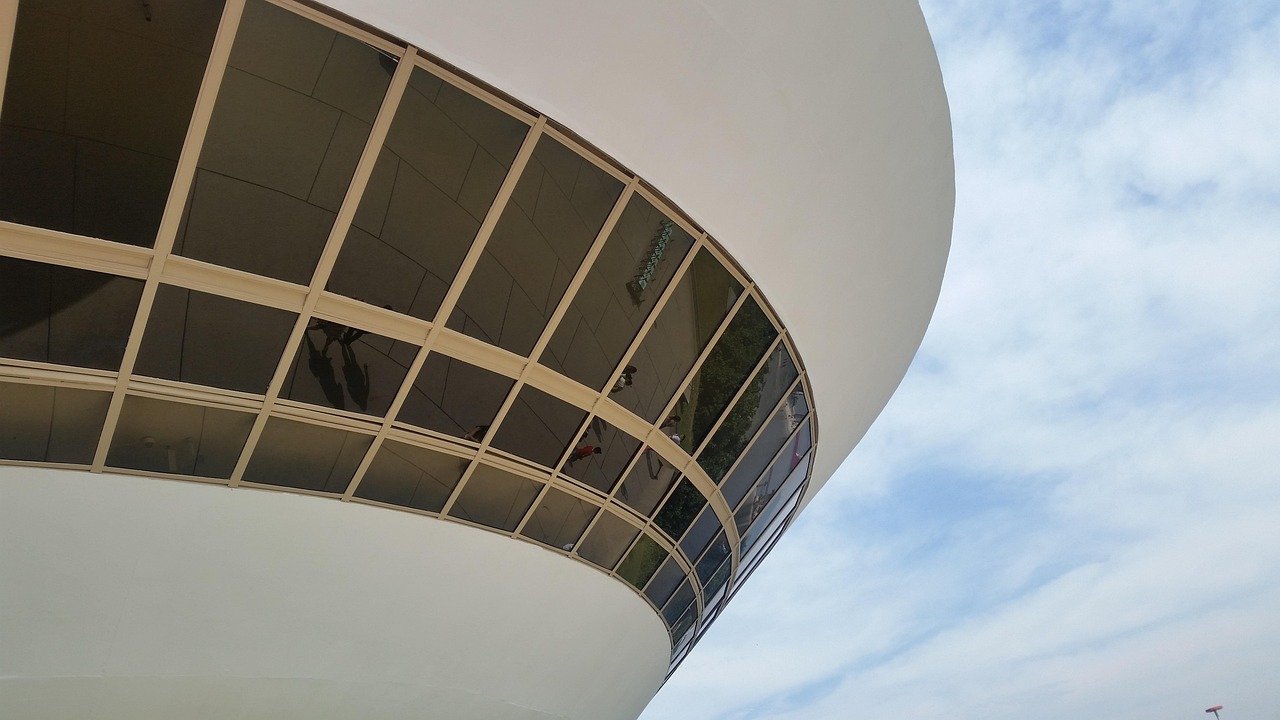
Samba arrived in Rio with Bahian migrants in the early 20th century, taking root in the hillside favelas before spreading across the city. Informal street parades gave way to more organized samba school competitions from the 1930s onward, but for decades the parades moved through regular streets without dedicated infrastructure, causing enormous logistical headaches as crowds swelled into the hundreds of thousands. By the early 1980s, the annual Carnival parade had become so large that the city government commissioned a purpose-built parade ground from Oscar Niemeyer, the architect who had designed Brasília and the Niterói Contemporary Art Museum.
Niemeyer’s design was audacious in its simplicity: a long, straight channel 700 meters long and 13 meters wide, flanked by tiered concrete grandstands and elevated camarotes (private luxury boxes). The Sambadrome opened in 1984, built in just 17 weeks — a feat that remains one of Rio’s great construction stories. The original structure has been expanded and renovated several times since, most recently ahead of the 2016 Rio Olympics, when it served as the finish line for the marathon. Today it can accommodate around 90,000 spectators and remains the world’s only purpose-built carnival parade ground, hosting not only Carnival parades but music festivals, military ceremonies, and other large events throughout the year.
What to See at the Sambadrome
The Carnival Parade — Special Group Schools
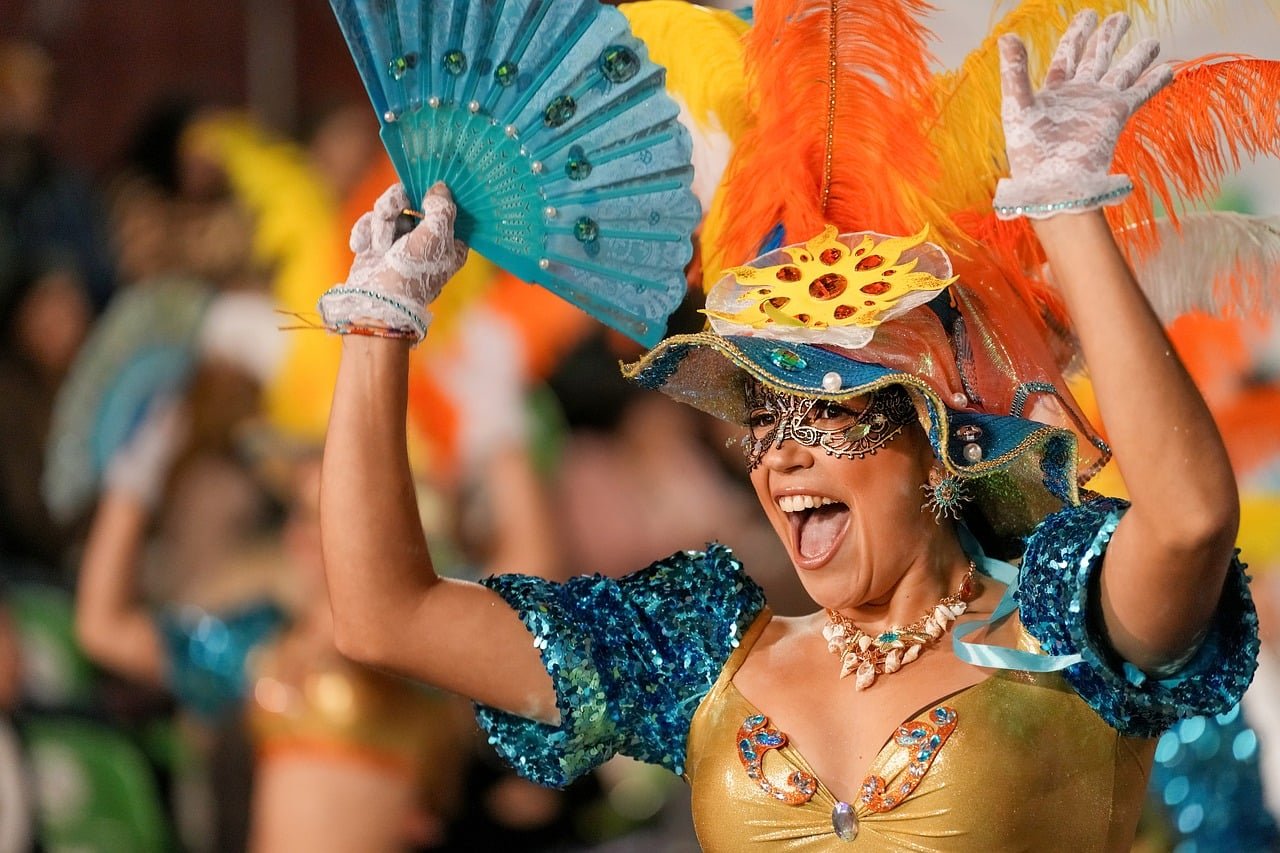
The pinnacle of the Sambadrome experience is the Special Group parades — the top tier of competitive samba, featuring the twelve most prestigious schools in Rio. These nights (Sunday, Monday, and Tuesday of Carnival week) are the ones to prioritize if you are choosing which evening to attend. Each school has roughly 80 minutes to pass through the channel with its full contingent of 3,000 to 5,000 performers, multiple allegorical floats that can stand 10 meters tall, and a bateria percussion section of 300 or more drummers. The thematic narrative of each school’s presentation — its enredo — is announced months earlier and generates enormous public debate. The 2026 Carnival runs February 13–18, with Special Group parades on the best nights. Tickets for these premium evenings sell out months in advance and range from R$ 280 for grandstand seats (around USD 52) up to R$ 3,000+ for private camarote boxes (~USD 560+). Purchase only through Ticketmaster Brasil or the official LIESA website to avoid scams.
Sector 9 — The Tourist Grandstand
For first-time visitors, Sector 9 — the tourist grandstand — is widely recommended as the best starting point. Located near the middle of the parade channel, it offers an excellent viewing angle for the full composition of each school — floats, wings of performers, and the percussion section all in frame simultaneously. Sector 9 has reserved assigned seating (unlike some other grandstand sections where seats are general admission) and is served by dedicated bathrooms, food vendors, and a security perimeter that makes it more comfortable than the cheaper sectors. It typically has the highest concentration of international visitors, which means English-speaking vendors and a somewhat more relaxed atmosphere. The section sits close to the transfer ramp, making it easy to leave before a particularly long queue forms at the exit after midnight.
The Sambadrome Off-Season
Outside of Carnival, the Sambadrome is open for tours year-round and is well worth a visit for the architecture alone. Oscar Niemeyer’s design — simple, modernist, and brutally functional — reads very differently when the grandstands are empty: you can walk the full length of the channel, stand on the concrete apron where the floats assemble, and appreciate the scale of what Carnival night fills with sound and motion. A small permanent exhibition near the entrance documents the history of samba and the parade with photographs, costumes, and memorabilia. Guided tours of the structure and backstage areas can be arranged through several operators along Rua Marquês de Sapucaí, and samba school rehearsals — called ensaios — take place throughout the year and are open to visitors for a small cover charge.
Samba Schools: The Heart of Carnival
The samba school (escola de samba) is the fundamental unit of Rio Carnival culture, and understanding how it works transforms a visit to the Sambadrome from spectacle into something much richer. Each school represents a community — often a neighborhood, historically rooted in the working-class suburbs and favelas that produced samba culture. A school with 4,000 parade participants draws on a social network ten times that size: seamstresses, float builders, drumming coaches, costume designers, lyricists, and tens of thousands of supporters who attend weekly rehearsals for months. The escola de samba is as much a social welfare organization and community center as it is a performance troupe.
The competitive structure is hierarchical: at the top sits the Special Group (Grupo Especial) with twelve elite schools. Below it are the Gold Series, Silver Series, and further access groups, with promotion and relegation between levels decided by each year’s parade scores. Judges score across ten categories including percussion (bateria), singing (harmonia), evolution (the choreographic progression through the channel), floats and props (alegorias e adereços), costumes (fantasias), and the song itself (samba-enredo). A school can win on the strength of its drumming section alone or lose despite magnificent floats due to a weak samba-enredo — the annual original song that every member of the school must sing throughout the parade. Following the judges’ scorecards on Carnival week and watching the Championship announcement three days later has become a media event consuming all of Rio.
The thematic research that each school undertakes to develop its enredo can be extraordinarily serious. Some schools hire academics to consult on historical narratives; others commission film directors and visual artists to design floats. In recent years, schools have tackled themes ranging from indigenous Brazilian cosmology and African spiritual traditions to critiques of environmental destruction and social inequality. This means the Sambadrome parade functions simultaneously as entertainment spectacle, cultural preservation, social commentary, and competitive sport — a combination found nowhere else on Earth. First-time visitors who read up on the themes of each school before attending Carnival find the experience transformed from colorful chaos into coherent, deeply moving storytelling on a monumental scale.
Local Insights
Cariocas who attend the Sambadrome every year offer this hard-won advice to first-time visitors.
- Attend the Access Group parades for a cheaper, more intimate option: The night before the Special Group begins, the Access Group — the second division of samba schools competing for promotion — parade through the Sambadrome. Tickets cost a fraction of Special Group prices (sometimes R$ 50–80, around USD 9–15), the crowds are smaller, and the energy is just as feverish, since these schools are fighting for survival or elevation. Many experienced Carnival-goers consider this their favorite night.
- Dress lightly and in layers: The Sambadrome is open-air and Rio in February is hot and humid, often reaching 35°C at night. Wear breathable clothing but bring a light long-sleeved layer for the small hours when the temperature can drop. Comfortable closed shoes are essential — the concrete grandstands involve a lot of standing and climbing — and sandals become miserable after midnight.
- Watch samba school rehearsals in October–January: Starting around October, each school opens its weekend rehearsals (ensaios) at its quadra — home base — to the public. Beija-Flor rehearses in Nilópolis, Mangueira in the Mangueira neighborhood, Portela in Madureira. Admission is typically R$ 20–40 and includes live samba from the full percussion section, costumed performers, and an atmosphere that is more spontaneous and communal than the Carnival parade itself. Many visitors find the ensaios more personally affecting than Carnival night.
- Protect valuables, especially phones: The grandstands attract pickpockets during Carnival, and the concentration of distracted tourists makes it a target-rich environment. Use a money belt or hidden pouch for cash and documents; consider bringing an older phone for photos and leaving your primary device locked in your hotel safe. Most hotels offer this service free of charge.
- The Champions Parade is a hidden gem: One week after Carnival, the six top-scoring Special Group schools parade again in the Desfile das Campeãs (Champions Parade). Tickets are much cheaper than Carnival night, the mood is celebratory rather than competitive, and the crowds are far smaller, meaning you have better sightlines. For the uninitiated, this is actually the ideal introduction — the quality is identical to Carnival night but the logistics are vastly easier.
Planning Your Visit
- Tickets: Carnival parades: Sector 9 grandstand from R$ 280 (~USD 52); Access Group nights from R$ 50 (~USD 9); camarote boxes R$ 1,500–R$ 3,500+ (~USD 280–650); off-season guided tours R$ 30–50 (~USD 6–9)
- Opening hours: Carnival parade nights: gates open around 7 PM, parades run roughly 9 PM to 6 AM; off-season: open for tours most days 9 AM–5 PM; ensaio rehearsals typically Saturdays from 10 PM
- Best time: Special Group parades on Sunday–Tuesday of Carnival week (Feb 13–18 in 2026) for the full experience; October–January for ensaio rehearsals; year-round for architectural visits
- Duration: Carnival night: budget 6–8 hours including queuing and transport; off-season tour: 1.5–2 hours
- Booking: Carnival tickets must be booked well in advance — often 3–6 months ahead — via Ticketmaster Brasil or LIESA; avoid third-party resellers; off-season tours can be arranged on the day through operators on Rua Marquês de Sapucaí
Getting There
- Metro: Line 2 (Orange) — Praça Onze station is 15 minutes’ walk from the Sambadrome; during Carnival, a special metro service runs all night with extended hours on parade nights — Line 1 also stops at Central and connects to Linha 2
- By car: Address is Rua Marquês de Sapucaí, Cidade Nova; parking is extremely limited during Carnival; driving is strongly discouraged on parade nights — road closures start hours before the parade
- On foot: 15-minute walk from Praça Onze Metro; 20 minutes from Centro along Avenida Presidente Vargas; the area around the Sambadrome is well-lit and patrolled during Carnival
- Taxi/ride-share: Uber, 99, and taxis are available but surge pricing during Carnival can be extreme; arrange pick-up via app before leaving the grandstand; many hotels organize group transfers — ask your hotel concierge
Frequently asked questions
When is Rio Carnival 2026 at the Sambadrome?
Rio Carnival 2026 runs from February 13 to 18, 2026. The main Sambadrome parade schedule has the Access Group schools parading on Friday and Saturday (Feb 13–14), and the Special Group — the top twelve schools — parading on Sunday, Monday, and Tuesday (Feb 15–17). The Champions Parade (Desfile das Campeãs), featuring the top-scoring Special Group schools, takes place the following Saturday (Feb 21). Dates are confirmed well in advance; check the LIESA website or Rio Carnival official sources for the specific night each school parades, as the order changes annually and matters for planning.
How much do Sambadrome Carnival tickets cost?
Ticket prices vary significantly by sector, night, and proximity to the parade. Grandstand (arquibancada) seats on Special Group nights in the popular Sector 9 tourist area typically range from R$ 280 to R$ 500 (approximately USD 52–93 at current rates). Camarotes — private hospitality boxes with food, drink, and premium views — start around R$ 1,500 and can exceed R$ 3,500 per person. Access Group nights are dramatically cheaper, often R$ 50–100. Purchase tickets only through Ticketmaster Brasil or LIESA to avoid counterfeit tickets, which are a known problem in the secondary market around Carnival time.
Can I visit the Sambadrome outside of Carnival?
Yes — the Sambadrome is open year-round and is a rewarding destination even without the Carnival spectacle. Guided tours of the structure run most days and include access to the parade channel, grandstands, and the small Carnival history exhibition. From October through January, samba school rehearsals (ensaios) at the Sambadrome and at individual school quadras across the city offer a genuine, affordable, and often more emotionally resonant experience of samba culture than Carnival night itself. The Sambadrome also hosts music concerts, athletics events, and occasional markets throughout the year — check local listings.
Is the Sambadrome safe during Carnival?
The Sambadrome itself during Carnival is generally safe — there is a heavy police and private security presence inside the venue, and the grandstands are well organized. The areas immediately surrounding the Sambadrome on parade nights require more caution: pickpocketing is common in the pre- and post-parade crowds. Conceal your valuables, use a money belt, and arrange transport home before you need it rather than hailing a random cab at 4 AM. Your hotel concierge can advise on current safety conditions, and many mid-range and upmarket hotels organize group transfers specifically for Carnival nights at the Sambadrome.