
St. Mary of the Sea Cathedral (Basilica de Santa Maria del Mar)
Step through the portal of Santa Maria del Mar and the noise of El Born disappears. The air inside is cool and perfectly still. Three naves of equal height rise on impossibly slender columns spaced 13 metres apart — no thick walls, no massive piers, just stone shafts of extraordinary grace supporting a vault that seems to float without visible means. This is Catalan Gothic at its most radical, a church built with such structural confidence that it discarded all the ornamentation its contemporaries considered essential and achieved something purer and more powerful than any of them.
History of Santa Maria del Mar
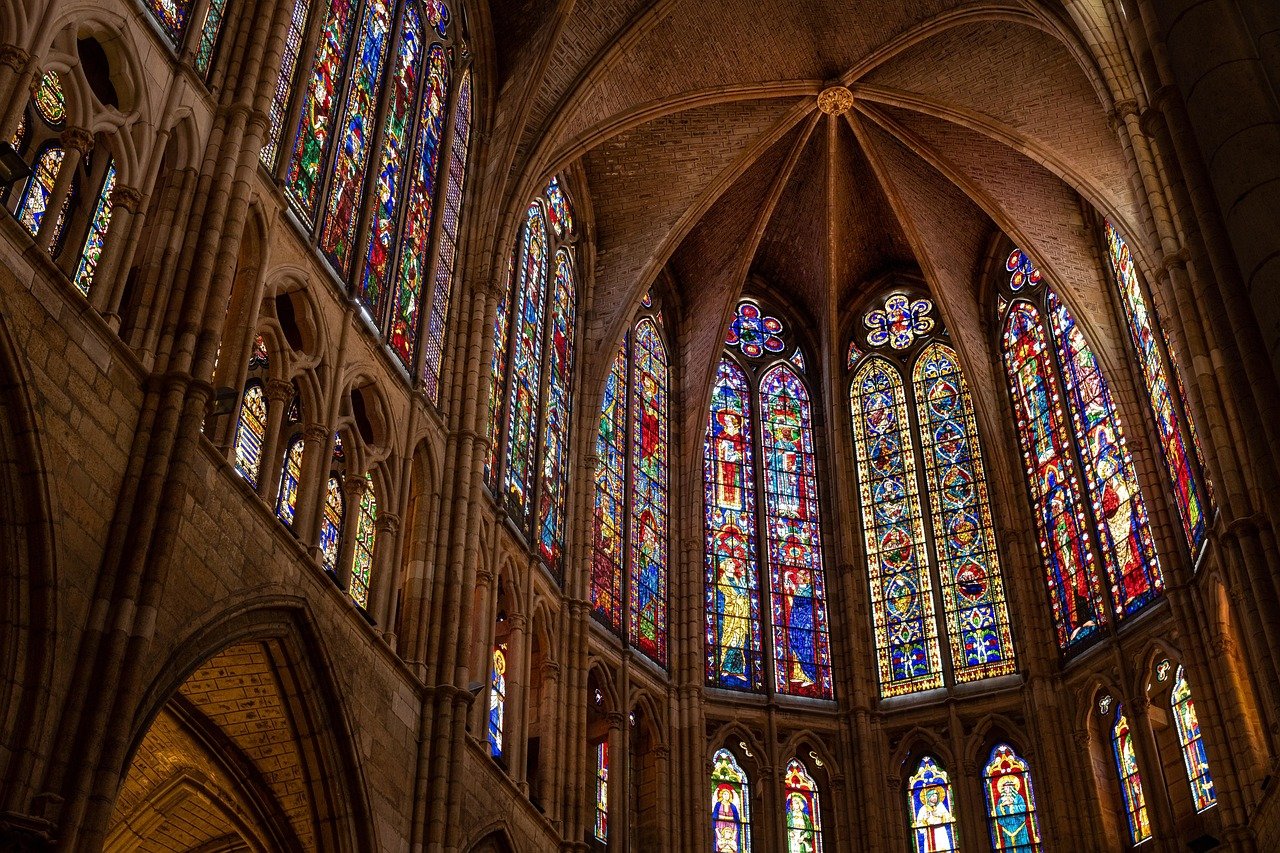
Construction of Santa Maria del Mar began on March 25, 1329 — the Feast of the Annunciation — on a site already associated with a chapel honouring the Virgin Mary as protectress of sailors. The church was commissioned by the shipbuilders, merchants, and stevedores of the La Ribera neighbourhood, Barcelona’s maritime quarter and commercial heart in the 14th century. Unlike the great cathedrals of the period, which were built over centuries under royal or episcopal patronage, Santa Maria del Mar was built by its own community — the porters (bastaixos) of the Ribera carried stones from the Montjuïc quarries by hand to the site, their labour commemorated in stone relief carvings still visible on the doorways.
The speed of construction was extraordinary: completed in just 55 years (1329–1384), under the lead architects Berenguer de Montagut and Ramon Despuig. No medieval church of comparable size in Europe was built in less time. This rapid construction accounts partly for the building’s stylistic unity — most Gothic cathedrals took centuries and show the shifts in taste and technology that each generation brought. Santa Maria del Mar has the visual coherence of a single sustained vision, uncluttered by later additions and alterations. The Civil War of 1936 burned its interior fittings and retables, an event that modern visitors may inadvertently thank: the fires stripped out centuries of Baroque accretions and restored the clean Gothic interior to near its 14th-century appearance.
What to See Inside
The interior’s signature quality is its spaciousness. The three equal-height naves are separated by columns so slender and widely spaced that the effect is of a single vast uninterrupted room rather than the divided space of most Gothic churches. The structural logic that makes this possible — pointed arches, flying buttresses outside, and the mathematical distribution of load through the stone columns — was worked out by Berenguer de Montagut with a precision that structural engineers still study today.
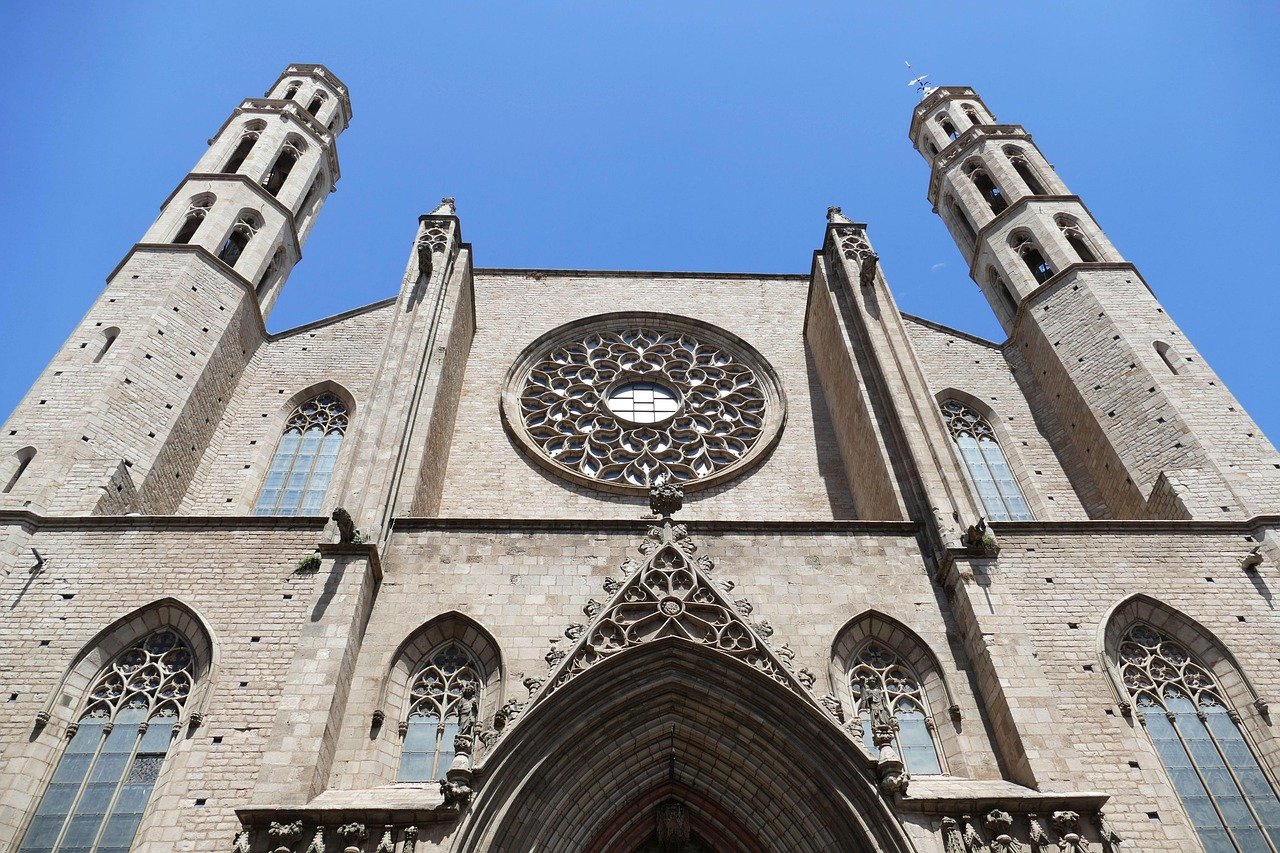
The stained glass windows are a particular highlight: while the Civil War destroyed most of the original medieval glazing, the surviving rose window at the west end and the ambulatory windows date from the 15th through 18th centuries and fill the interior with coloured light of exceptional quality. The ambulatory (the curved walkway around the high altar), with its ring of chapels dedicated to various guilds and confraternities of the neighbourhood, reveals how the church functioned as a community institution rather than a royal or episcopal monument.
The Rooftop and Towers
Access to the church’s rooftop and towers offers a completely different perspective on the building and the El Born neighbourhood below. From the roof terraces, the structural logic of the flying buttresses becomes visible — great arched stone bridges that carry the lateral thrust of the nave vaults out and down to the external wall supports, allowing the interior walls to be opened up with windows rather than solid masonry. The rooftop terrace also provides panoramic views over the densely packed medieval streets of El Born, across to the Palau de la Música Catalana, and toward the old port.
Rooftop access is available through a separate guided tour (in addition to general entry) and requires advance booking. The guided tour lasts approximately 45 minutes and includes both the rooftop and a thorough explanation of the church’s architectural principles. It is strongly recommended for anyone with an interest in architecture — the combination of the interior experience and the exterior structural view provides a complete understanding of how the building works that neither visit alone can offer.
Practical Information
- Tickets: Paid entry (13:00–17:00 Mon–Sat) approx. €5 adult; rooftop guided tour additional €3; free entry at other hours (check current schedule)
- Opening hours: Mon–Sat 09:00–20:30; Sun 10:00–20:00 (hours vary slightly seasonally — check official website); free entry outside paid-visit hours
- Best time to visit: Early morning (09:00–10:00) for the most serene atmosphere; avoid Saturday afternoons when the interior is busiest
- Duration: 30–45 min for the interior; 1.5 hrs with rooftop tour
- Booking: General entry walk-in; rooftop guided tours should be booked in advance at santamariadelmarbarcelona.org
Local Insights
What locals know that guidebooks don’t always tell you:
- Attendance at Mass (Sunday 12:00 and 19:00; weekday mornings at 09:00 and 20:00) is free and allows you to experience the acoustic properties of the nave — the space has extraordinary resonance that no photograph or architectural description can replicate.
- The novel “La Catedral del Mar” by Ildefonso Falcones, set in the church’s construction period, was a worldwide bestseller and dramatically increased the church’s visitor numbers. Reading it (or watching the Netflix series) before your visit enriches the experience considerably.
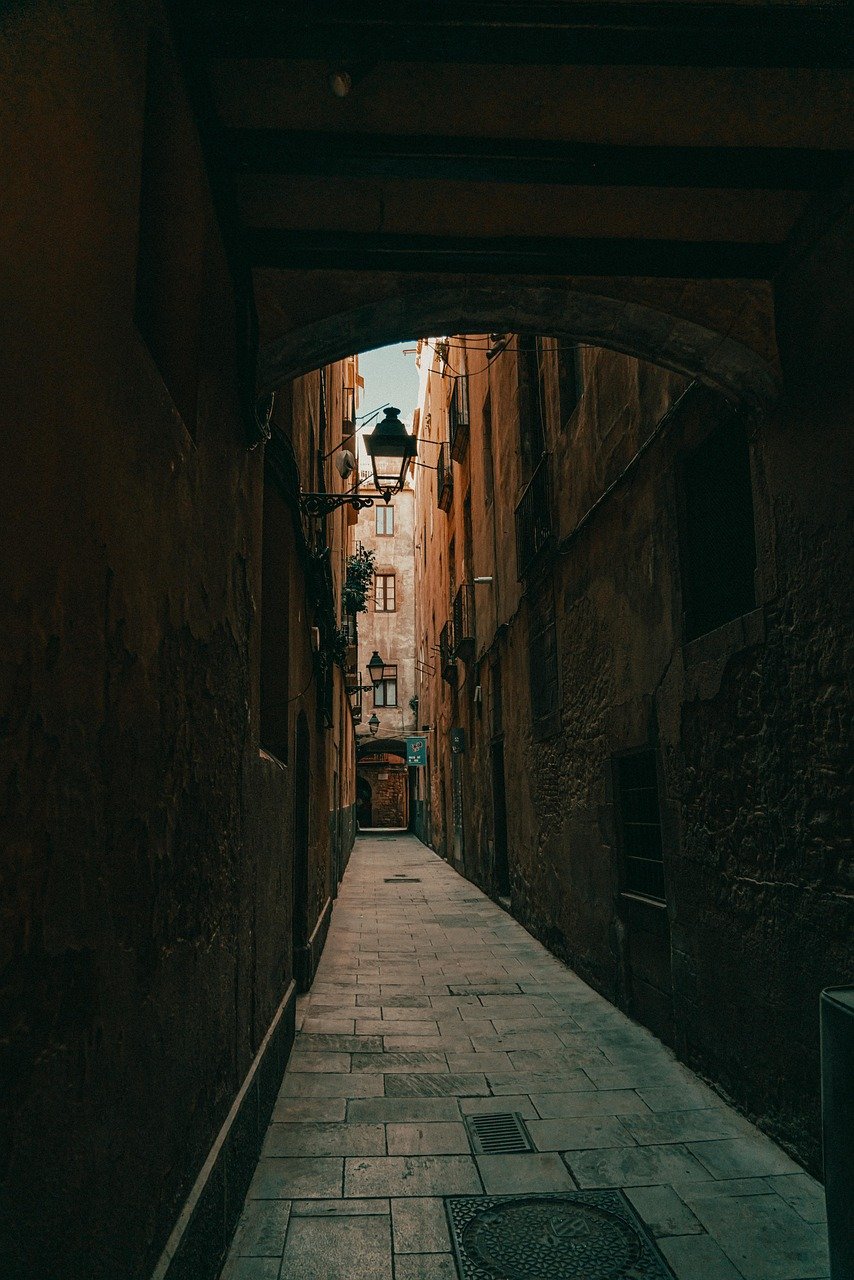
- The square outside (Plaça de Santa Maria) is one of the most pleasant in El Born and lined with good bars and restaurants. The El Xampanyet bar on Carrer de Montcada (3 min walk) is one of Barcelona’s oldest and most authentic cava bars.
- The fossar de les Moreres (outside the church’s southern wall) is a memorial to Catalans who died defending the city in 1714 — an eternal flame burns at its centre and it carries deep emotional significance for Catalans that is worth understanding before visiting.
- On Saturday evenings, concerts and musical events are sometimes held in the nave — check the church’s website for the programme. The acoustic quality makes even modest performances extraordinary.
Getting There
- Metro: Line 4 (Yellow) → Jaume I station (3 min walk east)
- Bus: Routes 17, 19, 40, 45 stop in the El Born area
- On foot: 5 min from the Picasso Museum; 10 min from the Cathedral of Barcelona; 8 min from Barceloneta beach
- Taxi/Rideshare: Drop off on Passeig del Born or Carrer de Santa Maria, directly adjacent to the church entrances
Frequently asked questions
Is entry to Santa Maria del Mar free?
Partially. The church operates a paid-visit window (currently 13:00–17:00 Monday–Saturday, approx. €5) for tourist access during the afternoon. Outside these hours — mornings, evenings, and Sundays at certain times — entry is free, though worshippers have priority access during Mass times. The rooftop guided tour is an additional charge.
How does Santa Maria del Mar differ from the Barcelona Cathedral?
The two buildings represent very different approaches to Gothic architecture. The Cathedral of Barcelona (completed over centuries) is heavier, more ornate, with darker interiors typical of French Gothic. Santa Maria del Mar is lighter, spatially unified, and distinctly Catalan in its austerity — many architectural historians consider it the superior achievement precisely because of its economy of means.
Can I photograph inside the church?
Photography for personal use is generally permitted. Flash photography and tripods are prohibited. Photography during religious services is not appropriate.
Is there parking near Santa Maria del Mar?
Street parking in El Born is extremely limited. The nearest car parks are at Passeig del Born and the Barceloneta area. Public transport (Metro Jaume I) is strongly recommended.
What neighbourhood is Santa Maria del Mar in?
El Born (officially La Ribera), one of Barcelona’s most characterful medieval neighbourhoods, with excellent independent restaurants, cocktail bars, the Picasso Museum, and the El Born Market (a 19th-century iron market building with exposed medieval ruins visible below). A full El Born walk takes 2–3 hours.