
Montserrat Monastery
The train from Barcelona climbs through vineyards and then rears steeply into an improbable mountain landscape — serrated peaks of conglomerate rock in shapes that look designed rather than geological, rising from pine forests like the battlements of a giant’s castle. And nestled impossibly into the base of these cliffs is Montserrat Monastery, a Benedictine abbey that has functioned continuously since 1025 AD and which holds one of the most venerated religious images in Europe: the Black Madonna, La Moreneta, a twelfth-century polychrome statue before which Catalans, Spanish kings, and pilgrims from across the world have prayed for nine centuries. You approach by cable car or rack railway. You arrive, and the mountain and its monastery exceed expectation.
History of Montserrat Monastery
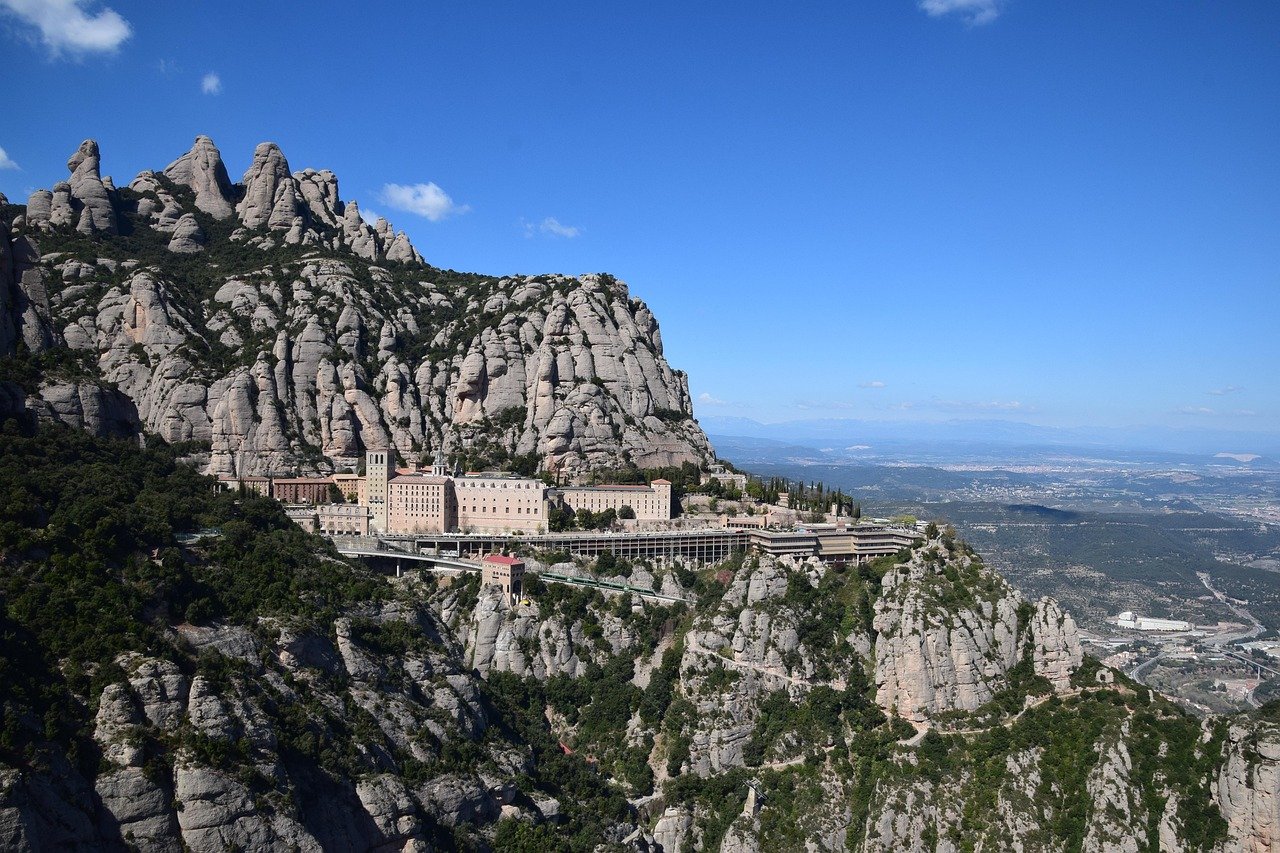
The mountain of Montserrat — its name means “jagged mountain” in Catalan — has been considered sacred since pre-Christian times, and early Christian hermits established cells in its caves during the ninth century. The official founding of the monastery dates to 1025, when Bishop Oliba of Vic organised the hermitages into a formal Benedictine community and commissioned the construction of the first church. The monastery grew in importance throughout the medieval period as a pilgrimage site centred on the Black Madonna, a statue of the Virgin Mary with the Christ child that dates from the twelfth century and is believed to have miraculous powers.
The monastery’s history mirrors Catalonia’s turbulent story. It was sacked by Napoleon’s troops in 1811 and largely destroyed, with the monks forced into exile. Reconstruction began in the mid-nineteenth century and continues to the present day — the current church and surrounding buildings are largely nineteenth and twentieth-century constructions in a Romanesque revival style, though the overall complex retains a medieval atmosphere enhanced by the extraordinary mountain setting. During the Franco dictatorship (1939–1975), when the Catalan language was prohibited in public, Montserrat Monastery became one of the few places where Catalan could be heard openly in religious ceremonies, making it a symbol of Catalan cultural resistance. The monastery published books in Catalan and sheltered dissidents, and its role in preserving Catalan identity during this period is deeply significant to Catalans today.
What to See
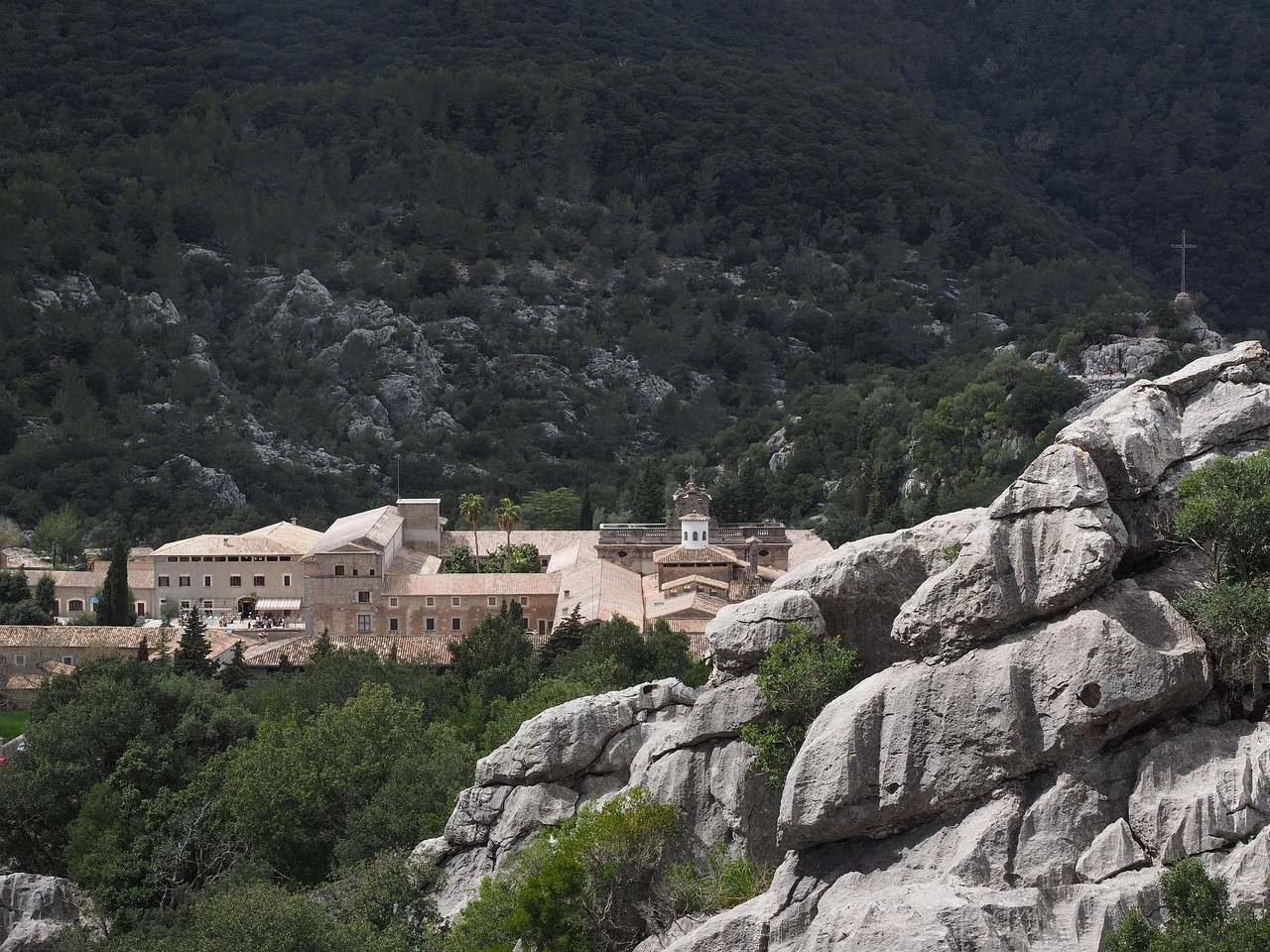
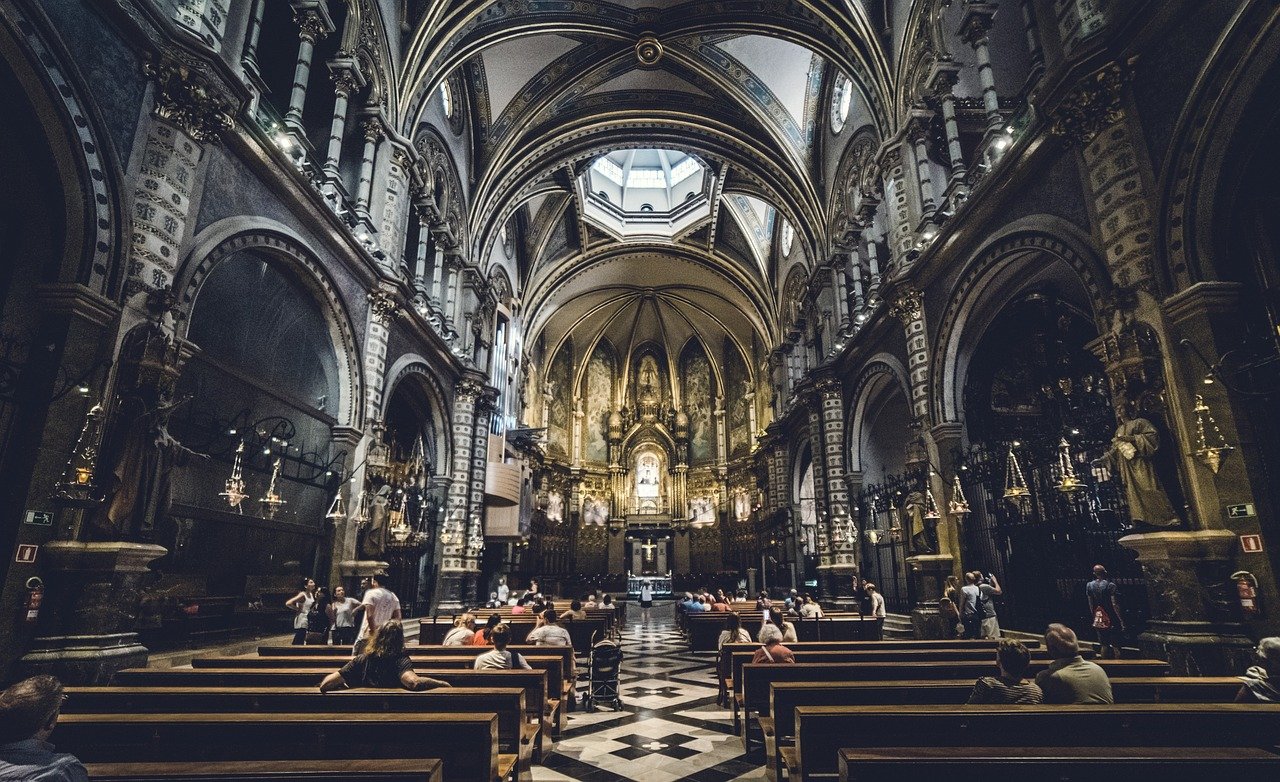
The Basilica of Santa Maria is the monastery’s heart and the home of the Black Madonna. Access to the statue is via a long queue that moves slowly but steadily — pilgrims and tourists wait together to have a moment in front of the statue, which sits enthroned in a side chapel behind a glass shield. The statue’s name reflects the darkened colour of its wood, caused by centuries of candle smoke and varnish rather than the original pigmentation. The queue is serious — expect 30–45 minutes — but the moment of arrival before the statue, with the basilica’s golden interior glowing around you, rewards the wait.
The monastery complex beyond the basilica includes a museum with an impressive collection spanning ancient Egypt through medieval manuscripts to twentieth-century Catalan painting — an eclectic assembly that reflects the monastery’s long history as a centre of culture and collecting. The Escolania, one of Europe’s oldest boys’ choirs (founded in the thirteenth century), performs at the 1pm mass on most days of the year and at vespers at 6:45pm. Hearing the choir’s pure treble voices rising through the basilica’s stone acoustics is an experience of considerable beauty, and many visitors plan their visit specifically around the choir schedule.
Mountain Hiking
The mountain offers more than a dozen marked hiking trails ranging from gentle 20-minute walks to strenuous full-day ridge traverses. The Sant Joan trail, reached by cable car from the monastery level, climbs to the chapel of Sant Joan in 20 minutes and continues to the Sant Jeroni summit (1,236 metres) in a further 90 minutes — from which, on clear days, Mallorca is visible 250 kilometres away across the sea. The Hermitage trail visits a series of medieval caves and hermitages built into the cliff face, providing the closest thing available to the landscape that the original ninth-century monks would have known. All trails are well marked and maintained by the park authority.
Rock climbing on Montserrat’s conglomerate walls has been a serious sport since the 1920s, and the mountain hosts hundreds of established routes graded from beginner to expert. The rock — smooth, rounded conglomerate — requires a different technique from limestone and has developed its own local school of climbing expertise. For hikers without climbing equipment, simply walking the paths between the rock formations, with their extraordinary shapes and textures, provides an hour or more of geological wonder independent of the monastery below.
Practical Information
- Tickets: Monastery and museum entry is free; combined train + cable car from Barcelona approx. €32–40 return; museum admission €8; Sant Joan cable car €15 return
- Opening hours: Basilica daily 7:30 am–8:00 pm; Museum Tuesday–Friday 10:00 am–5:45 pm, Saturday–Sunday 10:00 am–6:45 pm
- Best time to visit: Weekday visits in spring or autumn avoid the severe weekend and holiday crowding; arrive early for shorter queues to the Black Madonna
- Duration: Half-day minimum; full day if combining monastery, museum, and hiking
- Booking: Train (FGC from Barcelona Plaça Espanya) runs regularly; no booking required; cable car can have queues on busy days
Local Insights
What locals know that guidebooks don’t always tell you:
- The Escolania choir performs at the 1pm mass and 6:45pm vespers — plan your visit around one of these times to hear what many consider the finest boys’ choir in Spain. The 1pm mass is more accessible; vespers more intimate.
- The queue to see the Black Madonna is fastest in the first hour after the basilica opens (7:30am) and immediately after the 1pm mass when many visitors leave. Mid-morning queues on weekends can exceed an hour.
- The mountain’s rack railway (cremallera) from Monistrol de Montserrat is both faster and less crowded than the cable car from the same base station — take one up and the other down for different perspectives.
- The Sant Jeroni summit hike is genuinely achievable for moderately fit visitors in good shoes — the trail is clear and well-maintained, and the summit view from 1,236 metres is among the finest in Catalonia.
- Catalans consider the purchase of Montserrat cheese (a soft white cheese made at the monastery’s own farm) and honey from the monastery gift shop to be essential souvenirs. Both are produced on the mountain and are genuinely excellent.
Getting There
- Train: FGC line R5 from Barcelona Plaça Espanya to Monistrol de Montserrat or Aeri de Montserrat (both approximately 1 hour); then cable car or rack railway to the monastery
- By car: 60 km from Barcelona via A-2 and C-55; approximately 1 hour; parking available at the monastery (fee applies)
- Cable car (Aeri de Montserrat): From Aeri de Montserrat FGC station; the classic, more dramatic approach with views over the valley
- Rack railway (cremallera): From Monistrol de Montserrat FGC station; more comfortable and less susceptible to weather delays
Frequently asked questions
Is Montserrat Monastery worth visiting from Barcelona?
Consistently rated among the top day trips from Barcelona, Montserrat offers a combination of natural spectacle, religious history, and outdoor activity that no other Barcelona day trip matches. The journey by train and cable car or rack railway is part of the experience, and the mountain itself is extraordinary. Allow at least half a day; a full day is even better.
How long is the queue to see the Black Madonna?
Queue times vary significantly. On weekday mornings in spring and autumn, waits can be as short as 10–15 minutes. On summer weekends and religious holidays (especially September 8, the feast of the Virgin of Montserrat), queues can exceed 90 minutes. Going as early as possible or immediately after lunch reduces wait times considerably.
Can I attend a mass at Montserrat?
Yes — the basilica is an active monastery and all masses are open to the public. The 1pm conventual mass is the principal daily mass and includes the Escolania choir. Dress code is respectful; shoulders covered; no shorts.
Is Montserrat suitable for children?
Yes — the cable car, the rack railway, and the spectacular mountain landscape appeal strongly to children. The hiking trails are graded and families can choose appropriately. The monastery museum has interactive elements. The Sant Joan trail’s shorter sections are manageable for older children with some hiking experience.
What is the weather like on Montserrat?
The mountain creates its own microclimate — it is typically cooler than Barcelona at sea level and can have cloud and wind when the coast is clear. Always bring a jacket regardless of the season. Winter visits can involve snow on the upper trails; summer can be hot by midday but the mountain remains cooler than Barcelona.