
La Pedrera (Casa Milà)
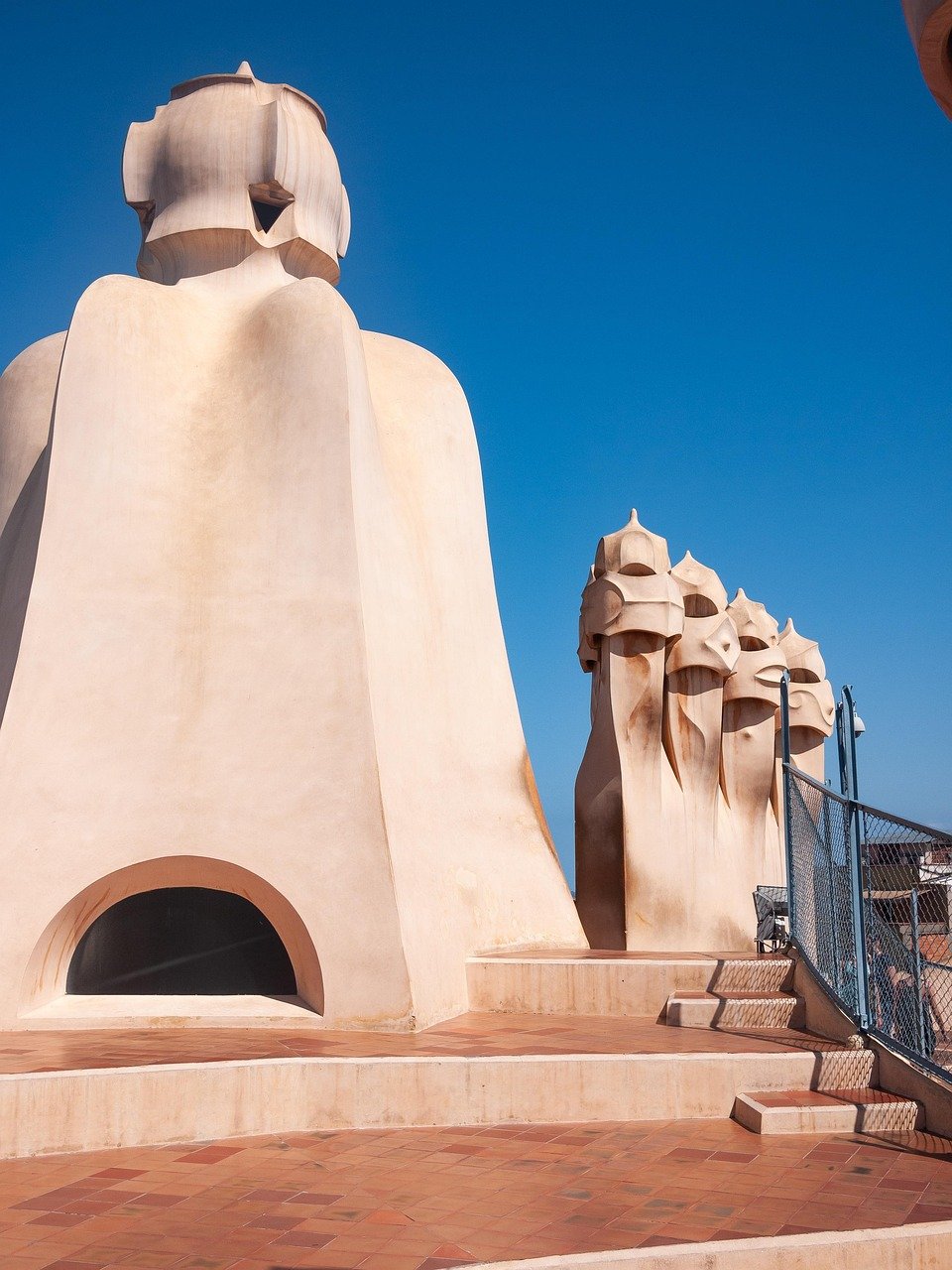
Stand on Passeig de Gràcia and look up, and the building defies the eye to make sense of it. There are no straight lines. The stone façade ripples like a sea frozen mid-wave, balconies twist in organic scrollwork, and the roofline sprouts warrior-shaped chimneys that catch the Barcelona light and hold it like sculpture. This is La Pedrera — the quarry, as Barcelonans nicknamed it when it was built, skeptical of Gaudí’s radical vision — and it is the most radical domestic building of the 20th century, a private apartment block that redefined what architecture could aspire to be. More than a century after its completion, it remains astonishing.
History of La Pedrera (Casa Milà)
La Pedrera was commissioned in 1906 by Pere Milà — a wealthy Catalan entrepreneur who had married an even wealthier widow — and his wife Roser Segimon. The couple wanted a fashionable residence on Barcelona’s grandest boulevard, and they hired Antoni Gaudí, then at the peak of his creative powers. Gaudí was simultaneously designing the Sagrada Família and had recently completed Casa Batlló just meters away on the same street, but La Pedrera (officially Casa Milà) would prove his most technically ambitious residential project. Construction ran from 1906 to 1912, and the building immediately caused controversy: the city fined the owners for building code violations, local residents mocked the undulating stone facade, and Barcelona’s satirical press relentlessly lampooned the design.
The Milà family never fully appreciated what they had commissioned. Roser Segimon reportedly hated the building and refused to allow the religious elements Gaudí had intended to include. After Gaudí’s death in 1926, the family tried to sell and demolish the building multiple times. It was eventually classified as a protected historic monument in 1969, and in 1984 it was declared a UNESCO World Heritage Site as part of the “Works of Antoni Gaudí” designation. The Caixa Catalunya foundation has managed it as a cultural center and museum since 1986.
What to See
The building tour begins on the period apartment floor, where a completely furnished apartment recreates upper-class Barcelona life circa 1910 — Gaudí-designed furniture, hand-painted ceilings, and organic door handles shaped like bones and vertebrae. The Espai Gaudí in the attic is perhaps the most dramatic interior space: a catenary-arched brick structure of extraordinary beauty, where 270 parabolic arches support the roof and once housed the building’s laundry facilities. The arches were modeled on an inverted chain hanging under gravity — a mathematical form that distributes weight perfectly without mortar, one of Gaudí’s signature structural innovations.
The rooftop terrace is the climax of any visit. Gaudí designed it as a landscape — a dreamlike environment of twisted chimneys covered in broken tile (the trencadís technique that Gaudí used throughout his work), ventilation towers shaped like armored knights, and a central staircase structure. The 360-degree view from the terrace takes in Gràcia, the Sagrada Família rising to the north, and the Mediterranean Sea glittering to the southeast. At night, the rooftop hosts the “La Pedrera by Night” experience with immersive light and sound projections that bring Gaudí’s vision into contemporary experience.
Gaudí’s Structural Innovations
La Pedrera represents Gaudí’s most complete realisation of his structural philosophy. Unlike conventional buildings where load-bearing walls divide interior space, La Pedrera is supported entirely by a system of columns and iron beams — with no load-bearing internal walls at all. This was extraordinarily radical in 1906, and it meant that each apartment floor could be partitioned in any configuration. The outer stone facade, though it looks massive, is essentially a curtain hung from the structural frame — it carries its own weight but does not support the floors above.
The building’s structural system also allowed Gaudí to design the courtyard as a continuous light well open to the sky, an innovation that ensures every apartment receives natural light from two sources: the street facade and the courtyard. The underground parking garage (one of Barcelona’s first) was incorporated into the original design with a spiral ramp that allowed cars to descend and turn without reversing — another technical innovation that preceded its time. The entire building was designed as an integrated system: structure, service, aesthetics, and urban relationship all resolved simultaneously.
Practical Information
- Tickets: Essential visit (daytime): €29 adults, €19 students/seniors, €12.50 children 12–17, free under 12; Night Experience: €39; book online in advance as tickets sell out
- Opening hours: Daily 9:00am–8:30pm (daytime visit); Night Experience starts at 9pm (summer) or 7pm (winter); last entry 45 minutes before closing
- Best time to visit: First thing at 9am or after 4:30pm for smallest crowds; avoid midday in summer when queues even with pre-booking can slow entry; the Night Experience rooftop in summer is magical
- Duration: 1–1.5 hours for self-guided visit with audio guide; 90 minutes for the Night Experience
- Booking: Book online at lapedrera.com well in advance — tickets consistently sell out, especially in peak season (June–September); print or have digital ticket ready for smooth entry
Local Insights
What locals know that guidebooks don’t always tell you:
- The “Block of Discord” (Manzana de la Discordia) on Passeig de Gràcia contains three rival Modernista masterpieces within walking distance: Casa Batlló (Gaudí), Casa Lleó Morera (Domènech i Montaner), and Casa Amatller (Puig i Cadafalch) — combine them in a single afternoon for the definitive Catalan Modernisme experience.
- The Night Experience rooftop show in summer is significantly less crowded than the daytime visit and offers dramatically different lighting and atmosphere — worth the extra cost for photography enthusiasts.
- The apartment floor recreation includes Gaudí-designed details that most visitors overlook: look closely at the door handles (vertebrae shapes), the ceiling paintings (botanical motifs), and the balcony ironwork (seaweed and leaves). Every detail was designed, not just the structure.
- Locals access the rooftop view without paying full admission on summer evenings when La Pedrera hosts occasional free open-air concerts — check the events calendar on the official website.
- The building is still partly residential — real people live in some of the upper apartments. The building’s residents are among the most prestigious addresses in Barcelona, and the apartments change hands for extraordinary sums.
Getting There
- Metro: L3 (Green Line) to Diagonal station — 2-minute walk; or L2/L3/L4 to Passeig de Gràcia station — 5-minute walk
- Bus: Routes 7, 16, 17, 22, 24, 28, D50, H10 all stop on Passeig de Gràcia
- On foot: 15 minutes from Plaça de Catalunya; 20 minutes from La Sagrada Família; Passeig de Gràcia is a major walking boulevard
- Taxi/rideshare: Address: Passeig de Gràcia 92; drop off at street level, entrance at no. 92
Frequently asked questions
Do I need to book La Pedrera tickets in advance?
Yes — very strongly recommended. La Pedrera tickets, particularly for daytime slots in peak season (June through September), sell out days or weeks in advance. Walk-up tickets on the day are sometimes available early in the morning, but cannot be relied upon. Book online at lapedrera.com as soon as your travel dates are confirmed. Specific time slots are assigned at booking — you cannot choose an open arrival window.
Is La Pedrera worth the price compared to other Gaudí sites?
Many visitors rate La Pedrera as the single most satisfying Gaudí experience in Barcelona, including over the more famous Sagrada Família. The building is entirely accessible (no ongoing construction obscuring it), the rooftop is extraordinary, and the Espai Gaudí attic is one of Barcelona’s most beautiful interior spaces. The reconstructed apartment provides historical context that the Sagrada Família cannot offer. If visiting only one Gaudí building, Casa Batlló is the most dramatic exterior, but La Pedrera is the most complete integrated experience.
What is the difference between La Pedrera and Casa Batlló?
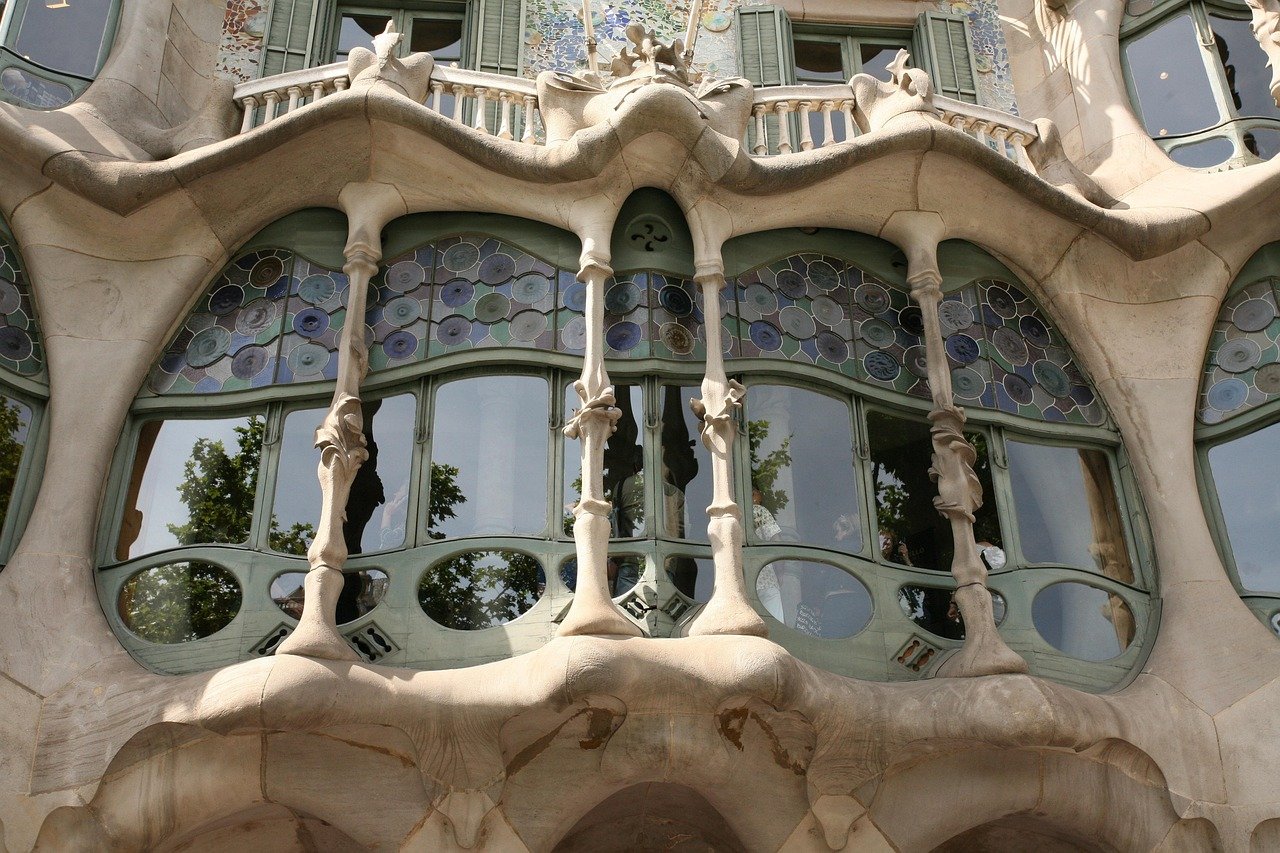
Both are Gaudí buildings on Passeig de Gràcia, but they are architecturally and experientially distinct. Casa Batlló (no. 43, a few blocks south) is more theatrical and its interior spaces more dreamlike and colorful — it’s particularly famous for its roof that resembles a dragon’s back and its blue-tiled central atrium. La Pedrera (no. 92) is larger, more structurally innovative, and its rooftop chimneys are perhaps Gaudí’s most sculptural statement. Both are UNESCO World Heritage listed. Many visitors do both in the same day; the combined ticket often offers a slight saving.
Can I visit the rooftop if it’s raining?
The rooftop is an outdoor space and access may be suspended during strong rain or wind for safety reasons. If the rooftop is closed on your visit day due to weather, you will typically still have access to the apartment floor and the Espai Gaudí attic. Refund or rescheduling policies for weather closures are managed by La Pedrera’s ticketing team — check the terms on your booking confirmation.
What nearby attractions can I combine with La Pedrera?
Casa Batlló is 5 minutes walk south on the same boulevard. The Museu Nacional d’Art de Catalunya (MNAC) is a 20-minute walk or metro ride (to Espanya). The Fundació Antoni Tàpies (devoted to another major Catalan artist) is 3 minutes walk from La Pedrera. Gràcia neighborhood — Barcelona’s most characterful residential barrio — begins immediately behind La Pedrera and rewards exploration over 2–3 hours.