
Park Güell
Perched on the slopes of El Carmel hill in Barcelona’s Gràcia district, Park Güell is an explosion of colour, creativity, and ambition unlike anything else on earth. Shattered ceramic tiles — trencadís — shimmer in the Mediterranean sun across sweeping mosaic benches, while gingerbread gatehouses flank the main entrance like something from a fever dream. Antoni Gaudí reimagined the hillside as a garden city, and though that vision was never fully realised, what remains is a UNESCO World Heritage masterpiece visited by millions who come to experience Barcelona from its most fantastical vantage point.
History of Park Güell
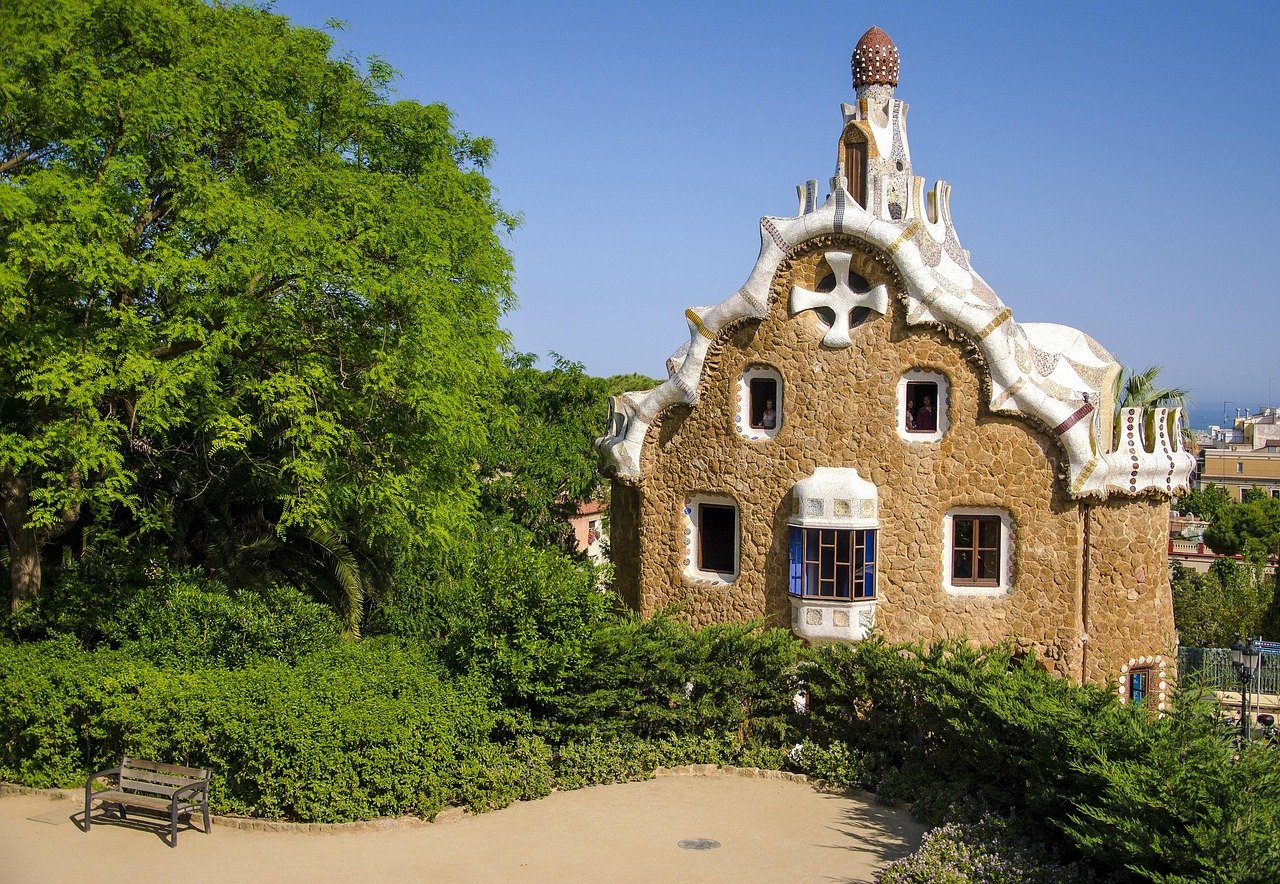
Park Güell was commissioned by Count Eusebi Güell, a wealthy Catalan industrialist and Gaudí’s greatest patron, who wanted to create an English-style garden city on the outskirts of Barcelona. Work began in 1900 and continued until 1914, when the project was abandoned due to a lack of buyers for the residential plots. Of the 60 planned houses, only two were ever built — one of which Gaudí himself purchased and lived in from 1906 until 1925. This house is now the Casa Museu Gaudí, offering an intimate look at the architect’s personal life.
The city of Barcelona acquired the park in 1922 and opened it as a public space. It was declared a UNESCO World Heritage Site in 1984 as part of the “Works of Antoni Gaudí” designation, alongside the Sagrada Família and Casa Milà. Today, the park is divided into a free public zone — covering the majority of the hillside — and a ticketed Monumental Zone that encompasses the most famous Gaudí-designed elements, including the Dragon Staircase, the Hypostyle Room, and the famous serpentine mosaic bench.
What to See
The Monumental Zone is the ticketed heart of the park, beginning with the Dragon Staircase at the main entrance on Carrer d’Olot. This is where the famous salamander or dragon fountain — covered in multicoloured trencadís — greets visitors, and where most iconic photographs are taken. Behind it, the Hypostyle Room (Sala Hipòstila) contains 86 Doric columns that support the Great Terrace above, and the ceiling is decorated with Jujol’s extraordinary ceramic medallions. The terrace itself offers panoramic views across Barcelona to the sea, framed by the sinuous mosaic bench that serpentines around its perimeter.
Beyond the ticketed zone, the free areas of the park are vast and largely uncrowded. Gaudí’s viaducts — stone arcades that wind around the hillside — are architectural wonders in their own right, with columns carved to look like tilted tree trunks. The park’s upper reaches offer some of the best views in Barcelona with far fewer visitors, and native Mediterranean vegetation — rosemary, lavender, and wild olive — lines the unpaved trails. The Casa Museu Gaudí, set in the rose-pink house on the hillside, displays original furniture, drawings, and personal effects that bring the architect vividly to life.
The Trencadís Art and Architecture
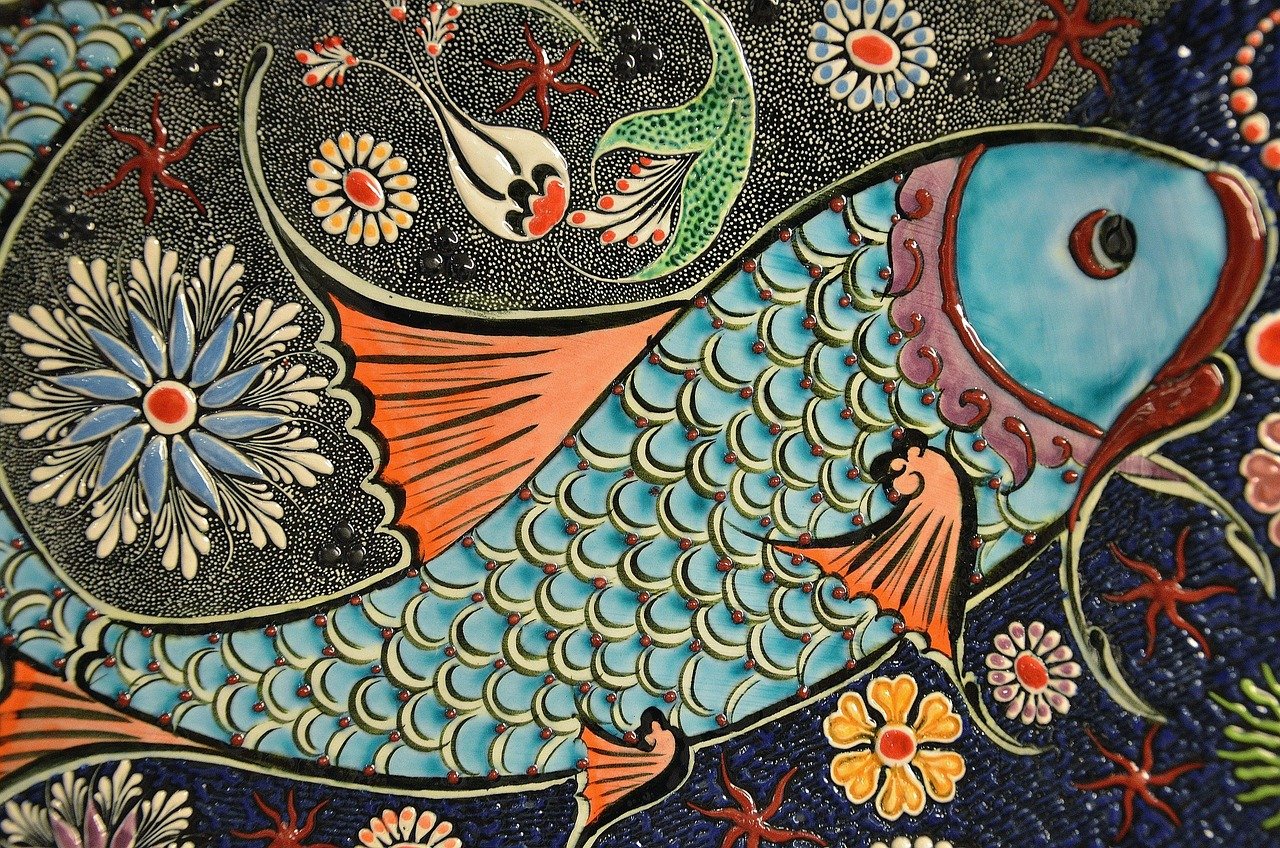
The defining visual language of Park Güell is trencadís — the Catalan technique of using broken ceramic tile fragments to create mosaic surfaces. Gaudí and his collaborator Josep Maria Jujol elevated this traditional craft into something extraordinary, embedding shards of smashed ceramic, glass, and porcelain into organic, flowing forms. The effect is psychedelic and precise simultaneously: up close, the mosaic reveals individual pieces of domestic ceramics, wine bottles, and discarded crockery; from a distance, it resolves into sweeping patterns of vivid colour.
Jujol was primarily responsible for the bench’s mosaic design, and his contribution is increasingly recognised as one of the great works of early 20th-century applied art. The benches were designed with ergonomic curves based on impressions taken from the body of a model — one of the first examples of ergonomic design in architectural history. Studying the detail of the trencadís reveals a playful, almost surreal imagination at work: crosses, suns, abstract forms, and occasional found objects are embedded within the overall composition.
Practical Information
- Tickets: Monumental Zone: approx. €10 adult, €7 reduced. Free zone: no ticket required. Book online in advance — timed entry slots fill up quickly.
- Opening hours: Hours vary by season. Generally 8am–9:30pm in summer; 8am–6pm in winter. Check the official website for current timed slots.
- Best time to visit: Early morning (first slot, 8am) for fewest crowds and best light. Avoid midday in summer — the hilltop can be extremely hot and busy.
- Duration: 2–3 hours including the Monumental Zone and free areas. Add an extra hour if visiting the Casa Museu Gaudí.
- Booking: Essential for the Monumental Zone via parkguell.barcelona. Walk-up tickets are rarely available.
Local Insights
What locals know that guidebooks don’t always tell you:
- The free zone of the park — which covers most of the hillside — is genuinely worth exploring and receives far fewer visitors than the Monumental Zone. Gaudí’s viaducts in the free zone are spectacular and often empty.
- Bus 24 from Plaça de Catalunya drops you almost at the park entrance — much easier than the Bus Turístic and far cheaper. From Lesseps metro, it’s a 15-minute uphill walk that most visitors avoid.
- The viewpoint directly above the Monumental Zone (accessible via the free zone) offers better panoramic views than the Great Terrace itself, with far fewer crowds and great sunset photography.
- Book your timed-entry slot at least 2 weeks in advance in summer — the park sells out entirely. Cancellations do appear occasionally if you check the morning of your visit.
- The Gaudí House Museum (€5.50 entry) is often skipped by visitors but offers the most personal insight into the architect’s character — his bedroom, workbench, and religious objects are all preserved as he left them.
Getting There
- Metro: Lesseps (L3, green line) or Vallcarca (L3). From Lesseps: 15-minute uphill walk along Carrer de Larrard. From Vallcarca: escalators ease the climb.
- Bus: Bus 24 from Plaça de Catalunya stops directly outside the main entrance. Bus H6 and V17 also serve the area.
- On foot: A steep but scenic 30-minute walk from Gràcia neighbourhood. Follow signs up Carrer d’Olot.
- Taxi/Rideshare: Drop-off at the main entrance on Carrer d’Olot. Note that the road becomes pedestrian-priority during peak hours.
Frequently asked questions
Do I need to book Park Güell tickets in advance?
Yes — booking online in advance is essential, especially from April to October. Timed-entry slots for the Monumental Zone sell out days or weeks ahead. Visit parkguell.barcelona to book. The free zone requires no booking.
Is the free zone of Park Güell worth visiting?
Absolutely. The free zone covers the majority of the park and includes Gaudí’s viaducts, native gardens, and the best high-level viewpoints over Barcelona. It is far less crowded than the Monumental Zone and gives a sense of the original garden city vision.
Is Park Güell accessible for visitors with mobility issues?
The Monumental Zone has limited accessibility due to staircases and uneven terrain. The main terrace is reachable via ramps from side entrances. Contact the park in advance for the accessible route details. Much of the free zone is along unpaved hillside paths.
Can I take photos at Park Güell?
Photography is freely permitted throughout the park for personal use. Drone flights require prior authorization from the park authority and are rarely granted during opening hours.
What else is near Park Güell?
The Gràcia neighbourhood at the foot of the hill is one of Barcelona’s most characterful areas — full of independent cafes, local markets, and plazas. La Sagrada Família is a 20-minute taxi or bus ride away, and the Hospital de Sant Pau (another Domènech i Montaner masterpiece) is en route.